
A Complete Marketing Plan for the Photography Studio I Just Got Beautiful Portraits From
I hate to see this great business suffer in our current environment, so I decided to help

I brought my daughter to a photo studio and returned with some beautiful portraits. I was heartbroken to see this great business suffer in our current environment, given the quality of their work.
“Why doesn’t this place get more customers?” I thought. And then I thought some more. I decided to craft a custom, actionable marketing plan for this little photography business to show my appreciation. Here’s the result.
Introduction
The Picture Rooms is a privately owned entity, established a few years ago by founders Aidan Beatty and Martin O’Leary. The business initially started as a gallery selling landscapes but soon evolved into selling portraits, wedding photography, and mote lucrative commercial photography.
To date, the business has achieved noteworthy success, including commercial projects with Harcourt Developments, Riverdance, KBC Bank, and Lidl, in addition to privately commissioned work such as family events and portraits.
The owners are looking to expand their business. They identified marketing as the starting point. Let’s understand their philosophy to help them with that.
Business Philosophy
There is no better way to truly capture the philosophy of a business than to immerse yourself and experience it firsthand. For this reason, I decided to do exactly that, buying a photoshoot for my daughter to appreciate exactly what The Picture Rooms’ philosophy is about, from the consumer’s perspective.
Consumer experience is the true compass of a company’s philosophy. With this in mind, a post-shoot interview took place with Taylor, who modeled under the guidance of Aidan and her father, the author, Paul Myers MBA.


The two images above were taken from the shoot portfolio created by The Picture Rooms. This offered a unique insight into the business. Analyzing two key stakeholders enabled me to establish if the business philosophy was in fact in parity with the consumer’s experience and expectations.
The business philosophy stems from an overall consistent ethos. This ethos is the sum of five core parts, identified by the owner, Aidan as:
- Customer experience
- Artistic signature
- Service
- Quality
- Presentation
Price, albeit reasonable, did not make the top five core business philosophy aspects. Given that it’s an unsustainable selling point, due to high volatility, the core philosophy model is therefore arguably quite strong, but would it hold up following a customer interview?
Consumer feedback
The responses recorded during the interview with Taylor were as follows:
- Did you enjoy the experience? Answer — “Yeah, I really enjoyed it.”
- What was the most enjoyable part for you? Answer — “I liked the fan blowing my hair back, like in the movies.”
- How did you feel during the shoot? Answer — “Like someone famous.”
- Are there any shots that you didn’t like? Answer — “No, I liked them all.”
- Would you like to do this again? Answer — “Yeah, of course.”
- Would you recommend The Picture Rooms to your friends and family? And why? Answer — “Yes, because it’s cool when the fan blows your hair back. It’s like you’re famous.”
Quality and creativity are, in the owners’ view of what differentiates them from the competition. This is a unique selling point and should be promoted throughout the website.
Pricing strategy is not aggressive, with middle prices for most services like portraits, weddings, and commercial photography. It’s a competitive market, but devaluating the brand by massive discounts can harm the business.
The business philosophy critiqued from the consumer’s perspective was for the most part aligned as intended, although two areas, customer consultation and customer feedback, jumped out for focused improvement to ensure philosophy conformance.
Customer consultation
Taylor was somewhat unsure what to expect and exhibited this uncertainty to begin with, but she became more confident as the process unfolded. Although The Picture Rooms do carry out consultations, more time with model/client prior to actual work commences would improve rapport between parties and settle client nerves/anxiety.
Additionally, a standardized consultation process would also capture data for future analysis, leading on to:
Customer feedback
Records pertaining to customer feedback for analysis purposes, such as the customer questionnaire prepared for this report, do not exist. Customer data provides valuable information to any business, ensuring:
- Customer satisfaction
- Business philosophy conformance
- Identification of areas for improvement (any weakness)
- Testimonials
- Potential future trends/needs
- Added-value business
- Future client events
Although the team at The Picture Rooms is in its infancy, a level of competency and expertise is evolving. The addition of Diego (new employee) for high-end editorial and commercial retouching support provides a unique artistic signature, which is their differentiation in the market and a strong competitive advantage, evident in the images of Taylor.
This article will embark on a journey to capture this artistic creativity and translate it into a tangible marketing strategy.
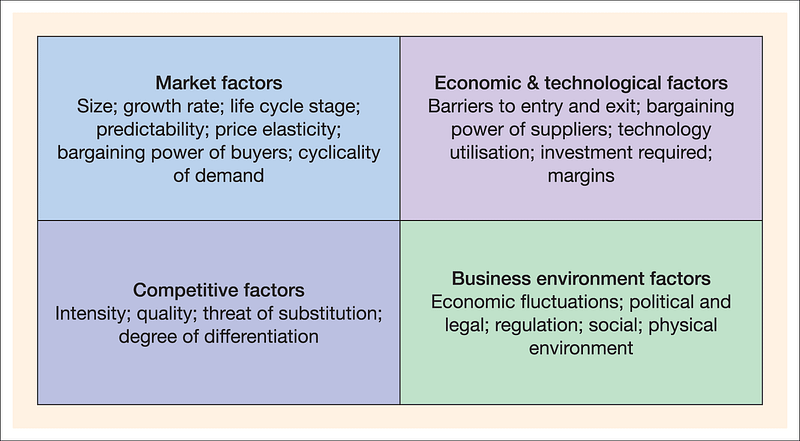
Understanding the market in terms of segmentation, targeting, and positioning is a natural next step for The Picture Rooms.
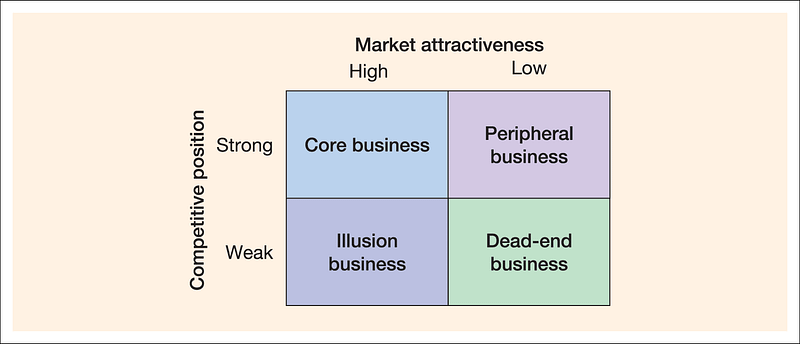
This will involve searching for where trends are going so that their customers experience continual innovation. Understanding the market will help the organization stay ahead of the curve, during a particularly vital economic phase in which a rapidly changing market is unfolding due to global uncertainty.
Segmentation, Targeting, and Positioning
The Picture Rooms serve two main markets: the consumer market and the business/commercial market. The consumer market can be segmented into two groups, based on the needs of the customer:
- Personal consumers who are looking for a personalized service to photograph family events such as weddings. The focus is on the quality of the output and the professionalism of the service.
- Impersonal consumers who purchase landscape prints. These are a pre-produced product, so there is much less emphasis on the service element.
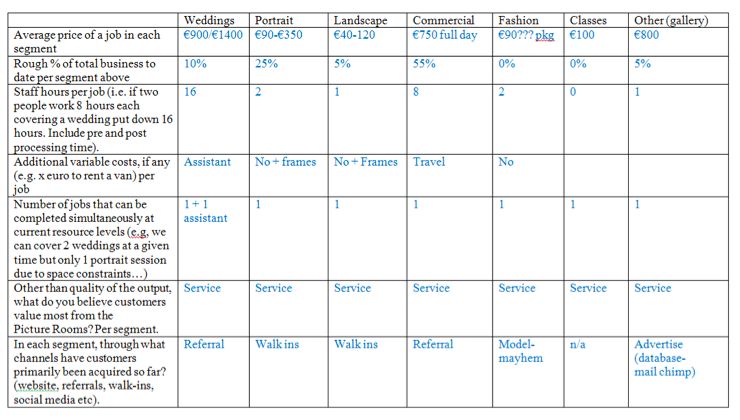
The matrix below shows which products are currently offered by The Picture Rooms and which of the three sub-segments they serve.
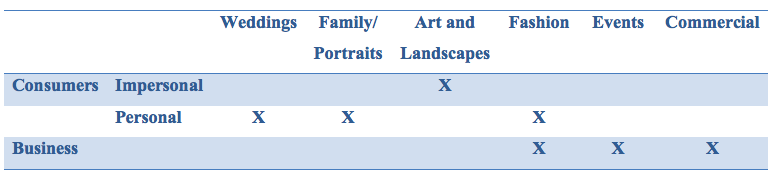
A characteristic of the photography industry is that the same process and expertise can be used to produce a variety of different products without requiring additional resource investment. As a result, The Picture Rooms can continue to provide a variety of products and services for customers.
“A segmentation basis is defined as a set of variables or characteristics used to assign potential customers to homogeneous groups” — Wedel & Kamakura, 2000
That said, the company does not have the resources to aggressively market all products to all segments, so it’s important to identify the most attractive segments to focus on.
Targeting
The personal consumer segment is attractive, with up to 20,000 weddings per year in Ireland. With an average price of a wedding photographer at €1,500 (a 30 million EUR industry), this segment is measurable and substantial.
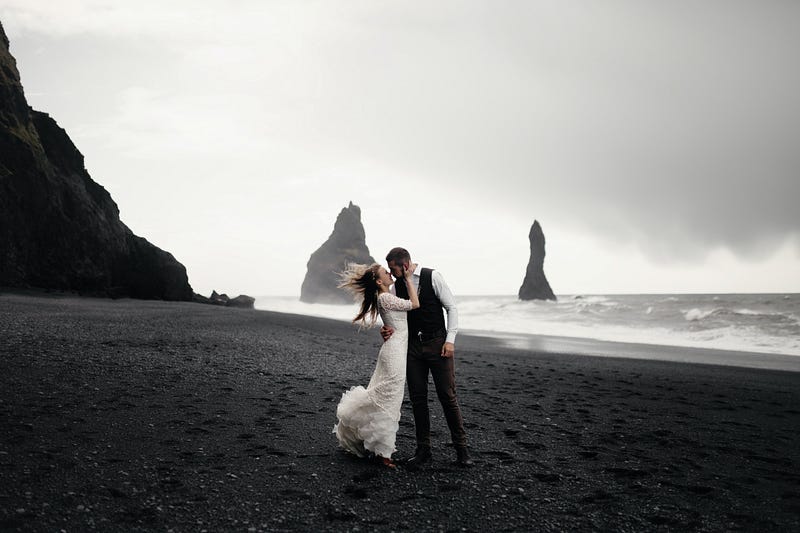
With an average of two children being born per couple, the segment also generates the opportunity to sell portraits. A recent survey by the wedding website mrandmrstobe found that having a photographer was the second-highest priority for couples, indicating sustainability.
Portraits are The Picture Room’s most lucrative product, returning an average of €350 per sale for two hours of work. Wedding customers, if they’re satisfied and the relationship is well managed, bring portrait sales opportunities through births, anniversaries, and other special occasions.
The segment can be broken down into two groups, based on the life stage:
- Unmarried couples
- Families
There are certain behavioral triggers within these life stages that cause the customer to seek the services of a photographer. For example, when a couple becomes engaged, it triggers a search for a wedding photographer, and the birth of a new child, a first anniversary, or another special occasion triggers the search for portrait photography.
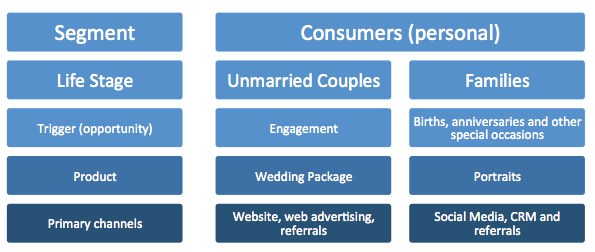
The mrandmrstobe survey indicated that the internet is the key resource for couples planning a wedding, followed by friends and family.
Wedding
Google trends indicate that “wedding photography” is the most-searched phrase related to photography in Ireland, effectively making it the most appealing of the segments.
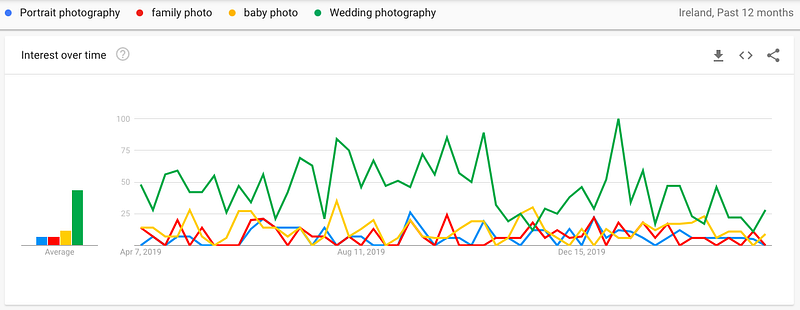
The segment is clearly accessible via the web, but currently, The Picture Rooms does not appear as a top result in Google searches relating to any of the segments it operates in.
Also, there is no dedicated wedding page on their website. Rather, all products are grouped together under Services. Nor are there any details of packages, prices, or even a sales phone number. This needs to be modified, with separate website sections for each segment, including a dedicated wedding section that positions the service correctly.
When a wedding customer is acquired, they can be targeted for portrait products by customer relationship management and by monitoring these triggers through social media.
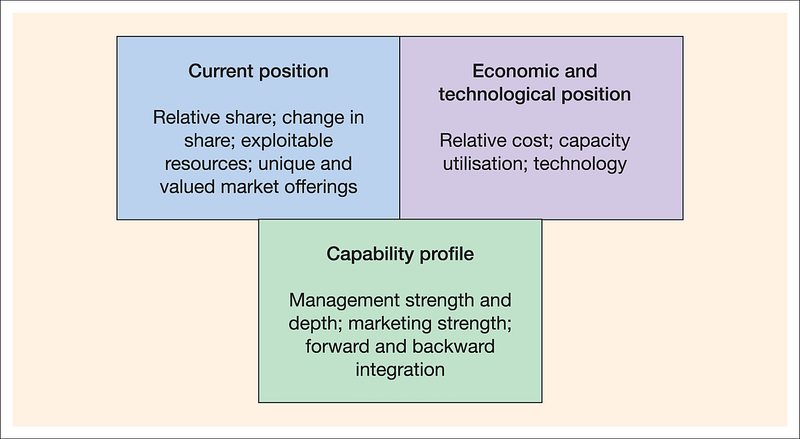
The Picture Rooms can, in effect, reach out to customers with best wishes and offers when they have a birthday or anniversary approaching, or when they have just had a child.
Commercial
The commercial segment is also large and lucrative but is less accessible than the personal consumer segment. Commercial customers do not typically use the web to search for photographers and need to be reached out to through direct selling. This requires a lot of person-hours, which is currently a huge constraint for The Picture Rooms.
Consequently, I advised that they focus on more accessible segments until such time as the business grows to a level where both partners can dedicate to it full-time.
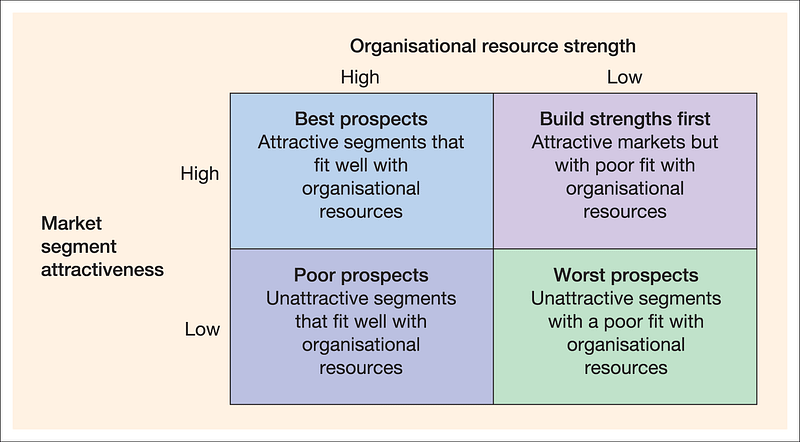
In the meantime, the company should maintain a peripheral interest in this segment by maintaining current customer relationships to ensure repeat business referrals, and by taking any organic opportunities that present.
Groups like The Chamber of Commerce and Temple Bar Traders Association should be used to attain projects without tying up resources.
Art and landscapes
Consumers purchasing art and landscapes differ from the other segments, in that they are essentially purchasing a product with much less emphasis on the personal service than there is with the other segments.
Analysis of Google trends does not indicate a huge demand for this type of product internationally, and so far, sales from the shop itself have not been sufficient to sustain the business, indicating that this is not an attractive segment.
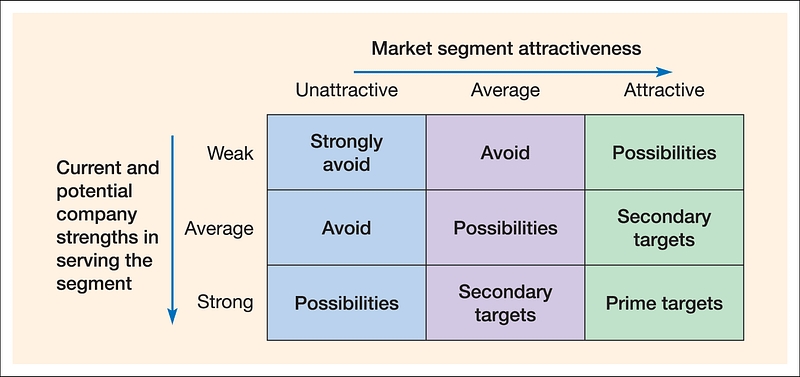
The Picture Rooms should remain in this segment, as it consumes minimal resources and they are strong here, as this is the background of the company. The gallery itself and location provide the potential for exhibitions and showcases, which can be used to establish the brand's artistic pedigree. This will be important to the positioning strategy.
Fashion
The Picture Rooms is currently available for fashion shoots, although they have not been charging for this service, in order to gain exposure.
They offer the advantage of make-up and retouching services, so they can capture a slice of this work by offering a competitively priced package. These customers can be reached through advertising on sites like Model Mayhem or through modeling courses.
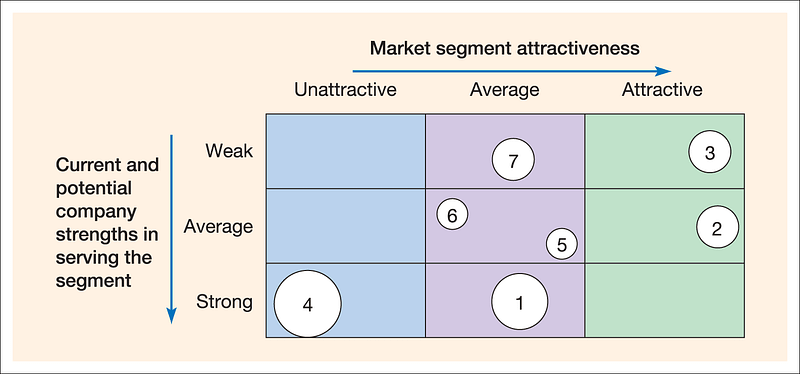
Unattractive segments
Photography classes and emerging trends, such as boudoir photography, should be avoided, as neither is a particularly attractive niche and are better served by better-equipped competitors — in the latter case, by specialized female photographers with more private facilities.
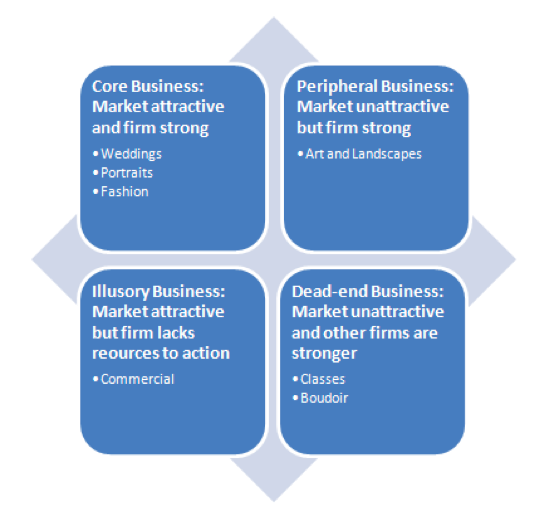
Referrals are important in all segments and should be positively encouraged and requested from customers. A referral reward program should be considered. For example, a discount on a landscape print for every wedding or portrait session referred could be offered.
Positioning
Here are some factors to consider when evaluating market positioning:
- Positioning in relation to a competitor
- Positioning by product/service attribute
- Positioning by price and quality
- Positioning in relation to product use
- Positioning in relation to a target market
- Positioning in relation to a product/service class
Photography market
The Irish photography industry operates in a close-to-perfect competition environment. By that, I mean that there are a large number of small competitors but no clear market leaders.
Most competitors offer the same type of products and services. However, perfect competition has not led to downwards price pressure, with competitors differentiating on brand, style, and the process involved. This underlines the importance of a strong positioning strategy.
There are several different styles of wedding photography including, but not limited to, traditional (formal), photojournalistic (natural), artistic, and fashion.
Competition
Most competitors, taken from a sample of city center photographers, are positioned as natural-style wedding photographers, with many others broadly positioned to cover all styles.
All competitors stress friendliness and flexibility of staff, indicating that this is merely an expected benefit, a pre-requisite to compete, not a competitive advantage.
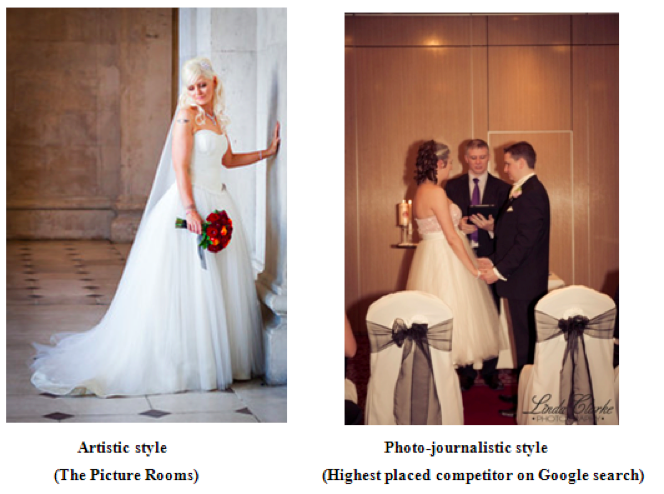
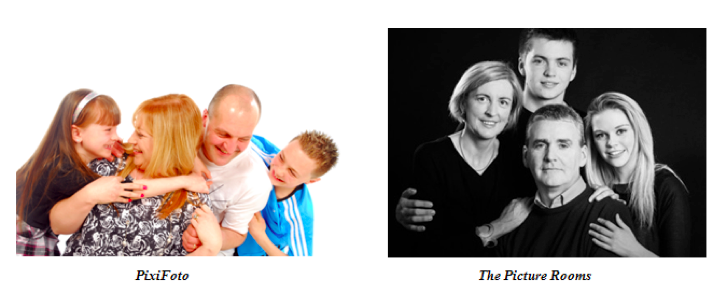
There is an opportunity for The Picture Rooms to use their pedigree to position the brand as the artistic photography specialists in all segments, servicing customers who want their finished product presented artistically. See the images below as an example of the different approaches:
PixiFoto, an established player, has made a huge impact on the market for portraits by offering standardized, convenient products through Mothercare outlets, maximizing the value of place in the marketing mix. PixiFoto has had a positive impact on the segment by attaining customers who would not have traditionally sought these services.
The Picture Rooms can benefit from this by positioning as an artistic and sympathetic style that is different from the standardized style of PixiFoto.
The gallery itself, located in Temple Bar (a center for the arts in Dublin and the firms associated with art), provides a core resource that is difficult to imitate and the basis for the creation of a defensible niche.
As such, the premises should become a showcase for the firm’s product and services, an art gallery-style setting exploiting the place and physical evidence of the marketing mix as their competitive advantage.
The website must also promote the gallery itself, as well as the products and services provided.
Branding
The brand identity of The Picture Rooms is linked to its primary origins as a gallery for showcasing artistic landscape photography. This gives the business a strong market position in fashion, commercial, and artistic segments. But this brand identity is problematic for family portraits and weddings, where customers are unlikely to associate these services with what they perceive as an art gallery.
“You should limit your brand. That’s the essence of branding. Your brand has to stand for something both simple and narrow in the mind.” — Al Ries
However, as mentioned in positioning, the brand’s association with art can be a powerful competitive resource that provides a key source of differentiation.
Brand equity
The brand can be deployed across all segments to demonstrate the artistic pedigree and appeal to customers who value artistic photographic style.
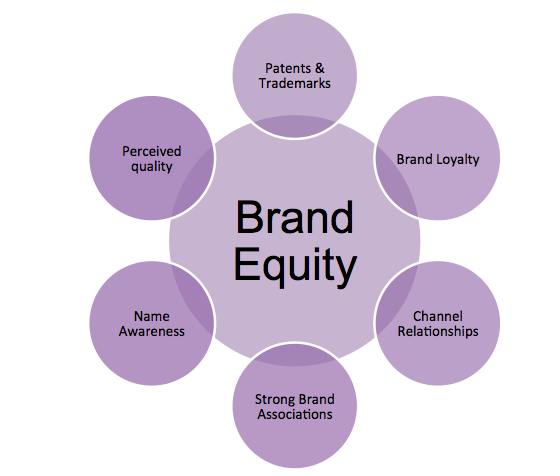
The challenge is to retain this key brand value and, at the same time, position the brand so that it conveys all products and services offered.
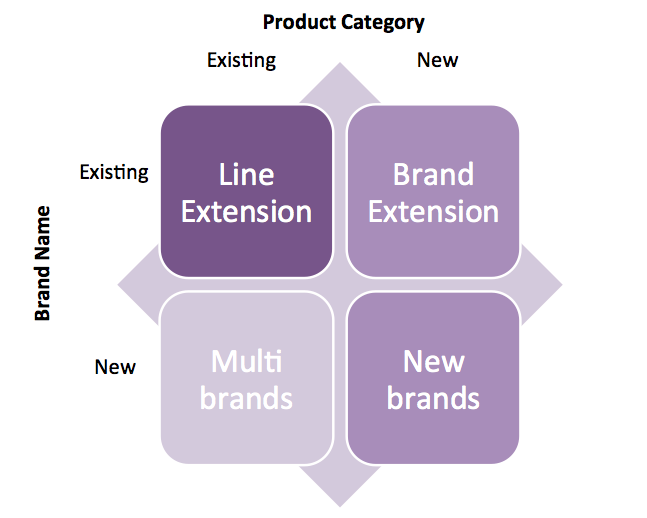
Brand extension
One method of executing this is to use “by The Picture Rooms” for sub-brands, for example, “Weddings by The Picture Rooms” or “Fashion by The Picture Rooms.” This would maintain the power of the brand while tying it to the products and services offered.
The critical factor here is to maintain the artistic brand image/equity without alienating consumers of specific products or services.
“A brand is an identity…the language of business” — Haig, 2007
The Picture Rooms brand does, however, incorporate a number of touchpoints. To appreciate the existing brand, it is worth exploring some elements in order to clearly define this dimension of the business.
Logo
Any company logo is its unique identification, its signature. The Picture Rooms is no different. Their logo is quite striking at first glance. White writing on a circular mauve colored background stands out.
Also, the color selection and text is timeless, in that it does not represent a specific generation or era yet maintains a retro undertone. Powerful logos such as Coca-Cola, Apple, Levi’s, and Ikea also capture this trait characteristic.
As mentioned above, logo extensions like “Weddings by…” or “Fashion by…” can strengthen brand extension and recognition, and are worth further investigation by Aidan and Martin.
Brand visualization
Images don’t just enhance the content; images are content, and people love them.
The Picture Rooms embraces visual content to tell and sell their story. Continuous improvement in telling their own story by blogging and store (gallery) images on their website or affiliates is an untapped resource.
Brand experience
A shift towards brand storytelling and experiences has emerged in recent years. Emotionally driven ads from leading companies are proof of this. Every brand should invest in brand experiences, both in-person and online. By not doing this, you’re behind the ball.
“Brand loyalty can be divided into behavioral-loyalty, emotional-loyalty, cognitive-loyalty, and intentional-loyalty” — Yang and Wang, 2010
Emotional-loyalty brand drive and creation is a natural fit for The Picture Rooms philosophy and should be exploited.
Also, The Picture Rooms is a creative organization but does not showcase this effectively on the web, in terms of search results. A focus on actionable metrics and initiatives will be a step in the right direction.
Brand behavior
By collecting and using brand data, The Picture Rooms can leverage behavioral targeting to increase ROI for digital marketing campaigns. Implementing a plan to capture this data is a must for The Picture Rooms.
The objectives for The Picture Rooms brand sustainability must:
- Deliver a clear message
- Confirm credibility
- Motivate the buyer
- Emotionally connect with target prospects
- Solidify consumer loyalty
Understanding the needs and wants of customers is the cornerstone of branding. This is done by integrating brand strategies at each stage of the consumer experience.
Ideally, a brand must reside within the hearts and minds of the consumer.
A brand is the sum total of customer experience and perception, most of which can be influenced. It’s important that The Picture Rooms spend time in researching, defining, and building their brand day by day. That’s the foundation of marketing communication.
Stakeholder Analysis
The main stakeholders in The Picture Rooms studio are the two owners, the customers, and the employees. Other types of stakeholders like suppliers, creditors, and distributors do not have much impact on any aspect of the business. Competition is healthy, with no market giants to directly impact sales.
Loyalty
Customer loyalty can be achieved through fair price, quality, and creative products on a more personal level, like weddings or family portraits.
Honest communication with transparency and without exaggerating facts is fundamental to create a long term loyalty. Friendly employees and interpersonal relations can have a far-reaching effect. You can read more about loyalty in the article “Nando’s Case Study: A Restaurant With Excellent Execution of Basic Marketing Principles.”
When a customer is unhappy, it can impact a company that’s trying to achieve a name in the local community. Nobody wants a negative reputation. The local community is equally important and should not be treated as a separate stakeholder group. For the community, businesses can be seen as citizens with ethical contributions.
The company should follow ethical practices, as well as contributing to local community events or helping charitable organizations in the area.
Word of mouth
Through the local community, benefits like word-of-mouth marketing, where satisfied customers tell their friends how happy they were with the service, should be exploited. Word-of-mouth marketing is considered one of the most credible forms of advertising and can be very useful with more personal services, like weddings or family portraits, in small enterprises like The Picture Room.
People who promote a company with nothing to gain are perceived as genuine.
Opportunities for creating business-to-business core customers should be exploited in commercial photography. Partnership with corporations will create a substantial income for the company.
Economic conditions like consumer income, consumer confidence, and the general state of the economy can have an impact on sales, highlighting the need for a quality product and service.
Final Thoughts
The nature of photography means that The Picture Rooms can continue to offer multiple products/services without diluting their resource pool. However, due to limited resources (i.e., boots on the ground), the company must focus on pursuing the most attractive and actionable segments.
Below is a recap of the recommendations reported to the business owners.
Recommendations
Co-founder Aidan Beatty indicated that The Picture Rooms needs additional revenue of €100 K for both partners to work full-time. This can be realized by selling one wedding package and two portraits per week (€109 K).
Therefore, the marketing strategy should target wedding and portrait market segments as both are attractive and accessible.
Digital upsell
The web is a great channel to target best-fit segments, with weddings being particularly sellable through websites and internet searches.
A relationship with wedding customers should be maintained post-sale through social media and email. Monitoring audience life triggers, such as births and anniversaries, and reaching out with the right promotion to convert will lead to future sales.

Also, an online store where consumers can buy physical products, like picture frames and ancillary items, opens up a whole new revenue stream.
B2B sales
The commercial segment may be lucrative, but it's not as accessible without a direct sales resource. But a peripheral presence should be maintained with potential repeat business from existing clients and referrals.
With time constraints in mind, business groups should be used to find work. When the business grows to a level where both partners can commit full-time, the attractiveness of this segment should be reassessed.
Smaller segments, where competitors are better placed (e.g., boudoir photography or classes) should be avoided.
The art and landscape segment is less attractive, but a peripheral presence can be maintained, as the firm is strong in this area. Also, there is little cost to maintain the brand's artistic pedigree — a key differentiator.
Business process
- Introduce a standardized consultation process for clients, prior to commencement. This will allow the client ample time to convey their expectations while improving rapport between both parties.
- Also, a standardized consultation process will capture data for future analysis, such as a database of customer insights for future business development.
- Existing and potential customers should be targeted through outbound marketing campaigns.
Segmentation, targeting, and positioning
- Focus on the development of wedding photography. Wedding customers can provide future sales opportunities.
- The Picture Rooms offers the advantage of make-up and retouching services and can capture a piece of this business by offering a bundle package, advertised on sites like Model Mayhem or those of modeling courses.
- There is an opportunity for The Picture Rooms to use its pedigree to position the brand as the artistic photography leader in key segments.

- The Picture Rooms can benefit by positioning as an artistic-style studio that is different from the standardized fast-food-style output of PixiFot.
- Smaller segments, where competitors are better placed (e.g., boudoir photography or classes), should be avoided.
- The Picture Rooms can differentiate the brand from online competitors through geo-targeting, focusing on Dublin and Ireland.
- The art-and-landscapes segment is less attractive, but a peripheral presence can be maintained here, as the firm is strong in this area.
Branding
- The company's commercial website must be redeveloped.
- There is currently no wedding section on the website. This should be rectified as soon as possible.
- The website should promote the gallery as well as products and services.
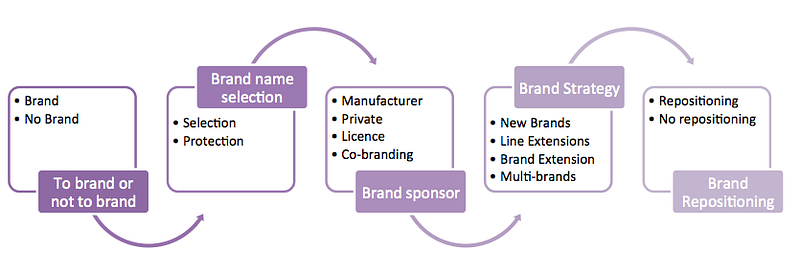
- Introduce brand extensions through sub-brands to highlight all service offerings, e.g., “Weddings by The Picture Rooms” or “Fashion by The Picture Rooms,” to convey brand agility.
- The gallery location offers the potential to host exhibitions and showcases, which can be used to further the brand's artistic pedigree.
- Introduce a customer referral/reward program.
- Create a contingency plan to protect brand reputation online.
- Create an effective method to increase the digital footprint, via multiple channels beyond owned assets.
- The brand must be adaptable to the ever-changing social media aspects of the web and look outside its market for future trends.
- Develop a plan to capture and store digital traffic data.
- Focus on actionable metrics and initiatives online.
- Use brand marketing (and positioning) to influence social corporate responsibility, while maintaining strategic priority.
In light of recent global events, it’s vital for every business to operate an omnichannel market approach so that when one channel suffers, another can shine. Taking the lead to ensure survival — this is business agility.
“The best way to predict the future is to invent it.” — Alan Kay


