
Psychology
Susceptibility to “Fake News” Linked to Lower Emotional Intelligence
Higher EQ associated with a greater ability to see through emotionally charged content of fabricated news stories.
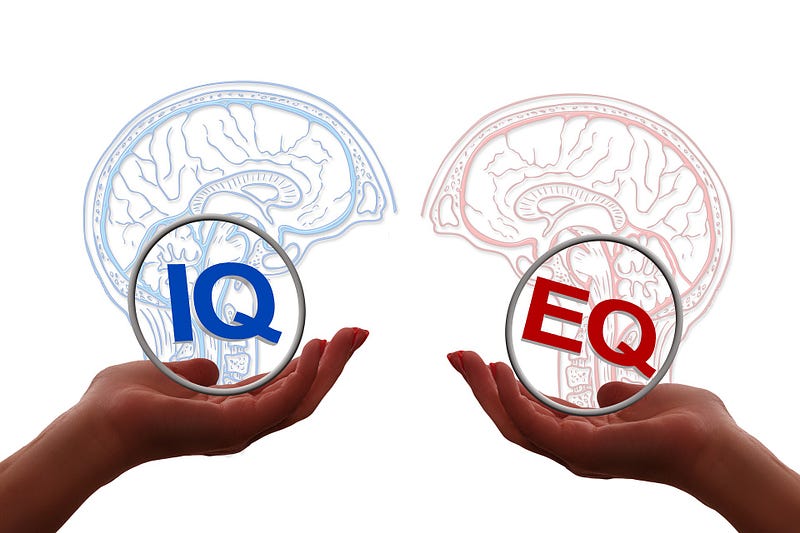
A recent study in PLOS ONE by researchers at the University of Strathclyde reports that individuals with high levels of emotional intelligence are less likely to be susceptible to “fake news.”
The researchers asked subjects to read a series of news items on social media and determine whether they were real or fictitious, along with a brief description of the reasons behind their answers. Subjects also completed an emotional intelligence test to determine their emotional quotient, or EQ.
The real and fabricated news stories were about issues that included health, the environment, wealth inequality, and crime. Fabricated items mimicked features of fake news such as a lack of attributed sources, scant information, and the use of emotive language.
On average, subjects were more likely than not to distinguish real news content from fake. In addition, those who correctly identified news stories as true or false were most likely to score highly on the EQ tests. They were also more likely to have attained a higher level of education.
For subjects who incorrectly identified the fake news items as trustworthy and credible, four themes emerged in their reasons: 1) the item apparently corroborated their personal experience; 2) the inclusion of data and graphs; 3) the item was bringing to light an important but previously “suppressed” problem; and 4) the point being made fit their existing beliefs. Examples of such comments were: “The commenter on the post has the same thoughts as me”; “I have personal experience of this”; or “My kids are in this position so I completely get this.”
For those participants who correctly identified false news items, six themes emerge: 1) obvious use of overly emotive language; 2) lack of supporting data or facts; 3) concern over the unofficial nature of the news source; 4) unprofessional “opinionated” tone used by the author; 5) graphs and visuals that looked unprofessional; and 6) the content contradicted their own understanding of current facts and science. Examples of such comments were: “Fearmongering article with no data”; “The source is not a an official scientific or governmental source”; or “Comes across as more of a rant.”
The researchers noted that although they used subjects’ ability to detect fake news as a proxy for critical thinking aptitude, because a direct measure of critical reasoning was not included it is not possible to definitively conclude that high-EQ individuals were necessarily better critical thinkers. For example, low-EQ individuals could perform just as well on non-emotion based tests. Accordingly, the researchers plan to conduct a follow-up study that will also include an assessment of critical analysis skills.
“Fake news on social media is now a matter of considerable public and governmental concern,” said Dr. Tony Anderson, Senior Teaching Fellow in Psychology at Strathclyde and a partner in the research. “Research on dealing with this issue is still in its infancy but recent studies have started to focus on the psychological factors which might make some individuals less susceptible to fake news.”
Dr. Anderson continued, “Previous research has shown that people can be trained to enhance their own EQ levels. This should help them to discern with a greater degree of accuracy which news is reliable and which is misleading.”
More like this: