
COVID-19 | Vaccines | Psychology
These 12 Strategies May Be the Key to Overcoming Resistance to COVID-19 Vaccination
A new paper in the New England Journal of Medicine offers concrete strategies to maximize vaccine-promotion efforts along with key actions authorities can take.

The proportion of the U.S. population saying that they definitely or probably will not get vaccinated for COVID-19 has fluctuated from a low of 27% in May to a high of 49% in September, splitting the difference at 39% in November. Although about half of those individuals indicated that they might change their mind once others started to receive a vaccine and there is more information, 21% of U.S. adults absolutely did not intend to get vaccinated and were “pretty certain” more information would not change their mind.
Against this backdrop, researchers from North Carolina State University and Stanford University published a paper January 6th in the New England Journal of Medicine offering strategies drawn from behavioral economics and consumer research to create the most effective vaccine-promotion programs.
The researchers note that any successful program will be multifaceted and that not all strategies are equally actionable for all health agents. However, by combining relevant strategies across different players and prioritizing tactics according to targeted populations’ degree of vaccine hesitancy, the following elements can be used to optimize a national strategy that is reinforced by local public health officials and individual clinicians.
Segment the Public by Identity Barriers
There is a tendency for medical professionals to segment patients by socioeconomic or demographic criteria. However, opposition to COVID-19 mitigation efforts and vaccination has become most strongly associated with personal identity, particularly political identity.

There is a danger in labeling vaccine-hesitant people as “conservative” or “Covid-hoaxers.” This can reinforce the perception that vaccination is a political issue pushed by liberals and heighten skepticism. Such labeling also risks marginalizing people who are vaccine-hesitant for other identity-related reasons (e.g., distrust of medical research by some people of color), and sends a message that their concerns are not being heard or respected.
The researchers draw an example from elderly Republicans, some of whom, “are quietly worried by their party’s failure to take the pandemic seriously, but are afraid to rock the boat,” vs. others who, “are defiant in their assertion of fearlessness.” A common message for both groups will not work — emphasizing the danger of the virus will scare one group and strengthen the other’s defiance.
Different messages should be crafted with an eye toward these divisions based on self-identity, in-groups, or social beliefs. Using the example described above, “campaigns could address the first group’s fear of social censure and promote the idea that the best good works are done quietly, known only to oneself.” For the second group, campaigns could assure them, “that their legacy of rebellion should include dying on some fearless adventure, not alone, locked in tubes, wheezing through a plastic straw.”
Identify a Common Enemy
Nothing brings two people who hate each other together more than a third person who each of them hate even more.

Making the virus into a common enemy, however, will only work if both groups see it as real and dangerous. Some groups are still resistant to information about the virus, viewing the threat as inflated or a hoax. Accordingly, “common enemies may be downstream effects: we can focus on ‘battling’ poverty by getting people back to work or on ‘racing’ other countries to return to normal.”
Use Analogies
Complex medical and statistical information needs to be conveyed in a way that is accessible and understandable. For example, instead of trying to explain how a vaccine cannot guarantee that someone will not get COVID-19, “an analogy to some extremely rare event may help: we can say, ‘The likelihood is about the same as being killed in a car crash,’” rather than simply saying “there are no guarantees.”
Other examples include referring to “the war against COVID” to evoke thoughts and feelings of “coming together, making sacrifices, doing tough things, and emerging on the other side with new improvements and inventions in hand.” Or explaining that mRNA vaccines are not weak doses of the virus, but instead are “instruction manuals” that teach the immune system how to defend itself.
Increase Observability
Rogers’ concept of observability suggests that consumers’ ability to observe others’ choices increase an innovation’s rate of adoption. Take the Apple iPod — it wasn’t the only MP3 player on the market but it became one of the most successful product launches in history in part because its white earbuds were distinctive and turned wearers into walking advertisements.
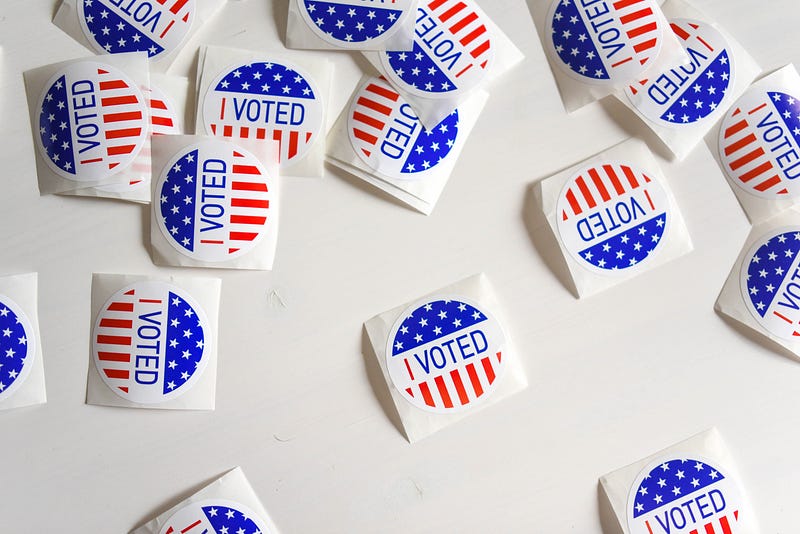
Making vaccination status more observable can draw on this effect. For example, “wearable tokens, such as Livestrong-style bracelets or stickers or pins similar to those given to voters.” In virtual environments, digital badges “such as frames or banners for one’s social media profile photo” could be effective and easy to create. Targeting specific populations could heighten their impact (e.g., “Frontline Healthcare Hero — I’m Vaccinated!” or “Proud Veteran — I’m Vaccinated!”)
Leverage Natural Scarcity
Scarcity often signals exclusivity in consumer markets and prompts greater desirability or interest. In early stages, vaccines will be in limited supply, causing a natural scarcity that can be leveraged for persuasive effect. Hesitancy to “go first” or feel like a “guinea pig” can be counteracted by framing early access as a badge of honor or respect bestowed on those we most want to protect (e.g., medical staff, the elderly, first responders, schoolteachers, or essential workers.)
Predict and Address Negative Attributions
When confronted with something unexpected or troublesome, people have a natural tendency to develop their own explanations for why it happened. For example, “if a product launch occurs later than initially announced, people might attribute the delay to a problem with the product (even if the delay was caused by bad weather slowing a shipment).”
Effective promotion will involve harnessing the power of positive attributions while predicting negative attributions and combating misinformation before it is amplified and spread like wildfire on social media. Take, for example, a program with the laudable goal of providing preferred vaccine access to historically disadvantaged neighborhoods so that those who can least afford a setback get early protection. A possible negative attribution may be that individuals in these neighborhoods are being treated as “lab rats” to test the vaccine’s safety before it’s given to wealthier people.

Anticipating and combating negative attributions “requires listening openly to the vaccine-hesitant, building trust, and addressing false attributions directly and consistently.” Working with social media platforms to limit dissemination of false information is also critical.
Prompt Anticipated Regret
Emotions are powerful motivators, and can even drive decisions before they are felt. In particular, the anticipation of regret has been shown to drive behavior. In this context, vaccination “can prevent a specific anticipated regret: the fear that someone we love will die from the illness.” Fear of losing loved ones may provide an especially powerful persuasive tool.

Avoid Conveying Piecemeal Risk Information
Scientists and health care professionals understand that research on novel viruses and vaccines results in evolving knowledge and recommendations over time. Unfortunately, research suggests that piecemeal release of risk information is particularly dangerous for public acceptance of pharmaceutical innovations.
When risk information is presented piecemeal over time, people become more sensitive to the risk of side effects and significantly less likely to try a new drug as opposed to when a single news source presents a final risk assessment. Without covering up negative news regarding the efficacy and safety of COVID-19 vaccines, where possible vaccine news should be presented in total instead of reporting on incremental updates.
Promote Compromise Options
When it comes to medical treatment, patients are often presented with an either-or decision: get the treatment or not. However, when given a choice, people tend to choose a middle-of-the-road option over options at either end of a continuum.
By framing vaccination decisions as more than a binary choice, people may be nudged toward that a compromise choice and feel increased confidence about making that choice. For example, “we could allow people to get the shot now, sign up for a later date, or not get it at all. Or all three options could include the vaccine (get the shot now and donate plasma, just get the shot now, or get the shot later).” The idea is to avoid making vaccination the most extreme action among a range of choices.

Create FOMO (Fear of Missing Out) Motivations
FOMO is the anxiety that others might be having fun somewhere while you’re not. While vaccination isn’t generally a fun experience, it may be possible to create desirable rewards associated with getting vaccinated that play on the feeling of missing out.
For example, employers could offer a day off to reward an employee who gets vaccinated as a “contribution to a safe workplace.” A public messaging campaign could portray “families staggering their vaccinations so one ‘vaccine hero’ at a time can stay on the sofa and be coddled with snacks and movies” as they get over the side effects of the vaccine. Universities could “offer students and staff tickets to future sports or cultural events.” Insurance rebates and tax benefits could also be considered to provide financial incentives for vaccination.
Combat Uniqueness Neglect
Recent research into the use of medical artificial intelligence (AI) for diagnosing patients has identified a phenomenon known as “uniqueness neglect.” This is the concern that AI will not be able to deal with a person’s idiosyncratic characteristics and circumstances, resulting in an avoidance and suspicion of AI medicine.
To the extent that this phenomenon may also apply to individuals’ perception of a vaccine as a one-size-fits-all option, some may opt out on the basis that they have unique concerns such as being more prone or sensitive to side effects. Developing some variations in vaccine delivery, such as offering topical numbing of the injection site for sensitive patients, could address such considerations.

Neutralize the Base Rate Fallacy
Scientists and medical providers are trained to trust facts and statistics over anecdotal evidence. However, most individuals give less weight to statistical evidence compared to anecdotes (stories) when judging probability. This effect is known as the “base rate fallacy.”
When responding to concerns from vaccine-hesitant patients based on stories they’ve heard through family or social media, clinicians should counter with their own stories instead of statistical explanations about the rarity of certain outcomes. Vaccine communications teams should proactively spread real success stories , such as “a Georgia family going out for ice cream after being vaccinated” or “Indiana retirees joyfully visiting neighbors 10 days after receiving the vaccine.” Although seemingly trite, such stories “can help counteract the shock value of a few bad-effect stories.”
Key Actions for Health Care Players
The researchers also provide a list of key actions to be taken by players in various health care roles, such as local clinicians and practices, hospital management, insurance management, state and county health agencies, federal agencies, and advocacy groups.
For the full list of key actions, see Figure 2 of the paper, which is published open access in the New England Journal of Medicine.


