avatarRuben Bouma

Free AI web copilot to create summaries, insights and extended knowledge, download it at here

5620

Abstract

107 controls were EBV-negative. All but one of these 35 EBV-negative MS cases became infected with EBV during the follow-up, and all seroconverted before the onset of MS.</p><ul><li>The median time from the first EBV-positive sample to MS onset was 5 years</li><li>The median time from estimated EBV seroconversion, defined as the midpoint between the last seronegative sample and the first seropositive sample, to MS onset was 7.5 years.</li><li>The high seroconversion rate among individuals who developed MS during follow-up (97%) contrasts with the 57% rate of seroconversion observed among individuals who did not develop MS (<b>Fig. 2A</b>).</li></ul><p id="0c95">The latter percentage is consistent with previous <a href="https://academic.oup.com/cid/article/43/3/276/332089">reports</a> among EBV-negative young adults.</p><p id="d0f0">The hazard ratio — a measure of association widely used in prospective studies — for MS comparing EBV seroconversion vs. persistent EBV seronegativity was 32.4 (<b>Fig. 2C</b>).</p><figure id="4924"><img src="https://cdn-images-1.readmedium.com/v2/resize:fit:800/1*KiYaEEgk8NgKjUIYzM0QtA.jpeg"><figcaption><b>Fig. 2.</b> EBV infection precedes MS onset and is associated with markedly higher disease risk. From <a href="https://www.science.org/doi/10.1126/science.abj8222">Bjornevik et al., (2022)</a>.</figcaption></figure><p id="6d7b">To assess the possibility that environmental, behavioral, or personal characteristics may correlate with a predisposition to both infection and MS, the researchers measured antibodies against <a href="https://www.sciencedirect.com/topics/agricultural-and-biological-sciences/cytomegalovirus">cytomegalovirus</a> (CMV), a herpesvirus that, like EBV, is transmitted through the saliva.</p><blockquote id="52c3"><p>“CMV displays socioeconomic and racial/ethnic disparities in age at infection in the <a href="https://www.cambridge.org/core/journals/epidemiology-and-infection/article/socioeconomic-disparities-in-the-seroprevalence-of-cytomegalovirus-infection-in-the-us-population-nhanes-iii/99162F183817EC4A39D076A2A6C5D230">US population</a> similar to those of <a href="https://academic.oup.com/jid/article/208/8/1286/2192838">EBV</a>, thus constituting an ideal <a href="https://journals.lww.com/epidem/Fulltext/2010/05000/Negative_Controls__A_Tool_for_Detecting.17.aspx">negative control</a>.”</p></blockquote><ul><li>Among those who were CMV-negative at baseline, seroconversion for CMV occurred at a similar rate in those who later developed MS and those who did not (<b>Fig. 2B</b>).</li><li>MS risk was lower among CMV-positive than among CMV-negative individuals (<b>Fig. 2D</b>).</li></ul><p id="8cf4">The latter finding is consistent with a previous <a href="https://onlinelibrary.wiley.com/doi/10.1111/ene.14961">report</a> suggesting that the immune response to CMV attenuates the adverse effects of EBV.</p><p id="532a">To further elucidate the temporal relation between EBV infection and MS, the researchers measured serum concentrations of <a href="https://www.nature.com/articles/s41582-018-0058-z">neurofilament light chain</a> (sNFL), a sensitive, albeit not disease-specific, biomarker of ongoing neuroaxonal degeneration, in the samples from those who were EBV-negative at baseline.</p><p id="16a2">sNFL levels increase as early as 6 years before clinical MS onset and maybe a <a href="https://jamanetwork.com/journals/jamaneurology/fullarticle/2749888">more accurate biomarker</a> of the time of initiation of the disease process.</p><p id="cd53">The study results revealed:</p><ul><li>sNfL levels in individuals who were EBV-negative at baseline and went on to develop MS were similar to those of non-MS controls before and around the time of EBV infection but increased after EBV infection (<b>Fig. 3, A to C</b>).</li></ul><blockquote id="2402"><p>“Thus, there were no signs of neuroaxonal degeneration before EBV seroconversion in individuals who later developed MS, indicating that EBV infection preceded not only symptom onset but also the time of the first detectable pathological mechanisms underlying MS.”</p></blockquote><figure id="c73a"><img src="https://cdn-images-1.readmedium.com/v2/resize:fit:800/1*qakM5aoTB4PKoWbOgxM4gw.jpeg"><figcaption>Fig. 3. EBV infection precedes elevation of sNFL before the onset of MS. From <a href="https://www.science.org/doi/10.1126/science.abj8222">Bjornevik et al., (2022)</a>.</figcaption></figure><p id="1d6b">Additionally, the researchers randomly selected 30 MS cases and 30 matched controls with serum samples to further explore whether immune dysregulation during the preclinical phase could increase susceptibility to viral infections more generally.</p><p id="3c29">Serum samples were collected shortly before (median: 1 year, range: 0 to 3) and soon after symptom onset (median: 1 year, range: 0 to 2).</p><p id="174e">Then, a comprehensive agnostic search of the antivirome antibody response was conducted using VirScan — which enables comprehensive unbiased detection of antibodies raised against all linear peptides encoded in the genomes of viruses known to infect humans.</p><ul><li>The overall antibody response to viral peptides was similar in cases and controls at both time points, except for EBV (<b>Fig. 4, A to D</b>).</li></ul><p id="1137">Suggesting that the preclinical and early clinical phases in MS are not associated with immune dysregulation affecting general susceptibility to infections.</p><p id="1040">Moreover, using a <i>Z</i> score of > 3.5 as a cutoff for identifying the presence of a peptide-specific antibody:</p><ul><li>the n

Options

umber of antibody-recognized EBV peptides with a nominally significant difference between MS cases and controls clearly stood out, both in the pre-onset (<b>Fig. 4, E and G</b>) and post-onset (<b>Fig. 4, F and H</b>) samples.</li></ul><p id="5211">This supports the specificity of the association between EBV and MS and argues against a second hit from another virus playing a major role in MS etiology.</p><figure id="5bb3"><img src="https://cdn-images-1.readmedium.com/v2/resize:fit:800/1*zn3ERFfia8oFjKLycQLxbg.jpeg"><figcaption>Fig. 4. Antibodies against EBV peptides in MS cases were detected using virome-wide screening. From <a href="https://www.science.org/doi/10.1126/science.abj8222">Bjornevik et al., (2022)</a>.</figcaption></figure><p id="91f5">A causal interpretation of the results requires ruling out the possibility that systematic differences between individuals who were seroconverted and those who remained EBV-negative explain the results.</p><p id="fa2e">These differences can be grouped into two categories:</p><ul><li>confounding by known or unknown factors</li></ul><blockquote id="97fc"><p>“The existence of a still unknown factor that increases the risk of both EBV infection and MS by >60-fold [to explain the 32-fold increase in MS risk] is rather implausible and there are no good candidates, even hypothetical ones. This conclusion would be robust even in the very unlikely case that EBV seroconversion in one of the MS cases was a false-positive result, in which case EBV infection would confer a 16-fold increase in MS risk.”</p></blockquote><ul><li>reverse causation</li></ul><blockquote id="2f48"><p>“In our agnostic search of the entire human virome during the preclinical phase of MS, we did not find other systematic differences in the antibody response to any pathogen except EBV that was related to previous infections in MS cases and controls, which makes it unlikely that immune dysregulation during this phase increases susceptibility to infections.”</p></blockquote><h2 id="7778">Conclusion</h2><p id="a5dd">These findings provide compelling data that implicate the Epstein-Barr virus as the trigger for the development of MS. Now that the initial trigger for multiple sclerosis has been identified, perhaps MS could be eradicated.</p><p id="0d0e">To date, there is currently no vaccine against EBV, however, several groups are trying to develop one. On 5 January, <a href="https://investors.modernatx.com/news/news-details/2022/Moderna-Announces-First-Participant-Dosed-in-Phase-1-Study-of-its-mRNA-Epstein-Barr-Virus-EBV-Vaccine/default.aspx">Moderna</a> announced that it had begun testing a candidate mRNA vaccine in people.</p><p id="1f35">Findings ways of targeting the virus directly could also improve treatments. <a href="https://pubmed.ncbi.nlm.nih.gov/30429369/">One small trial</a> has already shown that training immune cells called T cells to target EBV improved symptoms.</p><p id="1aba">What remains unclear is why so few of those infected with the virus develop MS — less than one in 10,000 in the recruits. This suggests there must be one or more additional factors required to trigger MS.</p><p id="4e0d">Kjetil Bjornevik, a research scientist at Harvard and the study’s lead author concluded:</p><blockquote id="ba4b"><p>“Our data strongly suggest Epstein-Barr virus is the leading cause of multiple sclerosis. It was a really dramatic increase in risk that would be very hard to explain any other way.”</p></blockquote><p id="8d29">Thank you for your interest in science! Feel free to put questions, comments, and suggestions for future articles in the comment section.</p><p id="178d"><b>If you want to support:</b></p><ul><li>If you are not a <b>Medium</b> member yet, you can use <a href="https://r-bouma98.medium.com/membership"><b>my referral link</b></a><b> </b>so I can get a part of your fees from <b>Medium</b>, you don’t pay any extra.</li><li>Subscribe to <a href="https://r-bouma98.medium.com/subscribe"><b>my Newsletter</b></a><b> </b>to get the best tutorials, research, education, and scientific-based tools for everyday life directly in your email inbox.</li></ul><p id="6d49">While you’re here, check out one of my other articles.</p><div id="a33a" class="link-block"> <a href="https://readmedium.com/study-finds-cannabis-compounds-prevent-infection-by-covid-19-virus-1dad8f1ac130"> <div> <div> <h2>Study Finds Cannabis Compounds Prevent Infection By Covid-19 Virus</h2> <div><h3>But I have some bad news for marijuana enthusiasts</h3></div> <div><p>medium.com</p></div> </div> <div> <div style="background-image: url(https://miro.readmedium.com/v2/resize:fit:320/1*jA1BVSdxhOISDww3Z3Ijmw.jpeg)"></div> </div> </div> </a> </div><div id="df32" class="link-block"> <a href="https://readmedium.com/dancing-molecules-reverses-paralysis-in-spinal-cord-injuries-5729ed9e738f"> <div> <div> <h2>“Dancing Molecules” Reverses Paralysis in Spinal Cord Injuries</h2> <div><h3>Researchers have developed a new injectable therapy that repairs tissue damage and reverses paralysis in mouse models.</h3></div> <div><p>medium.com</p></div> </div> <div> <div style="background-image: url(https://miro.readmedium.com/v2/resize:fit:320/0*7WK6259wAtoAdjyg.jpg)"></div> </div> </div> </a> </div></article></body>

Neuroscience News

Strong New Evidence Suggests a Virus Triggers Multiple Sclerosis

New research links Epstein-Barr Virus to Multiple Sclerosis

Photo by Marianne Bos on Unsplash

Multiple sclerosis (MS), a progressive disease that affects 2.8 million people worldwide and for which there is no definitive cure, is likely caused by infection with the Epstein-Barr virus (EBV), according to a new study led by Harvard researchers.

Their findings were published in Science on January 13, 2022.

Using data from more than 10 million USA military recruits monitored over a 20-year period, the researchers demonstrated that EBV infection precedes both the symptoms of MS and nervous system damage and that becoming infected significantly increases the risk for developing MS in susceptible individuals — people whose genetic background, lifestyle, and environment increases their risk for getting MS.

Dr. Bruce Bebo, Executive Vice President of Research for the National MS Society noted:

“This is an impressive study from a highly regarded research group that strengthens the scientific consensus that infection with Epstein-Barr virus is a trigger for MS. Development of Epstein-Barr virus vaccines is underway, and once one is proven safe and effective, it should be tested with haste in people at high risk for MS.”

The National MS Society invested in this study as part of its ongoing research commitment to ending MS.

Background

EBV is a human herpesvirus spreading primarily through contact with infected saliva. Moreover, EBV infects most children during early childhood and causes few, if any, symptoms.

In adolescence and adulthood, however, it can cause a disease that increases the risk of later developing MS — infectious mononucleosis. EBV stays in the body throughout a person’s lifetime and has been linked to certain autoimmune diseases and cancers.

There is currently no treatment that can eliminate the virus from an individual’s system.

MS is a chronic inflammatory disease of the central nervous system that attacks the myelin sheaths protecting neurons in the brain and spinal cord. The disease is thought to be caused by a combination of factors, including an individual’s genetic background, gender, environment, and lifestyle.

Researchers have been studying several viruses, with the Epstein-Barr virus showing the most evidence. However, researchers have not been able to identify a single virus as the trigger for MS because they must prove that:

  • The virus is in the body before MS develops
  • The virus causes the disease and is not just happening alongside the disease

Study design

The Harvard team used blood samples collected to test for HIV among more than 10 million active-duty United States military personnel between 1993 and 2013.

Looking for specific antibodies that signal past infection, they determined the EBV status at the time the first sample was taken, and then followed additional samples to determine the link between EBV infection and MS onset during the period of active duty.

Of the 955 documented incident MS cases among active-duty military personnel, there were

  • 801 MS cases; and
  • 1566 controls with samples available to assess EBV infection status included in the study.

“Cases were matched to two randomly selected individuals without MS of the same age, sex, race/ethnicity, branch of military service, and dates of collection of blood samples who were on active military duty when the case was diagnosed (Fig. 1A).”

  • Most of the individuals were <20 years of age at the time of their first blood collection (Fig. 1B);
  • those who developed MS had symptom onset a median of 10 years after the time of the first sample (Fig. 1C).
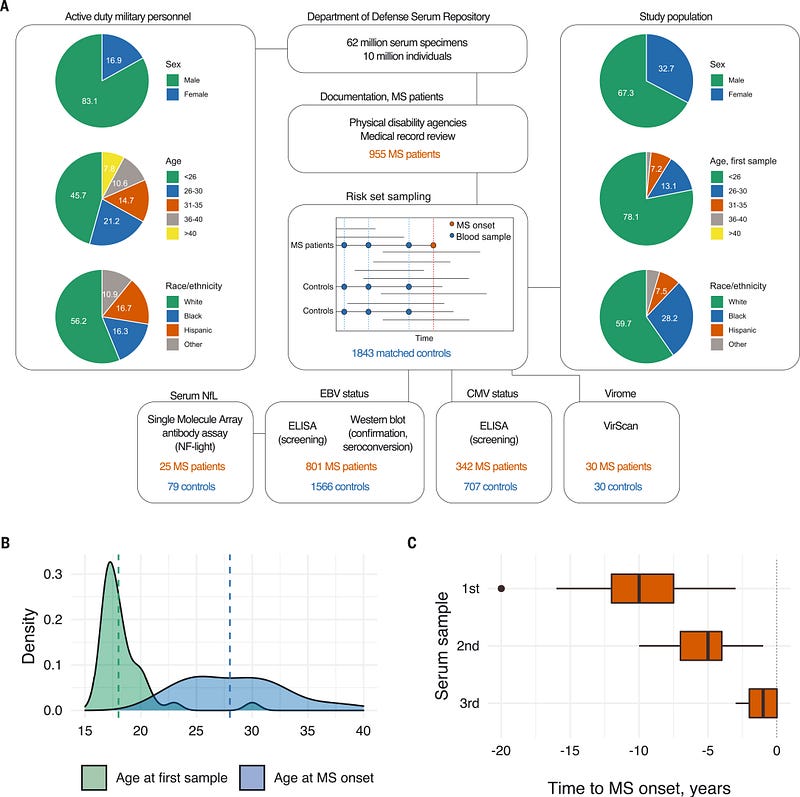
Fig. 1. Study design. From Bjornevik et al., (2022).

Findings

One of the major findings of the study is that EBV infection precedes MS onset and is associated with markedly higher disease risk.

Only one of the 801 MS cases occurred in an individual who was EBV-negative in the last sample — collected at a median of 1 year before MS onset.

At baseline, 35 MS cases and 107 controls were EBV-negative. All but one of these 35 EBV-negative MS cases became infected with EBV during the follow-up, and all seroconverted before the onset of MS.

  • The median time from the first EBV-positive sample to MS onset was 5 years
  • The median time from estimated EBV seroconversion, defined as the midpoint between the last seronegative sample and the first seropositive sample, to MS onset was 7.5 years.
  • The high seroconversion rate among individuals who developed MS during follow-up (97%) contrasts with the 57% rate of seroconversion observed among individuals who did not develop MS (Fig. 2A).

The latter percentage is consistent with previous reports among EBV-negative young adults.

The hazard ratio — a measure of association widely used in prospective studies — for MS comparing EBV seroconversion vs. persistent EBV seronegativity was 32.4 (Fig. 2C).
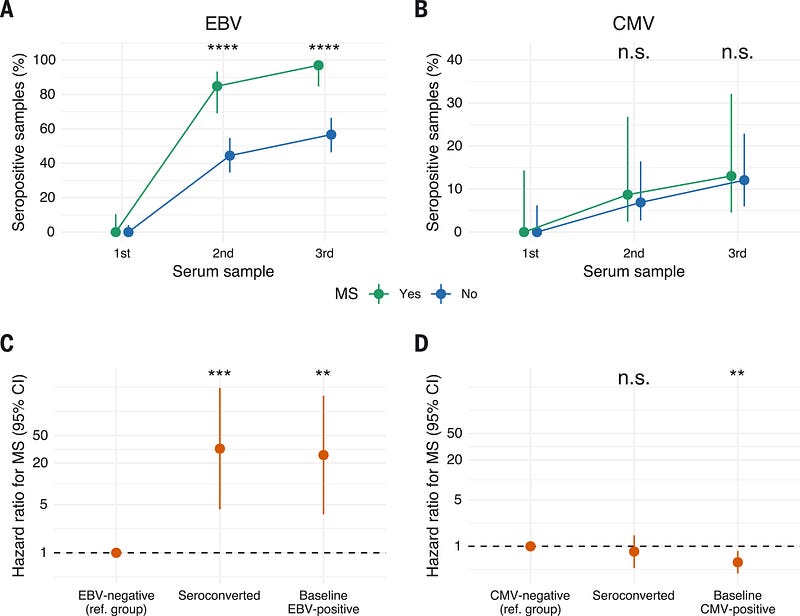
Fig. 2. EBV infection precedes MS onset and is associated with markedly higher disease risk. From Bjornevik et al., (2022).

To assess the possibility that environmental, behavioral, or personal characteristics may correlate with a predisposition to both infection and MS, the researchers measured antibodies against cytomegalovirus (CMV), a herpesvirus that, like EBV, is transmitted through the saliva.

“CMV displays socioeconomic and racial/ethnic disparities in age at infection in the US population similar to those of EBV, thus constituting an ideal negative control.”

  • Among those who were CMV-negative at baseline, seroconversion for CMV occurred at a similar rate in those who later developed MS and those who did not (Fig. 2B).
  • MS risk was lower among CMV-positive than among CMV-negative individuals (Fig. 2D).

The latter finding is consistent with a previous report suggesting that the immune response to CMV attenuates the adverse effects of EBV.

To further elucidate the temporal relation between EBV infection and MS, the researchers measured serum concentrations of neurofilament light chain (sNFL), a sensitive, albeit not disease-specific, biomarker of ongoing neuroaxonal degeneration, in the samples from those who were EBV-negative at baseline.

sNFL levels increase as early as 6 years before clinical MS onset and maybe a more accurate biomarker of the time of initiation of the disease process.

The study results revealed:

  • sNfL levels in individuals who were EBV-negative at baseline and went on to develop MS were similar to those of non-MS controls before and around the time of EBV infection but increased after EBV infection (Fig. 3, A to C).

“Thus, there were no signs of neuroaxonal degeneration before EBV seroconversion in individuals who later developed MS, indicating that EBV infection preceded not only symptom onset but also the time of the first detectable pathological mechanisms underlying MS.”
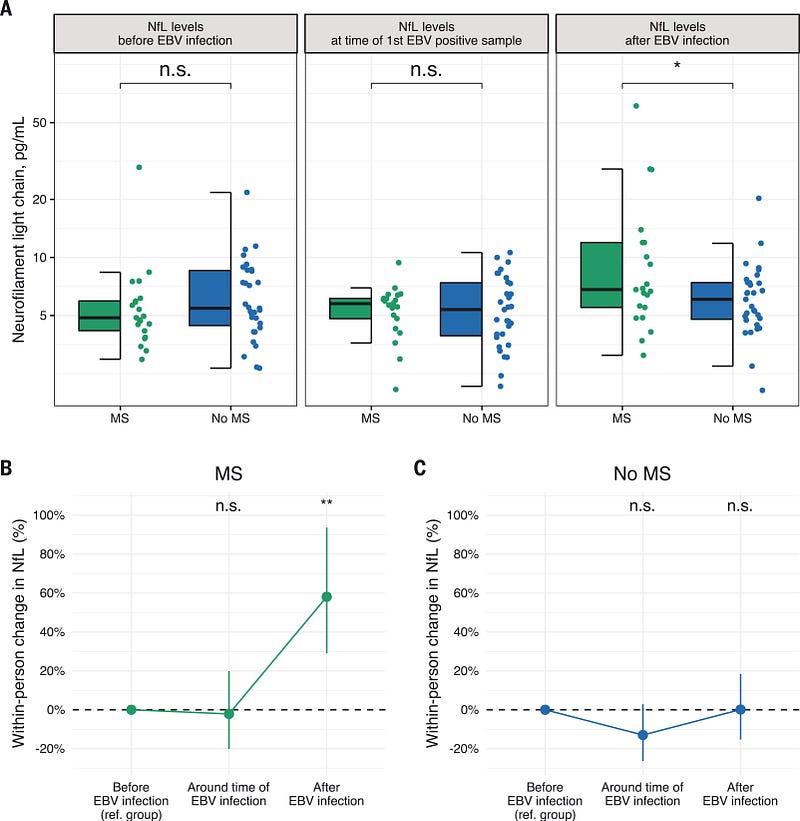
Fig. 3. EBV infection precedes elevation of sNFL before the onset of MS. From Bjornevik et al., (2022).

Additionally, the researchers randomly selected 30 MS cases and 30 matched controls with serum samples to further explore whether immune dysregulation during the preclinical phase could increase susceptibility to viral infections more generally.

Serum samples were collected shortly before (median: 1 year, range: 0 to 3) and soon after symptom onset (median: 1 year, range: 0 to 2).

Then, a comprehensive agnostic search of the antivirome antibody response was conducted using VirScan — which enables comprehensive unbiased detection of antibodies raised against all linear peptides encoded in the genomes of viruses known to infect humans.

  • The overall antibody response to viral peptides was similar in cases and controls at both time points, except for EBV (Fig. 4, A to D).

Suggesting that the preclinical and early clinical phases in MS are not associated with immune dysregulation affecting general susceptibility to infections.

Moreover, using a Z score of > 3.5 as a cutoff for identifying the presence of a peptide-specific antibody:

  • the number of antibody-recognized EBV peptides with a nominally significant difference between MS cases and controls clearly stood out, both in the pre-onset (Fig. 4, E and G) and post-onset (Fig. 4, F and H) samples.

This supports the specificity of the association between EBV and MS and argues against a second hit from another virus playing a major role in MS etiology.
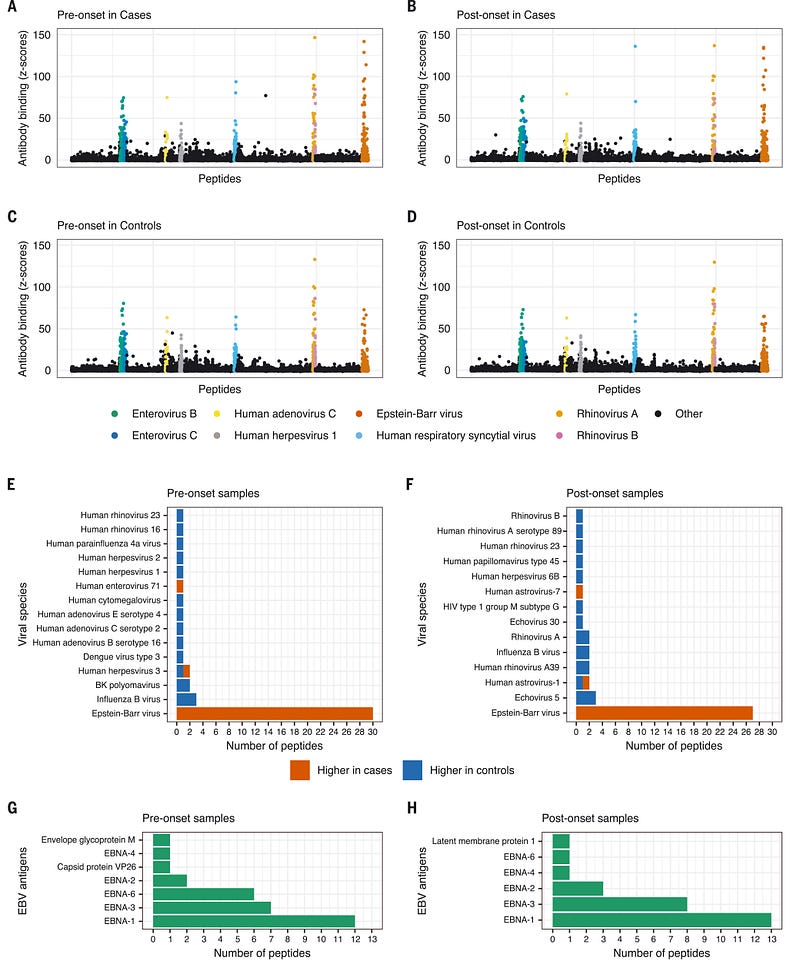
Fig. 4. Antibodies against EBV peptides in MS cases were detected using virome-wide screening. From Bjornevik et al., (2022).

A causal interpretation of the results requires ruling out the possibility that systematic differences between individuals who were seroconverted and those who remained EBV-negative explain the results.

These differences can be grouped into two categories:

  • confounding by known or unknown factors

“The existence of a still unknown factor that increases the risk of both EBV infection and MS by >60-fold [to explain the 32-fold increase in MS risk] is rather implausible and there are no good candidates, even hypothetical ones. This conclusion would be robust even in the very unlikely case that EBV seroconversion in one of the MS cases was a false-positive result, in which case EBV infection would confer a 16-fold increase in MS risk.”

  • reverse causation

“In our agnostic search of the entire human virome during the preclinical phase of MS, we did not find other systematic differences in the antibody response to any pathogen except EBV that was related to previous infections in MS cases and controls, which makes it unlikely that immune dysregulation during this phase increases susceptibility to infections.”

Conclusion

These findings provide compelling data that implicate the Epstein-Barr virus as the trigger for the development of MS. Now that the initial trigger for multiple sclerosis has been identified, perhaps MS could be eradicated.

To date, there is currently no vaccine against EBV, however, several groups are trying to develop one. On 5 January, Moderna announced that it had begun testing a candidate mRNA vaccine in people.

Findings ways of targeting the virus directly could also improve treatments. One small trial has already shown that training immune cells called T cells to target EBV improved symptoms.

What remains unclear is why so few of those infected with the virus develop MS — less than one in 10,000 in the recruits. This suggests there must be one or more additional factors required to trigger MS.

Kjetil Bjornevik, a research scientist at Harvard and the study’s lead author concluded:

“Our data strongly suggest Epstein-Barr virus is the leading cause of multiple sclerosis. It was a really dramatic increase in risk that would be very hard to explain any other way.”

Thank you for your interest in science! Feel free to put questions, comments, and suggestions for future articles in the comment section.

If you want to support:

  • If you are not a Medium member yet, you can use my referral link so I can get a part of your fees from Medium, you don’t pay any extra.
  • Subscribe to my Newsletter to get the best tutorials, research, education, and scientific-based tools for everyday life directly in your email inbox.

While you’re here, check out one of my other articles.

Health
Neuroscience
Multiple Sclerosis
Education
Science
Recommended from ReadMedium