
Stop Your Ego From Sabotaging You.
Don’t let your emotions get the best of you and react without considering the possible consequences.
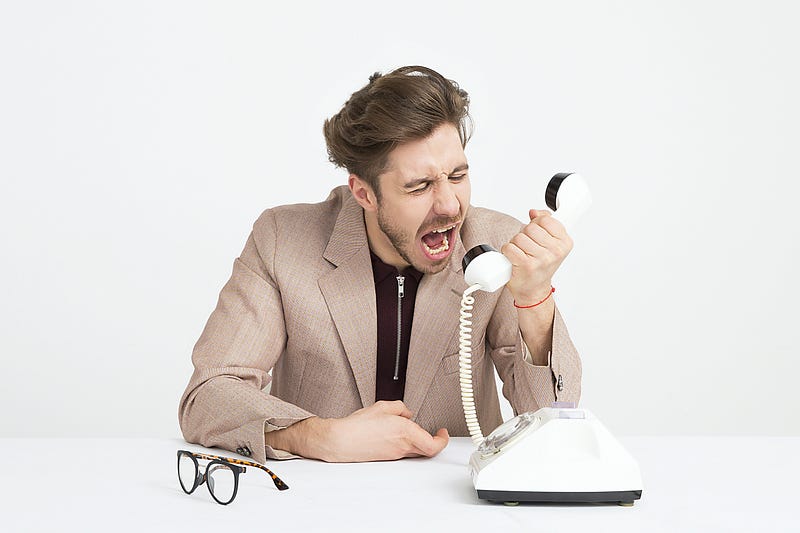
If there’s one good thing I got from being a people-pleaser and stuffing my feelings, it’s this.
Internalizing my feelings allowed me an opportunity many people don’t get because they let themselves get easily swept up in their emotions.
To sit with uncomfortable emotions and figure out if it's worth reacting to them or not.
Now, I won’t say what I did was healthy. It wasn’t.
I internalized ALL of my feelings in the past — I NEVER communicated how I felt.
But since working with a counselor, I have learned how to establish and communicate my boundaries.
I’ve also learned A LOT about my ego and how it tries to sabotage me long-term in certain situations and circumstances that are trying.
With that said, here are three key lessons on how to get your ego under control and not let it be in control.
Learn your emotions are a signal of what you’re feeling.
But they’re not a good guide for what you should DO.
Our egos are there to protect us.
This is why when someone says something we don’t like or don’t believe, we feel a certain way about it.
What we have yet to teach our kids and ourselves is how not to get carried away with how we feel.
We try to teach a part of this to children very early on.
For example, imagine a kid playing with a toy, and another child takes that toy away unexpectedly.
That kid will most likely react badly. He’ll either cry, throw a tantrum, go after the child who took the toy and take it back, or worse, hit that child.
In those moments, the adults try to teach those children what to do and what not to do.
But here’s when we miss teaching how not to get carried away with our emotions.
Have you noticed how the adult will immediately try to soothe the child, trying as hard as possible to stop the child from crying or throwing a tantrum?
We’re taking away from the child the opportunity to learn how to sit with their emotions. We don’t allow that child time to understand why they’re upset, and we don’t allow them to regulate themselves.
This follows us into adulthood.
We don’t learn to sit with our emotions, understand what they’re telling us, analyze them, and react as logically as possible so we don’t worsen the situation.
As adults, the behavior is the same as if we were children.
Think of a person cursing another one out, making threats, or even punching another person because they felt offended.
Also, think about the consequences of reacting this way.
This is why we must learn to sit with our feelings rather than react based on them.
Don’t let them decide for you what you should do next.
When someone says something offensive, off-putting, or passive-aggressive, realize they are saying more about themselves than you.
As children, most of us are taught that if we have nothing nice to say, not to say anything.
The problem is not everyone does this, and there’s always that person who has to have the last word.
They may say something offensive or inappropriate in hopes of getting a rise out of you or anyone else.
They may say it because that’s how they feel, and that’s okay. Just because they feel that way doesn’t mean what they said is right or proper.
But more importantly, it doesn’t mean you must react to it.
Depending on your upbringing, you may believe you have to say something or put that person in their place.
The reality is that’s not true. You have a choice.
A choice to think about what they said, if what they said was towards you, and if what they said impacts you in any way. If it doesn’t, why react to it?
We get offended because it makes us feel like our beliefs are being challenged.
But the truth is, that person isn’t challenging you specifically. They are just revealing their poor manners, way of thinking, and personality.
They may say something outrageous to get a rise out of you or anyone (like I said before) because maybe they enjoy feeling like they have the power to get under someone’s skin, which leads to my next point.
Don’t give your power away easily.
I’m not saying not to feel annoyed or bothered. That’s impossible. You can’t change your emotions or feelings.
What you can do is take a breath, process your emotions (don't react at that moment), and later on, decide if this person needs to be addressed or not.
It's easier said than done, but it’s possible.
I’ve done it at my job (I work as a bartender).
I remember a few months ago, I was working by myself on a Wednesday night.
The restaurant got slammed with customers, and I was doing my best to take care of the customers at the bar, the orders coming in from servers, and the customers who wanted a drink while they waited for their party to be called.
During this rush, a lady came to the bar as some patrons were leaving. She didn’t realize there was a lady at another section of the bar who had been patiently waiting for me to take her order.
So I went to the lady I saw arrived first and took her order.
After I got her drinks and was in the middle of taking payment from her, the second lady told me I ignored her and was not doing my job correctly.
At that moment, I became irate.
I was annoyed and frustrated because she wasn’t considerate enough to realize I was the only bartender for one restaurant serving around 200 people.
But instead of telling her off, I went to her and explained that another lady had arrived before her and had been waiting for me to take her order for some time.
This explanation wasn’t enough for her; she kept telling me how to do my job. At that moment, I bit my tongue, asked her what she wanted to drink, and took her order.
While preparing her drinks, I got an opportunity to think about how I was feeling.
I knew the way she reacted was unwarranted, inconsiderate, and unnecessary.
Instead of telling her how I thought she had a crappy personality, I decided to say to her very respectfully how the way she spoke to me was unnecessary and inappropriate and to have some consideration because I was the only bartender for 200 plus people.
And so I did.
Professionally, I addressed how her tone and words were unnecessary and disrespectful towards me and how she lacked consideration for other customers waiting patiently for me to take their orders.
The best part was watching her be stunned into silence. It was also watching her realize that I was right, and there was nothing she could say back to me because I addressed her respectfully about her poor manners.
This is a great example of responding without letting your emotions get the best of you, establishing boundaries, and not giving your power away.
It’s easier said than done like I said, but it’s possible.
Takeaways.
Don’t let your emotions take the wheel.
Instead, realize they are there to tell you what’s happening inside you and why you feel the way you do.
Don’t give away your power by reacting to a stranger's offensive, frustrating, or annoying remarks.
Odds are, they are looking for someone to respond so they can get satisfaction for getting under someone’s skin.
And lastly, realize that you have a choice.
You have the power to decide if something needs to be done or said.
And if it does, take some time to figure out what you want to say rather than getting carried away with your feelings.
If you do this, you’ll be able to establish boundaries and avoid getting into sticky situations that may leave you worse off.


