
Author skills
Steps to Building Your Author Platform
How to get your author brand ready for your launch and beyond

It’s not enough to just write a good book.
When you say it like that, it sounds obvious. But the reality is that far too many authors focus only on their writing. On their creativity, their novel planning, and their storytelling.
I care about that too — I really do. As an author, I want to spend a lot of time thinking about story, characters, plot…I want to release books that people will respond to, and that will keep them coming back for more.
All of these things are important.
But without a platform and a decent launch strategy, nobody is even going to read your book in the first place. Even if it’s great, even if you manage to get some very positive feedback and reviews, you’re going to need a way to build your author brand. To share the news about each new release, and everything else you’re doing as a new author.
I’m a fantasy LitRPG writer, and I’ve networked extensively with other authors for years. As I have done so, I’ve seen some writers rise to the top and achieve stunning success, and others, despite being talented, remain far below where they aimed for.
I think that we can greatly overestimate the extent to which this is a matter of either talent or luck. Yes, there is an element of both — but I have also seen for myself how some authors have grown through careful strategy and brand building. Doing the right things to build an author platform and brand can be transformational.
Here’s how.
Being social
The first step is to be social. By this, I don’t mean that you have to be an extravert. But to some degree, you do need to come across as a human being! Engage with readers (and probably with other authors, too), and share a bit about your life.
This aspect is probably uncomfortable for some — I know writers who don’t want to share anything about their lives. I personally avoid talking online about my kids or where I live. But there are surely some things that you can share: a pet, perhaps, or what you are cooking today.
Or you could just ask a question, or share a quote. After all, these are among the most popular kinds of Twitter posts.
Social media are a key set of tools for this engagement, but I’d warn against trying to have a presence on too many sites. Take some time to figure out where your audience is (and I mean your actual audience, not your friends or fellow authors). Then start to slowly build up.
For my area — fantasy and LitRPG — some of the main platforms are as follows:
- Facebook, and particularly Facebook groups.
- Discord servers.
- Reddit pages (‘subreddits’).
Bear in mind I am talking about being a member of groups here. For hosting your own group, see below…
The best choice of platform probably depends on your writing genre and who the audience are, but just to give you an idea, in my writing area LitRPG, the top Reddit page has over 37,000 members, and some Facebook groups have around 20,000 or more. That’s a lot of reach.
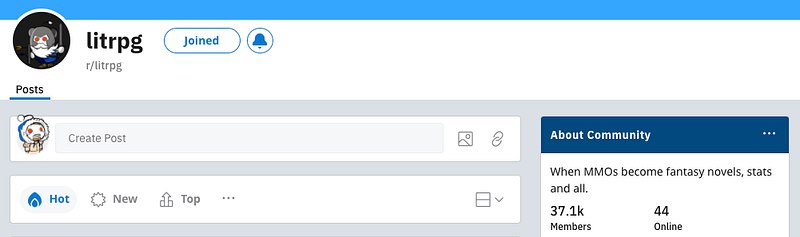
One last point is to be very careful about how you post on Reddit and Facebook. Most groups have strict rules about self-promotion. Read the ‘about’ section carefully, and take a note of what is allowed (and when).
In general, it’s best to spend at least a month just reading and commenting on other people’s stuff. Focus on liking, sharing and networking. You need to learn the norms of the platform and of the group itself before you begin to promote yourself.
A broader platform
A social media presence is important, but you also need to think about what your broader online presence as an author is going to look like. There are certain sites and activities which are key building blocks of an author platform.
Again, you will need to make your strategy coherent and sustainable here. A single site like a Facebook group or Twitter profile is much too narrow, but trying to take on too many platforms and outlets could get very messy.
This means that there are certain key elements that all authors should consider, and others that are optional at best. I list them here, roughly in order of importance, starting with the most important:
- Author website. These can be kind of a nuisance to maintain, but it looks bad not to have one. For most authors, it is best to keep it tidy, minimal, and well-updated, and make it easy for readers to find your books, your social profiles, and any freebies that you offer. Invest in a professional domain name.
- Amazon profile. Once you have published (or co-authored) at least one work, you can sign up to Amazon Author Central and have a profile associated with them.
- An author Facebook page or group. I’m in two minds about whether a page or a group is best. Many of my fellow authors run groups, but on balance — unless you have a lot of time — a page is easier. A group requires constant attention and moderating. It’s also helpful if you can use your personal profile to interact on Facebook, as this is best for engagement. However, you might want to unfriend your family and co-workers first, so that they don’t start reading and reviewing your books!
- A newsletter. I’d recommend sending a newsletter pretty frequently. The ones I look at most often are short and frequent, and it helps to keep your brand in the readers’ mind. I use Mailerlite. In my genre, authors Phoenix Grey and Paul Bellow both do a great job with their newsletters.
- Goodreads. This is the main social media for readers, and you can also maintain an author profile here, too. It’s a good idea to check it frequently, but it probably doesn’t need to be an everyday thing.
- Patreon or Kofi. These are great sites for offering extras to fans, and in my experience, Patreon is much more important for authors. The most common model is to offer extras, works in progress, or advance chapters/drafts of ongoing series or web-novels. Some authors make thousands of dollars a month this way. However, it is a lot less important as you start out, and can remain a lower priority until you have begun to build up your first few core fans.
- Twitter profile. Less essential, but good for interaction with other authors. I have learned a lot from author Twitter! Give the Twitter ads a miss, however — your readers are not here. You can see my Twitter profile here.
- Instagram, Pinterest, TikTok, and other social media sites. Definitely optional, and lower priority. Granted, there are readers on these platforms, but it is hard to get reach unless you are very active. If you are going to do it, pick one site, stick to it, and do it well.
- A YouTube channel or podcast. These are highly time-consuming, and require niche skills. They are also definitely not necessary elements of a solid author platform. I therefore suggest that you don’t start such an undertaking unless you plan to commit to it. If you are keen, however, then these can certainly be good ways to raise your own brand awareness and do something positive for readers, too.
- Reddit. I don’t recommend that you make your own Reddit page (again, this is different from being active in existing groups). Let your fans make a page for you once you get famous! The same can be said for wikis.
It’s also worth considering how you can have consistent branding across these various sites and platforms. This helps to ensure that readers recognise you and remember you. You want them to be saying, “oh, that’s the writer that shares funny memes on Facebook” or whatever.
Also, remember the marketing rule of seven — some estimate that customers need to hear a message seven times before they will take action. Regardless of the specifics, a promotion is going to have more impact in a reader’s memory and emotions if they see it repeatedly and in several contexts. To do so, you need to make sure that you are sharing a consistent message and brand, and doing so across multiple (well-chosen) platforms.
Use the same profile image, too, as well as consistent background branding, colors and fonts. Ideally, these will tie in well to your series and genres. You may even link in specific phrases — Paul Bellow, who I mentioned above, signs off his newsletters with “Long live LitRPG!”.
The Books
Having said all that, I think we should take a moment to reflect back on the books themselves, and how they contribute to your author brand. No matter how good you are at setting up platforms and connecting to readers, it’s going to be an uphill struggle if you can’t make it clear what you are offering to them.
They need to know what kind of writer you are. And so, even besides the writing skills that you need to develop, there is a coherence and a branding that needs to be considered (or reconsidered) as you establish your author career.
In essence, community and writing are two pillars that support your author career. You need both, not one or the other.
Look at this series by my friend and fellow LitRPG author Dimitrios Gkirgkiris, for example:
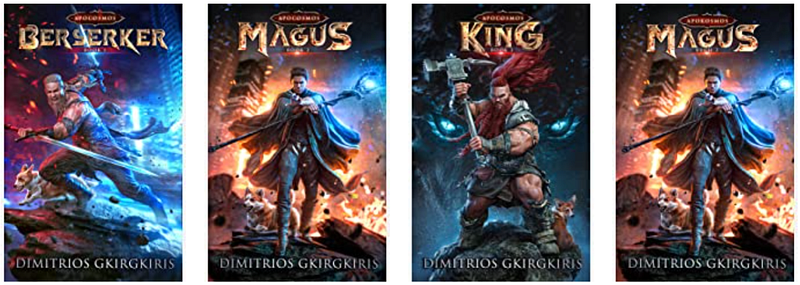
Not only do the books have great covers, there is a very clear ‘look’ across the series as a whole. Dimitrios is able to use this great artwork for backgrounds and profile pictures elsewhere (at the time of writing, it is also his Facebook banner image).
I did a similar thing with the covers from my Druid Stones saga — these are a great set of covers with a Celtic feel. I have used these as a group for marketing images, and at times have also used details as profile pictures. I even use the main images from three of the books to label the tiers on my Patreon site.
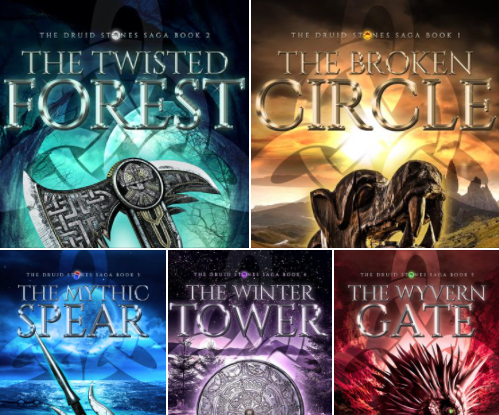
Having great artwork that fits your brand is a win-win. You will sell more books, and it also makes it easier to develop your presence across the sites discussed earlier in this article.
Don’t delay —there’s no time like the present to start building your own author platform!
p.s. you should get my posts direct to your inbox. Do that here! Also, if you’d like to experience Medium yourself, consider supporting me and thousands of other writers by signing up for a membership. It only costs $5 per month, it genuinely supports writers, and you have the chance to make serious money with your own writing as well! By signing up with this link, you’ll support me directly with a portion of your fee, it won’t cost you extra. If you do so, thank you so very much!


