
Author reflections
What is LitRPG?
Author J. F. Danskin on the explosion of novels with game-like elements and statistics.
For the past three years, I have been deeply immersed in reading and writing LitRPG novels. When I mention this to people, the most obvious and common question is to ask — what is LitRPG?
If you know the definition of LitRPG already, you might be more interested in reading my discussion of whether LitRPG should be considered a part of fantasy fiction.
But if LitRPG is new (or almost new) to you, read on… I’ll try to keep it brief as well as informative!
On RPGs
First up, we need to know about the ‘RPG’ bit. RPG stands for role-playing game.
A role-playing game, for the un-initiated, is a game where players take on a specific character, and go on open-ended adventures, usually run by a game-master. The most famous one is Dungeons and Dragons (D&D).
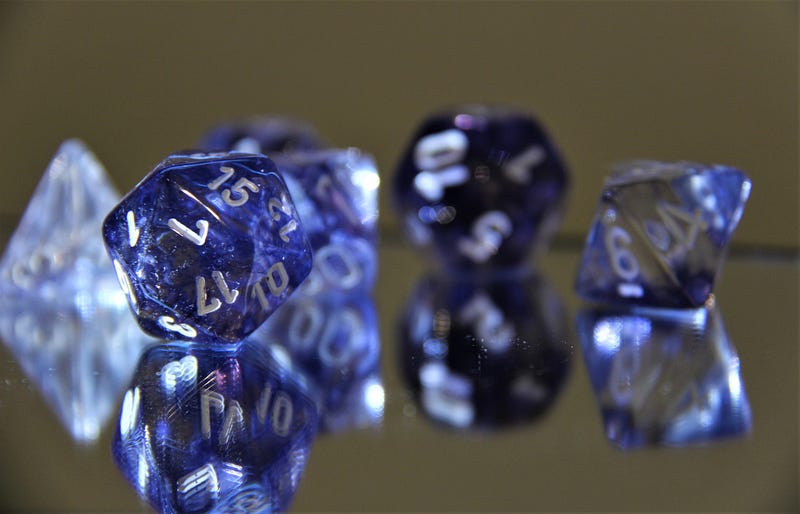
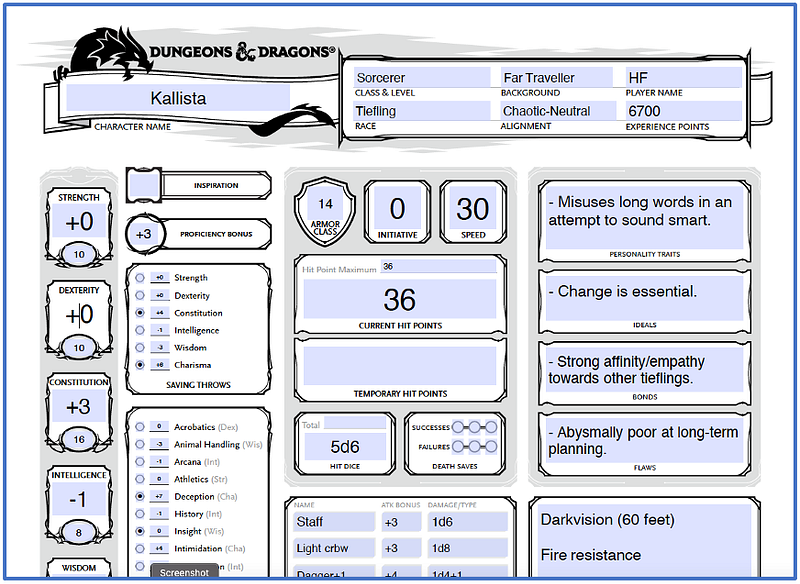
Collectively, these games are know for the use of dice, character sheets, stats, and calculations. For example, a typical D&D character has numerical statistics for things like Strength, Dexterity and so on, as well as a numbers representing their ‘hit points’ (how much damage they can take) and experience points (which accumulate until they ‘level up’).
You can see part of a D&D character sheet below:
So, how does this help us to define LitRPG? Well, LitRPG means “literature role-playing game”… The briefest way to explain this term is to say that all of the things I just mentioned — stats, hit points, experience points, and so on — are worked into a fiction novel.
That is to say, they actually appear in the text of the novel.
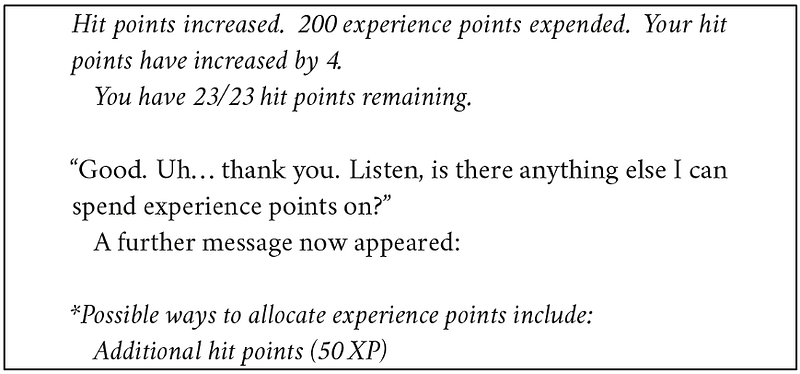
Check this screenshot from one of my Sparta Online novels, during which the main character Troy is learning how he can use accumulated experience points to increase his attributes within the simulation:
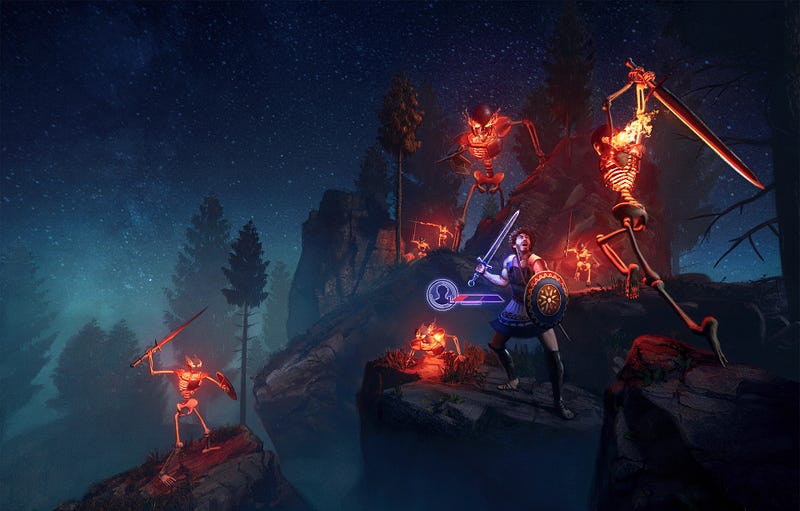
You can also see the use of stats in LitRPG novels hinted in blurbs and covers — often front covers indicate that the world in the book is some way created by technology, or track character stats. As an example, you might have noticed how in the main header image on this article — which is the cover art from my LitRPG novel ‘Chaos’ — has an icon indicating hit points and damage.
As well as tabletop roleplaying games, the other main influence on LitRPG is video games. Skyrim, for example is a RPG-style video game where you explore a fantasy world, taking the part of a particular character. This is very much like what happens in a lot of LitRPG novels.
Competing terms
The term ‘LitRPG’ originated in Russia, and the word order in English is perhaps not ideal — it might make more sense to say ‘Role-playing game lit’. But that’s the term that has stuck!
While the name suggests that the novel should revolve around a specific role-playing game , any novel with game-like elements could, in practice, be considered LitRPG.
Often the related term Gamelit is used for novels which are based around games but don’t actually contain statistics like the examples above. The novels which are set in the Forgotten Realms world could be considered Gamelit, for example.
How big is this?
It’s safe to say that LitRPG has become a very big deal over the past few years. I regularly see authors in the genre reaching the top 1000 ranked ebooks (by sales) in the Amazon store. Not just in fantasy books, mind you, but the whole store.
Some even make the top one hundred on release.
Indeed, it has been so successful and lucrative that many authors from other genres have decided to try their hand at LitRPG writing.
That’s all well and good — the more the merrier — but it’s perhaps worth pointing out that without a keen understanding of RPG game mechanics and the norms of the genre, it is hard to write a book that chimes with the audience.
For every success story, there is an author whose new series flops.
If you’d like to give it a go, it’s therefore important to take some time to learn about the genre, to maximise your chances of success. Why not check out my recent article, ‘Writing a LitRPG novel — where to start?’.
Styles of LitRPG
There is more than one way to tell a story, and more than one way to structure a LitRPG novel:
- One of the most common approaches is for the main character in the novel to be playing an actual game — usually an immersive virtual reality game. The story then follows their interaction within this game.
- Another major style of LitRPG is called isekai, or ‘portal fantasy’. Here, the character enters another world (like what happens in Alice in Wonderland or the Narnia books), only to find that the world (usually a fantasy world) has game-like elements.
- A third possibility is for the real world to somehow take on game-like elements. For example, perhaps aliens take over the planet and turn the entire world into a monster-filled dungeon, or into contest with stats and scores. Crazy but fun, right?
- Finally, a major type of books in the genre involves people being reborn into a game world.
There are other approaches, of course, and as with any creative writing, the variety is part of what makes it fun.
But without those stats and game elements, a novel probably would not be considered LitRPG.
I hope you enjoyed my explanation and definition of LitRPG. Now, why not try writing your own story in the genre? Here is that link again: ‘Writing a LitRPG Novel — Where to Start’.
Are you new to Medium? It’s a great way to learn about fiction and writing skills, and you can earn from it, too! If you’re thinking about signing up, please consider supporting me and thousands of other writers by signing up with this link. Doing so will support me directly with a portion of your fee, and it won’t cost you extra. If you do so, thank you very much!!


