
Education
Here’s How STEM Education Prepares Us for the Future.
Virginia exhibits a bright vision for young brains to grasp a great passion for STEM Education.

STEM (Science, Technology, Engineering & Mathematics) is a group of disciplines preparing young people for future employment in Virginia.
Education helps us create our reality. We owe our comfort to science, technology, and engineering. Mathematics is the prime tool to support these disciplines. Therefore, STEM education is a critical tool for our personal and professional development.
Learning STEM subjects has exceptional value for society. It also has an impact on the economy. As educated in STEM at the tertiary level, I reaped many benefits from the empowerment of this education type in my personal and professional life.
In a nutshell, using the acronym, the focus of S is to help students observe and interpret the world using a scientific approach. T serves as a tool to solve scientific problems. E encourage students to design, test, and implement products and services. Finally, M helps students to quantify and evaluate situations. Overall, it is an integrated education system.
According to NAP (The National Academies of Sciences, Engineering, & Medicine), science, engineering, and technology permeate nearly every facet of modern life and hold the key to solving many of humanity’s most pressing current and future challenges.
The NAP framework highlights that the position of the US in the global economy is declining, in part because US workers lack fundamental knowledge in these fields. To address the critical issues of US competitiveness and to better prepare the workforce, A Framework for K-12 Science Education proposes a new approach to K-12 science education that will capture students’ interest and provide them with the necessary foundational knowledge in the field.
As STEM education is not organized systematically, the desired outcomes are achieved in the US. The framework by NAB is designed to address the issues and overcome weaknesses in the STEM education system.
A CRS (Congressional Research Service) paper points out that although the United States remains the leading host country for international students in science, technology, engineering, or mathematics fields, the global competition for talent has intensified. In addition, the paper provides insights into immigration policies for STEM education.
How is Virginia progressing in STEM education?
A Springer research paper confirms that “the Commonwealth of Virginia is one of the largest employers of STEM professionals in the United States. CodeVA, a nonprofit computer science advocacy organization, worked with Virginia legislators to develop the nation’s first K-12 computer science framework and has trained cohorts of elementary school teachers to integrate computer science and STEM content into all subject areas.”
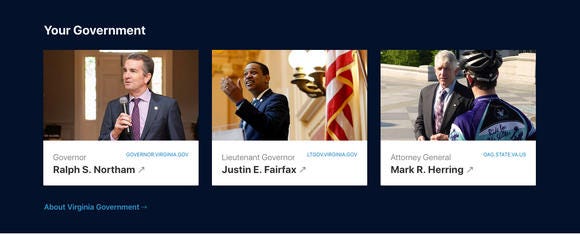
The Governor’s STEM Education Commission was “established by Governor Ralph Northam on July 17, 2019, to create a unified vision for STEM Education in the Commonwealth and adopt a set of shared goals to strategically inform how Virginia prepares students for STEM jobs of the future. Since its establishment last year, the Commission has conducted a cursory landscape analysis of Virginia’s STEM programs, opportunities, and growth.”
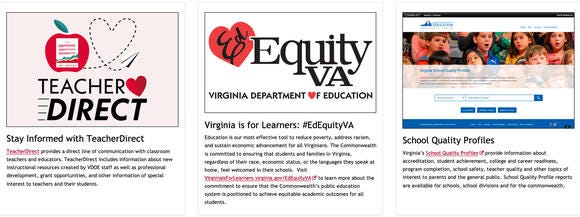
Virginia has a well-organized and proactive Department of Education (DoE) guiding teachers, students, and parents. The vision of the DoE is to maximize the potential of all learners. The mission of the DoE is to advance equitable and innovative learning.
DoE has been working closely with the Governor’s Office, the Virginia Department of Health (VDH), and other state agencies to ensure schools and communities have the most up-to-date information and resources.
DoE has a newsletter called TeacherDirect. It provides a direct line of communication with classroom teachers and educators. It includes information about new instructional resources created by VDOE staff and professional development, grant opportunities, and other information of particular interest to teachers and their students.
The most outstanding feature of Virginia DoE is the provision of equality, diversity, and inclusiveness. DoE points out that education is our most effective tool to reduce poverty, address racism, and sustain economic advancement for all Virginians. Therefore, the Commonwealth is committed to ensuring that students and families in Virginia, regardless of their race, financial status, or the languages they speak at home, feel welcomed in their schools.
One of the most valuable services of DoE for Virginia is School Quality Profiles. Residents can easily search each school and obtain comprehensive qualitative and quantitative information about the educational institutions.
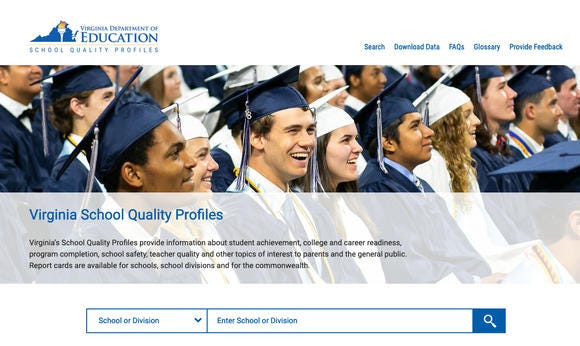
This resource provides information about student achievement, college and career readiness, program completion, school safety, teacher quality, and other topics of interest to parents and the general public. The site also provides report cards for schools, school divisions and the commonwealth.
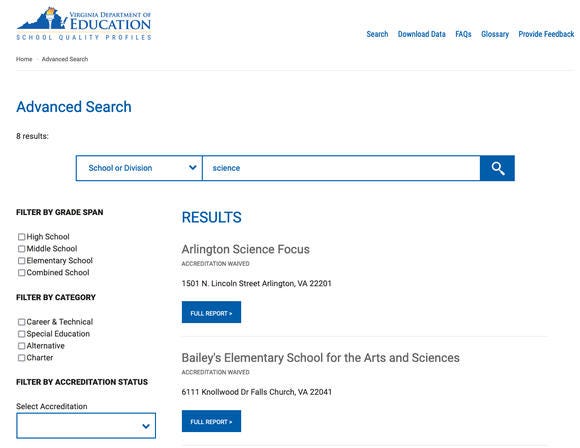
If you are looking for a school with STEM education, you can basically add the words such as science, technology, engineering, and mathematics to the search bar. To graduate, Virginia high school students must earn a minimum of 22 credits. These credits must include one in economics and personal finance to earn a standard diploma.
Here is the search tool to give you an idea.
Virginia's education system has a particular focus on gaining skills in specific areas called 5Cs. These skills are critical thinking, creative thinking, collaboration, communication and citizenship. For these skills, graduation requirements were confirmed in 2017.
From a legislation perspective, the Standards of Learning Innovation Committee recommended that the Board of Education develop a Profile of a Virginia Graduate and adjust Virginia’s diploma requirements to conform with the profile. The 2016 General Assembly subsequently approved Bills 336 and 895.
Back to STEM education which is the key point of this article. Virginia Government Department of Education has a special focus on STEM education.
The Virginia Department of Education has aligned the vision for STEM education with the Profile of a Virginia Graduate. This profile explains the knowledge, skills, experiences, and attributes that students must accomplish to succeed in college and the workforce. In addition, the profile highlights the importance of being life-ready in an economy and a world characterized by rapid change.
The department points out that knowing facts and figures is not enough to prepare students for the future. Virginia’s economy requires people to be critical and creative thinkers. Using the 5Cs, being outstanding communicators, collaborators, and community-minded citizens is vital for Virginia school graduates. The focus of STEM education is to make students “life ready”.
Virginia has a holistic approach to STEM education. In addition to essential content knowledge, the education department highlights the importance of workplace skills, community engagement, civic responsibility, and career opportunities. These goals are achieved through standard diplomas and advanced study diplomas.
There are many schools, including STEM education, in Virginia. Covering them in an article is impossible. Instead, USNews created a report on the best high schools in Virginia that you can review. They reviewed around 24,000 public high schools in the US and selected 319 schools from Virginia that met their requirements.
In this article, I highlight two schools, one secondary and one tertiary. In addition to the review of USNews, I also checked various online resources showing that Thomas Jefferson High School for Science and Technology was selected number one best school in Virginia, having a perfect score according to the criteria.
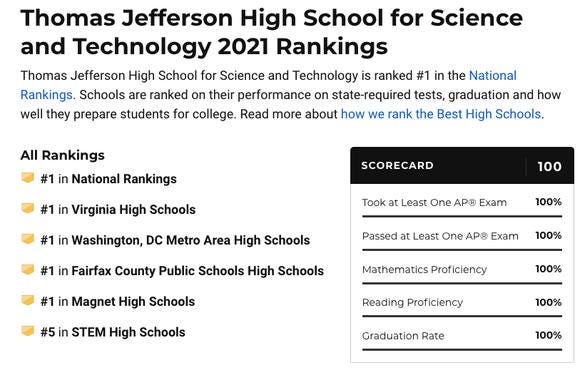
TJHSST
Thomas Jefferson High School for Science and Technology (TJHSST) has a comprehensive website informing students, teachers, and parents.
TJHSST offers many resources such as curricular, digital, technology, wellness, health, counseling, and research collaboration with the Challenge Success organization, a Stanford University affiliate.
In addition, TJHSST provides free summer meals, virtual mental wellness consultations, immunization, and broadband services to students and their parents. Ann Bonitatibus is the principle of TJHSST and can be contacted on social media via Twitter.
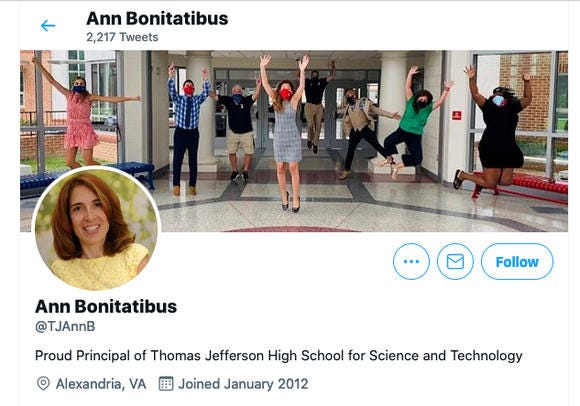
The second outstanding STEM tertiary school is Virginia Tech.
Virginia Tech
Virginia Tech is a public research university with its main campus in Blacksburg, Virginia. It also has educational facilities in six regions statewide and an overseas site in Riva San Vitale, Switzerland.
The school offers 280 undergraduate and graduate degree programs to around 35,000 students with a research portfolio of $522 million.
The Twitter account of Virginia Tech, followed by 80K people, makes an interesting statement.
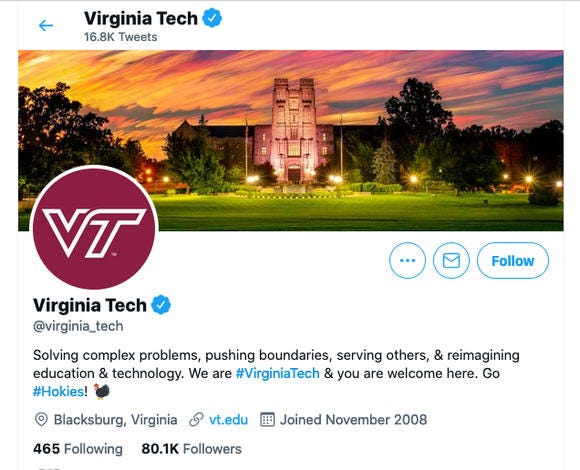
“Solving complex problems, pushing boundaries, serving others, & reimagining education & technology. We are #VirginiaTech & you are welcome here.”
Their Latin motto is Ut Prosim (That I May Serve).
Virginia Tech has a large Innovation Campus.
The campus is partnering with the Commonwealth of Virginia to create a bold vision for graduate education in computer science and engineering that aims to unlock the power of diverse people and ideas to solve the world’s most challenging problems using technology.
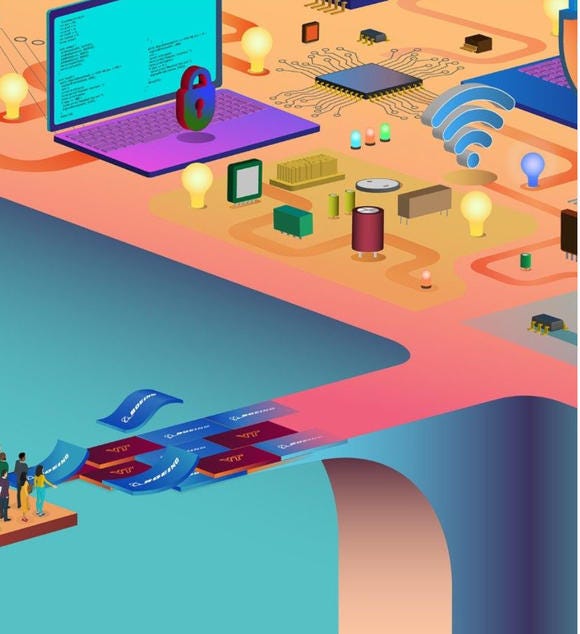
The campus is still small. However, they plan to construct an 11-story building in a 300,000 square-foot structure for 2024. In addition, the campus has a world-class advisory board of global business and industry leaders providing strategic direction to Collins and the Innovation Campus Leadership Team.
The committee has members from Qualcomm, Boeing, KPMG, Northrop Grumman, and Hunch Analytics, including several tech pioneers and entrepreneurs.
Collaborating with the industry, the school develop partnership large business organizations. For example, Boeing made a $50 million investment commitment for a partnership with the innovation campus.
Here is a breathtaking YouTube video introducing this remarkable STEM college in Virginia
Conclusions
Science, technology, engineering, and mathematics are changing the way we perceive and manage our world. As STEM education has a global focus, Virginia leads in this education arrangement uniting government, academia, industry, and residents.
What is more interesting for Virginia is combining STEM with HASS (Humanities, Arts, and Social Sciences) in some schools to create balanced brains for innovation.
Our economy and environment need creative and informed brains trained in STEM education in this complex and problematic world. Virginia state appears to understand the value of STEM education and makes a concerted effort to instruct these young brains.
Thank you for reading my perspectives.
I compiled my reviews of other states in the United States of America.

Thank you for reading my perspectives. I wish you a healthy and happy life.
If you are a new reader and find this article valuable, you might check my holistic health and well-being stories reflecting on my reviews, observations, and decades of sensible experiments.
Sample Health Improvement Articles for New Readers
I write about various hormones and neurotransmitters such as dopamine, serotonin, oxytocin, GABA, acetylcholine, norepinephrine, adrenaline, glutamate, and histamine.
One of my goals as a writer is to raise awareness about the causes and risk factors of prevalent diseases that can lead to suffering and death for a large portion of the population.
To raise awareness about health issues, I have written several articles that present my holistic health findings from research, personal observations, and unique experiences. Below are links to these articles for easy access.
Metabolic Syndrome, Type II Diabetes, Fatty Liver Disease, Heart Disease, Strokes, Obesity, Liver Cancer, Autoimmune Disorders, Homocysteine, Lungs Health, Pancreas Health, Kidneys Health, NCDs, Infectious Diseases, Brain Health, Dementia, Depression, Brain Atrophy, Neonatal Disorders, Skin Health, Dental Health, Bone Health, Leaky Gut, Leaky Brain, Brain Fog, Chronic Inflammation, Insulin Resistance, Elevated Cortisol, Leptin Resistance, Anabolic Resistance, Cholesterol, High Triglycerides, Metabolic Disorders, Gastrointestinal Disorders, Thyroid Disorder, and Major Diseases.
I also wrote about valuable nutrients. Here are the links for easy access:
Lutein/Zeaxanthin, Phosphatidylserine, Boron, Urolithin, taurine, citrulline malate, biotin, lithium orotate, alpha-lipoic acid, n-acetyl-cysteine, acetyl-l-carnitine, CoQ10, PQQ, NADH, TMG, creatine, choline, digestive enzymes, magnesium, zinc, hydrolyzed collagen, nootropics, pure nicotine, activated charcoal, Vitamin B12, Vitamin B1, Vitamin D, Vitamin K2, Omega-3 Fatty Acids, N-Acetyl L-Tyrosine, Cod Liver Oil, and other nutrients to improve metabolism and mental health.
Disclaimer: Please note that my posts do not include professional or health advice. I document my reviews, observations, experience, and perspectives only to provide information and create awareness.
I publish my lifestyle, health, and well-being stories on EUPHORIA. My focus is on metabolic, cellular, mitochondrial, and mental health. Here is my collection of Insightful Life Lessons from Personal Stories.
If you enjoy writing and storytelling, you can join Medium, NewsBreak, and Vocal as a creator to find your voice, reach out to a broad audience, and monetize your content.
You may also check my blog posts about my articles and articles of other writers contributing to my publications on Medium. I share them on my website digitalmehmet.com. Here is my professional bio. You can contact me via weblink.
As a writer, blogger, content developer, and reader, you might join Medium, Vocal Media, NewsBreak, Medium Writing Superstars, Writing Paychecks, WordPress, and Thinkers360 with my referral links. These affiliate links will not cost you extra to join the services.
You might join my six publications on Medium as a writer by sending a request via this link. 18K+ writers contribute to my publications. You might find more information about my professional background.
If you enjoy reading, you may join Medium with my referral link for limitless access to my stories and other writers.