

Spiritual Traditions in Old Jerusalem
Touring Jerusalem Holy Sites
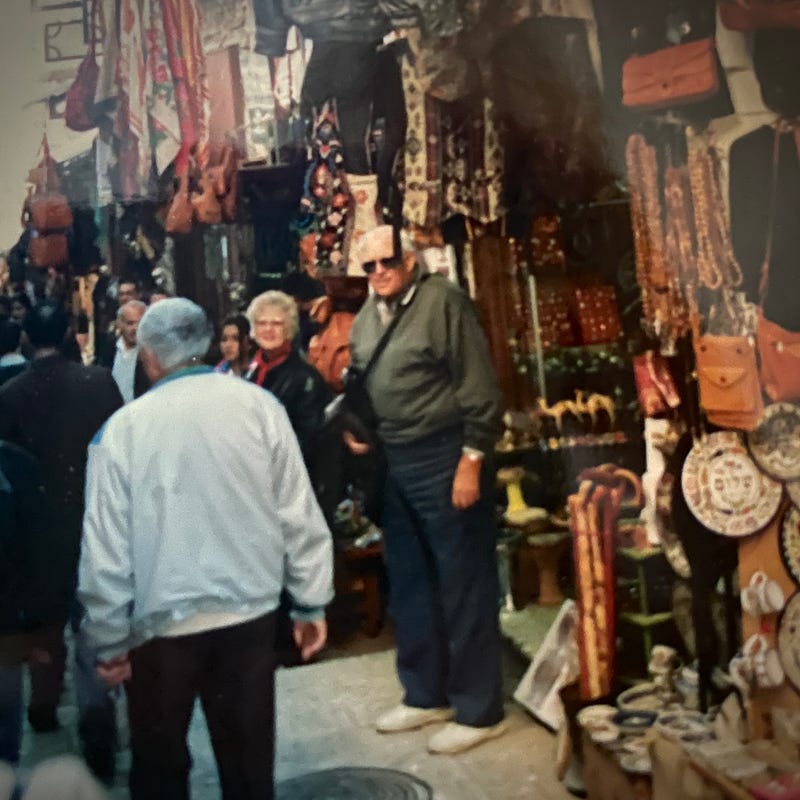
Gerad and I were teaching at an international school in Amman, Jordan in 1994. My mother and stepdad flew in from Iowa, so were with us on this trip to Jerusalem during our winter break at school.
Everywhere you go in Jerusalem, every step you take is an entanglement of past and present histories, religions, philosophies, and politics.
One of our first stops was to walk the Via Dolorosa. It is the road that Jesus walked while carrying his cross. The road leads to the Church of the Holy Sepulchre, identified as the place of both the crucifixion and the tomb of Jesus of Nazareth.
After walking the Via Dolorosa, we entered the Church of the Holy Sepulchre. The Roman emperor Constantine had the temple of Venus demolished to build the original church on this site. During the demolitions, a tomb was discovered that was thought to be the tomb of Jesus. In 326, Constantine’s mother visited and thought she found the relic of the cross of Jesus.
The church was destroyed in 614 by the Persians. Later, the site became a mosque. The Byzantine emperor Constantine IX Monomachus (1042–1055) rebuilt a church on the site. Next, the city was captured by the Seljuk Turks in 1077. Restoring access to the area for Christians was the motivation behind the Crusades. The Church of the Holy Sepulchre was reconsecrated in 1149, 50 years after Jerusalem was recaptured during the First Crusade. That is the basis for the Church that is seen today. (Source)
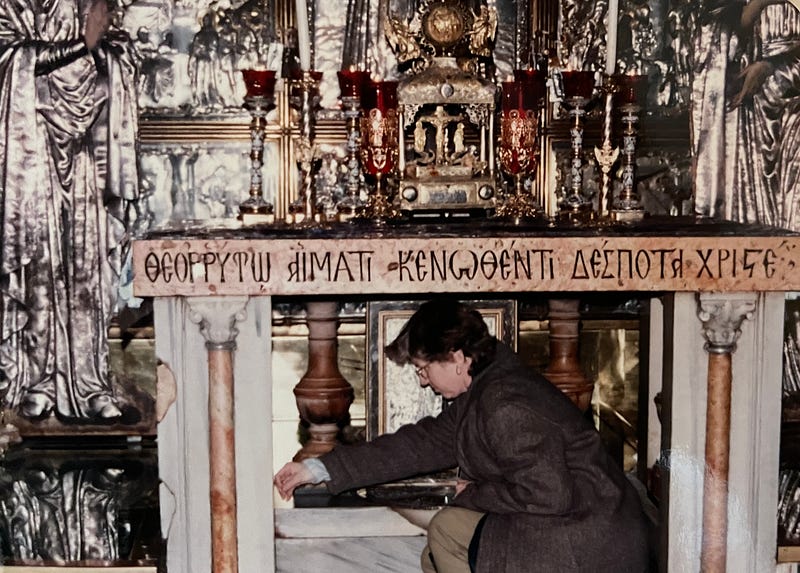
The Church is a complex structure and was full of pilgrims visiting. We stopped to pray at the Altar of the Crucifixion in the main section of the Church.
Various Christian groups control areas of the complex. For me, hearing the singing from a male Coptic Christian group in one of the areas as we left the Church highlighted the spiritual feeling of the visit.
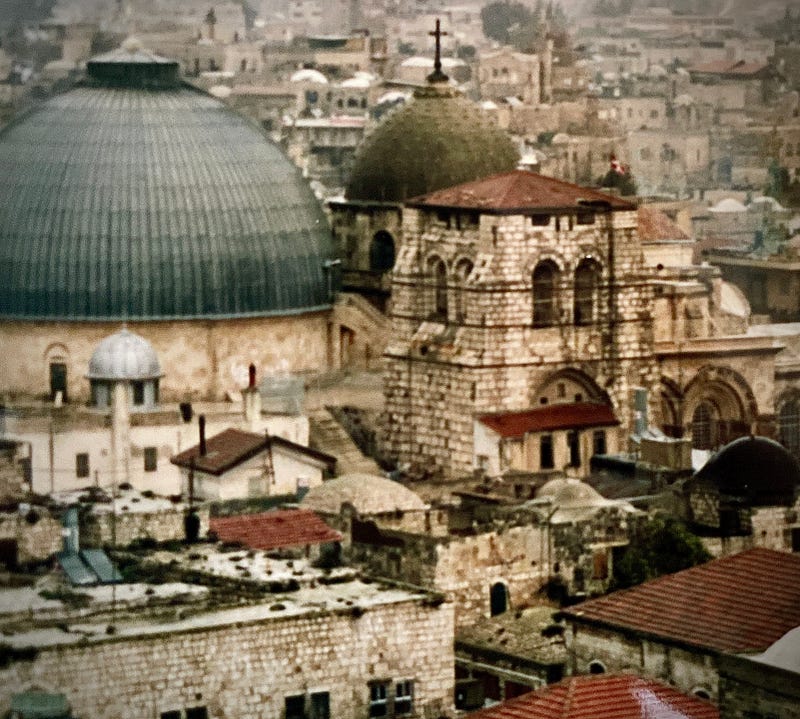
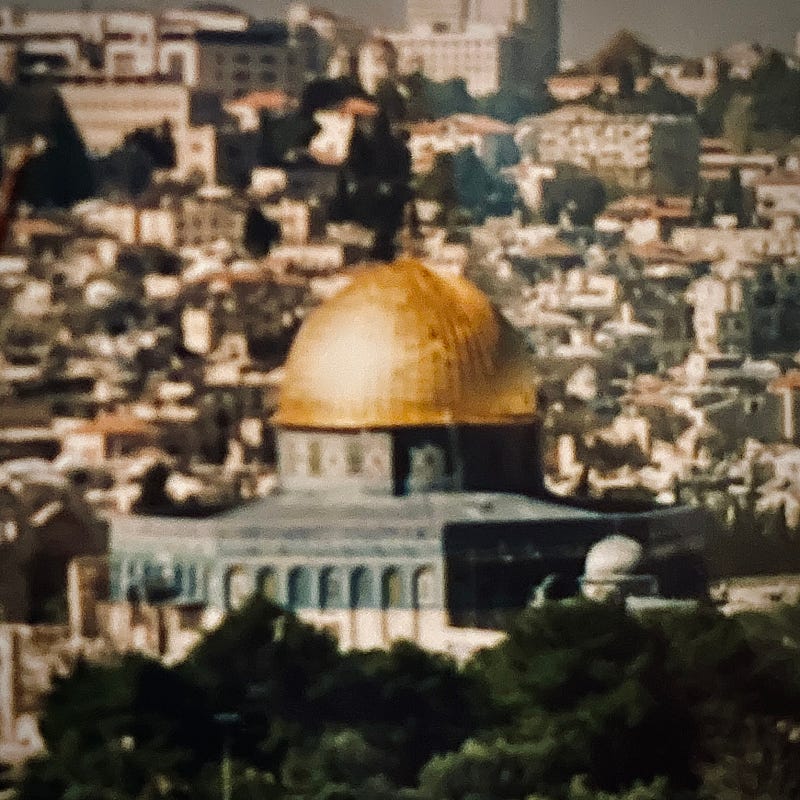
We also visited the Dome of the Rock Mosque. It was built in the late 7th century and is one of the first structures with a distinctive Islamic style. The 65-foot Dome rises over a circle of columns and sits over a large Rock. Muslims believe that Prophet Muhammad ascended from this Rock for an encounter with God. (Source)
The Rock is also sacred to the Jews. They believe this Rock is the one that Abraham was going to use to sacrifice his son Issac.
We entered the Mosque and carefully and respectfully viewed the site. Part of the sacred Rock is exposed but is protected by a railing. One of the men inside came up to talk to us and assured us that it was okay to touch the Rock. I was shocked but we stopped to touch the Rock before leaving the Mosque.
We did not visit any of the Jewish temples but we did stop at the Wailing Wall, also known as the Western Wall, or Solomon’s Wall. Sections of the wall date to the first century BCE. The Wall is believed by Jews to be part of the “Western Wall of the Second Temple of Jerusalem (destroyed by the Romans in 70 CE), the only surviving structure of the Herodian Temple built during the realm of Herod Agrippa (37 BCE–4 CE) in the first century BCE.” (Source).
We stepped back to watch as several Jewish men stopped to face the Wall and to pray. Then each slipped a piece of paper with a prayer into one of the crevices of the Wall.
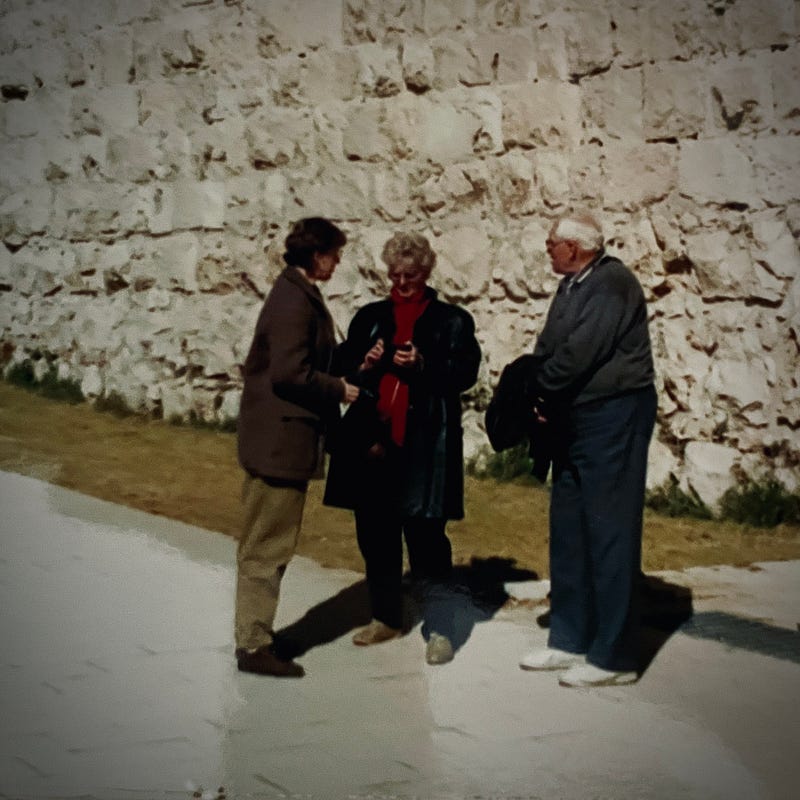
We visited many other holy sites on our tour. We were almost always surrounded by groups of people from various nationalities and religions seeking the Spirit of Jerusalem.
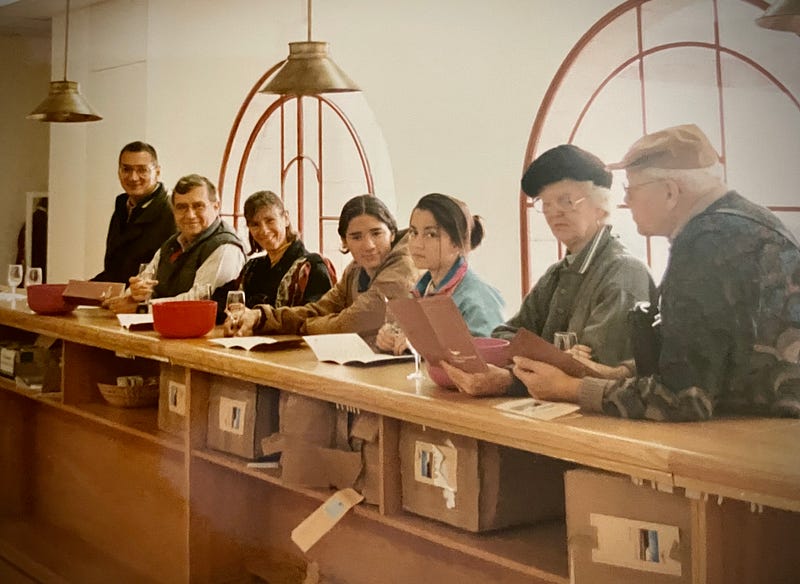
On a lighter note, a few days later we stopped to sample some local spirits at a winery in the Golan Heights. Delicious.
A few other Spirited Stories:
Found During Travel: Places Of Spirituality In California And Austria by Carol Labuzzetta, MS Natural Resources, MS Nursing — Forests, and the Melk Abbey on the Danube River, each resonate with me.
The Amitabha Autumn Night Light Show in Kyoto by Tim Ward, Mature Flâneur — Chion-in Buddhist Temple in Kyoto is beautiful. I visited the gardens there in the autumn. He provides a wonderful description of the Jōdo-shū, or “Pure Land” sect of Buddhism.
A Spiritual Place, a Place of the Spirits by Scott-Ryan Abt — “The air is cold and bracing. The sound is of the wind in the trees and the water flowing nearby. There’s often a goal in mind — the completion of an out-and-back trail or a loop. But other times, the goal is just to be in it.”
Saint John the Baptist’s Head by Rhonda Carrier — Both Christians and Muslims believe Saint John the Baptist’s head is buried in Damascus.
St. Simeon Stylites the Elder by Rhonda Carrier — Saint Simeon sat on a high pillar for 30 years. He was found dead in a prayerful position on his pillar in September 459.
Mount Nebo, Memorial to Moses by Rhonda Carrier — A beautiful, historical, and spiritual site in the Jordan.