Chess Variants
‘Sovereign Chess’ is a Battle Without Loyalty or Humanity
I have a terrible addiction to chess variants. My favorite variants add new and bizarre angles to the traditional game. Uncertainty, asymmetry, obstacles, new goals, or a new spacial dimension. But Sovereign Chess re-engineers the traditional game into a completely new beast.
I’d been thinking about buying Sovereign Chess for about a year. But I’m very stingy with my game dollars. I practice what I preach and do my damnedest to extend my existing collection’s replayability. Even with my weakness for chess variants, I resisted the urge.
So I nearly shat myself when THE INDOMITABLE Mark Bates offered me a review copy. Because NOBODY offers me review copies. I’m the guy who politicizes Pandemic and makes board games play themselves. Then again, I’m also the guy with over a dozen chess variants, so this is definitely my jam.
It’s best to start with the individual changes:
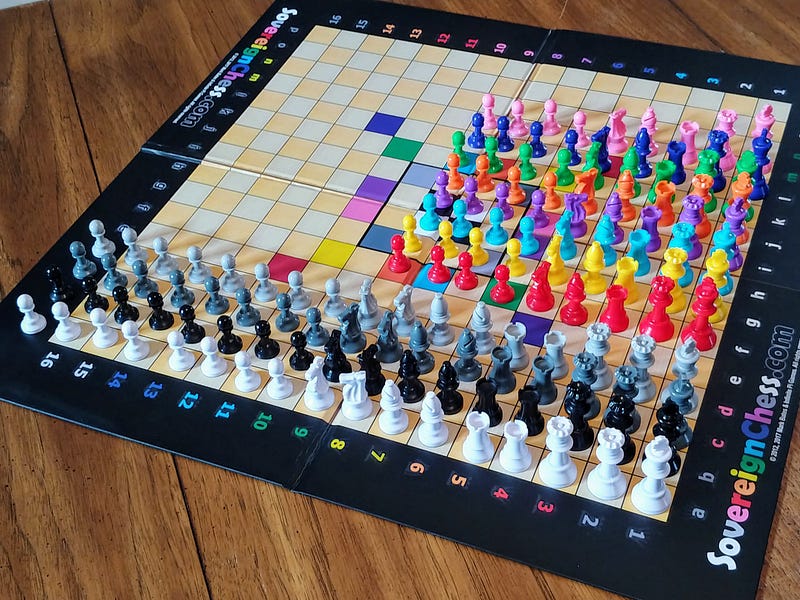
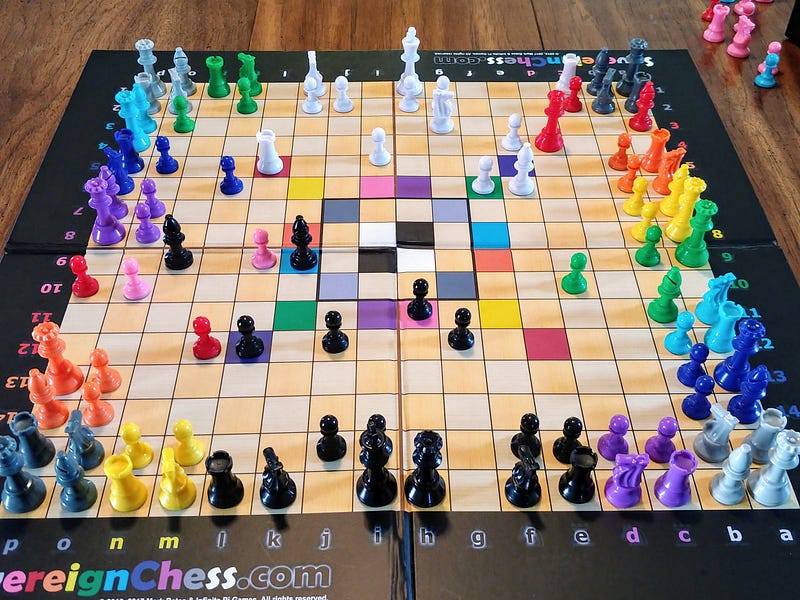
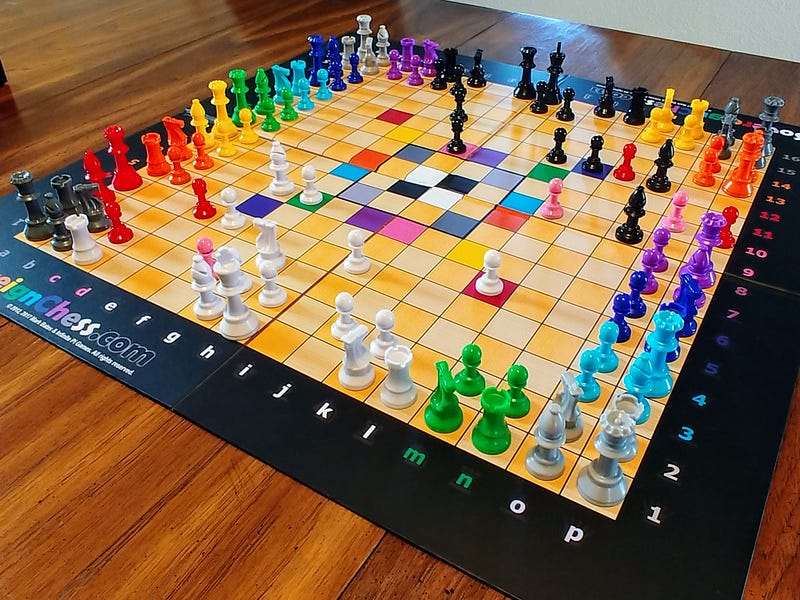
- The board is 16x16. That’s the biggest single chess board in my collection so far (Pi doesn’t count. That board comes in 4 sections.).
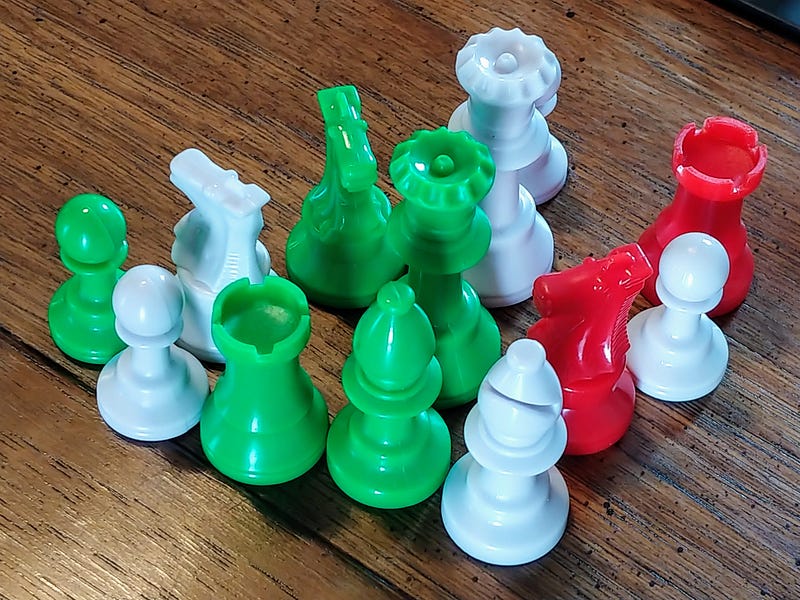
- The two player game requires a staggering 112 pieces. Two traditional white and black armies, and 10 half armies.
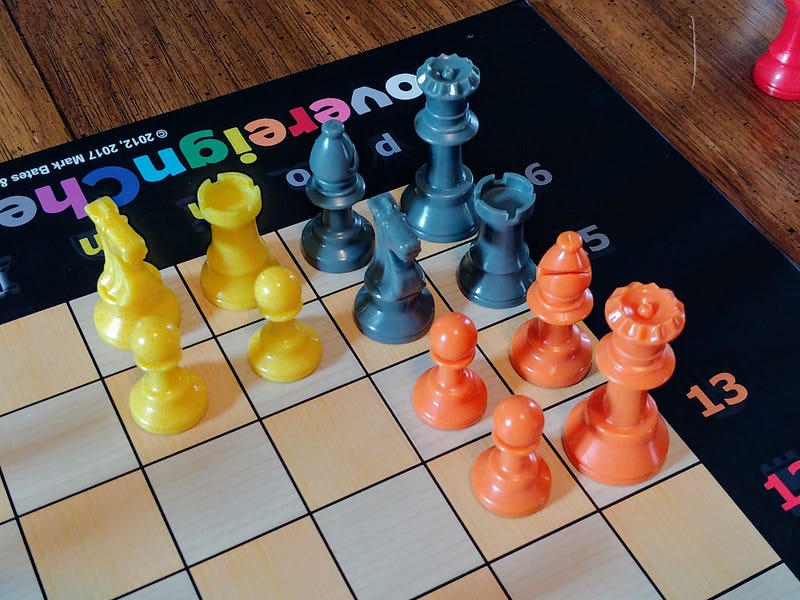
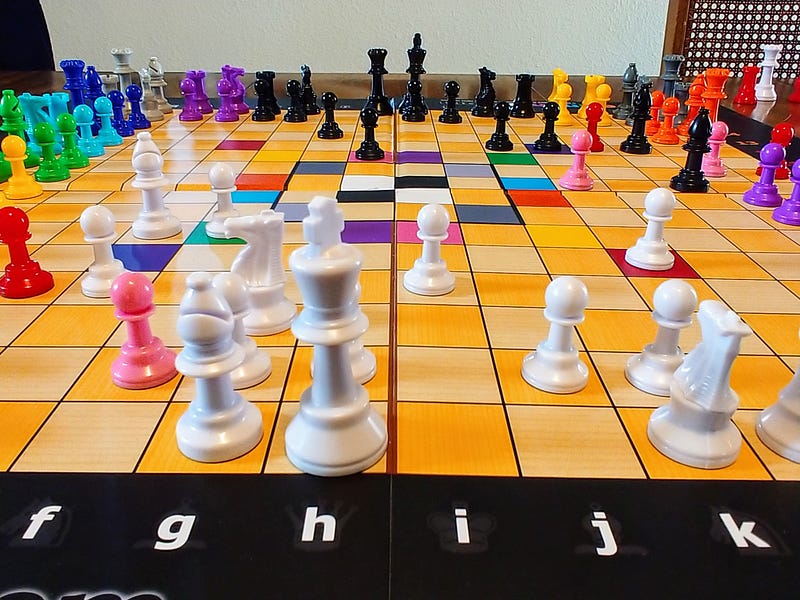
- Because Pawns ring the entire board, they work differently. They still move and capture the same, but “forward” means “toward the center of the board”. They can move in two directions, toward either brown center line. Plus, they can capture along three diagonals.
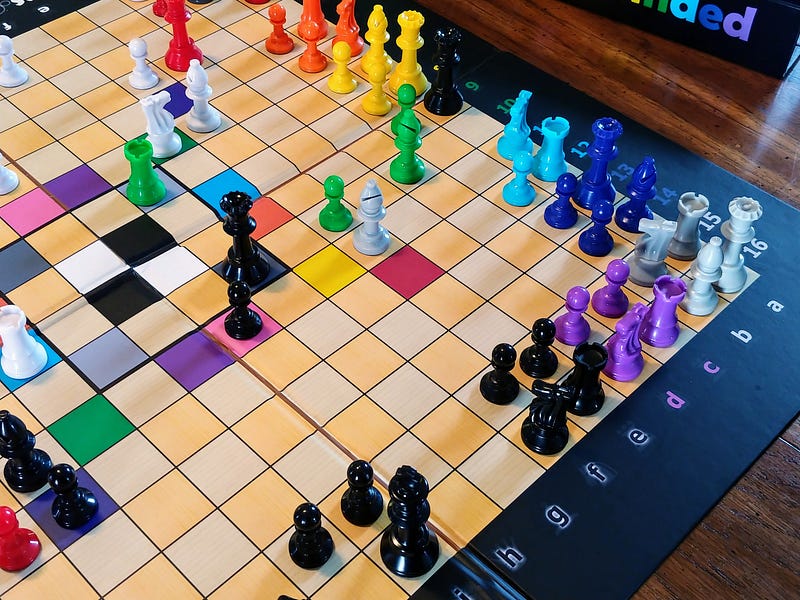
- The board lacks classic white and black squares. Instead, squares are tan and beige. This is because every army has two matching squares near the center, including the White and Black armies. This is important because…
- The colored squares allow you to control the matching army. This is opposed to owning an army. You own the army belonging to your King. If an army is neither owned or controlled, they’re neutral and can’t be captured. So if you land on a red square, you now control the Red army…
- Unless there’s a Red King in play. Kings supersede color control. So you can’t take over your opponent’s original army by standing on a black or white square. But there is a exception to that rule, because…
- Regime Change is a thing.
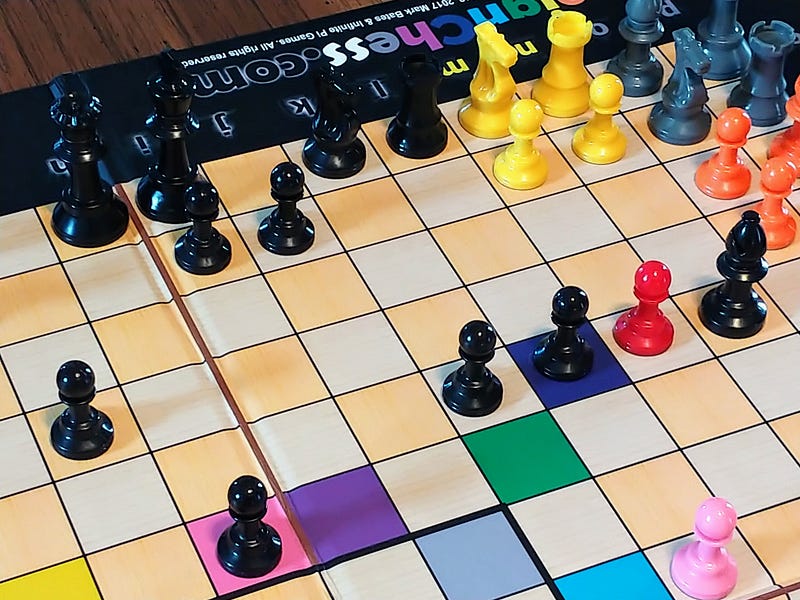
Regime Changes come in three flavors: Coups, Overthrows, and Defections.
A Coup happens when an owned Pawn reaches the center and promotes to a King. Your King then replaces that Pawn.
An Overthrow is mostly the same, except it’s done with another color that you control. You replace that newly promoted Pawn with that color’s King and remove your original King. YOU are now that color. You don’t OWN your former color anymore, but you can still CONTROL it if one of your newly owned pieces is sitting on a square matching your former color.
Defection is very different. Instead of making a normal move, you replace your King with the King of any color you control. Your King is in the same square, but you now own that new color. Just like Overthrows, you lose ownership of your former color.
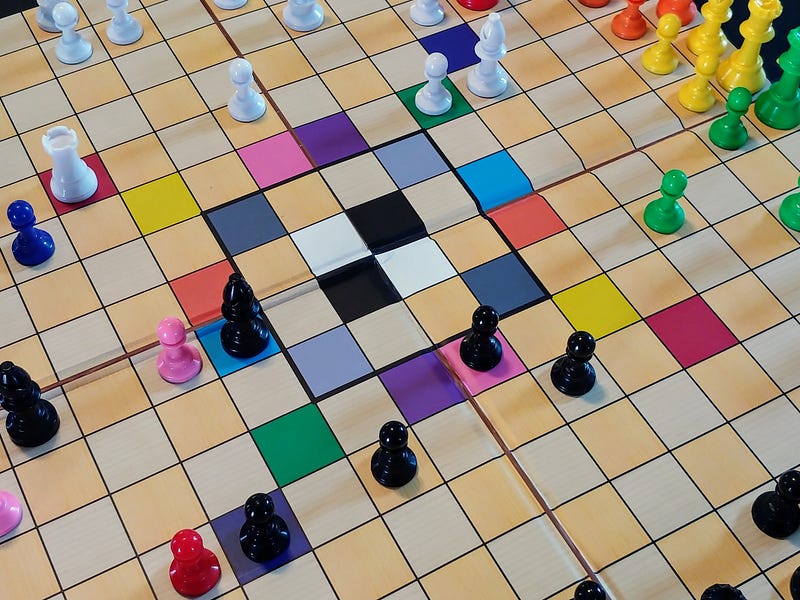
The control mechanics let you to draft more pieces. That’s easy to grok. But controlling one army through another army creates webs of puppet strings. It’s dangerous, because losing one piece can lose you control of that color and any colors that piece controlled.
The control and Regime Change rules make EVERY piece expendable and EVERY army disposable. With Overthrows and Defections you can abandon ravaged armies. Even if the other colors are only “half-armies”, it’s tempting to use up Queens and Bishops and then bounce to another color. That’s not an optimal strategy, but it does kinda reflect modern leadership. Pull a savage burn on one army, and then move to another one. Like a Big Tech exec “failing up” by running one company into the ground, then getting hired by another one.
There’s something parasitic about the whole idea. The player is represented by the King, who can change colors. Where’s the loyalty? An owned army is loyal to you, but you are not loyal to any one army. Kings are like parasites and owned armies are akin to host organisms.
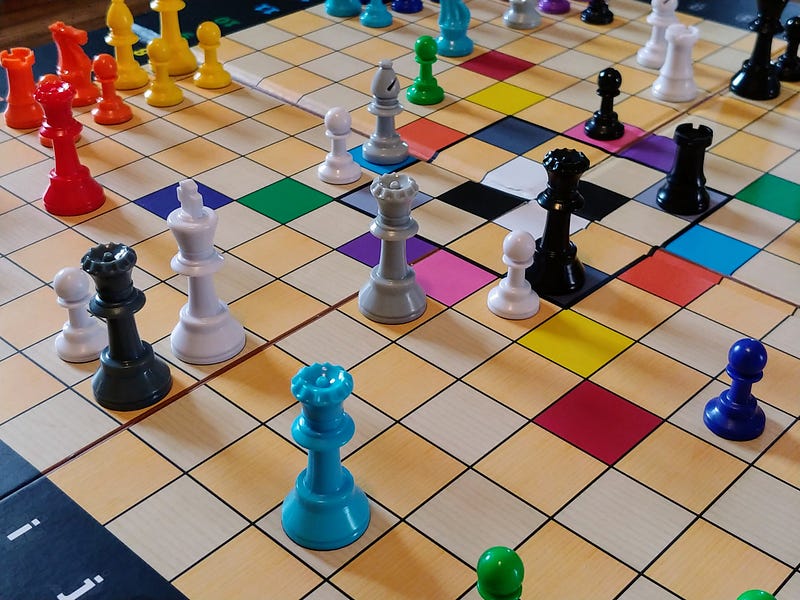
I can’t tell you if Sovereign Chess is objectively fun for the average board gamer. It’s different enough that you’re going to play it wrong the first time or two. Be prepared to notice you’re in check without knowing when it happened. Also, Regime Changes didn’t happen all that often in my games. Maybe they’re more common in the four-player game. It’s also possible I haven’t grokked how to use it best.
Still, Sovereign Chess a serious and legit re-imagining of the game, and WAY better than the majority of variants in my collection.
I’ll eventually get around to mashing Sovereign Chess up with Rogue Chess. Or Knightmare Chess. Or Loka? Whatever I do, it’ll be offensive to ranked chess players everywhere.