
Chess Variants
Why I Love Chess Variants (and You Should Too)
I know two things to be true:
- First, Cards Against Humanity is a shit game.
- Second, you can never take chess variants too far.
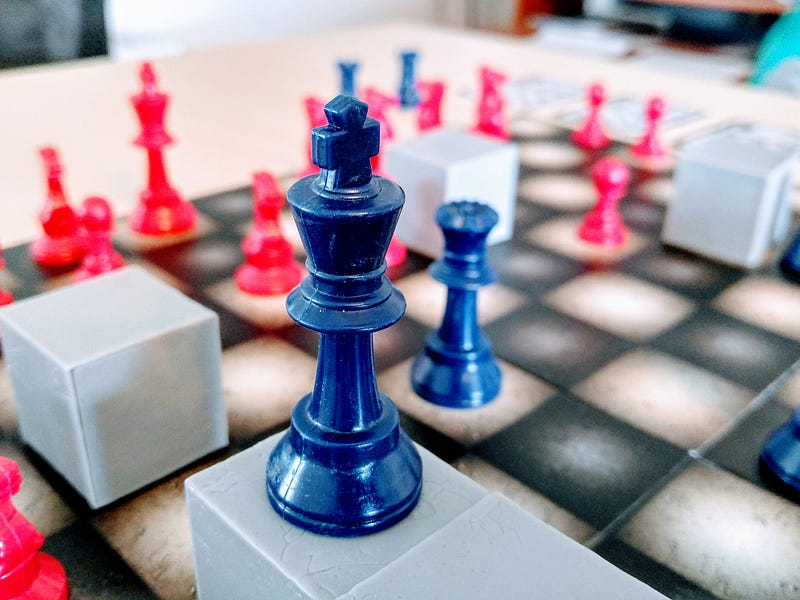
I own an unhealthy number of chess variants. Some are add-ons that change the rules of traditional chess. Some are replacements with their own boards and pieces. Some are playable with one another. Some are too weird to integrate at all. And I love nothing more than mashing them up.
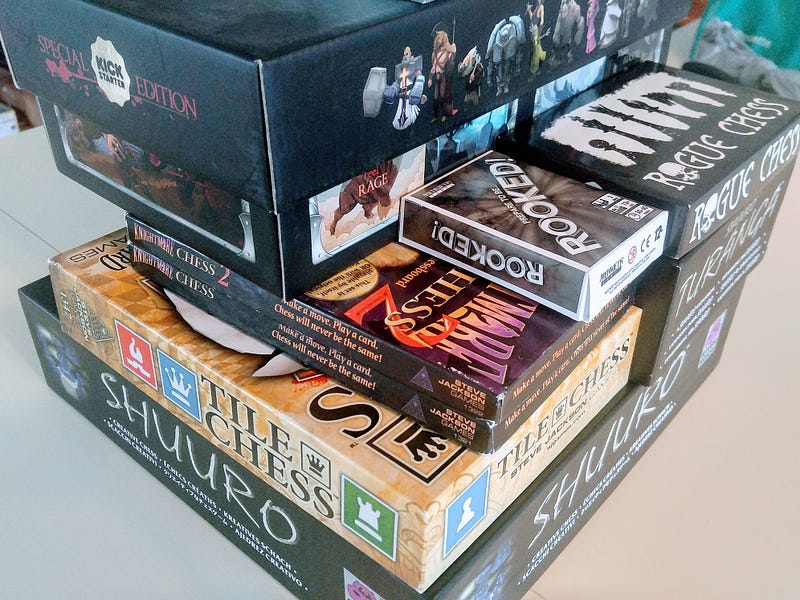
Some of these mashups are way broken, but balance isn’t really the point. The point is experimentation. Trial and error. Variation and selection. Like evolution. Without this constant evolution, I wouldn’t have experienced the pleasure of watching an opponent shit a brick when I played Onslaught to move 12 pawns forward. And you haven’t lived until you’ve seen 7 queens on the same board, all belonging to you.
Keep in mind that not every chess variant is perfect. After buying King Down, I felt more than a bit of buyer’s remorse. The pieces are too miniature-ish. Chess pieces are supposed to be elegant and abstract. Loka suffers from the same problem. Both add wargame-ish mechanics, which work brilliantly, but wargame-ish minis don’t look right on a chess board. And then there’s For the Crown, which I avoided entirely. It too is a full replacement for chess, and getting it to mesh with other variants would be complicated.
But all of this trial and error leads to a toolbox of possibilities. This isn’t a new thing. Stonehenge is 6 games in one box, 504 has a mix-and-match system of rules, and Pyramid Arcade is a board game kit centered around a common piece. With so many variants on the market, Chess isn’t a single game anymore. It’s a system. A toy box of pieces and boards and rules to mix and match as you see fit.
The standard 52-card deck is the most well known gaming system. Everyone knows how to play the more common card games, and it’s not hard to find someone who’s made up their own game. This is different from chess. Sure, there are tons of chess variants, but chess wasn’t meant to be a gaming system. That doesn’t mean it can’t become one.
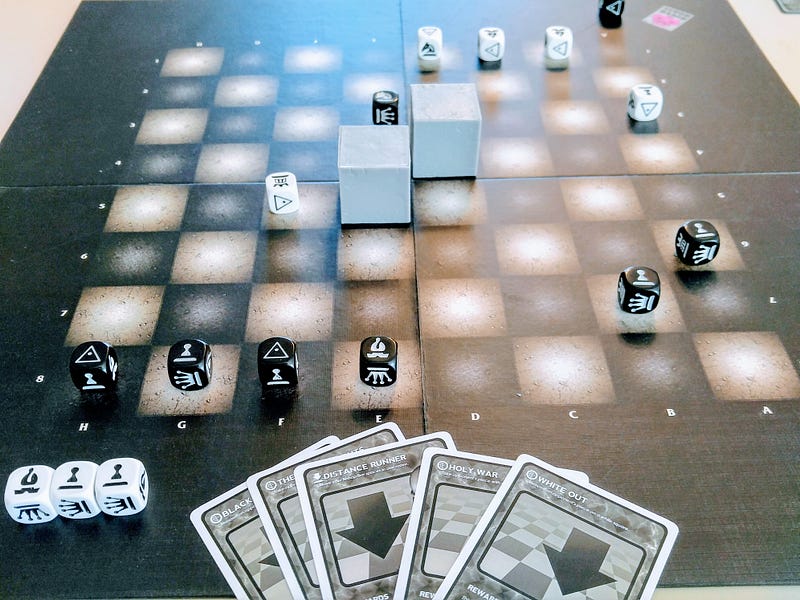
And that’s why I love chess variants. Rogue Chess, Shuuro, Knightmare Chess, and all the rest become something new when combined with each other. The mechanics mesh in ways you can’t foresee, adding surprise to a familiar game. These systems may break under the stress, but it’s just cardboard and plastic. Unlike a video game, changing it is trivial. But the insane creations that emerge are never boring. Some combinations are better than others, but it doesn’t take much effort to rearrange them and get something entirely new.
Below are some of my experiments. I’ve only played them a few times each, so there are going to be breaks I haven’t found yet.
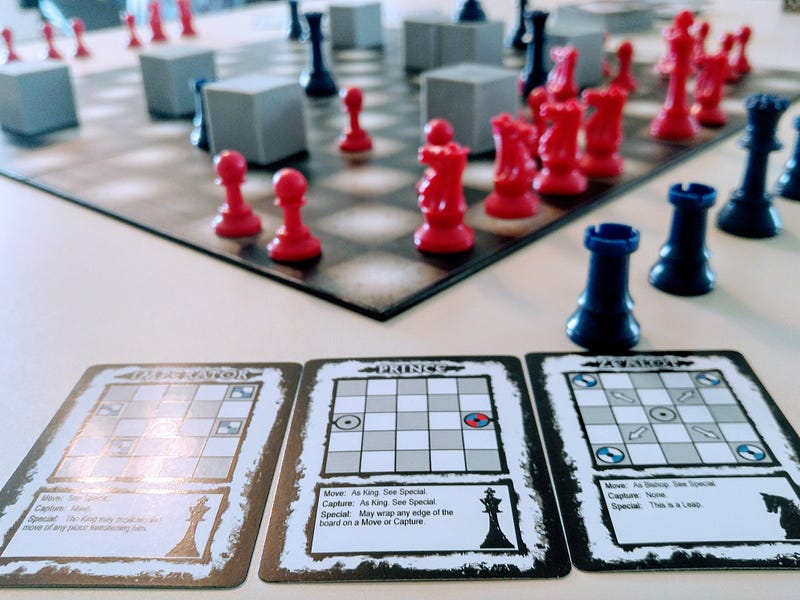
Shuuro + Rogue Chess
- Set up Shuuro as normal, with no variants.
- Draw Rogue Chess cards using Option 3: Total Strategy.
- Play as normal. You can move a piece normally or play a card to make a special move.
- Non-Knight pieces on top of a plinth cannot jump down without playing a Rogue Chess card that allows leaping. If two plinths are adjacent, a piece can move between them normally.
I was tempted to allow non-knight pieces to jump down from plinths, but I figured it should be more of a hassle. Note that some cards just don’t work, but I think it’s better to just let players discard broken cards and redraw instead of trying to determine a definitive list beforehand. Eventually I’ll get around to making one.
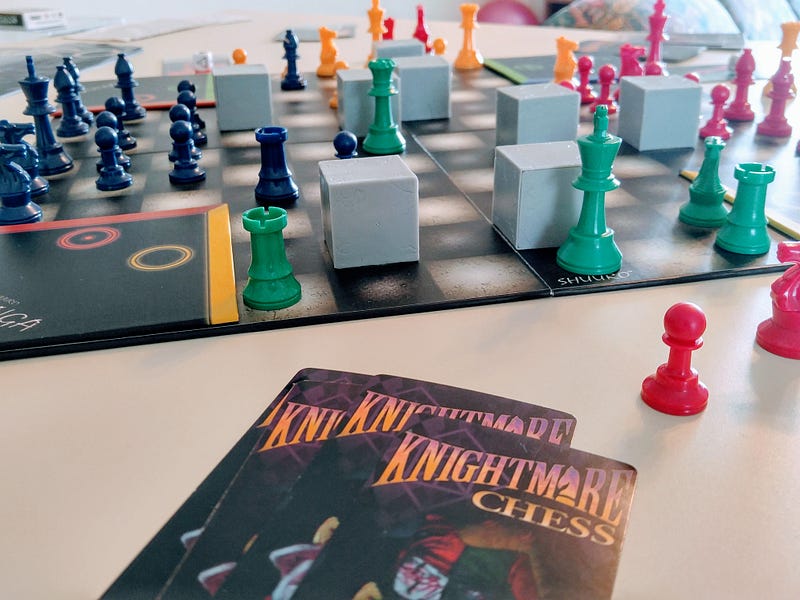
Turanga + Knightmare Chess
I’ve been playing Knightmare Chess since it was released and mashing it up with Shuuro and Turanga just seemed right.
- Construct decks as per Knightmare Chess as part of the Form Armies phase.
- Prepare the Battlefield, Deploy and Fight as per Turanga.
- If a non-knight piece finds itself on top of a plinth (due to either the player’s or an opponent’s card), the player can only climb down with the use of another Knightmare Chess card.
- All other rules of Turanga and Knightmare Chess are followed normally.
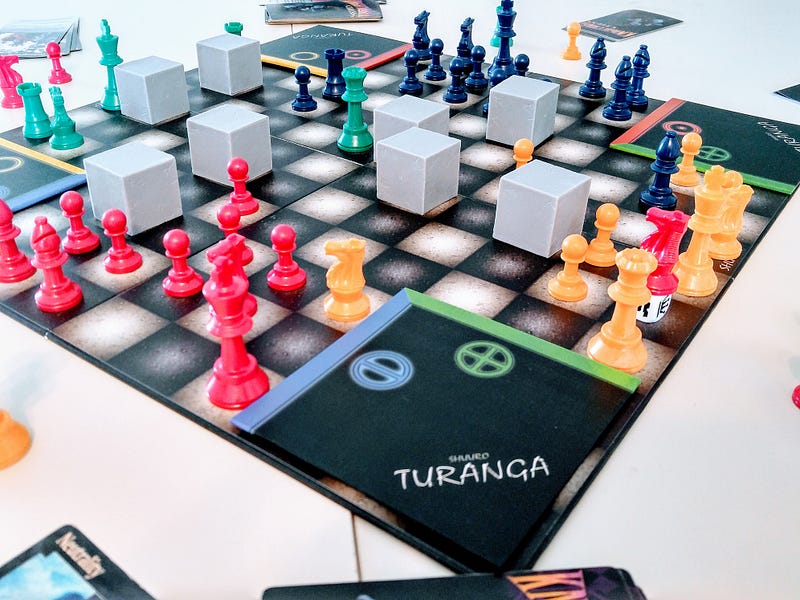
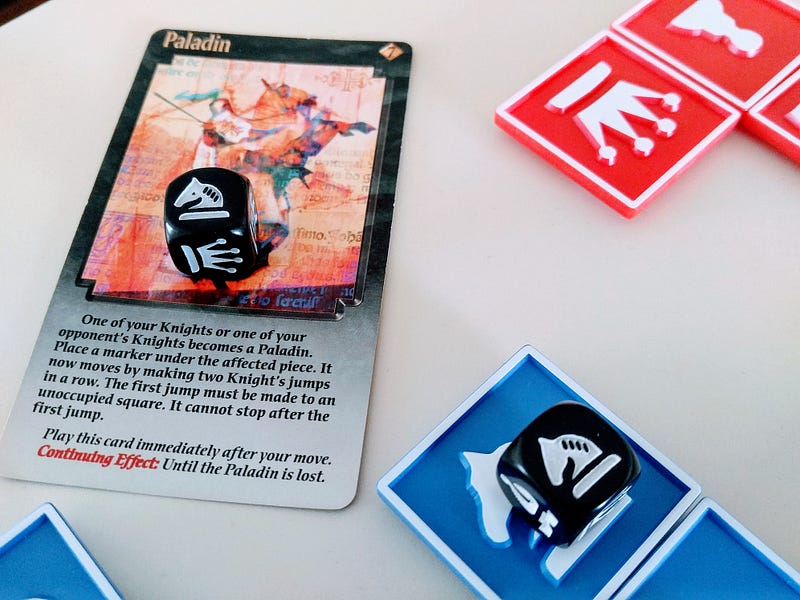
There’s more than one card that allows a piece to jump, making the plinths less of a refuge than before. The Bombard card is the most obvious example, but there are other cards that let you place pieces on any square, jump obstacles, or phase through things.
Another card that can give you a nasty surprise is Onslaught if your opponent built a pawn-heavy army. Also, plinths are not pieces, so cards that let you phase through other PIECES don’t work on plinths.
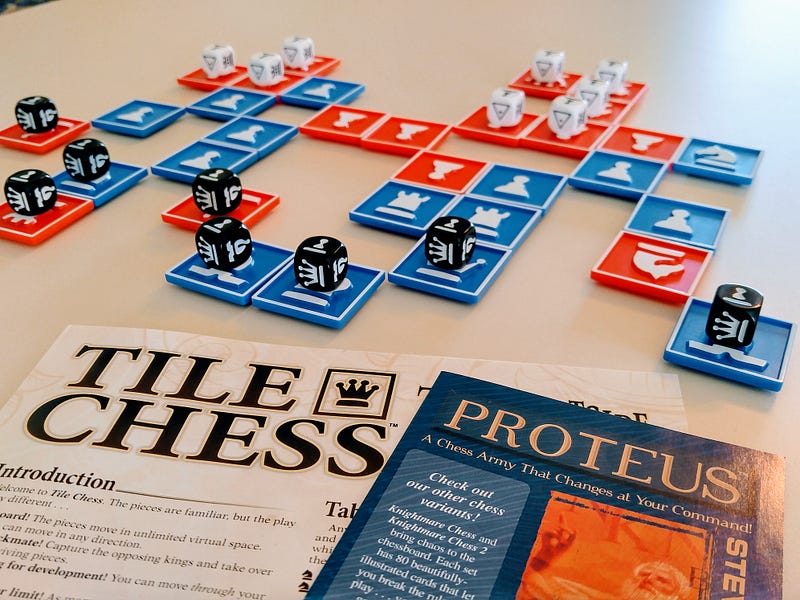
Tile Chess + Proteus
This one didn’t work, mainly because it was confusing for the sake of being confusing. Chalk it up to a learning experience. Also, Proteus is WAY out of print, but there’s one copy on Amazon if you want to pay $45.
- Set up a two-player game of Tile Chess as normal.
- Tile Chess tiles are both pieces onto themselves, and act as a board for the Proteus dice.
- Set up a Proteus game with all dice starting as pawns.
- Players must fill in the row closest to them before placing dice on the next row. White sets up first, then black. The player with the white Proteus dice moves first.
- Each turn, players may either make a Proteus move or a Tile Chess move.
- Proteus moves: Move a die, then shift a different die.
- Tile Chess moves: Move a tile. Any Proteus die on top of it moves with it, regardless of who owns it. If a player captures a tile, any Proteus die on top of it is also captured, even if it belongs to the capturing player.
- If a player captures the opponent’s King tile, they win.
- If any player has one Proteus die left, points are scored and the winner is determined via Proteus rules.
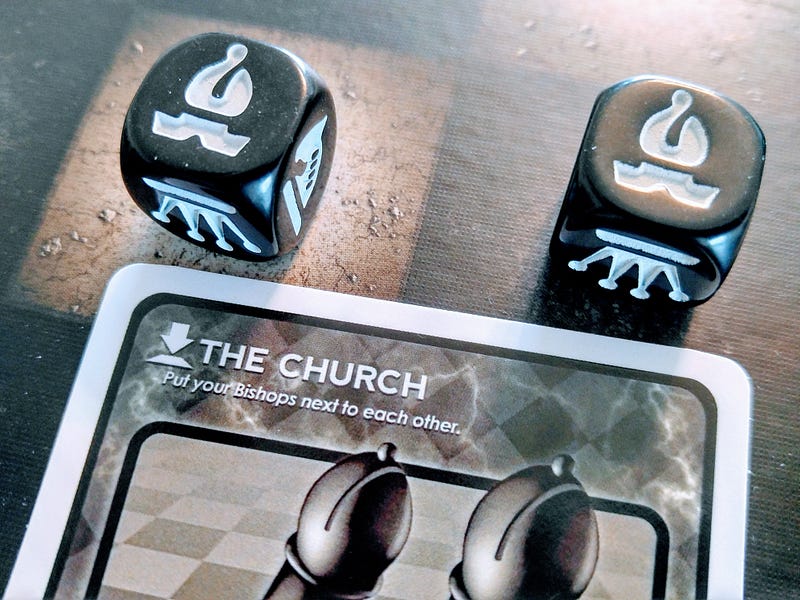
Rooked + Proteus
Both of these games are out of print. Rooked is listed on The Game Crafter, but you can’t buy it because one of the cards has a major misprint and the creator disappeared.
- Set up Proteus as normal.
- Draw Rooked cards as normal.
- The game ends when one of the following happens:
- 1) If a player scores all five of their Rooked cards, that player immediately wins.
- 2) If a player has only one Proteus piece left, points are totaled per the Proteus rules and the player with the most points wins.
After the first few moves, it becomes apparent which kind of victory you should go for. It’s very possible to have your army decimated and still win because you knocked out all your cards.
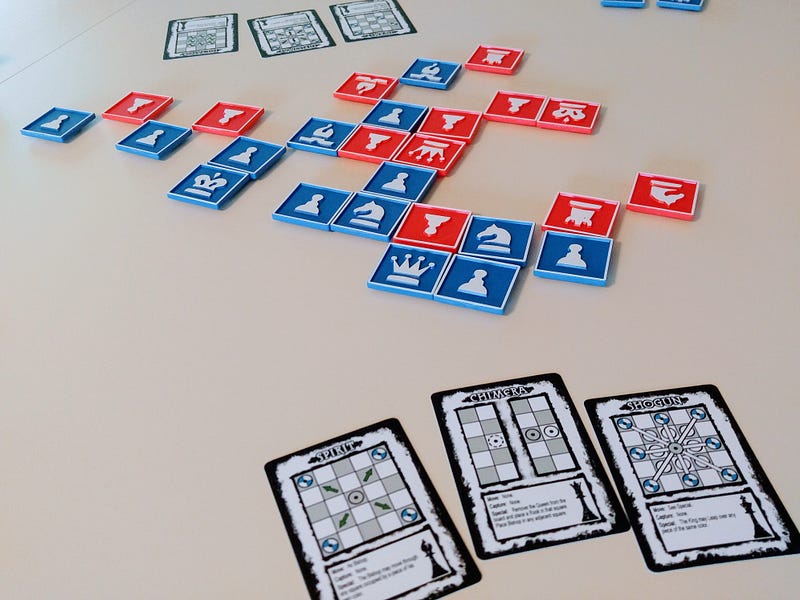
Tile Chess + Rogue Chess
Rogue Chess doesn’t upend chess conventions as much as Knightmare Chess, so it’s a bit more sane.
- Set up Tile Chess as normal.
- Draw three Rogue Chess cards as normal.
- Play normally according to both sets of rules.
- The player who captures the opponent’s King per the standard Tile Chess rules WITHOUT using a Rogue Chess card wins.
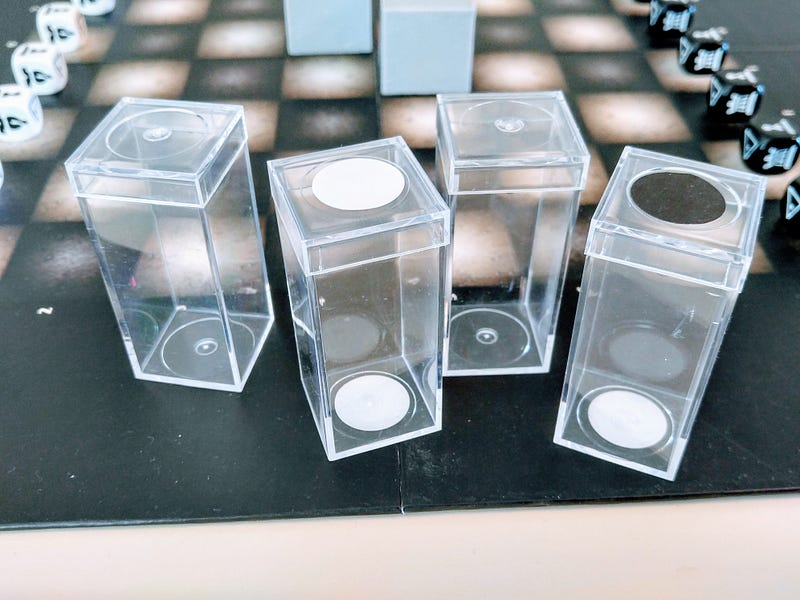
A final note on ObstructionChess: it’s crap. And the only reason I kept it was to tear it down. Fuck this thing. Fuck the guy who made it. Fuck Chess.com, the only site that sells it.


