Son in Law: The Ultimate Thanksgiving and Fish Out of Water College Movie
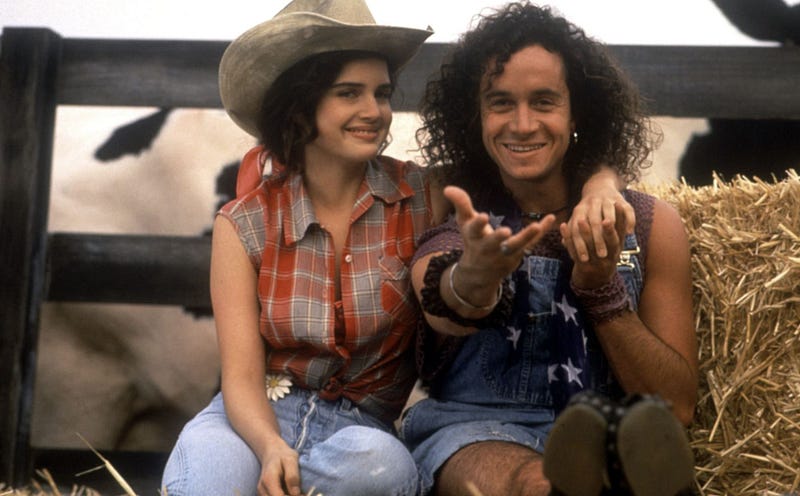
At first glance, Son in Law seems emblematic of a trend in early 90s film where a wacky SoCal slacker wreaks havoc in a straight-laced setting. But it blends several genres together seamlessly and was ahead of its time with gender dynamics, all while being a Thanksgiving movie.
When it comes to holiday-centric movies, Halloween and Christmas are the two major cash cows.
They’ve gotten scads of movies ranging from classics shot in the Golden Age of Hollywood to 80s thrillers and 90s comedies still lovingly remembered to this day, like It’s a Wonderful Life and Home Alone. There’s even a sizable number of classic horror movies preserved in the Library of Congress, like Invasion of the Body Snatchers and 1978’s eponymous Halloween.
Then you have the other end of the spectrum with horror B-movie delights that become cult classics which get replay at theaters around Halloween like Killer Clowns From Outer Space, and the glurge buffet of cheap Hallmark Christmas movies and forgettable tree light-covered titles that end up at the very bottom of the average smart TV’s free movie list.
But what about the Thanksgiving movie?
After all that excitement leading up to Halloween and the subsequent candy and/or pumpkin cocktail hangovers, November zips right by with constant reminders to buy shit for the holidays. But just a month before Christmas, the be-all end-all for retail, Thanksgiving is there with food, football, and fighting with your family.
But it’s a very tiny subgenre as far as holiday movies go. Much like its retail counterpart, Thanksgiving is an afterthought in the industry if even considered at all. You might see a pithy turkey plate underneath the fresh pile of shiny red tinsel and string lights, but the Yuletide onslaught commences the second the Halloween candy goes on sale November 1. Hell, BEFORE IT in some places as irate social media posts have depicted.
The Thanksgiving movie is like a heptagon. That odd seven-sided shape that rarely gets as much acknowledgement as its fifth grade geometry counterparts like the hexagon and octagon (an apt analogy given the order of holidays!)
So rarely-made is the Thanksgiving movie, that most of my Twitter feed is littered with stories and photos of watching Christmas movies with the family after the big feast. And I don’t limit myself to only following other alternative media folk who lack families or are estranged!
The most well-known Thanksgiving movie in Boomer, Gen X, and Millennial consciousness has to be Planes, Trains, and Automobiles where the late great John Candy plays shower ring salesman Del Griffith who accompanies the irascible executive played by Steve Martin, who just wants to get home to his family for Thanksgiving while Del doesn’t have one to spend the holiday with.
But Son in Law is a great contender for this minuscule genre as coming home for Thanksgiving is not only the crux of this story, it also encompasses other genres: the college movie, and the “fish out of water” story that has been told in numerous mediums since the beginning of time.
With so many movies from prior eras finding excited new audiences decades later, Son in Law absolutely deserves a second look from those of us who grew up with it and younger audiences who don’t have that 1990s context.
It isn’t the deepest and most complicated story ever, or the kind of symbol-rich art that gets picked apart in university classes before the 90-minute YouTube commentaries from media studies PhDs. But Son In Law is a movie that not only holds personal significance to me, it’s one that has a surprising amount of hidden depths.
I find it interesting that Roger Ebert panned this movie while giving the trainwreck The Freshman, another fish out of water college movie that wasn’t nearly as engaging or cohesive, such a glowing review. I take it there must’ve been some personal vendetta towards the SoCal stoner type that apparently dominated youth-centric media in the 80s and 90s. After all, that’s partly how we got into the student debt crisis.
It doesn’t help that Pauly Shore is one of those creators people love to hate and his movies were this time capsule of that early-mid 1990s Gen X slacker stereotype. While he was born into a showbiz family what with his mother owning The Comedy Store, Shore got his start on MTV and his major film breakout in Encino Man paved the way for the rest of his best-known titles in the 90s which eventually got dismissed as crude, unfunny, and overplayed.
But no matter how you feel about him, his early 90s movies were one of my first major exposures to life in southern California. Not simply using it as a setting for countless movies or TV shows, but the actual ground-level culture and life. I watched Son in Law countless times growing up and loved how it juxtaposed these two drastically different settings of paradisiacal and transgressive college life in LA and the more buttoned-down rural farm town Becca is from. While you could definitely argue that Bio-Dome and everything that came after it were when Pauly Shore’s antics were just getting overplayed, Son in Law has some surprising hidden depths and was shockingly ahead of its time with respect to typically gendered tropes.
It feels especially compelling watching this movie again 30 years later because some of these same concepts just haven’t changed while others have drastically. There’s been endless discourse on rural life versus huge cities like LA, and college campuses are still often a young person’s first exposure to other cultures, subcultures, and even the vast differences in the pace of life depending on what part of the US you come from. The ubiquity of the Internet drastically changed this in some respects, but modern Internet usage can bolster a narrow worldview just as much as it can shine a light of different walks of life.
Revisiting Son in Law in my late thirties actually made me appreciate it more and want to dive into the college movie genre once again, but also how rare it is to see a Thanksgiving movie!
Son in Law is a fish out of water story, and a bidirectional one at that.
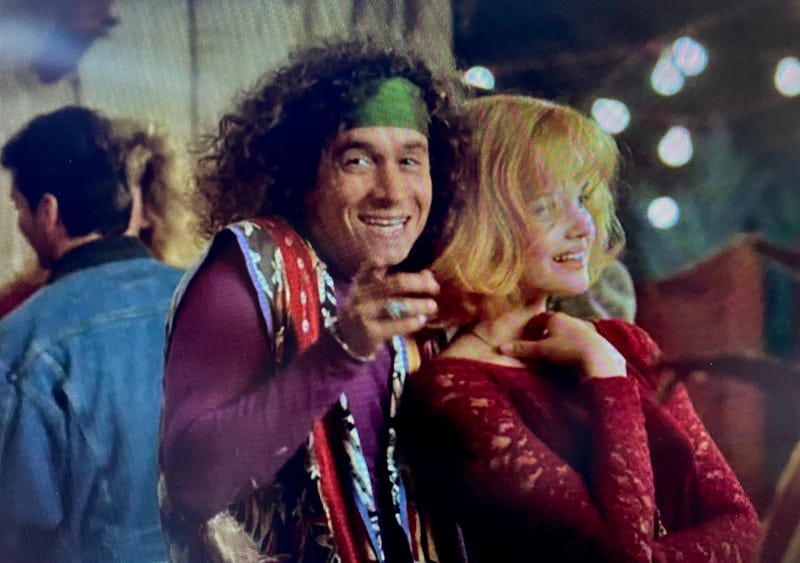
Protagonist Rebecca Warner (later shortened to Becca as a nod to her character development) is your classic bright-eyed ingenue of a farm girl leaving home for the first time to go to college. She’s attending UCLA which is quite a culture shock from her small and conservative farm town in South Dakota.
A majority of the film’s fish out of water context is derived from Pauly Shore’s Crawl, the resident advisor in Becca’s co-ed dorm. But we see a small and predictable amount of this with Becca as she and her family take in UCLA and environs for the first time, and it’s this totally alien world to them. Even if the school’s party atmosphere is a little hyperbolic, as per usual for 1990s and 2000s college movies, the film does a great job at depicting how out of place she feels.
And while it’s not that deep, we even get a little symbolism with the horse statue that Becca’s grandfather gave her. At the rowdy Halloween party where the entire dorm seems to be involved in varying degrees of sexy or elaborate costumes, she’s uninterested and is seen wearing regular clothes and carrying her laundry. The crowd has spilled into her room where a party guest sat on her desk, accidentally breaking one of the horse’s legs.
It first looked like Crawl has nefarious intents when he’s going around the dorm with his video camera on move-in day and follows Becca to her room, citing her “charisma”. But it turns out he actually does express concern when the culture shock is just too much for her, after she tearfully tries to call her parents wanting to drop out after the horse’s leg symbolized her fear of losing herself in this strange new world she still hasn’t adapated to.
Crawl stops Becca from making the call and gives her a pep talk showing an old picture of himself where he looks just as staid as she currently does. He mentions being in college for six years, unsure what to do with his life (the belief that such a situation was normal is totally what fueled the student crisis, trust) he says the point of leaving home for college is to start anew and she’s got to mingle with new people, and he wants to guide her on this journey. This leads to a makeover scene that causes her to come out of her shell and thrive in LA’s bright and fun milieu.
Becca full-throatedly embraces her transformation and is happy to become a more assertive and outgoing young woman.
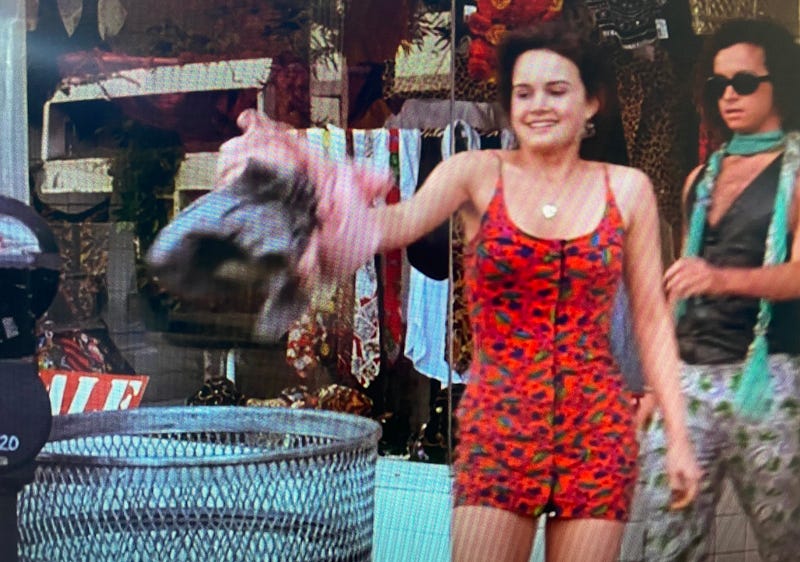
Son in Law was incredibly ahead of its time in some respects and this is definitely one of them. Because Rebecca Warner transforming into Becca was not just another case of “Hollywood Frumpy woman gets some waxing, a haircut, and new makeup to chase the dream guy”. Even if it was a male character who spurs this change, it’s really Becca who decides on her own to change and take on a new look and persona.
The trope of the makeover being both a showing and telling of a character’s metamorphosis is older than dirt and often steeped in harmful stereotypes. (Seriously, imagine how it felt to be anything but white, thin, and with smooth stick-straight hair at the height of makeovers in teen movies growing up in the 90s.) But upon viewing Son in Law again with all this trope literacy under my belt, I LIKE THIS SCENE EVEN MORE.
For instance, John Hughes movies are guilty of making the weird goth chick into someone the jock would want to go out with (I loathed this aspect of The Breakfast Club), and countless films that have a scene where some external force makes over the “Plain Jane” into this head-turning fox is usually for the male gaze.
But Son in Law did the opposite. Hell, it’s vindication for that stupid pink dress Alison was given, since Becca hurls her plain pink cardigan into the trash!
As The Take points out in the above video, the woman being made over usually lacks agency in how her looks are being changed and the oncoming character development since the makeover tends to be brought on by an external character rather than internal motivation.
And it starts out looking like a typical makeover when Crawl takes Becca to Venice Beach and he explains that people there are just different than they are back where she’s from. He takes her to a funky-looking clothing shop and it’s implied he helped pick out the new, sexier outfit she leaves in. But she takes the reins from there.
Becca CHOOSES how she wants to change: she excitedly squeals, “I want her hair!” when she sees another woman after they leave the clothing store, then Crawl accompanies her to a salon. Then she decides to get a tattoo and Crawl totally cheers her on in this decision despite lacking ink himself. He says it’s permanent, but doesn’t try to talk her out of it: even saying “It’s up to you.” She does get a small tattoo of a butterfly, which could arguably be a symbol of metamorphosis.
Crawl does it again later when he gives Becca’s mom Connie a little makeover that ends up revving the gears in the bedroom again. It could be construed as just more reinforcement that women only matter for their looks. But Crawl points out to her that women in LA still get picked up well into their sixties, directly saying that an older and married mom doesn’t have to completely give up on being sexy. Even if it was strictly for male gaze purposes, this was still pretty damn revolutionary in 1993.
Makeover scenes are dime a dozen in light-hearted movies, especially from this era. But even by 2020s standards, it’s rare to see a female character having this degree of agency when she’s being made over. It’s also worth noting the generational differences that Connie lacked agency in the makeover and it was really for her husband, while Becca fully embraced the makeover for herself.
It’s even more interesting that it’s been established Becca has a boyfriend back in South Dakota, Travis, who she misses when she first arrives at UCLA. But since he loved her the way she was, she clearly didn’t undergo the makeover for him. But the real turning point of the story begins when Thanksgiving rolls around, campus is emptying out, and no one in Crawl’s family is hosting Thanksgiving so Becca invites him to South Dakota out of a genuine gesture of cementing their friendship.
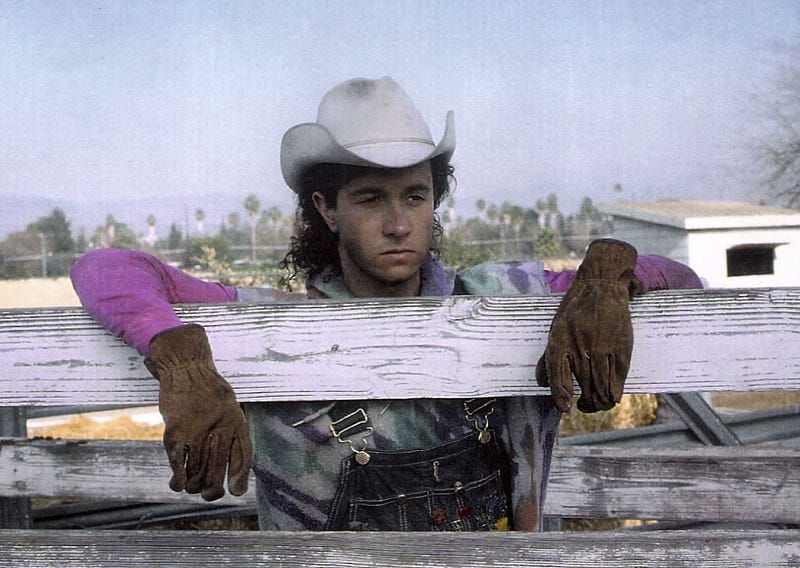
Back where she came from after this monumental change, Becca has to reconcile with the woman she’s becoming versus the farmer’s daughter she was in South Dakota. Ultimately, Crawl has to win over these “clay of the New West” types despite them not understanding his SoCal slang and overall lack of direction in life.
Because of course, there’s a love triangle!
Crawl and Becca are just close friends, despite Crawl obviously wanting to sleep with her. But she sees how much more worldly he is than her and indeed wants to learn from him, whether he has nefarious motivations or not. There’s a little tension when she discusses Travis with him because he points out from his experience watching co-eds come and go for years that their long-distance relationships with their high school sweethearts almost never survive. They’re figuring themselves out while they’re so young. They change, often a lot! I know I sure as hell did in that age bracket.
Becca has to reconcile not just who she is versus who she was with her family, but also with Travis. Does she really want to seal her fate at just 18 to become his wife?
There’s even this scene that I just appreciate so much more now as an adult where Travis proposes to Becca while their families and most of the town are at a higher-end restaurant. Her parents think it’s this incredible sweeping romantic gesture, but Becca is internally freaking out and kicks Crawl under the table in an attempt to beg for help. First Becca missed Travis, now she sees there’s so much of life and the world she has yet to experience and could be closing herself off from if she marries this man at just 18.
Now Crawl’s not just Becca’s weird friend who was alone at Thanksgiving. He’s her alleged fiance! And now he has to win over her family! Will they fall for the charade?!
So we get the cliched but still enjoyable action of watching Crawl adapt to farm life, using his SoCal slacker methods to simplify farm work, and solving intergenerational conflicts among the men in the family since Crawl himself doesn’t really fit in with traditional gender roles aside from his obvious boner for Becca.
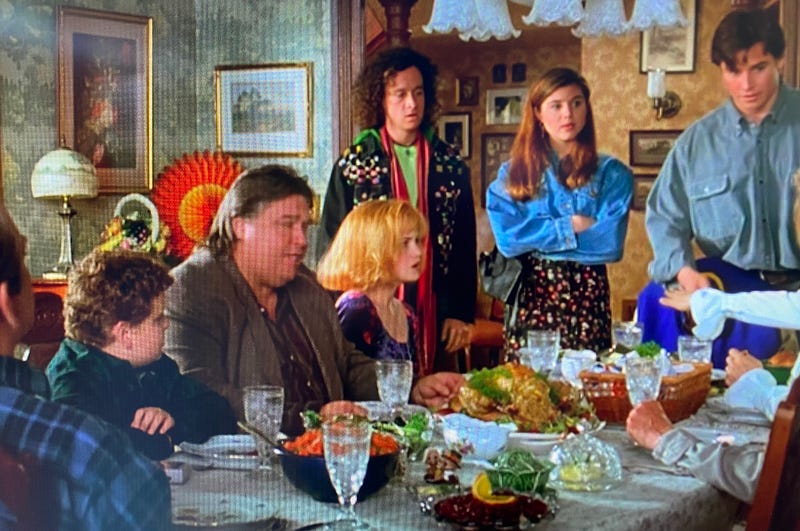
And since it’s a Thanksgiving movie in rare form, we of course get a scene where the clueless surfer bro is about to get murdered by a turkey. Multiple times, no less!
Son in Law once again was ahead of its time by having women characters cooperate and gang up against a conniving man instead of competing with each other for his affection.
Son In Law was ahead of its time in many respects, but particularly with the idea of Tracy (hey! It’s Kelly from Saved By the Bell!) being slut-shamed while she was also used by Travis, so the girls gang up against him later.
With the horrific direction much of the US is heading in, where numerous older women have said they find it shocking they had more rights as teenagers than after the fall of Roe, Travis is even more outwardly evil than I remember him.
When I constantly watched this movie as a kid, I just thought he was a brutish jock who wanted to have it both ways with sleeping with other women yet marrying Becca. A tale as old as time that is still told in real life. As an adult, I’m not only aghast that one would propose marriage so young — but the idea that Travis really just sees Becca as property.
He wants to chain her to him through marriage, and is upset that she doesn’t just change her looks when she goes off to college. We’re shown how much Becca grows and changes upon coming out of her shell by being exposed to this new world at UCLA. He just wants her chained to him regardless, even though he’s displeased with how much more confident and extroverted she’s become. Becca’s no longer that ingenue farmer’s daughter, she’s clearly soaked up Crawl’s influence in addition to the southern California sun.
It’s implied that Travis’ family has major real estate holdings in the town and that this is truly a means of securing the Warner family’s legacy. Especially when Walter expresses worry about who’s going to inherit the farm, since his younger son Zack is more interested in tinkering with computers than operating a combine. Given what would become of both major cities and even rural towns in three decades, he’d probably sell the old Warner farm to Amazon to become a fulfillment center.
Travis conspires with Theo to make it look as if Crawl slept with Tracy when the two were in fact drugged at his bachelor party. It looks like yet another misogynist setup with the temptress versus the young bachelor, but nope, Travis is just a scumbag and Tracy doesn’t realize she’s being used. Becca doesn’t fight with Tracy or blame her for what happened. She pins it all on Travis, as she should! Tracy even gets a seat at the Warner family’s Thanksgiving dinner, cementing these women as being cooperative acquaintances rather than seeing each other as competition for a manipulative rich guy.
The ruse that Becca and Crawl were going to get married is also left ambiguous at the end, when they tell the family that they’re going to spend more time together before seeing if they want to marry. It could imply they’re just gracefully getting out of the situation as friends after keeping up the charade all this time, or that they did grow close enough to each other through the course of Becca’s first college semester and Crawl’s South Dakota trip.
Son in Law then subverted the major romcom trope of the era by not directly showing or telling the audience that Crawl and Becca live happily ever after! After all, the story was more about Crawl disrupting this small town and getting a bunch of rural conservatives to like him and adopt his slang while being framed in the transformation of this timid rural farm girl into a bright and extroverted LA beachcomber after she starts college.
So, it’s a college movie and a fish out of water story while also utterly centering Thanksgiving. Something you don’t see in movies all that much.
Whether you’re revisiting it for the umpteenth time as an overanalyzing digital media professional like myself, or you’ve never seen this movie, Son in Law should absolutely be in your post-pumpkin pie queue rather than yet another Christmas movie.