
POLITICS AND AMERICAN GOVERNMENT
Some WANT the Government to Fail
There’s Madness to Their Method

Last Saturday, the United States dodged a bullet. In a month and a half, we will be facing the same situation, with all that implies, and the House is in shambles. Keven McCarthy, a Trump-supported conservative who had the temerity to talk to Democrats and pass a last-minute continuing resolution (CR), was punished by Matt Gaetz and other ultra-MAGAt (pronounced “maggot”) members of the “Freedom Caucus” by his removal from the position of Speaker of the House. Gaetz is in no position to run for the job himself. McCarthy’s Speakership was so contentious in his caucus that it required separate fifteen votes for him to secure the job. In a month and a half, when the issue of keeping the government working arises again, Republicans may still be fighting about who will replace him. They can’t rule the House. They are in too much disarray to help rule the country.
And for Matt Gaetz and the worst of the worst, a government shutdown is not a bug of American democracy — it’s a feature, and they will continue to take advantage of it. The “ultra-MAGAts”, as opposed to complicit MAGAts, want a government shutdown. They are nihilists and Putinists who want America to burn, so long as they can make a profit off it for themselves.
How did we get into this mess?
The federal fiscal year runs from Oct. 1 to Sept. 30. If Congress does not agree on spending and pass a federal budget by Oct. 1, the government is forced to shut down. During a government shutdown, all federal agencies and services that are not deemed “essential” must stop. Essential services include the U.S. Postal Service, Medicare, and Social Security. The Postal Service is self-supporting. Social Security and Medicare have budgets that are beyond the reach of Congress.
“Non-essential” work, however, must pause. What is essential? In a sense the question answers itself: a budget is always a reflection of priorities. When there is no budget, we discover what the real priorities are. Many thousands of federal workers will be furloughed, government food assistance benefits delayed, and national parks closed. Air traffic controllers and TSA screeners are deemed essential workers, but those people won’t be paid until the shutdown ends. TSA lines could grow longer if enough screeners call in sick. Air traffic trainees (hired after recent slowdowns at the nation’s airports) will be furloughed.
Law enforcement continues to work but agents won’t get paid until Congress takes action to end the shutdown. Most Customs and Border Protection agents are also considered essential and would be expected to work at airports and border crossings without pay.
During a shutdown, two million active-duty military troops and reservists are required to serve without pay. Even the threat of shutdown adversely affects military recruitment and retention. Why would anyone re-enlist, let alone volunteer for service, if there’s no assurance of a paycheck?
The worst impacts are the most immediate. Nearly 7 million women and children who rely on the Special Supplemental Nutrition Program for Women, Infants, and Children (WIC) would be at risk of losing assistance almost immediately. Families who receive benefits from the Supplemental Nutrition Assistance Program (SNAP) would lose assistance if a shutdown drags on.
If and when the shutdown occurs, Americans who rely on the government are left in the lurch. The only reason Social Security and Medicare will continue is because they are authorized by Congress in laws that do not require annual approval (although services offered by Social Security benefit offices may be limited during a shutdown, and some Social Security employees will be furloughed). Even this is threatened by a case coming before the Supreme Court in October.
Under a 2019 law federal employees get paid retroactively when a shutdown ends. Retroactive repayment may work for the accountants. Real people need to pay their bills now. Real children need their food now. Real students need to receive their aid now. Real Seniors need their aid now.
In short, a government shutdown would have been an unmitigated disaster. We avoided it, this time, by a matter of hours. In a month and a half, we will face it again unless some fundamental changes happen to how the United States makes and implements its budget.
Why does the government shut down?
On a simple structural level, the problem is appropriations and accounting. Under the Antideficiency Act (initially passed in 1884 and amended in 1950), federal agencies cannot spend or obligate the expenditure of any money without the approval of an appropriations bill (or similar act) from both Houses of Congress. If Congress fails to enact the required twelve annual appropriation bills, federal agencies must cease all non-essential functions until that happens. If Congress enacts some but not all of the twelve appropriations bills, only the agencies without appropriations have to shut down. This is known as a partial shutdown.
On a deeper level, this is a problem of political posturing and a failure to command.
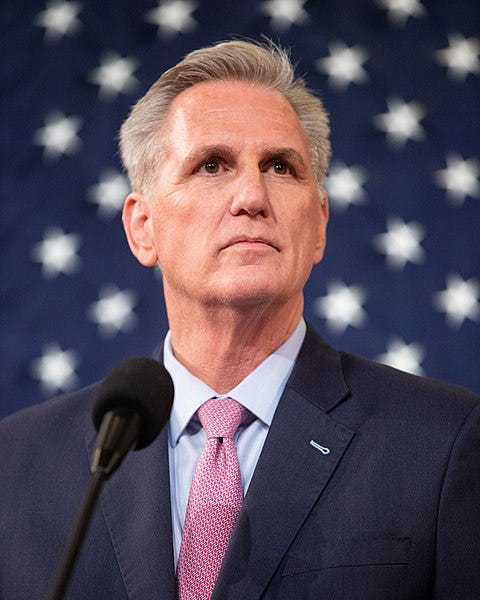

The Republican Party in the House is cursed with a faction that is less interested in the job of governing than they are in appealing to their most angry, MAGA-inspired voters and contributors. Other Republicans admit this.
The worst of the worst identified themselves by petitioning President Trump for pardons after the January 6th insurrection. According to Trump aides who testified to the January 6th committee, the following members of the House sought pardons:
- Rep. Scott Perry (R-Pa.)
- Rep. Matt Gaetz (R-Fla.)
- Rep. Mo Brooks (R-Ala.)
- Rep. Louie Gohmert (R-Texas)
- Rep. Andy Biggs (R-Ariz.)
- Rep. Marjorie Taylor Greene (R-Ga.)
Brooks emailed the White House requesting “general pardons” for himself, Gaetz, and the 147 Republican House members and senators who voted against certifying Arizona’s and Pennsylvania’s electors, according to former Republican Representative Adam Kinzinger (Ill.), a member of the January 6th Committee. Cassidy Hutchinson, who served as an aide to White House chief of staff Mark Meadows, testified to the panel that she personally heard from Biggs and Gohmert. She also said she had heard that Greene had personally reached out to the White House counsel’s office to ask for a pardon, and Jim Jordan (R-Ohio) “talked about … pardons but he never asked me for one.” Representative Kinzinger underlined the obvious point:
The only reason I know to ask for a pardon is because you think you committed a crime. — Adam Kinzinger (2022)
These people are an influential minority in the Republican caucus, and Kevin McCarthy is a very ambitious man.
When Joe Biden won the 2020 U.S. presidential election, McCarthy supported Donald Trump’s debunked claims of voter fraud and participated in efforts to overturn the results. After the U.S. Capitol was stormed during the electoral vote count, McCarthy reversed his previous comments on voter fraud and blamed Trump for the riot. In a typical case of self-serving pragmatism, in 2022 he reversed again and publicly reconciled with Trump.
The goal of McCarthy’s political life had been to be the Speaker of the House while his party dominated that chamber. To do this, he required a majority vote of his caucus after the Republicans came into the majority of the House in the midterm election of 2022. Despite the expectations of a “red wave” that would sweep the House and Senate in 2022, Democrats continued to hold the Senate and Republicans eked out a bare majority in the House (222 seats won, compared to the 218 required for a majority). This meant he needed 112 Republican votes, which meant that a small minority could hold up his confirmation to the job. And this meant he needed the support of the rigidly-disciplined forty-five members of the House “Freedom Caucus”, led by Scott Perry (previously mentioned for his application for a pardon).
Traditionally, the Speaker of the House has been one of the most powerful and influential positions in the American government. He serves as third in line if the President and Vice President are unable to perform their duties. He approves committee assignments. For decades, the word of the Speaker was law. To cross him was political suicide. In fact, this power led to House members slowly chipping away at his authority. And for some today, they have come to see him not as their leader, but as their servant.
A skilled and talented Speaker, like Nancy Pelosi, has been able to accomplish her goals even as the formal rules have changed. Hard work, personal reputation, and attention to detail allowed Pelosi to be one of the most successful Speakers in recent history. The current House minority leader, Representative Hakeem Jeffries of New York was elected by acclimation by his caucus. His skill in keeping his party united in the recent vote to remove McCarthy, shows that he also has the talent to work within the rules to be a successful Speaker.
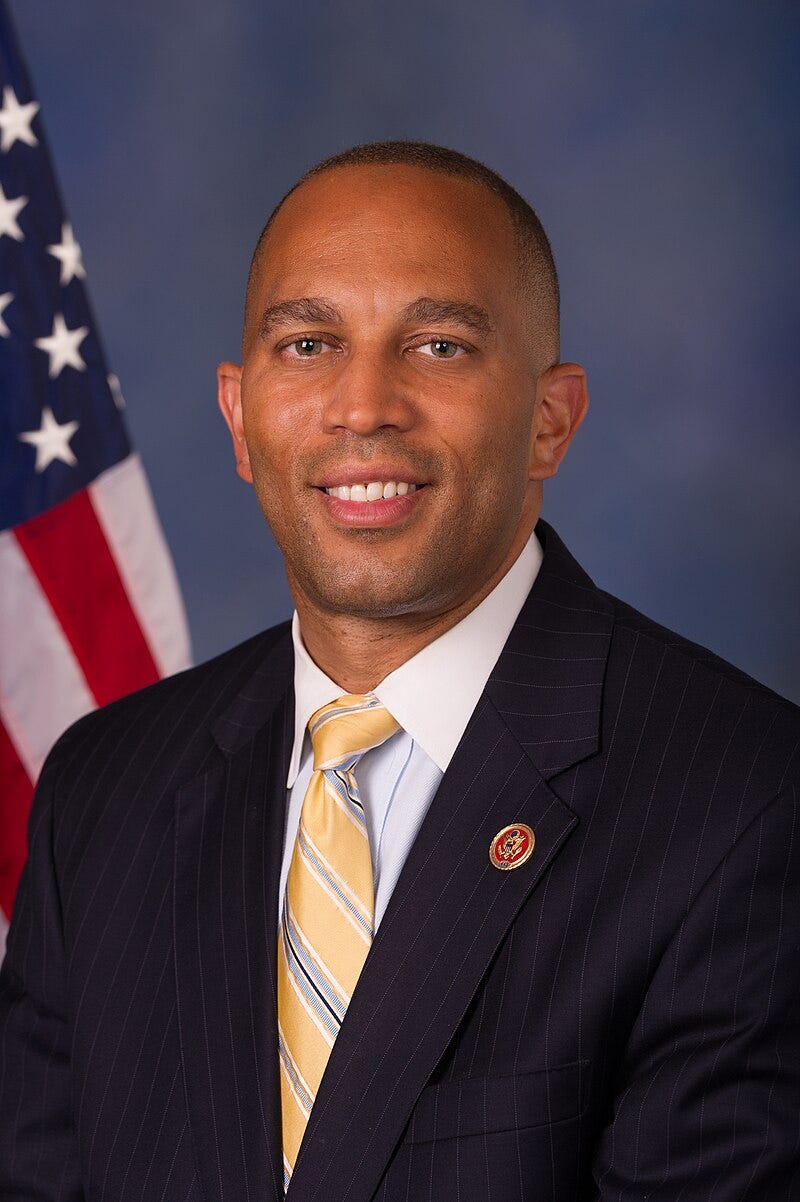

Kevin McCarthy, however, has none of these attributes, and the Republicans have a disciplined minority that exists to bring the Speaker to heel.
The Freedom Caucus began in January 2015 as a group of very conservative Republicans who declared that their criterion for new members in the group would be opposition to John Boehner as Speaker of the House and willingness to vote against or thwart him on legislation that the group opposed. Boehmer had already sparred with those House Republicans in 2013 over their willingness to shut down the government in pursuit of goals such as repealing the Affordable Care Act. This caucus, once it was formalized, was central to the resignation of Boehner in September 2015 and the ensuing leadership battle for the new speaker.
After Boehner resigned as speaker, Kevin McCarthy, the House majority leader, was initially the lead contender to succeed him, but the Freedom Caucus withheld its support. McCarthy, as is typical for him, withdrew from the race. In October Paul Ryan announced that his bid for the Speaker was contingent on an official endorsement by the Freedom Caucus. While the group could not reach the 80% approval that was needed to give an official endorsement, on October 21, 2015, it announced that it had reached a supermajority support for Ryan, who succeeded Boehner.
Boehmer, a conservative Republican himself, is probably best placed to describe the goals of the Freedom Caucus:
They can’t tell you what they’re for. They can tell you everything they’re against. They’re anarchists. They want total chaos. Tear it all down and start over. That’s where their mindset is. — John Boehmer (2017)
Another senior Republican has described the Freedom Caucus as “lemmings with suicide vests”. They, like Donald Trump, are not ideologically driven. They are nihilists. They are authoritarian. They are not interested in governing. This was true even before the rise of Trump. Now they have become cultists in the cult of Trump.
Why are these asshats in power?
There have always been a few extremists in Congress, but never in a position of responsibility or a position to veto. Today, the underlying causes are structural — rules and institutions that are the result of choices by the political class — the “poletariat,” if you will.
The primary mission of every politician and every party is to acquire and keep power. There is logic to this: a politician who is not at the table has no position to achieve whatever other goals he has. This is an especially powerful motive in the U.S. House of Representatives. With a two-year term of office, the successful completion of one campaign marks the beginning of the next. Because we do not have public financing of elections, this means the majority of the time of House members is dedicated to raising the money they need to compete in the next election.
Furthermore, while Republicans and Democrats differ on many, many issues, they have a common interest in keeping other parties out of the political process. The reason we have a two-party system is the first-past-the-post electoral system found across most of the United States (with a few exceptions — reforms in Maine and Alaska have been making things better). In such a system, the first candidate to have the most votes — whether among two parties, five, or more, is declared the winner even if everyone else finds him unacceptable. There is no gain that accrues to everyone’s second-best choice, even if he is more popular, overall, than any of his rivals.
Let’s consider a hypothetical election: five candidates, and nine voters. The preferences of the voters are as follows:
- voter 01: A,B,C,D,X
- voter 02: B,C,D,A,X
- voter 03: C,B,A,D,X
- voter 04: D,B,C,A,X
- voter 04: X,B,D,A,C
- voter 05: B,C,D,A,X
- voter 06: D,B,C,A,X
- voter 07: X,B,C,D,A
- voter 08: X,B,C,A,D
- voter 09: C,B,A.D,X
Final results —
First preference: 3 for X, 2 for B, 2 for C, 2 for D. If any of the second-place finishers had changed their vote, there would be a run-off, which X would lose.
Second preference: 8 for B, 2 for C. B would almost certainly win the runoff election.
Last preference: 7 for X, 1 for C, 1 for D
B is almost everyone’s second choice. X is almost everyone’s last choice
X wins the election.
This is why voters are told they are “throwing their vote away” when they vote for third-party candidates. By continuing to vote for their favorite when he has no chance of winning, they may be sacrificing the acceptable and electing the worst. It’s why many of the people who voted for Donald Trump (the Republican nominee) in 2016 began by supporting Bernie Sanders (a Democrat and democratic socialist, who lost in the Democrat primaries). They wanted change. They didn’t like Trump, but a vote for him was the only vote for change available to them. Without going through a series of legal hoops in each of the states, other parties weren’t even listed, and when they were they had no chance of taking an election of national significance.
(There are exceptions: Senator Bernie Sanders has been elected as an Independent from Vermont. Senator Bernie King is an Independent from Maine. Senator Kyrsten Sinema is an independent from Arizona. In each case, personality and personal record allowed them to drop the party label. Yet each continues to caucus with a major party: the Democrats)
There is, in principle, no perfect way to make a choice from a set of three or more candidates. The mathematical proof of this, Arrow’s impossibility theorem, was a reason for granting the Nobel Prize to games theorist Kenneth Arrow. However, some systems are better than others, and many are better than what is found in the United States.
One alternative is called ranked-choice voting. In this system, Americans rank their candidates in order of preference. If a majority of voters pick a certain candidate as their first choice, that candidate wins the election. But if no candidate gets a majority, then the candidate with the fewest votes is eliminated. Then voters’ second choices are taken into account and the process repeats itself until someone wins a majority.
Across the United States, a growing number of cities and states are using ranked-choice voting. New York City started using the system in its local elections in 2021. Maine now uses them for federal elections, like congressional races. Nebraska simply refuses to list party affiliations on ballots for elections to the legislature. Its unicameral legislature is officially non-partisan.
Another option is now working in Alaska, to excellent effect. Three days after the insurrection, Senator Lisa Murkowski of Alaska became the first Senate Republican to call for President Trump’s resignation; she later became the only Senate Republican up for reelection in 2022 who voted to convict Trump in his impeachment trial. In almost any other state, Murkowski’s vote would likely have doomed her chances in a Republican primary. However, Alaska had ditched partisan primaries when its voters adopted a single, nonpartisan primary in which all voters can participate and select their preferred candidate. Then the top four finishers advanced to the general election, where voters had the option to rank them. Whoever earns a majority of votes wins. (If no candidate earns a majority after first choices are counted, the race is decided by an “instant runoff” — whereby the candidate with the fewest votes is eliminated, and voters who ranked that candidate first have their second-place votes counted instead, and so on, until a candidate wins more than 50 percent of the vote.) With this reform, Alaska became the first state to combine a nonpartisan primary with ranked-choice voting in the general election. The effect? The crazies — and Alaska has a number of them — couldn’t take power.
Yet another option avoids asking voters to rank who they want. Instead, it asks who the voter finds acceptable. This has its own problems. As noted, no system is perfect. However, alternative voting is simple and extremely reliable. Games theorist Steven Brams explains:
A more radical change is proportional representation. In this system, voters vote for a party instead of a candidate. This makes it easy for new parties to grow because even getting a smaller number of votes will still win them some power. It also promotes the creation of coalition governments. However, if there are clear divisions within the population, it can put small extremist parties in the position of “kingmaker”, with disproportionate influence over policy. Israel is a contemporary example of this dilemma.
Other peculiarities of the American system
Discussion of elections in general raises the next problem in relation to the House of Representatives: gerrymandering. Although it does not happen in all American states, when it does, gerrymandering is the term used to describe the political manipulation of electoral district boundaries with the intent to create an unfair advantage for a party, group, race, or socioeconomic class. This manipulation may involve “cracking” (diluting the voting power of the opposing party’s supporters across many districts) or “packing” (concentrating the opposing party’s voting power in one district to reduce their voting power in other districts). After the national census (every ten years) the party that dominates a state legislature redraws districts to their own advantage. In a sense, the politicians pick their voters instead of the voters picking their politicians. The results can look bizarre:
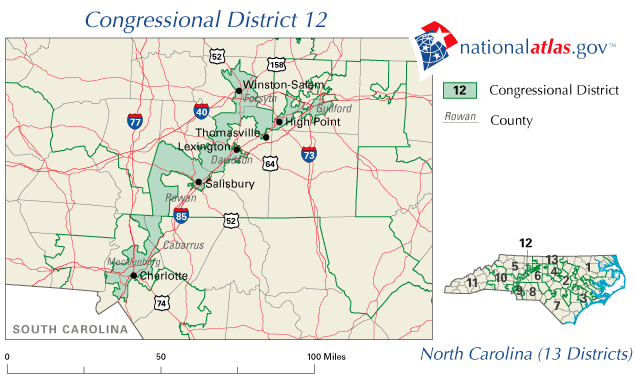
.gif)
This has been made easier by the segregation of the country by political attitudes, as well as by race. It has also been fine-tuned by the availability of personal information that correlates with political affiliation and computers to model the effects of prospective district boundaries. Because of gerrymandering and the natural distribution of political parties in the United States, in many regions the only election that counts is the primary, because whoever is selected in the primary is assured to win in the general election.
Primaries are an addition to the American system of elections associated with the reforms of the Progressive Era of the late 19th century. In addition to direct primary elections, progressives established direct election of senators (rather than by state legislatures), the initiative and referendum, and women’s suffrage. In the spirit of the times, primaries were meant to increase the voice of the people and to rid the country of widespread corruption in the old way of picking candidates.
Parties, like money, exist because they are necessary. They manage political competition in a complex society by pushing disparate groups to resolve their differences internally in order to stand as a united opposition to those in other parties. America has at least nine distinct political groups with disagreements on ideology, faith, policies, and perceptions of fact. Parties enable them to make deals and establish a common brand that allows people to make their choices in the voting booth (another Progressive innovation) without the chore of digging out and processing all the information required to make a rational choice. We have two parties that matter because the voting system is currently set up to allow only two choices that have a chance of success.
For all their problems and corruption, there were some advantages to the “smoke-filled rooms” of party elders who had longstanding relationships with one another, were free to make deals, had to learn to trust one another to keep their word, and on occasion had to worry about the electability of their anointed candidate in a general election. Among other things, they served as gatekeepers. If you weren’t in general agreement with the parties’ principles, as hammered out through long debate, you were excluded from the party.
(Have you ever wondered why the government is involved in paying for and administering the selection of the candidates of private organizations — the political parties? The more you think about it, the more you realize government power is being used to enforce a choice between the Republican and Democrat parties. If you don’t believe me, found your own party and ask your state to administer your primary. I won’t hold my breath waiting for their support.)
Polarization in Congress actually went down as the use of primaries climbed in the early 20th century. And then polarization increased again while primaries continued. Something else is going on. In fact, recent studies have suggested primaries may not be exacerbating polarization. That may sound surprising, but there isn’t a ton of evidence that more extreme candidates are more likely to win primaries, especially when some are “open” and “semi-open” or other options that reduce partisanship as a factor.
When the Cook Political Report Partisan Voting Index (PVI) measured the polarization it showed redistricting is more an effect than a cause. The PVI compares the partisan leanings of all 435 House seats and 50 states. Comparing historical PVI values for every set of congressional districts dating back to 1997, the Cook Report found that polarization and shifting boundaries have cut swing seats in half, profoundly altering House members’s electoral incentives.
Once they are through the primary, most Congressional districts are not organized to allow competition between the political parties. In fact, only 82 of the 435 House districts across the United States are competitive enough that both parties start out with a decent shot at winning. That is only half the number of swing districts that existed in 1999. This has effectively eliminated much of the incentive that the two parties once had to find a middle ground on emotion-driven issues. Members of Congress know that playing to the lowest instincts and impulses of their populist bases is their surest ticket to reelection.
This might be tolerable so long as the politicians elected to office were willing to meet and socialize and negotiate and compromise across party lines. And for most of American history, they were willing to compromise. A major reason for this is both major parties have traditionally been “liberal” in the sense that the word is used around the world: dedicated to Constitutional order with elements of a democratic republic and protection of personal liberty under law. Which liberties have been prioritized and how much democracy have been areas of disagreement, but we haven’t seen Monarchist parties, Fascist parties, or even Socialist parties as one of the two main contenders.
American politics (excluding the Civil War) has been a “football game played between the forty-yard lines”. We haven’t seen national leaders call for the execution of political leaders and elements of the civil service — until Trump “normalized” this behavior for some. That’s the big change today. Many Republicans and Democrats fear for their lives, and with good reason. The worst of the MAGAts (“maggots”) aren’t interested in the politics of rule but the politics of revenge. They want everything to burn, so long as it raises their visibility and the contributions to their Political Action Committees.
Between popular partisanship, gerrymandering, voting systems, and public apathy, a small minority of intense voters in a small number of districts are so partisan that even talking to the other party is an actionable offense. Matt Gaetz called for the removal of Kevin McCarthy because he had the gall to talk to Democrats and keep the government open.
Getting primaried
In the most recent midterm elections, fewer than 1 in 5 eligible voters cast their ballots in party primaries, according to the Bipartisan Policy Center. A tiny — and utterly unrepresentative — slice of Americans is deciding who holds a seat in the House. A new study by Unite America took a look at eight Republican House members who have been among the most determined obstructionists: Andy Biggs (R-Ariz.); Elijah Crane (R-Ariz.); Lauren Boebert (R-Colo.); Matt Gaetz (R-Fla.); Marjorie Taylor Greene (R-Ga.); and Matthew M. Rosendale (R-Mont.). The eighth was chosen in a 2022 party convention (where he received 1,488 votes, compared with his opponent’s 271).
Unite America found a small number of people voted in the GOP primaries, where the real choice to send these people to Washington was made for these districts. The average, according to its calculations, was only 68,000 voters, or 12 percent of the number who were eligible to vote in each GOP primary, actually got off their asses to vote. Most didn’t participate.
The effect? For one, it is probably not a coincidence that of the handful of Republicans who voted to impeach President Donald Trump after the Jan. 6, 2021, attack on the Capitol, the only two who managed to be reelected were Dan Newhouse (Wash.) and David G. Valadao (Calif.) — “both from states where their fates were not in the hands of the extremists and election deniers who dominated last year’s Republican primaries”.
The worst of the MAGAt extremists were at the head of the charge to remove Speaker McCarthy. Actually, in a House where it took fifteen elections to win his position, the decision of the Democrats to hold together as a caucus and watch the Republicans try to clear up their own mess meant that it was eight Republican votes that threw McCarthy from the Speaker’s chair:
- Andy Biggs of Arizona
- Ken Buck of Colorado
- Tim Burchett of Tennessee
- Eli Crane of Arizona
- Matt Gaetz of Florida
- Bob Good of Virginia
- Nancy Mace of South Carolina
- Matt Rosendale of Montana
Meanwhile, the Republican Party continues to go off the rails, led by the nihilists of the Freedom Caucus.
Where Republicans once believed that limited government meant lower taxes and more autonomy, today limited government means inciting violence against government officials.
Following the tragic Oklahoma City bombing, former President George H. W. Bush publicly refuted those who used fear to gain support. In stark contrast, our leaders today belittle, and in some cases justify, attacks on the U.S. Capitol as “legitimate political discourse”. The once great party of Lincoln, Roosevelt, and Reagan has turned its back on the ideals of liberty and self-governance. Instead, it has embraced lies and deceit.
The Republican Party used to believe in a big tent, which welcomed the tired, the poor, the huddled masses yearning to breathe free. Now we shelter the ignorant, the racists, who only stoke anger and hatred to those that are different than us.
Our constituents voted us in based on our beliefs, but we cannot use our faith as a sword and a shield while ignoring the fact we are all children of God, that we are all Americans. — Adam Kinsinger (2022)
Donald Trump actively worked to promote a shutdown. It distracts people from his problems. The federal attorneys and judges involved in his investigations and trials are considered “essential workers” and would be required to work without pay. If he thought that would get him off the hook, it’s inevitable that he’d be disappointed. They will continue to work until their paychecks arrive. It’s the little people — like the court clerk Trump bullied to get his gag order — who live paycheck to paycheck and might have been furloughed. His cultists followed him over that cliff. And they were so disappointed when they failed to wreck the government they removed the Speaker from office, a move never before accomplished in the history of the Republic.
What comes now?
The Republicans and the country are now back where they started. Given that the Democrats have demonstrated they can hold a unified front against any nominee for Speaker that doesn’t meet their standards (and McCarthy didn’t), the Republican Party has to come together and resolve the conflict between the conservatives and extremist MAGAts. At present, it’s unclear if a candidate can garner enough support from the fractured Republican conference to claim the gavel. This leaves two options, and neither looks likely:
- The Republicans unite behind a single candidate that appeals to both the sane elements and the insane elements of the party.
- Republicans divide, leaving the extremists to fume, and the sane conservatives work out a power-sharing relationship that enables the House to operate with a Republican majority and a Democrat minority that come together to pursue a centrist agenda that respects a substantial element of both parties.
While we wait to see if either of these options are possible, some names have emerged as possible successors to McCarthy. The candidates:
- Steve Scalise: (Republican from Louisiana) The majority leader, Scalise is currently the second-ranking Republican in the House. Originally the frontrunner, Scalise once described himself as “David Duke without the baggage.” (David Duke, in case you've forgotten, is a former Grand Wizard of the Klan.) If Scalise wins the Speakership, it would set off a reshuffling of the House GOP leadership ranks. Complicating his candidacy, Scalise has been diagnosed with multiple myeloma, a type of blood cancer. The majority leader announced the diagnosis in August and said it is “very treatable,” but he is expected to undergo treatment for “several months.” He has already spent several months in the hospital in 2017, after being shot by a gunman during a softball practice with other Republican members of Congress. In his favor, MAGAt Matt Gaetz, the Florida Republican who unilaterally forced the vote to remove McCarthy, indicated “I think very highly of Steve Scalise. I would vote for Steve Scalise.”


- Jim Jordan: (Republican from Ohio) A leading member of the Freedom Caucus, the full extent of Jordan’s involvement in Donald Trump’s attempt to overturn the 2020 election, leading up to the deadly attack on Congress, remains unknown. He is known, for instance, to have spoken with the then-president on the morning of the riot. Jordan refused to cooperate with the House January 6th committee, despite being served with a subpoena. He is also dogged by questions about a sexual abuse scandal at Ohio State University, where he was a wrestling coach. Former Speaker John Boehner, also from Ohio, famously referred to Jordan as a “political terrorist”, only interested in destructive action rather than legislative achievement. Matt Gaetz, who led the charge to depose McCarthy, has said “[m]y mentor Jim Jordan would be great!” Former Representative Liz Cheney has remarked that if Jordon was elected “there would no longer be any possible way to argue that a group of elected Republicans could be counted on to defend the Constitution.”

.jpg)
- Kevin Hern: (Republican from Oklahoma) The leader of the 176-member Republican Study Committee, which bills itself as the “sane” conservative caucus of the House GOP. As with Jordan, Hern garnered backing from several Republicans opposed to McCarthy during the speaker elections in January, even though he cast his vote for his colleague from California. For what it’s worth, Gaetz on Tuesday listed Hern among Republicans he could support for Speaker, alongside Scalise, Emmer, Jodey Arrington, and Mike Johnson of Louisiana. Hern is said to be weighing whether he will run.
- Donald Trump: (Republican from several federal and state courts) No, really. It’s a sign of just how far the Republicans have slipped that Texas representative Troy Nehls announced he would nominate the 45th president for the position. Trump told Fox News Digital that if Republicans cannot rally enough support for Jordan or Scalise, he would accept the speakership himself for a short period. “I have been asked to speak as a unifier because I have so many friends in Congress,” Trump said. “If they don’t get the vote, they have asked me if I would consider taking the speakership until they get somebody longer-term because I am running for president.” Trump, however, doesn’t want the job. What he does want is almost as bad: Jim Jordan. “He will be a GREAT Speaker of the House,” Trump said of Jordan in a post on TRUTH Social. Besides, under House rules, Trump is ineligible because he is under indictment.
Why isn’t Matt Gaetz running for the job? Simple: his own party hates him. National Republican Congressional Committee Chair Richard Hudson (R-N.C.) had to physically restrain Rep. Mike Rogers (R-Ala.) from punching Rep. Gaetz back in January.
The race for Speaker
Normally, the way these races unfold is fairly simple: Candidates make their case to the members of their caucus that they are the most effective person to lead the chamber. In some cases, deals are made — such as the deal with Gaetz and the Freedom Caucus that ultimately doomed McCarthy’s speakership. But this is not a normal Republican Party or a normal race for Speaker. Gaetz pushed for a unanimous decision of the caucus, a rules change that would make any decision impossible. After that was rejected, the candidates hatched a plan: What if they debated for the job, live, on Fox News?
This may be the worst possible idea. A televised debate would promote grandstanding as candidates committed themselves to impossible pledges. McCarthy’s speakership ended in part because of Gaetz’s ability to wield the kind of fanatical partisanship represented by Fox. A debate would accomplish nothing, and it would guarantee that the kind of dysfunction we have seen would play out indefinitely.
In any case, the candidates came to their senses. A few hours after the debate was announced, it was reported by multiple outlets that everyone had reconsidered. Whatever happens, it won’t be televised.
As this process proceeds, the clock is ticking on the extension of government funding that lawmakers approved before McCarthy’s ouster. The new deadline is Nov. 17th. In addition, abandoning Ukraine is off the table for any budget resolution that will pass the Senate. Approving more aid for Ukraine has become a divisive issue among the GOP. Most Republicans in the House opposed a new round of aid in the latest vote and Senate Republican leaders supported continued assistance. But the divisions among the Republicans are a matter of degree. It should be possible to find a deal with tightened oversight that will meet the objections of the majority of the House. It is only a relatively small number in the Republican caucus, centered on the extremist MAGAts, that are active agents of influence for Putin and Russia.
The House can’t function without a Speaker. The Constitution vests the House with the power to originate all appropriations bills. Although House committees can continue to meet, the Speaker decides which bills are brought to the floor of the House, and when. No Speaker, no spending. No spending, no government.
At present, it’s unclear if a candidate can garner enough support from the fractured Republican conference to claim the gavel. Speaker pro tem McHenry has announced he intends to have the Speaker elections on Wednesday, October 11th. The Republicans are scheduled to meet Tuesday in a closed-door forum to agree among themselves who they will nominate for the job. (Democrats, meeting the same day, are expected to unite behind Hakeem Jefferies.) Even if they can reach a majority decision to back a candidate, there may well be enough angry Republicans to cost them the majority of the House they need to elect him. Representative David Valadao, a California Republican and a rare survivor of the 10 who voted to impeach Trump over the January 6th Capitol attack, lamented “a sideshow that is sad to watch”, mounted by a party “basically just tearing [itself] apart”.
The clock keeps ticking on the extension of government funding that lawmakers approved before McCarthy’s ouster, with the new deadline of Nov. 17.
Perhaps you might want to dismiss my warnings as the ravings of a Democrat or a Progressive. I am neither. My personal political leanings are orthogonal to the left/right axis of American politics. I can find common ground with all nine of the political tribes that constitute the Republican and Democrat coalitions. When I was a professor, I served as the faculty advisor to the College Republicans. It was a role I had to abandon when the student group was taken over by Trumpists. They wanted to sponsor events that called for violating the law, and that is a line that I will not cross.
I have no quarrel with any political group that adheres to the most basic principles of civil discourse and liberal (small-l, relating to the protection of liberty) politics. I do have a quarrel with members of the mislabeled “Freedom Caucus” whose anger leads them to attack basic American principles. People like Matt Gaetz and Marjorie Taylor Greene are outside of the sphere of normal American politics. They do not support, and may not understand, the most essential principles of America. They are not politicians. They are nihilists. And we are now paying the price for their madness.