
Soft Fascination — Sister of Awe and Muse of Mental Health
A form of attention that increases well-being, creativity, and focus
If awe is the movie star aunt who drives up unannounced and steps out of her Ferrari in a sequined dress, then soft fascination is her modest but equally beautiful sister who invites you in for tea — and you end up intrigued by the conversation and staying for a second cup.
Awe is the subject of books, podcasts, and countless articles. It’s recognized as a human emotion right up there with happiness, sadness, anger, fear, and surprise. A Google search for awe produces 16 times more hits than a similar search for soft fascination. Awe has at least four organizations devoted to its study. Soft fascination has none.
Here on Medium, the discrepancy is likewise profound: The number of stories tagged with the topic of awe is 1,200; the number of stories with the topic of soft fascination: 3. Awe even has a publication dedicated to it.
All the focus on awe is well-deserved. I’ve written articles celebrating awe (links here and here) and the positive ways it can affect our lives. I’m not saying that awe deserves less attention but rather that soft fascination deserves more. The bottom line is soft fascination can play an important role in mental health and personal growth — and we’ll be happier and healthier if we tap into its potential.
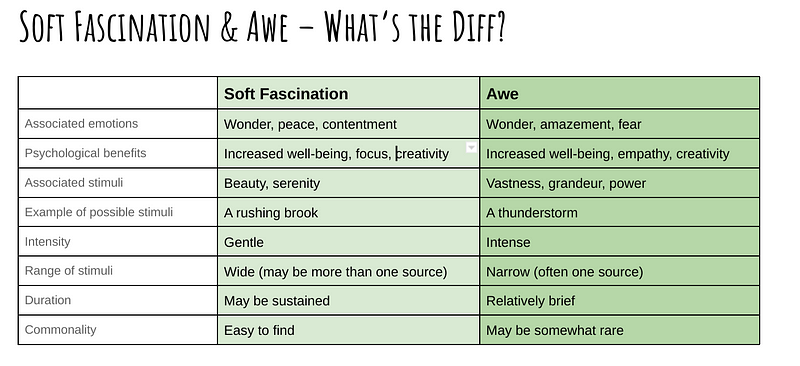
As with awe, the experience of soft fascination contributes to our well-being. Both are associated with increased creativity. While awe is characterized by intense emotions and a profound sense of wonder, soft fascination involves a more gentle engagement with the environment.
What is soft fascination?
The word fascination is from the Latin fascinare — to bewitch or enchant, and those words are good entry points to understanding the hazy, curious, creative, and semi-focused mental state that is soft fascination.
Anna Murphy Paul, as quoted in a “Nature and Creativity” article, explains it as a mental state in which the mind is happily relaxed and free to follow its own impulses and curiosity:
Scientists theorize that the “soft fascination” evoked by natural scenes engages what’s known as the brain’s “default mode network.” When this network is activated, we enter a loose associative state in which we’re not focused on any one particular task but are receptive to unexpected connections and insights.
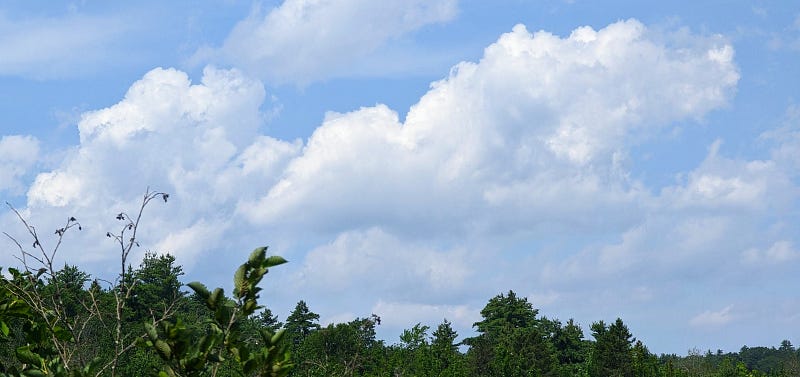
Soft fascination is often described as a daydreaming state — a form of attention that might initially be inspired by visual stimuli (be it a tree, a cloud, or the sound of a brook) that releases the mind into a fuzzy but alert way of being in the world. The word soft distinguishes it from the type of attention that is more willful, stimulating, and demanding (such as driving in traffic) and is known as hard attention.
The relaxed state of delight and curiosity common to soft fascination is no stranger to characters in literature. One well-loved example is found in Kenneth Grahame’s, Wind in the Willows. Much to Mole’s consternation, the Rat is in his own little world of soft fascination after having spent the morning swimming in the river and watching the ducks:
The Rat was sitting on the river bank, singing a little song. He had just composed it himself, so he was very taken up with it, and would not pay proper attention to Mole or anything else.

How can we attain it?
Spending time in nature is a primary means of reaching a state of soft fascination, but not the only means. Other pathways to this mind state include art, music, gardening, and meditation. Fly fishing is popular for a reason. Hint: it’s not just about the fish. While anglers aren’t likely to use the term, “soft fascination,” the relaxed but engaged mind state fostered by fishing is exactly that. Inspiration for attaining a soft fascination may be all around you. The clouds moving across the sky or the steam rising from a coffee cup.
Slowing down, clearing your mind, and opening your senses are helpful for setting the conditions in which your mind can achieve a state of soft fascination.
You can be intentional about attaining it, but soft fascination itself is involuntary. Once you enter it, a switch flips in your brain. You’re no longer trying to attain it. The activities director in your brain finally is out to lunch. In this way, it’s similar to the state of flow. You’re engaged and immersed without willing yourself to do so.
What can it do for us?
Richard J. Dolesh’s article in Parks & Recreation describes the relaxed state of mind evoked by soft fascination:
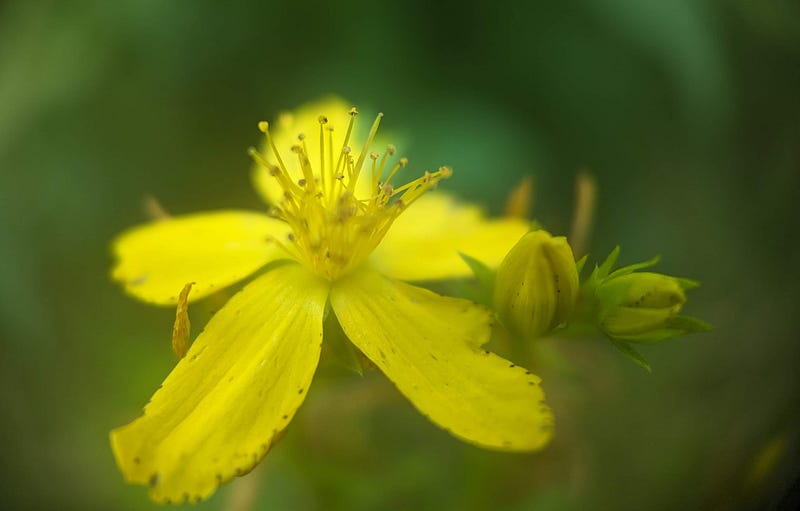
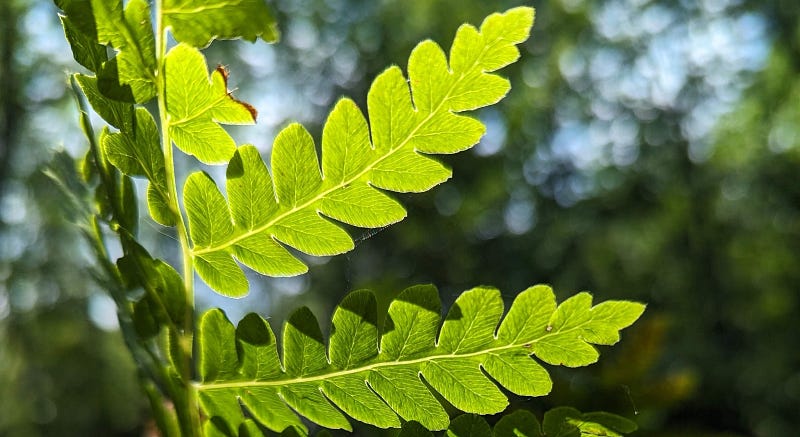
When you enter a green space of natural light and shadows containing the colors of nature, you can also enter a particularly reflective mode at the same time in which you are able to comprehend more than one thing at a time, a state in which stresses and pressures are reduced. You are able to enjoy multiple stimuli and perceptions even while thinking about other things. All in all, being in nature produces a fully restorative experience.
Soft fascination contrasts sharply with the other forms of attention required of the brain in the modern world. Our devices, our screens, our jobs, and our relationships all demand that we pay attention. We pay, pay, and pay more — until our tired brains are broke and we have no more attention.
The use of soft fascination as a remedy for the overworked brain dates back to the 1980s when psychologists Stephen and Rachel Kaplan developed the principles of Attention Restoration Therapy. The Kaplans found the soft fascination fostered by nature to be key to relieving the high levels of stress common to urban lifestyles. To learn more about soft fascination and how it helps restore attention, see Markham Heid’s article, “The Difference Between Hard and Soft Fascination, and Why It Matters.”
In another Medium article, Sarah Carrozzini explains that soft fascination gives the brain a break because it shifts activity away from overused parts of the brain:
Interacting with nature decreases the activity of the prefrontal cortex, the part of the brain responsible for planning, problem-solving, and decision-making. Instead, activity shifts to other brain regions associated with emotions, pleasure, and empathy — qualities closely tied to creativity.
Knowledge = Power
You don’t need to know about soft fascination — or even have a word for it — to benefit. Most people have probably experienced soft fascination at least a few times, and many people experience it regularly. The point, however, is that knowing about it reminds you to look for it. Knowing about it helps you find it more often and helps you appreciate it more fully. Just as being told there’s a rare species of bird nearby makes it more likely you’ll see it.
Soft fascination is the more accessible, less intimidating sister of awe. It’s something we can experience every day — and chances are we don’t have to go far to find it. While the experience of awe requires a degree of novelty (it’s profound enough that it changes our thinking), soft fascination can be inspired multiple times by the same source. While one study found that awe is something people experience up to 2 to 3 times per week, soft fascination is something we might experience several times a day — or, if we’re lucky, for most of an entire day.
A rose by any other name would smell as sweet
Lots of times when people talk about experiencing awe, they are actually talking about soft fascination. The two have a lot in common, and there are subtle but important differences. Understanding how they differ and calling each by its accurate name is a way to further our understanding.
In the end, the differences between these two forms of experience are more important to psychologists than the rest of us. Whether we think of soft fascination as a variation of awe or as a distinct form of attention is less important. What’s more important is that we make room in our lives for both of these powerful muses.
Ray Wirth is an outdoor trip leader, a Registered Maine Guide, and co-owner of Basin Pond Outdoors.


