
Animals Feel Awe Too — How Beauty and Love Rule the Natural World
We have more in common with the rest of creation than we‘re inclined to think
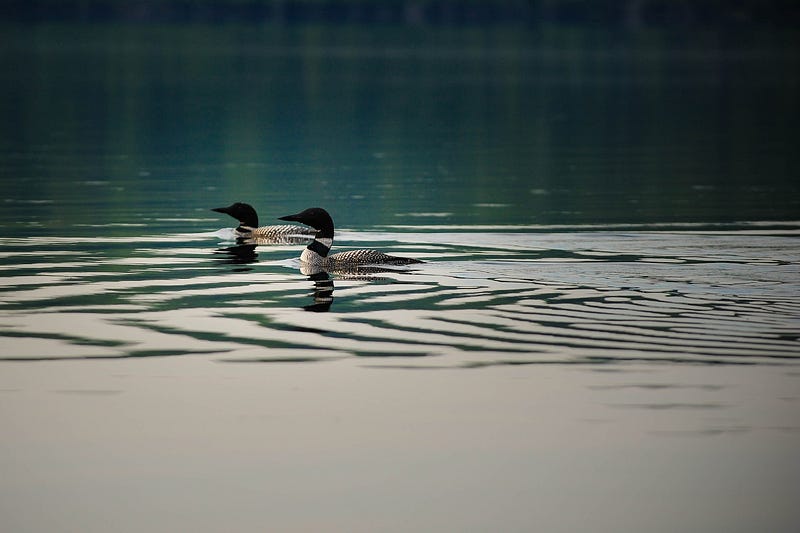
The sun was high, the wind was calm. My partner Leslie and I stopped paddling, and our kayaks bobbed in the gentle swells. The pair of loons floating 30 yards off repeatedly called out. They didn’t seem alarmed by us, but they were unsettled about something. What was their problem? “Maybe they want us to kiss,” I suggested. So we rafted together for a quick, precarious kayak kiss, and instantly the loons stopped their fussing.
Even the romantic me isn’t convinced the loons were quite that specific in their intentions. Later, when Leslie playfully accused me of projecting my emotions onto the loons, I couldn’t articulate much of a response — but I’ve been thinking about it since. Even if the loons weren’t engaging in matchmaking, they seemed to prefer our kayaks closer together. It helped them feel at ease about us and our intentions. Maybe they value harmony and unity just as we do. Maybe birds, whales, and other creatures really do have emotional and spiritual lives of their own. Maybe, just maybe, the Romantics were right.
Questions I’ve had for a long time: “Do other creatures appreciate beauty?” “Do they love the world as humans do?”
These questions come up when I experience moments of awe. Is beauty subjective? Is it just me who sees a misty river curling toward a sunrise as more beautiful than a parking lot or a clear-cut? Is it just me who’s struck by the intricacy and grandeur of a fern or a field sparrow? Or is the appreciation of beauty and wonder universal — something that’s widely shared?
What the evidence shows
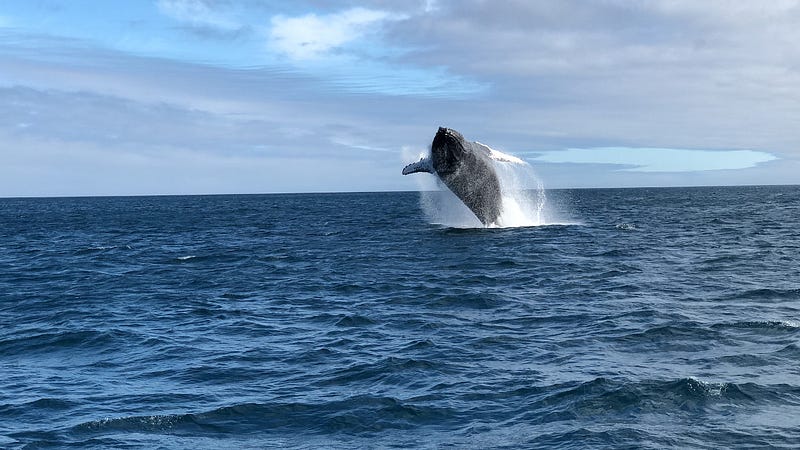
If you’ve watched a puppy frolicking in its first snowfall, that may be the only evidence you need. What about a colt running across a field in the spring? A family of otters repeatedly sledding down a muddy hillside? Birds lifting up from the water to join their first migration? Each of these is an example of other creatures taking joy in the world and being awed by the simple fact of being alive. Because we can’t get inside the heads of other animals, we don’t know how fully they experience emotions such as love and awe. However, a number of studies show animals experience the world more deeply and emotionally than they are typically given credit for. A National Geographic experiment showed that monkeys will interrupt their feeding and move to a place on the cliffs where they can best watch a sunset. Research shows the brains of dogs have similar structure and chemistry as those of humans— and surmises dogs also experience emotions such as love and awe. A Psychology Today article provides evidence of animals experiencing awe at waterfalls and during thunderstorms.
Happiness is never better exhibited than by young animals, such as puppies, kittens, lambs. . . . when playing together, like our own children. — Charles Darwin, The Descent of Man
In his book, Becoming Wild, How Animal Cultures Raise Families, Create Beauty, and Achieve Peace, ecologist Carl Safina has a lot to say about animals, evolution, and beauty. Carl Safina explains the capacity of animals to experience beauty by talking about play:
Play is practice for skills needed in life, but what motivates animals to play isn’t their concern that someday they’ll need the skills they’re practicing. They play because the short-term reward is pleasure . . . Play is ultimately practical, but animals play because it feels good. (122)
Safina says that play is connected to beauty — and both are driven by an impulse toward pleasure. For example, while birds sing as a form of territorial marking, that isn’t the only reason. According to Safina, the impulse to sing is ancient and is not merely an instinctive need. Safina quotes David Rothenberg, Why Birds Sing, as writing, “Birds sing because evolution is not just survival of the fittest, but also survival of the beautiful” (124).
Safina goes on to explain that the apprehension of beauty is an evolutionary advantage because creatures who love life struggle harder to survive — and are therefore ultimately more successful in living long lives and reproducing successfully:
I think the evidence leads to a stunning conclusion: the world appears beautiful so that the living may love being alive in it. Life has developed — and we have inherited — a sense of the beautiful to let us feel at home in the world, without further reason. (140)
Safina concludes that beauty and its pursuit are truly what make the world go round:
And Life has, in the most real ways, chosen random acts of beauty. Not all life, not all the time, but over time, over the hundreds of millions of years of this wondrous journey, this has been a trend: Life has created a perceptual capacity that is felt as beauty, and then has sought more and more of what is beautiful. Life prefers what is lovely and sees as lovely what it prefers. (220)
Why it matters
The experience of beauty can lead to feelings of awe — and awe, as science now tells us, has powerful emotional side effects. Studies of awe in humans show awe increases an individual’s sense of well-being and connectedness. In addition, awe is also shown to reduce stress levels and increase happiness, empathy, and prosocial behavior.
When other creatures experience awe, whether those creatures be whales or chimpanzees, dogs or housecats, it seems reasonable to expect they also experience the same emotional side effects. It seems reasonable to believe that other animals also feel increased happiness, connectedness, empathy, and love.
Scientists are still debating why humans evolved to have the emotion of awe. Safina’s discussion of animal behavior provides an answer: experiences of awe make us more present to the world, and they make us love it even more.
The world appears beautiful so that the living may love being alive in it. Life has developed — and we have inherited — a sense of the beautiful to let us feel at home in the world, without further reason.
Awe is in its essence a spiritual experience, and if animals experience awe, it highlights the fact that they too are spiritual creatures.
If animals have emotions including awe, love, and wonder, what really separates us? What are the implications for how we treat animals? What are the implications for how we treat the places animals call home?
One of two things is true. Either humans are the only species that counts, and the earth and its creatures are here for us to use and abuse at will, or we’re part of a community of creatures who love life and value beauty and harmony as we do. If the first is true and beauty is subjective and in the eye of the beholder, then that’s an excellent way to justify strip malls and strip mining. If the second is true, it’s a reason for joy and celebration, for it means we’re surrounded by beings who share our quest for beauty. But it also gives us a responsibility to act as stewards and co-inhabitants rather than pretending we’re the only non-expendable species.
Going forward, I choose to believe that nature reaches toward beauty. To the extent I am part of that reaching, I am not alone. The world is full of kin.
When I strengthen my connection to nature, I renew my membership in a community of which I am, by birthright, a deeply embedded part. It means I am closer to fox and fawn, finback and flycatcher than previously thought. This greater community has much to teach me about beauty. This greater community has much to teach about love.
More of my recent pieces on awe, nature, and wellness are compiled at:
Read more on Medium and support emergent writers! Become a member with the link below.


