
Branding: Why it is So Much More Than Just a Logo
Our brand is everything a customer associates with our business and products or services.
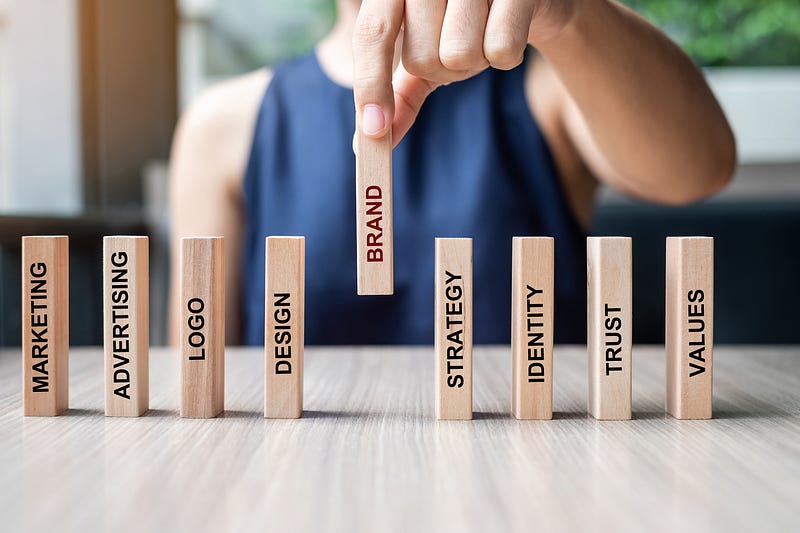
The term ‘Branding’ originates as the term for identifying marks burnt into the skin of livestock, slaves and criminals.
Now, branding is everything that contributes to your customers’ opinions and feelings about your company.
It’s your reputation.
Your brand is how people recognise you, including all the intangibles such as the customer experience and word of mouth.
When starting a business, we should consider our brand from day one. But, it often becomes an after-thought. It usually comes after “making money” on the to-do list.
Branding can help a business stand out and attract customers.
This blog explores what branding is, how it works and how to manage your brand.
A strong brand “increases customers’ trust of invisible products, while helping them to better understand and visualise what they are buying” (Berry 2000, p. 136).
Brand Management
A clearly defined brand strategy should be an essential document for any successful company.
It’s not easy to be instantly recognised and trusted by the people you want as your customers. It takes a deeper understanding of your customers and a strategy that creates value and builds a relationship.
Branding involves everything contributing to your customers’ opinions and feelings about your company.
Therefore, we should carefully manage our brand and deliver on their brand promise. If the brand is successful in its efforts, the consumer will perceive the brand to have good intentions and capability to deliver, increasing their trust.
We build our brand over time.
You can’t establish trust with most people right away. They need to get to know you first!
You’re going to reach far more people this way, than if you try and fit into a current fad or trend. The internet is a powerful tool to gain a considerable amount of people. But you want them to be listening! If you produce rubbish content, people will probably think you’re a little bit of rubbish. Your marketing influences perceptions of your brand and the quality.
You need to have something interesting to say, and you need a differentiator.

Brand Image & Identity
The way people perceive your brand is called your brand image. It is everything a potential customer associates with a business, and it defines their overall opinion.
Marketing, experiences and memories associated with that brand is the basis for the brand image.
You cannot control this — it’s a person’s gut opinion or mental flash of recognition.
However, a business can control its brand identity, all the elements that make up a brand and its marketing.
Our brand identity is all the visible elements of a brand, such as colour, design, and logo. It’s a marketing strategy with intent to nurture a specific image in consumers’ minds. A well-researched and distinct brand identity should be the foundation of any successful business.
Brands communicate in a certain way, such as a tone of voice (e.g. Funny or Serious), to establish a unique personality. Companies apply different human characteristics to their brands to influence customers’ associations — e.g. Tough (off-road vehicle) or fit (sportswear).
Your Brand Story
All brands have a story. But not many brands communicate it effectively, or at all.
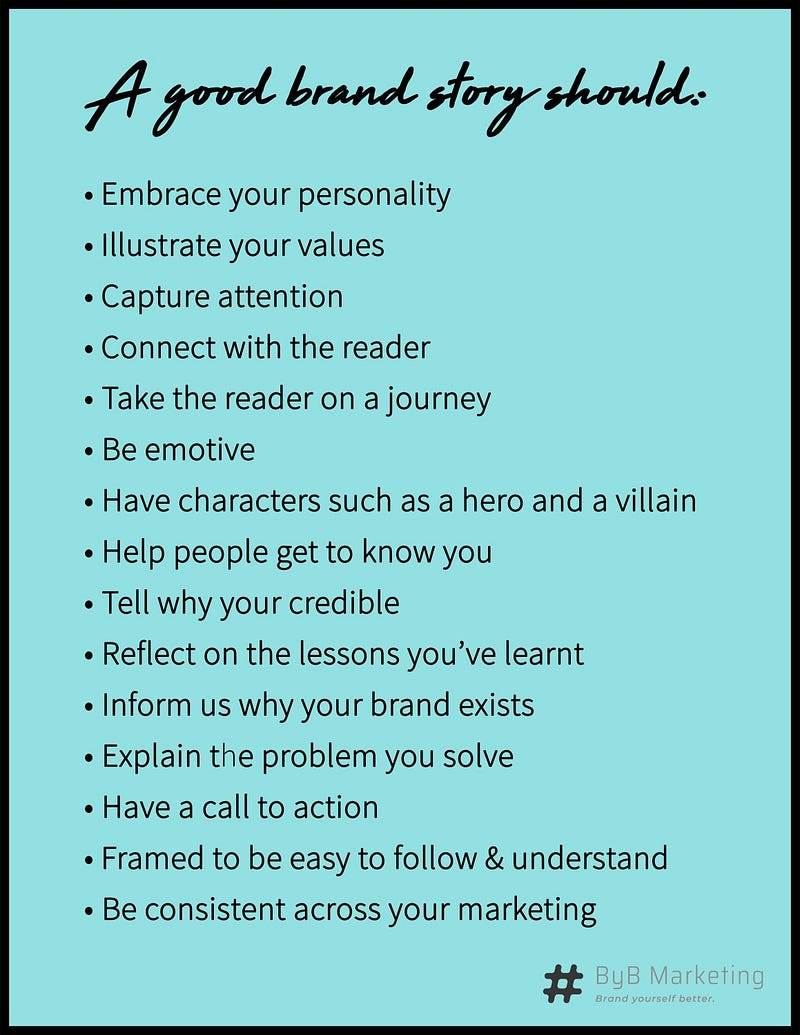
Your brand story gives people a sense that they know you if only just a little. A summary of how the business started, why you’re in that industry, why your credible, what makes you different, and how you benefit customers and provide a solution to their problems.
Your story should be written in a certain way to engage the reader and should include a hero (you), a villain, overcoming adversary — giving the feel-good factor. Great brand stories are universal and appeal to our emotions.
Value Proposition
Your Value Proposition needs to reflect what makes your brand different to your competition.
- What is your point of difference?
- Why should consumers purchase your brand first?
- What is your unique benefit?
Answering these questions will help you set your brand positioning strategy, where you sit in the market relative to competitors.
Three principals that help guide a value proposition are: quality, innovation and reliability.
Differentiation & Targeting
With globalisation and the rise of digital marketing, this has brought intense competition. It’s hard for your brand to be memorable when there are so many alternatives.
That’s why a point of difference with your branding is so important. It is how you are recognised and judged.
Brands must focus their advertising and marketing to target a certain group of customers.
Otherwise, your brand can become diluted, and you spend precious time and money on people who are never going to be a customer.
Think of it this way, if you spend $100 directly targeting the people most likely to be your customer, that’s far more effective than spending $100 marketing to everybody, with only $5 worth reaching your target market.
Consistency
One of the foundations of a strong brand is consistency across the communication. Colour schemes should be consistent across branding and marketing, and your copy should have an even tone, vibe and style, with consistent imaging.
Whether it’s your website, Facebook, LinkedIn or an e-newsletter, content needs to illustrate who you are, and the unique experience or value that your brand represents. Consistent messaging throughout your marketing funnel will help convert leads into customers.
Your brand includes every interaction point with potential customers, such as your website, social media, customers support/service, your store or office. Therefore, your brand’s promise and communication must be consistent at each brand contact point.
Brand Associations
Brand associations are an anchor for customer assessments and opinions of a brand and what it represents. Consumers continuously make new associations with brands, with each interaction. They are evaluating these assessments against a consumer’s values and lifestyle.
Customers value brands and experiences that reflect an aspect of their own personalities, so they generally choose brands that they feel reinforce who they are and what they want to be.
Customers subconsciously ask questions about brands such as:
👉 What are the perceived benefits?
👉 Do we share similar beliefs and values?
👉 Do I trust them?
The content you create and share on your social media influences perceptions of your brand. It defines your brand. If you share boring content and talk about yourself all the time, that’s the brand people will associate with you.
Authenticity
If customers believe you’re authentic, it increases your credibility. You’re more likely to be viewed as superior to alternatives because of this.
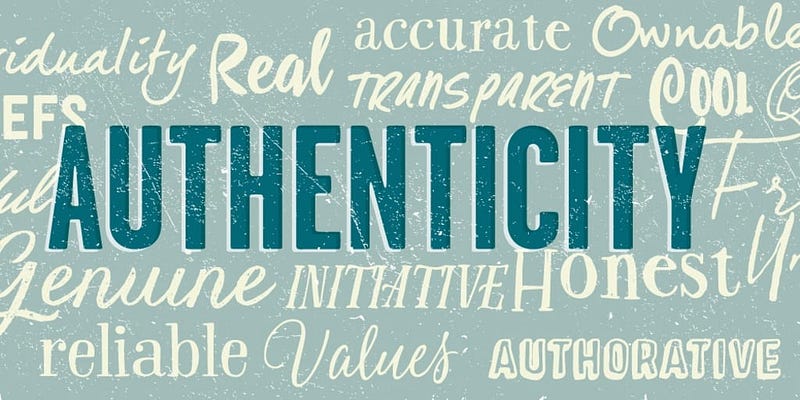
Authentic brands must be committed to their values and delivering on promises. To be perceived as authentic, brands need to come across as human, as it is easier for consumers to recognise a brand’s values.
Customers want to relate to brands in the same way they relate to people. Two essential aspects of this that brands need to express are warmth and competence.
Attributes of warmth include “sincerity” “integrity” and “transparency”, whilst competence is conveyed through “credibility”, “reliability”, “continuity” or “consistency”.
If you know and understand your target market, you position your brand to be as attractive as possible to this group of customers (market segment). If you can create a meaningful connection, you form a relationship, one of the drivers of loyalty.
Relationship Marketing
A fundamental of marketing is forming relationships with a group of customers or a market segment that likes you and trusts you. This process is called relationship marketing. It starts by forming a bond, and eventually creating an attachment to your brand with the customer.
Customer relationship management (CRM) systems track these relationships.
Creating a successful relationship contributes to the “equity” existing in a brand.
If you have a large organisation, all staff members must buy into the brand promise and show a commitment to delivering on it. The company should also regularly take feedback from customers to see if the brand delivers on their promise. Using this feedback will keep the relationship healthy, promote customer loyalty and purchase intent.

Forming a relationship increases customers’ trust in invisible products while understanding and visualising what they are buying.
Trust is synonymous with brand originality, ethicality, genuineness, warmth, and competence. From the consumer perspective, these brand attributes are deeply interconnected. When one quality is poor, this negatively impacts the others and vice versa when we strengthen a feature.
Creating a successful relationship contributes to the “equity” residing in a brand (Blackston, 2000).
Brand Equity
One of the benefits of having a strong brand that people remember is the ability to charge more. It’s far easier to position your brand as a premium offering.
We can position a brand as a premium because of the increased brand equity.
Brand equity is the added value of a product in a customer’s mind, attracting (or repulsing) consumers to (from) a particular product, service or company.
A consumer’s brand knowledge influences this process and their response to marketing. The higher the perception of value, the premium customers are willing to pay.
Read more about Brand equity.
Summary
In sum, your brand is your reputation. That reputation can be created and enhanced through marketing and carefully managing your brand.
Thank you for reading,
Dan
If you enjoyed the content, you might enjoy this one on Marketing Strategy.


