
How Brand Equity Increases a Product’s Value
Why are we willing to pay more for certain brands?
Brands such as Google, Apple, Nike and McDonalds outsell their competitors consistently on a global level.
The only thing that sets them apart from their competitors is the loyalty from their customers.
Academics first discussed brand equity in the late 1980s, with concern that the shifting trend towards a short-term focus on finances could have a harmful long-term effect on branding and marketing tactics.
There was a realisation that brands are assets to a business, driving business performance over time.
This article explores this concept of brand equity — what it is and how businesses can use marketing to enhance theirs.
What Is Brand Equity?
Brand equity is the added or subtracted value given to a current or potential product or service, influenced by the brand. It is
“the differential effect of brand knowledge on consumer response to the brand's marketing.” (Keller, 1993)
Consumers expect that a brand will meet their particular promise of benefits. The higher a customer’s perception of value a brand holds, the higher price they are willing to pay.
High levels of positive brand equity require synergy between the tangible and intangible aspects.
The intangible elements come from a customer’s experiences with a brand and their unique perceptions.
“Brands, in their ability to create choice, build trust and loyalty and drive a premium price.” (Interbrand, 2010)
Brand equity means customers will pay more
Consumers gravitate toward products with great reputations. Brands with substantial positive brand equity can generate a premium when compared to a generic equivalent.
Customers are more willing to pay a higher price — even if they can get a comparable product or service from a competitor for less.
This equity is how Apple can charge so much for an iPhone when a comparable alternative can cost less than half the price, yet Apple’s legions of loyal fans will queue outside the store to buy the latest phone on release.
If a customer attaches elevated levels of quality or status to a brand, they perceive it as worth more than alternatives.
This price premium is not limited to consumer products; a study on industrial products (See Bendixena, Bukasaa, & Abratt, 2003) found that the leading industrial brand name could command a price premium of 6.8% over the average industrial brand and 14% over a new and unknown brand.
Technical specialists were willing to pay a price premium of up to 26%.
Other benefits of high brand equity
Besides charging a premium price, there are numerous other benefits to having a brand with substantial positive equity. Some of the benefits are as follows:
- Higher profit margins as brand equity allow firms to charge more, but they do not incur higher expenses to produce the product or service.
- The brand is more recognisable and trusted; therefore, customers have increased demand, resulting in higher sales volumes.
- Brands are more easily extendable, which means the parent brand can develop a preference and favourable impressions towards their new products or services with their customers.
- Your target market more readily accepts marketing communications due to your existing positive reputation.
- A reduction in new product failure rates and launching costs are lower due to a higher level of brand awareness and trust with their target market.
- Due to the brand reputation of delivering a certain level of quality, customer retention and loyalty is high as consumers like to reduce their risk and simplify their choice.
- Reducing marketing costs to achieve the same volume costs more to acquire new customers than retain existing customers.
- Higher resilience to competitors’ actions as customers is loyal and unlikely to switch. This resilience creates entry barriers to competitors' marketplace as it is not a profitable market segment for their brand to target.
- A strong brand provides strategic support to a business strategy that will add long-term value to the organisation.
- Brands with high equity can have higher marketing budgets to invest in marketing through their higher profit margins, ensuring brand equity remains strong.

Customer-based brand equity
Over the years, there has been confusion and disagreement on how to define measure brand equity best. There have been multiple definitions, but they predominantly fit into two distinct categories: customer-based and financial.
“Customer-based brand equity is defined as the differential effect of brand knowledge on consumer response to the marketing of the brand.” (Keller, 1993)
Customer-based brand equity is the most popular conceptualisation of brand equity, introduced by prominent marketing academic Kevin Keller.
He defined brand equity as attracting (or repulsing) consumers to (from) a product generated by the ‘non-objective’ part of the product. It is the added value of a product in a customer’s mind. It is the influence brand knowledge has on consumer response to the marketing of the brand.
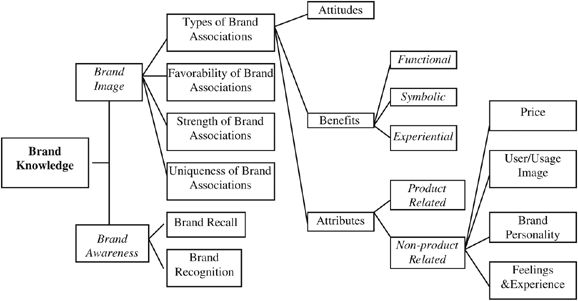
Keller’s brand knowledge construct drives brand equity and comprises three dimensions — brand awareness, brand image, and brand associations.
- Brand image is a customer’s perception of a product, service or brand.
- Brand awareness is a consumer’s ability to recognise a brand and recall how they have that knowledge.
As you can see below, an individual’s brand knowledge combines their subjective brand awareness and brand image.
Brand image should not be confused with brand identity, which the firm controls. Brand image is the customer’s perception of this identity.
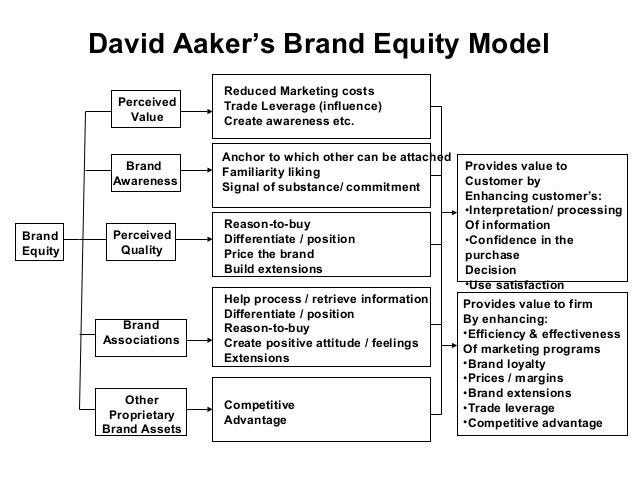
David Aaker is another notable marketing academic who modelled brand equity from the customer's point of view. He believes recognition is the crucial driver of brand equity and identified four contributors to brand equity:
- perceived quality
- brand loyalty
- brand awareness
- brand associations.
Variations of the dimensions the drivers of customer-based brand equity discussed in the literature include:
- reputation
- identity
- personality
- attitude
- familiarity
- commitment
- trustworthiness
- loyalty
- performance.
A common characteristic of both Keller’s and Aaker’s model of brand equity is brand associations.
Brand associations are anything that creates a positive or negative feeling toward a brand.
Marketing aims to create strong, favourable, and unique brand perceptions and associations with a brand that customers remember.
The functional benefits of the product can be the basis. Still, it often focuses on connecting on an emotional level through a unique brand personality that reflects positive organisational values and social services.
An individual’s usage experience also influences their brand associations, which is why tangible and intangible aspects of a brand’s products or services must align.
“High brand equity implies that customers have a lot of positive and strong associations related to the brand, perceive the brand is of high quality, and are loyal to the brand.” (Yoo, Donthu, & Lee, 2000)
Relationships build equity
One of the underlying functions of marketing in the 21st century is to form a relationship with customers.
Creating a successful relationship contributes to the positive equity existing in a brand, as these customers like and trust you. Brand trust and loyalty strengthen consumers’ investment in the brand by reducing their uncertainty and vulnerability.
A strong brand “increases customers’ trust of invisible products, while helping them to better understand and visualise what they are buying.” (Berry, 2000)
Brand trust is the customer's willingness to rely on a brand to meet its function utility expectations. This trust requires time and experience between the two parties, but trust plays an essential mediating role in creating equity and value in a brand.
Brand loyalty is a customer's commitment to consuming a preferred product or service consistently and repeatedly into the future, despite situational influences and the marketing efforts of competitors having the potential to cause switching behaviour.
Customers who believe in a brand's value often do not appraise cheaper options at lower prices. They’re willing to pay more for a brand they trust.
Marketing’s role in creating equity
Companies can create brand equity by making products and services memorable, easily recognisable, and superior in quality and reliability.
Marketing is a significant driver of brand equity through differentiating products from competing brands. Marketing builds strong brand equity by influencing the brand associations held in a consumer’s mind.
A brand's strength is enhanced by investing in advertising and resisting discounting products.
Research has shown to create negative brand equity for businesses; customers are less willing to pay a premium price if they know it is often cheaper.
“Brand equity is developed through enhanced perceived quality, brand loyalty, and brand awareness/associations; which cannot be either built or destroyed in the short run but can be created only in the long run through carefully designed marketing investments.” (Yoo, Donthu & Lee, 2000)
Create a personality for your brand expressed through your marketing mix. The connection a consumer feels with your brand’s personality can define your relationship with customers. Creativity helps develop a unique brand differentiated from competitors.
Marketing communications should also be consistent in the long-term, from messaging to visual identity.
The marketing mix should also always be relevant to the target customer and your brand image. Stay loyal to the brand.
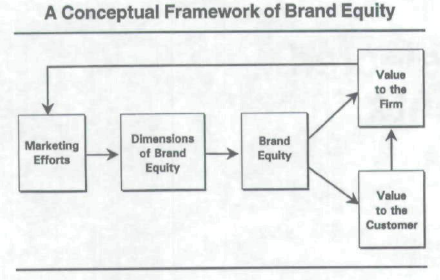
The brand equity model below from Yoo, Donthu & Lee (2000) illustrates how marketing contributes to the brand equity process.
Brand equity as the financial value
The second popular definition of brand equity uses it to measure the financial value of a brand. The value added to a product or service by its brand name compared to an unbranded alternative.
Marketers in the 1980s started to realise that certain brands offered considerable added value to products. They saw brand equity as a durable and sustainable asset to a business and wanted a way to estimate each brand's unique value.
One of the formulas introduced to estimate a brands value is by taking the firm's value and subtracting the tangible assets and “measurable” intangible assets.
The remaining value is the firm’s financial brand equity, measured at the macro (market) level to put a monetary value on a brand for resale purposes.
There are also measures for brand equity at a micro or product level, allowing firms to observe individual brands' value by isolating brand equity changes by measuring its response after significant marketing decisions.
As the financial method offered limited use to helping set marketing strategies to grow strong brands, researchers preferred the customer-based approach.
Academics started exploring brand value as a concept simultaneously. Researchers began to realise that taking a financial viewpoint to brand equity was confused with brand value, and the two should be kept separate.

Brand Value
An uncomplicated way to separate the two is that brand equity what a brand does for a customer, while brand value is what it does for the business. Brand value is the financial worth of the brand.
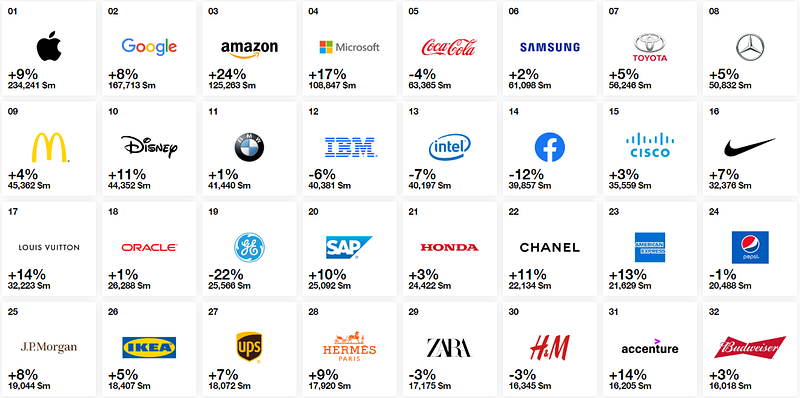
Many marketing academics consider Interbrand to be the world’s most reputable brand valuator (see Chu & Keh, 2006), and each year they publish a list of the world’s most valuable brands.
There are three critical components to Interbrand’s methodology for brand valuations:
- Analyse the financial performance of products or services — profit measured as “the after-tax operating profit of the brand, minus a charge for the capital used to generate the brand’s revenue and margins.”
- Branding's role in purchase decisions — the portion of the purchase decision attributable to the brand instead of other factors.
- The brand’s competitive strength — the ability of the brand to create loyalty and, therefore, sustainable demand and profit into the future
Below are the most valuable brands in the world in 2019, according to Interbrand.
Thank you for reading.
I hope you enjoyed this week’s content about brand equity.
Ensure you keep creating high-quality marketing content for your brand to position the unique value you provide to increase your brand equity!
Watch the video below for a short explanation of brand equity, and I’d appreciate a like on the video!
Dan
If you enjoyed the article, you might enjoy this one about brand identity.


