In the Kitchen with The Anxious Enthusiast
Single Girl’s Small Roast Chicken with Rustic Herb Butter
Recipes for Anxious Chefs #2
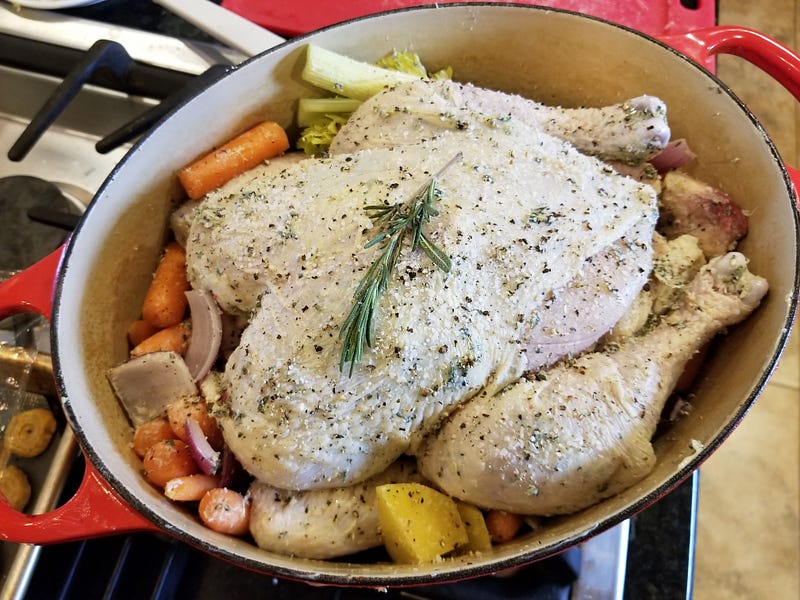
This small roast chicken recipe is one I began making as a single girl living for the first time in a big city. Desperate for the comforts of home, I found myself starved for the warmth of home-cooked, thoughtfully-attended food. I hadn’t really stopped cooking since moving to Dallas, but I hadn’t been treating myself to the longer, deeper flavors achieved by steaming, earthy herbs, and butter crisping brown over tendering meat.
Despite my love of the kitchen and tasty dinners, I often talk myself out of cooking. It is easy to be too busy or too tired or even too anxious to cook.
It is much more difficult to press myself onward and into the light of what I desire, especially when it comes to self-care and more specifically, feeding myself well.
The first step is easy: all home cooking requires that I arrive in the space where cooking takes place. So I feel into my belly, take a deep breath and step into the kitchen.
The Recipe, Serves a Single Girl and up to 3 Friends
What you need for Single Girl’s Small Roast Chicken with Rustic Herb Butter:
One small whole thawed chicken
One batch of herbed butter (see ingredients below)
A bed of fresh vegetables, 2–3 cups
2 T. Oil, S&P
Seasonal cavity fillers
1.5 cups of broth, water, cider or dry white wine
What you need for Rustic Herb Butter:
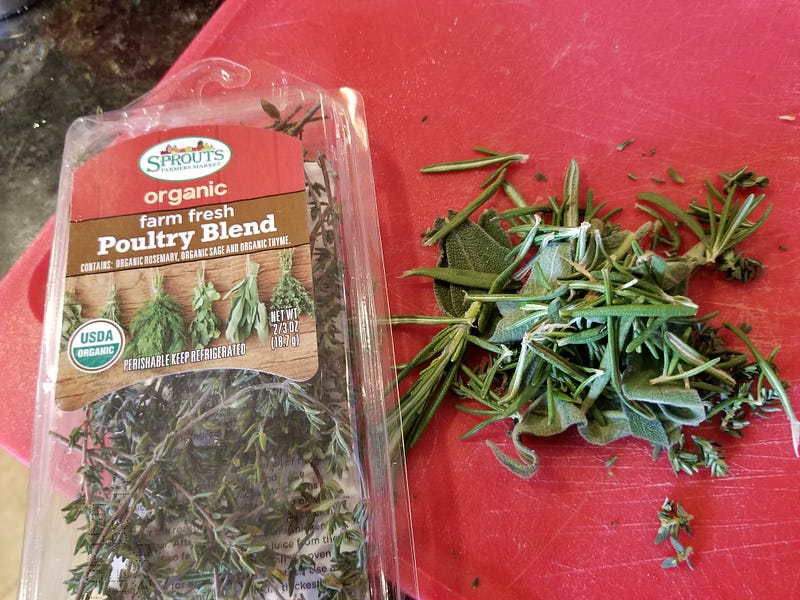
Fresh herbs, 3 tablespoons chopped
Room temperature butter, 2 ounces or 1/2 stick
Sea salt, a teaspoon or more
Fresh cracked black pepper, 1/2 teaspoon
One Mid-Sized French Oven: I paid the price, but I use this piece of kitchenware constantly. There are many great options out there. Mine is a mid-sized, oval variety by Le Creuset and it is my favorite kitchen accessory. If you love cozy or French-inspired food, I highly recommend purchasing one. — OR — Any cast iron or enameled dutch oven with lid. Lodge has some great options that are more economical.— OR — A roasting pan (disposable or non, with 3 inches or more sides) or metal roasting dish with a lid. Don’t have a lid? Don’t despair. Feel free to use aluminum foil if you do not have a lid.
Small, Whole Chicken (thawed): When I want to make this chicken, I go to the local grocer and look for the smallest chicken they have. The idea behind this recipe is that the chicken has been happy and healthy and has lived a good, long, natural life. I want to feed myself well while luxuriating in the herbal, earthy quality of this meat that is succulent and accentuated with the green, woodsy flavors of fresh herbs.
On Frozen Whole Chickens: Many of these small happy chickens are offered air-chilled, never having been frozen, but if you are pulling a small chicken out of your freezer or out of the freezer section at your local grocer, your icy bird will need to spend at least three days in your refrigerator before you can roast it.
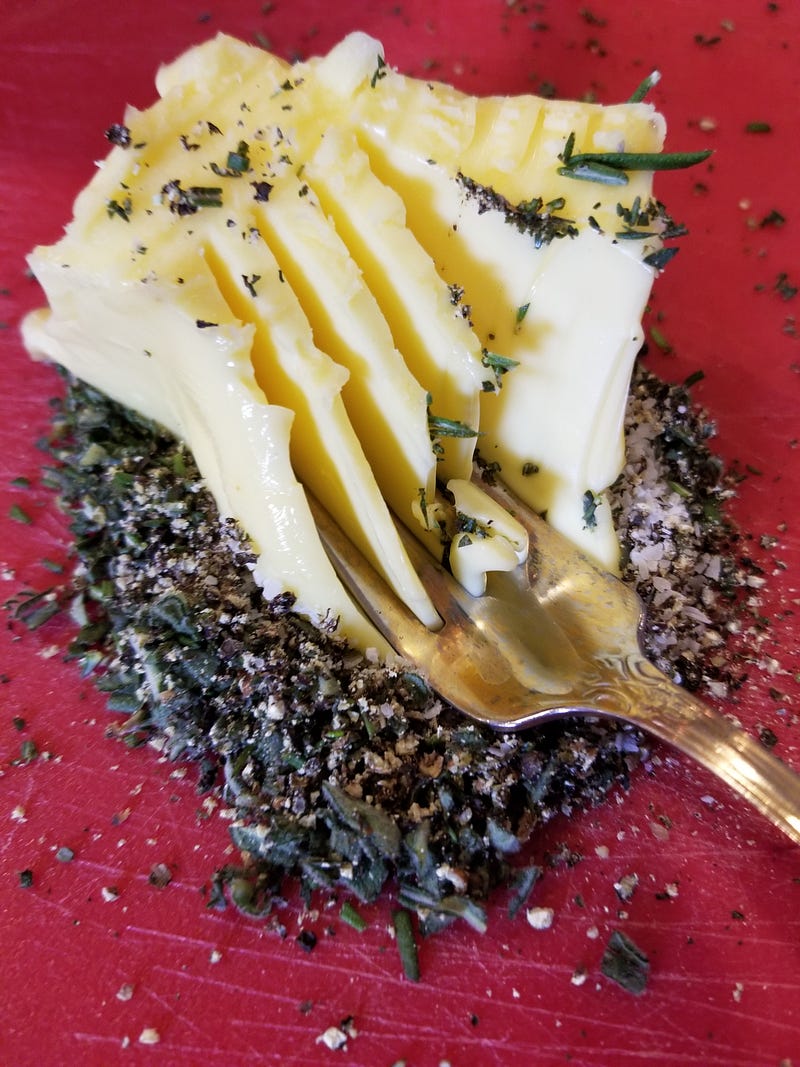
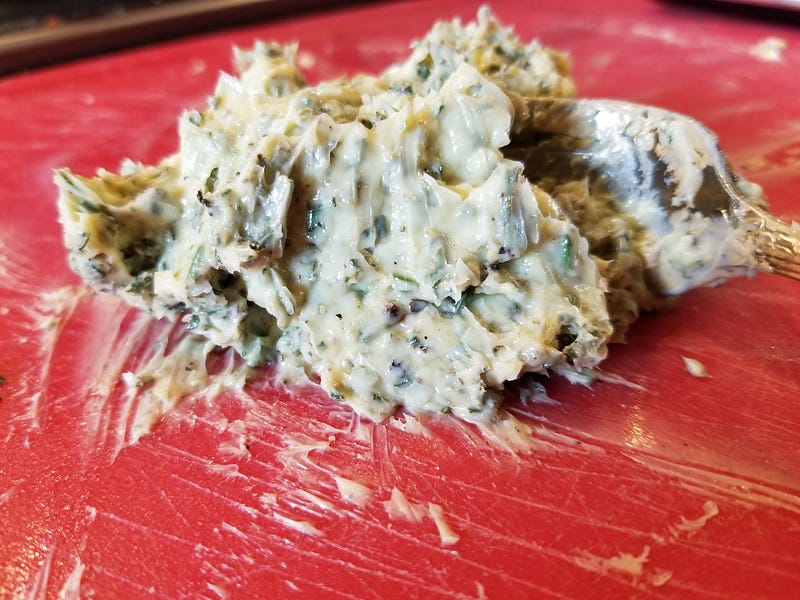
Rustic Herb Butter: By all means, if you want to spend a bit extra to buy pre-made herb butter from your local grocer, cheesemonger or butcher, do that. Please know that herb butter is one of the easiest things to make at home. As long as your butter is at room temperature, it comes together in seconds.
On Getting Ahead: Herb butter can be made ahead of time! Simply follow the recipe and then scrape the contents onto a sheet of parchment. Create a little log of butter by rolling the paper tightly around the butter, twisting both ends of the parchment in opposite directions (like a piece of saltwater taffy) to seal. Place the log in the fridge or freezer until the day before you need to use it. Move to the fridge to thaw for 24 hours, bringing it out of the fridge 30 minutes before use, or leave frozen butter on the counter for 2 hours or until soft before using.
Bedding Vegetables: The best bedding vegetables are what many cooks call “aromatics”. Commonly referred to as the trinity, French & American aromatics are commonly carrots, celery, and onion. If you live in Louisiana, your trinity may look a bit different. The Cajun-style trinity is onion, celery, and bell pepper. Mine often strays a bit from the original French as well. I love to add a chopped fennel bulb or parsnips when they are in season, among other things.
Get creative; stay seasonal if you can. The idea is to lift the chicken off of the bottom of the pan to prevent burning and drying out, so as long as the chicken is sat on top of a vegetable “bed”, you’ve done well.
Oil, S&P: olive oil, enough to coat the vegetables. You can also use many other kinds of fat, including ghee or vegetable oil. I use kosher salt and fresh cracked pepper, but whatever you use for seasoning is fine.
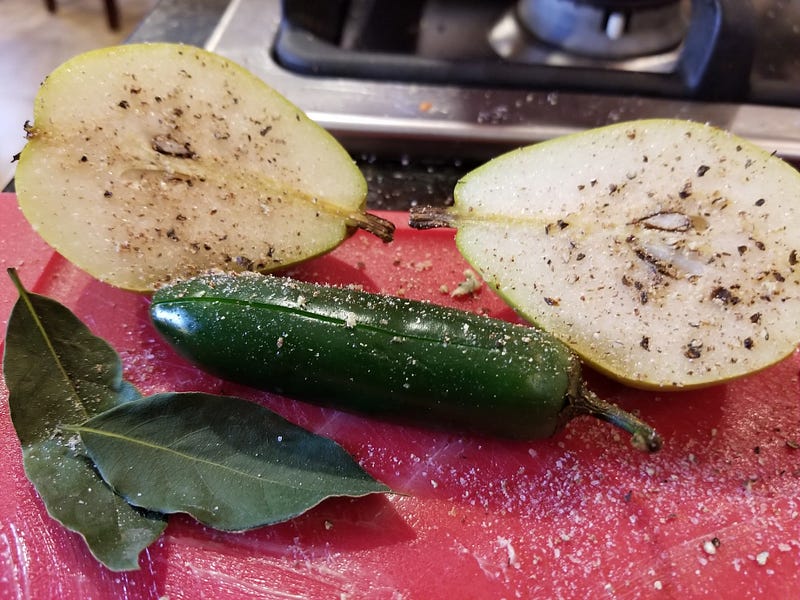
Cavity Fillers: These are additions to the inside of the chicken that create steam, distributing even heat with an extra punch of flavor. This particular chicken enjoyed the steam and warming fall flavors of a large, juicy pear, a spicy jalapeño, and a couple of fresh bay leaves, but my go-to is a half of a lemon, a sprig of fresh rosemary, and a few cloves of garlic.
Cooking Liquid: I use what I have on hand. Choose between chicken broth, a dry or fresh apple cider, or dry white wine (like pinot grigio or sauvignon blanc). In a pinch, it is just fine to use water. It’s not ideal, but there is so much flavor going on already it may not be missed.
Fresh Herbs for Herb Butter: The herb butter for this chicken recipe calls for a combination of fresh rosemary, sage & thyme. When you use woody herbs like these (especially rosemary), the resulting butter is best for cooking and roasting applications. Herb butter is versatile; you may choose to experiment with a variety of combinations that include softer, leafier herbs like tarragon, parsley, or chives or more pungent flavors like garlic, chili, or nutmeg.
Room Temperature Butter: I love butter. I use Kerrygold Salted Butter for most everything, but use what you have. Use your favorite butter. It will be outstanding.
Sea Salt & Fresh Cracked Pepper: These ingredients DO make a difference in this application. That being said, use what you have in your home kitchen. Making the chicken is better than letting your lack of pepper grinder keep you from a fab nosh.
Step 1: Rustic Herb Butter
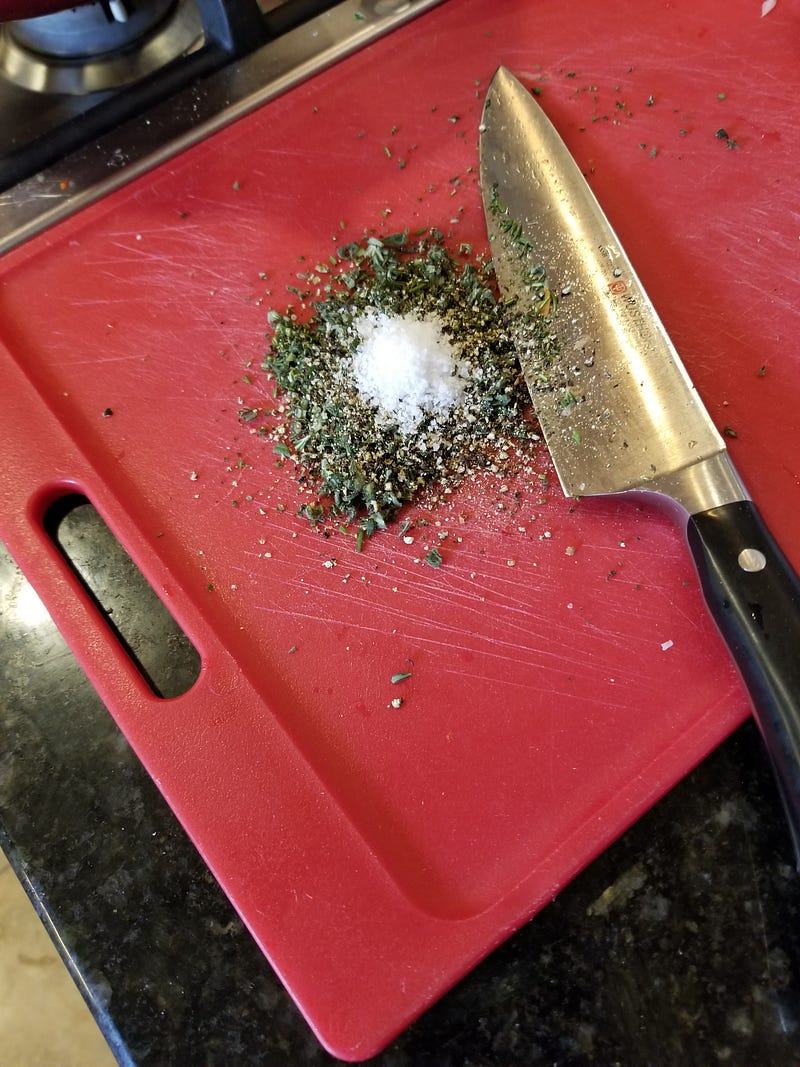
Finely chop 3 tablespoons of fresh herbs on a cutting board, add kosher salt and black pepper and drop the room temperature butter on top of the mixture, smashing the butter with a fork until the mixture is evenly distributed. Set aside for Step 4: Dressed Chicken.
On Salt Quantity: Begin with a teaspoon of salt. You can always add more later. That being said if you are using unsalted butter, add another half teaspoon of salt to total 1.5 teaspoons of salt.
Step 2: Vegetable Bed
Wash and chop a mix of carrots, celery, and onion to create a layer of vegetables in the bottom of your roasting dish. This layer must cover the entire bottom of the dish because any space that is left exposed will burn your pan, or worse, your precious roasting chicken. Add a half teaspoon of each salt and pepper and toss with oil, redistributing the veg when you are finished tossing to cover the bottom of the dish. Set aside for Step 5: Bedding.
Step 3: Naked Chicken
This is the step that scares most people, but do not let your fear keep you from a delicious small roast chicken. Holding the enclosed parcel over your kitchen sink, remove the wrapping from your small chicken. It will be weird. There will be juice. It will fall into your kitchen sink. Everything will be fine. Feel free to use kitchen or nitrite gloves for Steps 3 & 4 if you are squeamish.
Rinse your small chicken under cold water, running your hands around the outer surface to remove of any remnants of packaging liquid. Turn the chicken around beneath the faucet so that the water rinses the exterior entirely. If you see any feathery bits, just pluck and toss.
As you turn your sweet morsel, notice the opening at one end of the bird. Allow the water to run inside of the bird. Fill and dump the cavity with water at least twice and then put your hand into the cavity to feel for a small paper pouch which, depending on your butcher or grocer, may or may not have been stowed away inside for patrons of innards. I don’t mess with them. They are an acquired taste. In my kitchen, they go in the bin. If you’re just starting out, you may like to bin them until you have a use for them.
Congrats! Your chicken is ready for a dress (read deliciousness).
Step 4: Dressed (& Filled) Chicken
Place your small chicken on a clean cooking surface or cutting board with grooves. Using kitchen paper, dab the exterior and interior surfaces, drying all contact points for the application of your homemade rustic (or store-bought) herb butter.
Smudge your small chicken with herb butter everywhere: inside the cavity, on top of the skin, and under the skin without removing the skin. This feat is accomplished by first pushing your three middle fingers and pinkie in between the meat and the skin, tearing the strands that hold them together. Then laden the same fingers with herb butter and press the soft, bespeckled cream as far as it will go into the spaces you’ve created. Use all of the butter.
When your small chicken is buttery, plunk your seasonal cavity fillers into the cavity. Use the fillers to create a seal at the back of the bird. For example, if you are using half of a lemon, place it in the cavity rind end out.
Step 5: Bedding
Nestle your buttery small chicken into the vegetable bed you prepared for Step 2, making sure the vegetables are keeping your dressed bird from touching the bottom of the pan. Pour cooking liquid into the dish. At this point, I like to pinch a bit of salt and pepper over everything before I cover my small chicken with a lid (or aluminum foil) and bake.
Step 6: Bake & Serve
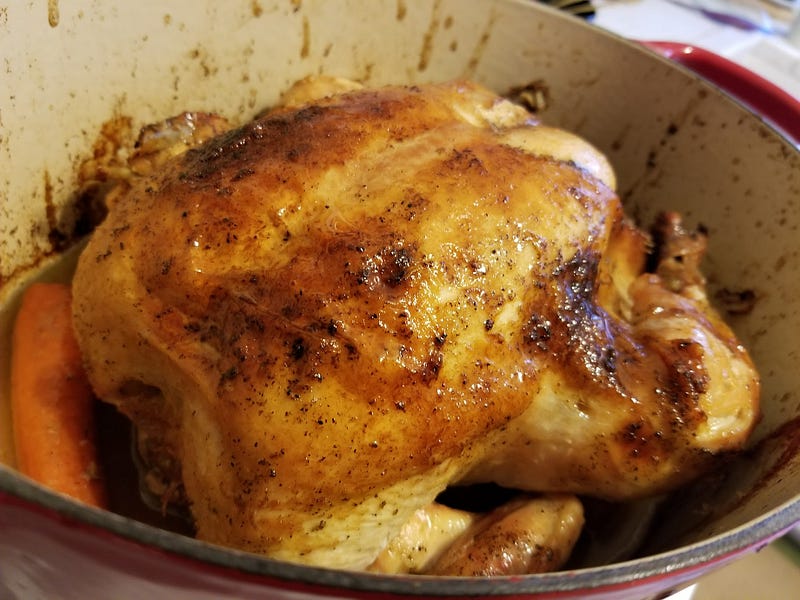
Roast (or bake) your small chicken, covered, in a 350-degree oven for 1.5 hours or until a thermometer into the deepest part of the breast measures 165 degrees. To decrease bake time, I begin my buttered, filled, dressed, bedded, and covered small chicken in the oven while it preheats to 400 degrees. When the oven reaches temperature, I turn it down to 350 and proceed with the roast.
For crispy, brown, caramel chicken skin: Turn your oven up to 425 degrees. Place your small cooked chicken back in the oven uncovered for 5 to 10 minutes or until the skin is golden, or amber if you like it deep and sweet like me. Bon Appetit!
Serving Options:
Serve it On a Weeknight: prepared the day before, stopping before Step 6. Placed in the fridge for one to two days. Brought to oven temperature the day of by placing the small chicken inside of a cold oven and preheating them together while the oven reaches 400 degrees. Left for 10 minutes in the 400-degree oven and then continued at 350 degrees for the rest of the cooking time.
Serve it like a Francophile: a weekly table adornment next to a vase of fresh flowers. For friends and alone, but always alongside a bottle of wine — perhaps a White Bordeaux, Rose, or light table red — and french-style green beans (called haricot verts). Finished with a selection of cheeses, honeys, and roasted nuts from local artisans.
Serve it Gluten Free/Paleo: with wilted spinach and baked sweet potatoes.
Serve it Country (Mid-Western) Style: with buttered sweet corn, creamy mashed potatoes, and a river of gravy. Bread and butter on the side and for dipping.
Serve it For a Small Dinner Party: for people you actually like because they will want to come over again after they try your delicious small roast chicken. Preluded by hummus and pita chips, crunchy carrots and sugar snap pea pods. Alongside sautéed broccolini and steamed rice. Concluded with small cups of gelato or ice cream with fresh berries and mint.
Serve it like The Anxious Girl: in a heavy bowl with bedding vegetables and broth streamed on top and garnished with warm, popping sweet peas. For dinner on a weeknight and lunch the next day, followed by Chicken Soup that feeds belly and soul for nigh a week.
Please feel free to check out my profile: Brett Jenae Tomlin. Comment below if we have something in common, if you have anxiety or if you like what you’ve read. Do you have any questions for me?
If you love, love, love my writing and want to shout out, “You get it, anxious girl!” You can contribute to my cookbook collection here.
A Few More Articles for the Anxious Reader
More Comfort Food: Every Season Vegetable Shakshuka
On Wine: The Anxious Beginner’s Guide to Wine
On Planning Your Next Getaway: 9 Anxiety-Friendly Amenities of All-Inclusive Travel
On Learning to Let Go: Six Mental Health Benefits of Learning to Play
On Body Image: Summer Body, Part 1
On Coming Out: My Bi Life, Part 1