
GLOBETROTTERS JANUARY CHALLENGE
Signs to Get Around the World
Boards and other sign markers I found on my travels
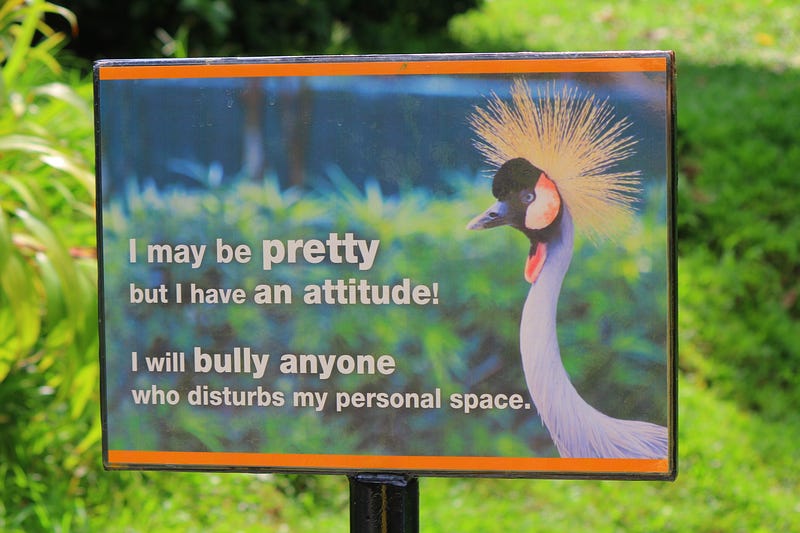
After too many hilarious, confusing and weird signs I found and stumbled upon on the African continent over the years, I decided it was time to see what other continents have to offer. It seems though as if some nations are more creative than others and some put more effort into signs than you might expect.
What about you? Are you a person who follows signs or do you see signs as a challenge to do the exact opposite? With me, I'd say it depends on which kind of signs I see. If they make sense and are for the environment, like 'don't litter' or 'avoid using plastic straws', then I'll follow them.
But if signs don't make sense to me or are simply plain right stupid, then the chance is very high I'd ignore them.
However, when I was walking through the bird park in Kuala Lumpur, Malaysia, which is said to be the world's largest free-flight walk-in aviary, I made sure to stay away from the crane the above sign warned about.
I am skeptical and certainly careful around animals having an attitude. You never know what they will come up with. Plus, I don't like bullies. If humans or animals, it doesn't matter.
Either way, once I was done observing and admiring all kinds of exotic birds in the park, I walked down to the Perdana Botanical Garden which is an incredibly vast and complex system of gardens with lush forests and waterways in the heart of Malaysia’s capital.
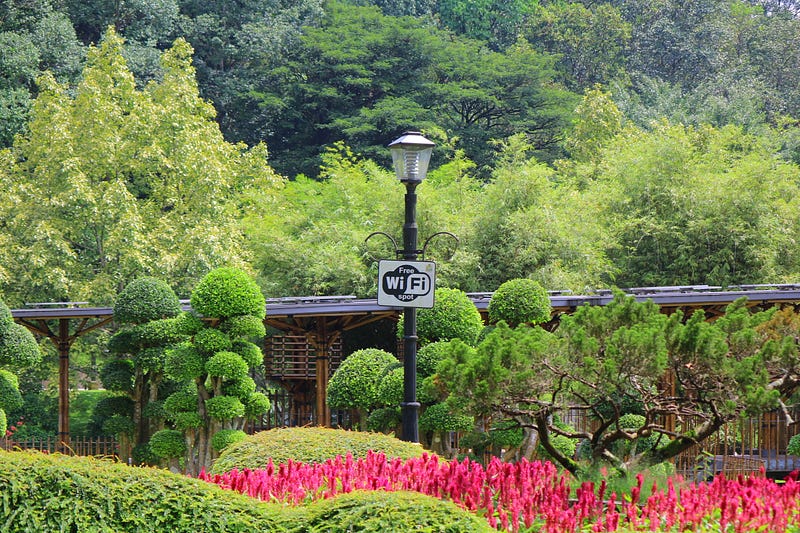
And in the middle of that beautiful ecosystem, a small but for many these days such an important sign popped up.
“Free WiFi”
At a time when Germany still didn’t offer free wifi on trains and I wouldn’t even have a stable internet connection in the most urban places of the country, you are here, in Malaysia, surrounded by trees, bushes, ponds and hear nothing but the chirping of birds.
And you have free WiFi.
The sign is showing how far advanced many Asian countries are. Especially when it comes to technology. I didn’t use the free WiFi but logged into my phone as I couldn’t believe and was stunned to see how great the reception and how fast the connection was.
“Sometimes the universe will send you signs that you’re headed in the right direction.” — unknown
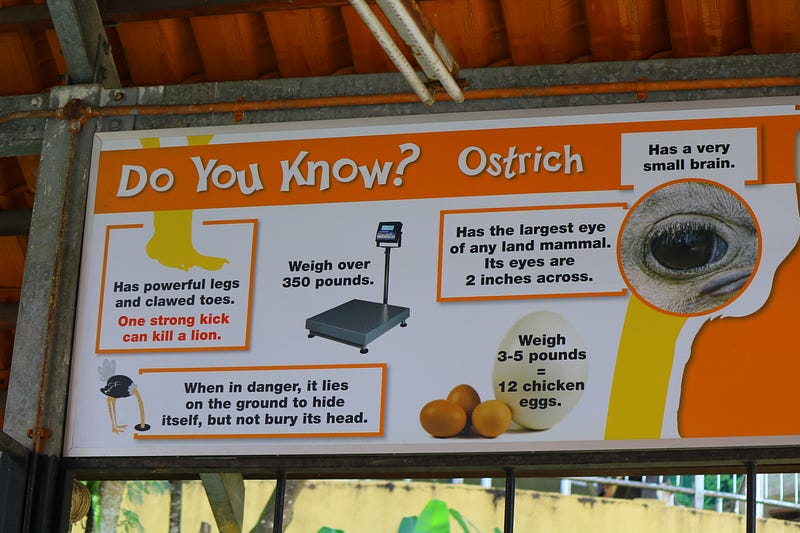
Back to the bird park brings me to a new category of signs. The one that informs, educates and teaches the bypasser who takes the time to stop and read.
Unfortunately, most people visiting the park, have their phones or cameras out and snap pictures all around but hardly anyone stops to read these, in my eyes, incredibly interesting facts.
Even while I’ve learned a lot on safaris in southern Africa and have seen ostriches in the wild at times on a daily basis, there were a few things even I didn’t know yet.
Did you know…
- An ostrich has such powerful legs it can kill a lion with its strong kick.
- When in danger, the ostrich lies on the ground to hide itself, but not bury its head.
- The ostrich has the largest eye of any land mammal but a very small brain.
- One ostrich egg is as large as the combined weight of 12 chicken eggs.
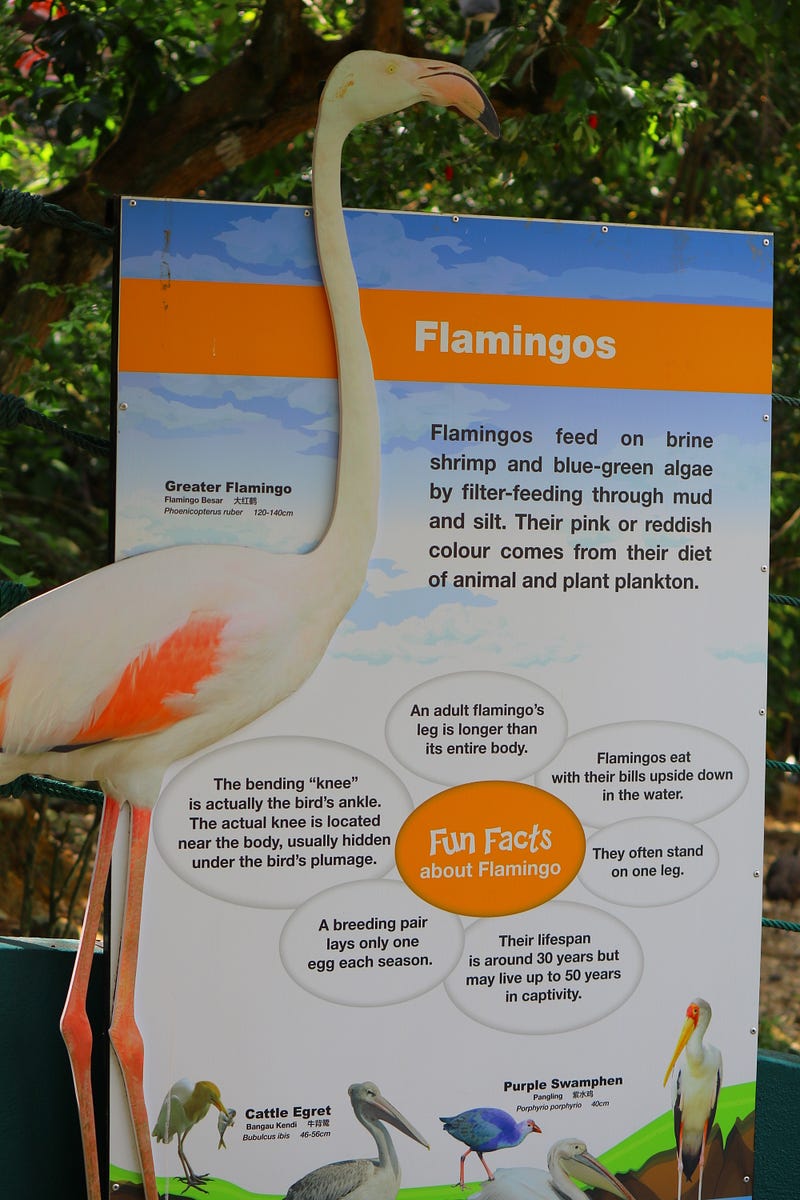
And while we are at it. Would you like to learn something about flamingoes?
- Their pink or reddish color comes from feeding brine shrimps and plant plankton, their diet.
- An adult flamingo’s leg is longer than its entire body.
- Flamingos eat with their beaks upside down in the water.
- A breeding pair lays only one egg per season.
So what do you think after reading these two informative and educational signs? Did you learn something new? Was the content valuable or did you consider these animal facts as boring and useless?
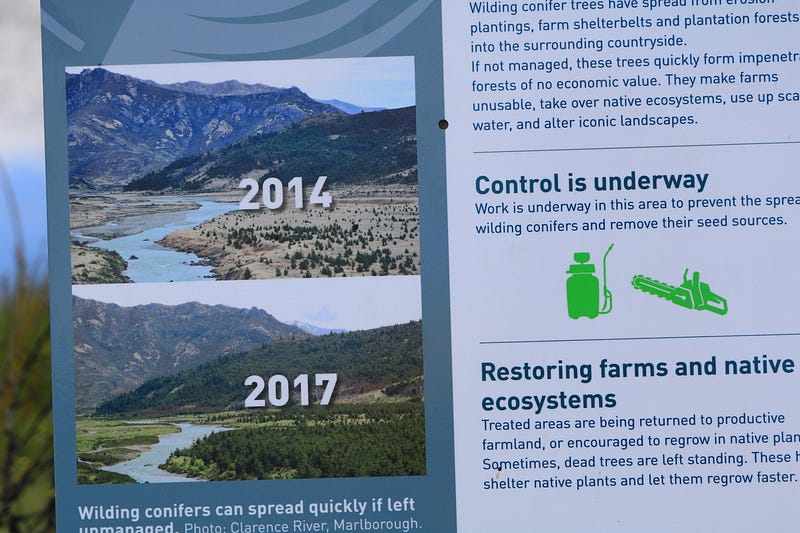
Switching continents and heading to our current home in New Zealand I remember the early days in the country when I was shocked how much logging was happening on the hills all around Central Otago.
But then, after the second hike and one with educational signs all around, I looked at those tree-cutting scenes in a very different light.
Thanks to those signs put up throughout the hiking trail, I learned that conifer trees aren't native to the island nation and were introduced by early settlers who needed them to build homes and other buildings.
Yet a tree like a conifer soon took over the landscape, spreading quicker than any native tree, sucking all nutrients from the ground and creating a rather dead and sad forest floor as they allow no other plants to grow. Also, acting as tinder, conifer forests spread and speed up wildfires like no native and healthy forest would.
To save the native ecosystem, control had to be put in place, in the form of logging but also through the help of spraying poison from atop. And this is what New Zealand is doing.
So yes, signs like these don’t just act as an educational board but change the way we see and perceive the surroundings. Now I know when I see a tree-cutting machine that it means control is underway. The country is doing something to restore its ecosystem rather than destroy forests, which I thought initially.
“Remember the only sign of life is motion and growth.” — Swami Vivekananda
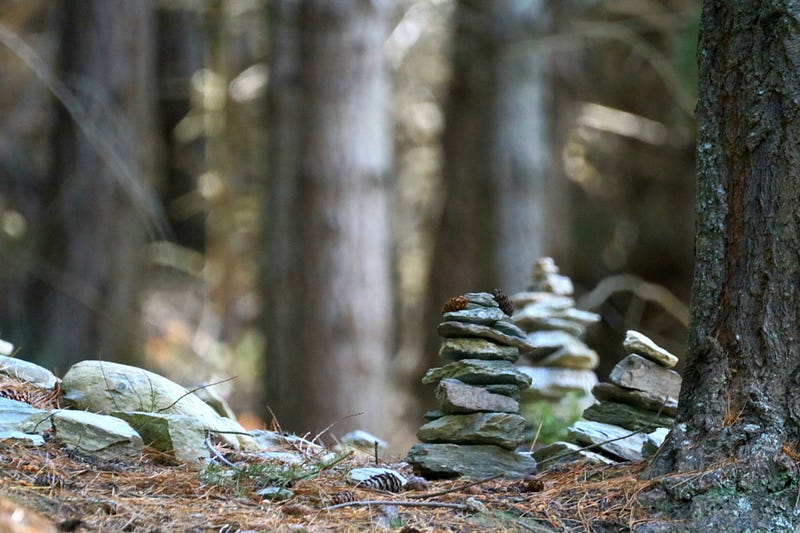
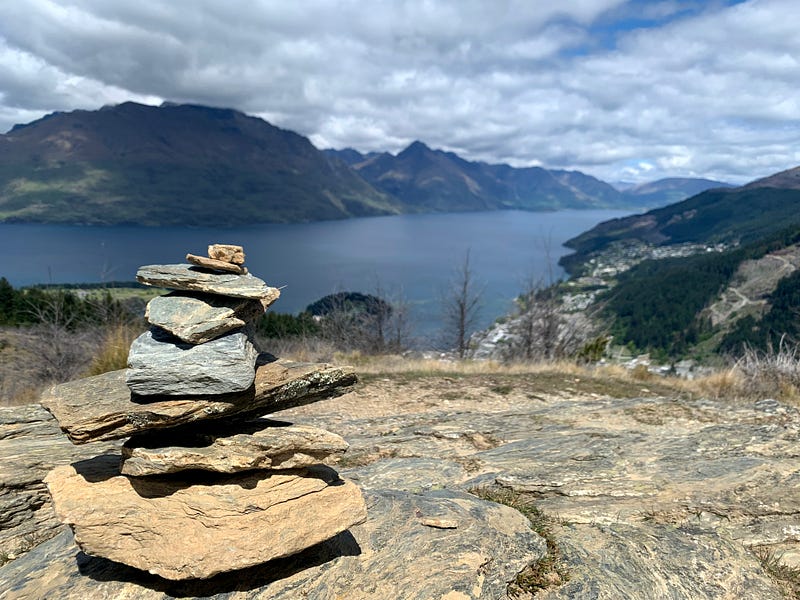
Signs that lead the way could also be cairns. While these days they are more often used and created by tourists as a piece of art, initially, these stacked piles of rocks were invented to guide travelers.
And they still do. In more remote and less traveled regions of the world.
Signs can also tell us where we are in the world. In a geographical language. Do you know the terminology of describing your location on the globe? I still remember as a child standing in front of that round piece called Earth and staring in disbelief at painted countries and bodies of water.
By now I have traveled across the length of many meridians and crossed several parallels of latitude.
A funny side note at this point. I found out I was living on the 45th parallel in New Zealand, which marks the geographical halfway point between the Equator and the South Pole, and while in Germany, I am just slightly North of the 45th Parallel. Of the northern hemisphere.
And yet, those two parallels of latitude are offering very different climates despite the same distance to the poles or the Equator. The reason for this is the continental climate of Europe and mixed climate of New Zealand between a warm subtropical and a cool temperate climate.
" The Equator is an imaginary circle equidistant from the poles of the Earth. Circles parallel to the Equator (lines running east and west) are parallels of latitude. They are used to measure degrees of latitude north or south of the Equator. […] Meridians of longitude are drawn from the North Pole to the South Pole and are at right angles to the Equator." — dauntless-soft.com

Other finds are signs of creativity. Like when we found ourselves in the middle of the desert, were planning to have a barbecue but forgot the grill stand and used empty bottles instead.
Ok, that is a lie. We didn’t forget the grill stand, we never had one. And from day one, we always used bottles to create a stand for the grid. We’ve tried it with rocks too but learned to be careful with them. Some of them explode with too much heat. That never happened to our glass bottles.

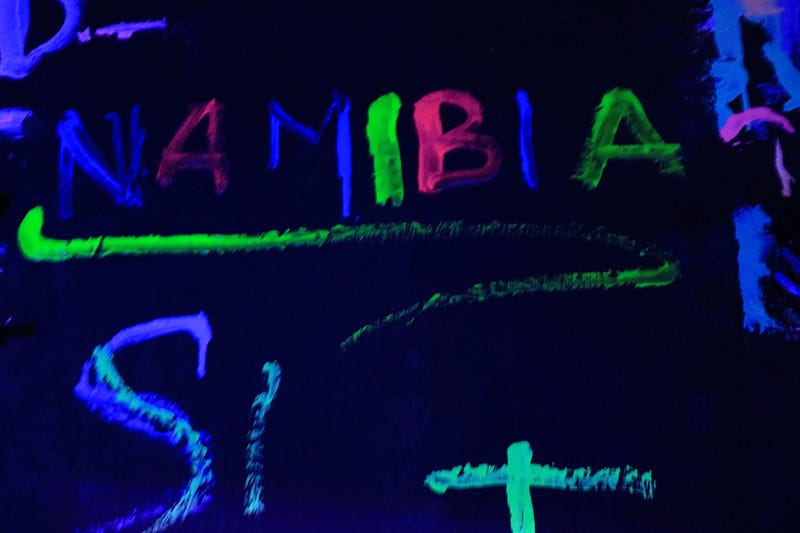
Other signs of human activity and creativity, I found while bar hopping on the beaches of Thailand’s countless islands. One of the bars was lit up with blue light and had a black wall standing next to the open dance floor. Four buckets with different colors were placed in front and everyone was invited to leave behind a sign.
A sign of their presence at this place and some point in time.
So did we.

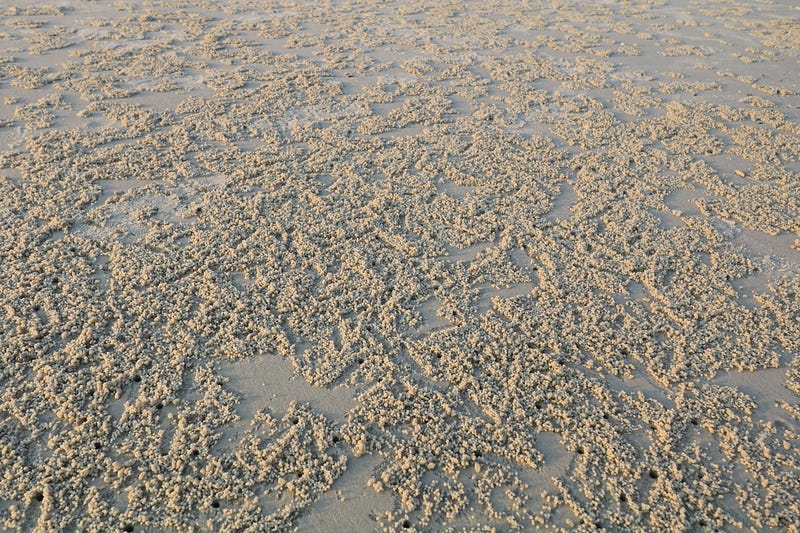
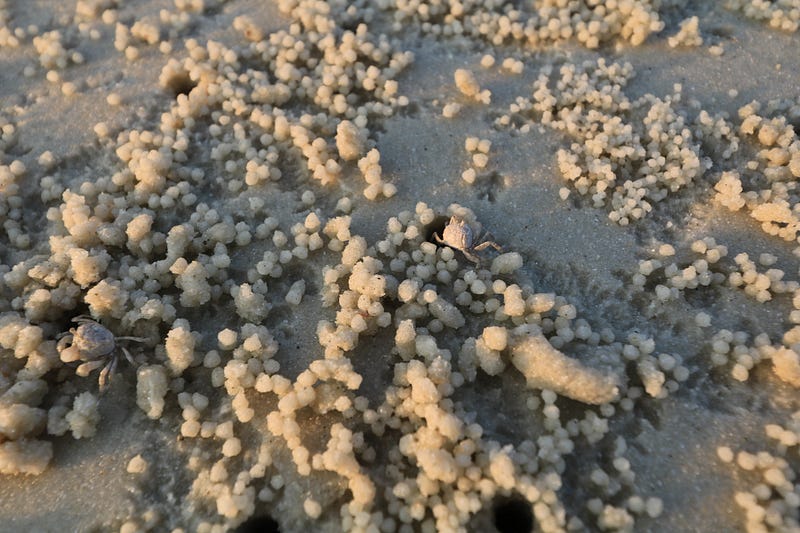
And moving from human-created markers to signs of animal activity. Staying in the country of Thailand and wandering along its stunning coastlines, I often stumbled upon beaches converted into surfaces covered in tiny, sandy balls.
As you are moving across the ground, hundreds if not thousands crabs run around and disappear in their holes in the ground. On the beach.
But if you stand still, for long enough, you’ll get to see them crawl out of their homes again and walk about pushing more and bigger balls of sand out of the underground tunnels.
Fascinating signs of animal activity, I find.

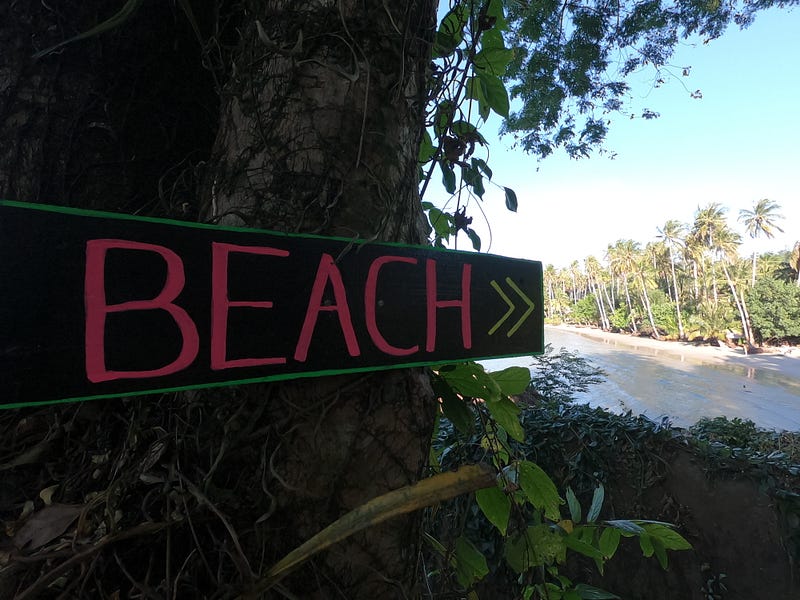
And I’m finishing off this article with important signs like the one below with not much more to say as one always should know and find the way to the beach.
This is a prompt response to January’s writing challenge. I have already written about “An African Version of Signs That Lead the Way (or Not)”, “More African Signs Between Elephants at Camp and Long Drop Toilets” and “Ghana Welcomes You With Open Arms and a Load of Hopeful Signs”.
Read other participants and their responses.
Matthew Bamberg with “Globetrotting in Search of Café Signs”
Jay Davidson with “There are Many Themes Among the Signs in Ghana”
Join my email list here if you would like to read more photo essays.
Shutterstock | Instagram | YouTube | Mailchimp | Amazon | Redbubble


