
Should Transhumanists be Pessimistic About Human Nature?
Nietzschean elitism and the transhuman’s existential status
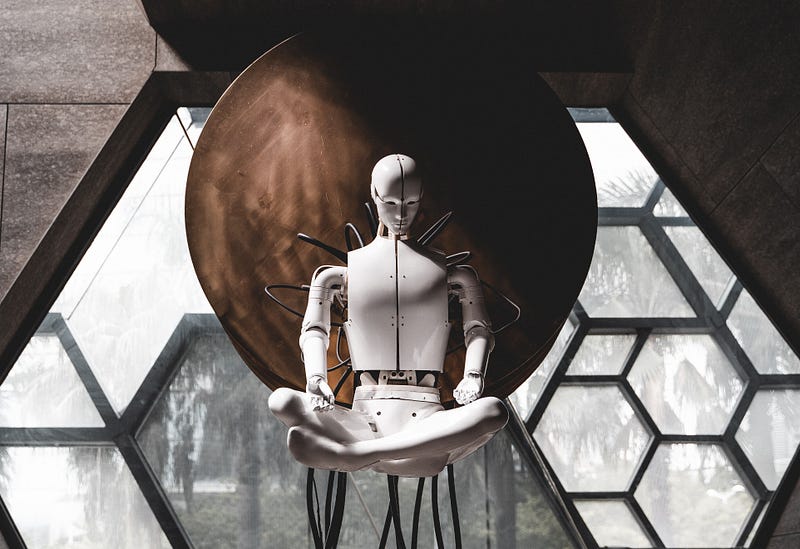
Friedrich Nietzsche envisioned that our species ought to be ruled by heroically creative, transhuman figures he called “Ubermenschen.” These intrepid conquerors would overcome the horrors of natural facts with honour instead of circumventing the arbitrariness of morality (the problem of nihilism) with self-deceptions and fantasies.
This was an early modern exploration of the possible evolution of an advanced, posthuman species, although Nietzsche was concerned not with questions of technical feasibility but with the nature of the superior mentality. And Nietzsche was an arch elitist, an existential aristocrat who repudiated the egalitarian aspect of humanism.
Is transhumanism, then, wholly at odds with humanism, that is, with the assumption that human nature is essentially good because we’re able to improve ourselves? Is the transhuman necessarily anti-human? To yearn for the transhuman merger with technology, must we first loathe our current form?
From original sin to humanistic progress
To address these questions, we should recall the context in which modern humanism arose in the European rebirths of the fifteenth and sixteenth centuries. During the Middle Ages, the Catholic view of our nature’s inherent depravity prevailed. Due to the “original sin” that made Jesus’s sacrificial death such a blessing, we couldn’t hope to progress by ourselves as a species.
We were the blind leading the blind, destined for everlasting punishment in the afterlife. Indeed, what we might regard as social progress, from our natural perspective, was just more intolerable sin, more arrogant and blasphemous boasting, more alienation from our divine source. Our obligation was to wait it out in medieval stability, in service to the institutions of Christendom, praying for God to finish saving us.
Then the potent ingredients of Greco-Roman philosophy and science boiled over. These the Church had been busy for centuries dulling with its insipid theological co-optations, but once liberated, they reignited the pride in every individual’s dignity that inspired the Protestant Reformation and the Scientific Revolution.
This humanistic abandonment of hope in miracles is implicit in the monotheistic idea that each person is a divinely created, morally valuable spirit. But whereas Gnosticism, for example, carries the wonder of our personal nature to a far-reaching religious conclusion, Christianity buried it with its defeatist and duplicitous Catholic shenanigans. What was awe-inspiring about us to Christians was only our negative potential to sin, not our positive one to progress. All positivity had to be credited to the Christian godhood since the entire natural universe was supposed to be corrupted.
What modern secular humanism did was to reaffirm our divine creativity. After all, if we were created in God’s image, we ought to have the relatively divine attributes of self-awareness, reason, freewill, and imagination, which we do. Soon enough, though, the theological rationales for our anomalous abilities in the animal kingdom seemed obsolete, as the modern age’s philosophers, scientists, and industrialists expanded our reach at a breakneck pace.
It was no longer a question of speculating about whether our species could progress. You could see that progress everywhere as the medieval world gave way to the modern one. Even if that progress wasn’t towards a pure utopia, and even if the predominance of secular powers entailed the wretchedness of the poor classes in the Industrial Age, and of soldiers and civilians in the world wars, there was freedom in that suffering. We were suffering in the interim because we were deliberately trying to right the ship, casting off the fairy tales that had beguiled us for too long, and there was no infallible referee, after all, to mark any conduct as out of bounds.
In a nutshell, secular humanism is the view that our inner nature is personal, and that personhood is a natural wonder. Everyone is roughly equal in that sense. Some may be more intelligent or self-aware than others, but every human has the cognitive capacities to act like a person as opposed to an animal. For secular humanists, personhood, not a skygod is the basis of our “salvation,” or of our progress away from a savage life in the wild to one of civil fellowship in our self-created, artificial worlds.
The shortcomings of human nature
If that’s the context of humanism, we can see that transhumanism isn’t so foreign to modern sensibilities. The transhumanist might be taken as saying that the approaching technological “singularity” is only a stage of human progress. We’ll have built AI because of the greatness of human mental capacities. If we’ll transform into a cybernetic species, that will only be a stage of our progress.
But that credit might be cold comfort. The question, you see, is whether transhumanism entails posthumanism. If so, the progress in our species’ transformation wouldn’t necessarily be ours since it would belong to nature or to the planet. We would be surpassed, perhaps even exterminated by our artificial offspring, as depicted in pessimistic science fiction stories. And we would be surpassed because, as pivotal as human personhood might have been, our nature would have flaws which wouldn’t burden the superior race.
We return, then, to the place of elitism in considering the transhuman species’ relation to ours. A transhumanist might admire our progressive potential, but that admiration could amount to a backhanded compliment. Put more precisely, our most consequential strength might be our ability to recognize our faults, which would motivate us to engineer a race of artificial beings that would be free from those faults. Likely, AI would have a unique set of defects, but at least AI would be potentially immortal like any other digital product, and perhaps it would be unbiased by emotion and egoistic myopia.
In any case, human progress would end in the overcoming of our animality. We’d exert our sentience and our rational powers to the utmost, scrutinizing not just the opportunities for exploiting natural processes, but the weaknesses of the human mind and body type. We’d advance by building something better than us. Then the question is whether we’d combine with that superior form, stepping into artificial immorality, or be left behind.
Either way, the elitist point would be that human personhood is a flawed product of natural selection. Our job would be to improve on nature’s generation of lifeforms. Nietzsche thought he could discern the outlines of that advanced mentality, the one that’s free from the weaknesses of slave morality and of our fear of the existential stakes of creativity. That is, we fear that we’ve taken God’s place as the divine creators, so we restrain ourselves, letting our religious fictions rule over us.
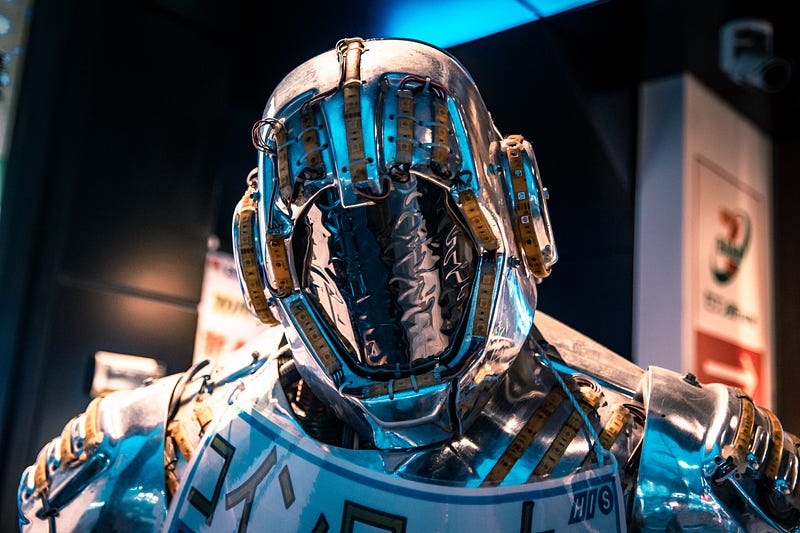
Nietzsche’s incomplete existentialism
But what of Nietzsche’s recourse to the natural ranking of social classes, according to which some deserve to be masters while others deserve to be slaves? Here Nietzsche dropped the ball. His latent social Darwinism — common to all conservatives — is quite at odds with the spirit of transhumanism. Indeed, what’s so profound in the creation of values is precisely that the divinity worth worshipping is anomalous in nature and therefore shouldn’t be judged in natural terms.
Nietzsche elided the difference between two kinds of creativity, the cosmic kind found across the outer wilderness, and the mindful kind which is at war with the former one, and Nietzsche did so by elevating the will to power as a quasi-metaphysical principle. That personalization of nature is superseded by the scientific discovery that nature is, rather, perfectly monstrous in its inhumanity. To the extent that they’re objective, natural processes are zombie-like in their lifeless mockery of willpower and intelligence. Natural causes and effects happen despite the lack of any cosmic intention or urge. The universal energy in question is the quintessential zombie ichor, the magic placeholder that glosses over the mystery of why there’s something rather than nothing, given that there’s no living overseer.
The point is that natural creativity is horrific because it’s impersonal, whereas the creativity of living things is honourable just because it’s deliberately opposed to nature. Naturalizing human capacities (with reductive, scientific explanations) would result in discrediting all values and assigning them dubious ontological standing. This would apply not just to the slave moralist’s precious religious fictions, but to the Ubermensch’s glorious self-expressions. Nietzsche does the opposite: he personalizes the inhuman wilderness by speaking of a broader “will to power.”
This naturalistic perspective would indeed have the nihilistic implication that all turns of events would be wholly objective, subjectivity being an illusion. Sure, we’d then be at the mercy of social Darwinian interpretations, and the masters would be destined to rule over their slaves as a matter of “natural law.” But there would be no honour or glory in any such outcome. The aesthetic values of honour and of aristocratic heroism, too, would be unfounded. Rather, these values emerge with subjectivity, with the advent of organisms that seek, according to their limited perspectives, an end which is partially good, that is, good for them and their kind at the universe’s expense.
This existential reconstruction of Cartesian dualism, according to which the artificial is at war with the natural, returns us to egalitarian humanism. Not only every human person, but every sentient animal has some conception of the conflict between the inner and the outer worlds. The natural solution is to reach an equilibrium known as “homeostasis,” but personhood blows past that solution. We’re cancer-like in our opposition to any such compromise. Rather than deferring to the natural environment, we build artificial environments and are forever intent on improving them.
If everyone is equally landed in the existential predicament of trying to live with honour and dignity within the monstrous outer darkness, Nietzsche’s Darwinian bluster comes across as obnoxious rather than just as a greedy case of reductionism.
The humanist has that point, then, which is that there is an existential condition of personhood, not just a Western or Eastern, ancient or modern, religious or secular, master or slave condition, but a universal predicament for all people (all intelligent, creative animals). Perhaps AI won’t be personal at all, in which case it might be free of that condition. Or maybe we’ll mistake AI for a worthy companion, and we’ll hide in virtual realities the way we used to hide in our religions and in our ideological excuses for patriarchies and dictatorships.
In any case, there’s a complex relationship between humanism and transhumanism. We ought to be antihuman in some respects and prohuman in others. Put paradoxically, we ought to be human enough to recognize our shortfalls and to overcome them by ourselves, without relying on any crutch, be it a God or a will to power. We might then overcome our vain self-image by adopting a humiliating perspective, one that situates the individual in the dehumanizing cosmic context.
Nietzsche aimed to do just that by taking power to be the highest value, but this only projects the sociopathic mindset of human aristocrats, towards which the universe is indifferent. The problem for both humanists and transhumanists is that subjects are anomalous in a world of objects. Moreover, the response that legitimizes the subjects is to overcome the divide by extending the subjective domain. Theistic religions and many secular ideologies do so dishonourably with frauds and fantasies, whereas the transhuman might humanize nature with no delusions.
The latter enterprise would be grim and tragic because the only vindication would be a compromise: nature would be rendered meaningful and artificial, but posthuman people would be dehumanized by their severe objectivity and by the inescapability of their existential awareness.


