
The Universe’s Monstrous Character
The paradoxes and horrors at the root of the numinous

What is nature’s character, the overall, informed sense of the outer wilderness?
Science models how natural systems work, and what we should expect to unfold, causally speaking, from certain initial conditions. But is there an aggregate of traits that forms the nature of nature, as it were, and if so, what is that overall character?
Of course, the universe is a fiendishly large, complex place, so if you were to ask different people who are preoccupied with different corners of all that is, you’d likely get different assessments of the universal character.
For instance, if you ask a consumer whose experience of nature is limited to the vacations he or she takes, you’d likely hear that nature is beautiful — because this person is used to looking only at Instagram-ready snapshots of the wilderness, as this urbanite shuttles between the office and a cozy vacation spot.
A religious person might insist, rather, that nature is a vehicle that testifies to its supernatural creator’s greatness. Nature turns out to be a mirror that magnifies God’s majesty, wisdom, and benevolence.
Neither of those answers satisfies because the first is superficial while the second distracts by positing something apart from nature, namely a supernatural deity. If we want to know the character of nature itself, as the depths of nature present themselves to our most exhaustive explorers, namely to scientists and philosophers, we should expect a different answer.
From philosophical naturalism to cosmicism and pantheism
Scientists have little time to reflect on the aggregate of natural properties since they’re busy exploring the minutia of natural elements, forces, systems, processes, and cycles. Scientific knowledge is fragmented because scientists have peered so deeply in different directions and paused to make sense of various strata of natural phenomena.
Philosophers are more likely to reflect on the upshot of scientific theories and on the assumptions of the scientific endeavour. Of course, philosophers can and frequently do disagree. But let’s work with naturalism, with the science-centered secular philosophy which says there probably are no miracles and we progress socially or at least technologically by expanding our empirical understanding of how nature works.
In that case, my sense is that that framework entails some combination of cosmicism and pantheism.
Cosmicism is the Lovecraftian fear that scientific advancement is ironically horrific, that the more we understand natural causes and effects, the more we disenchant the universe and thus dehumanize ourselves. That is, we lose our delusional pride as a species and as individuals when we realize that our emergence on this planet is simultaneously an abandonment of our all-too intelligent species to an amoral, alien wilderness. We are the proverbial babes who are lost in the woods.
Pantheism is the contrary idea that scientific advancement reenchants nature, that there’s the seed of wonder even in the horror of scientific discovery. If everything’s natural, nature obviously replaces God as the supremely creative power. Either natural creations go on and on forever, in infinite domains of the cosmological landscape or the elements of natural order arise miraculously from nothing as brute facts. In either scenario, nature is divine, meaning that nature’s creativity is so awesome that it dwarfs our progressive pretensions.
From a naturalistic perspective, then, nature’s character is appreciated best through alternating states of horror and awe, revulsion and gratefulness, despair and aesthetic wonder. Nature is generally that which triggers those conflicting enlightened reactions.
Indeed, modernity, the social progress that flows from the scientific kind exhibits both ends of that spectrum. After all, scientists maintain their curiosity, relishing how their discoveries empower developed societies, even as those same discoveries entail that nature isn’t our home. On the contrary, rich countries that are empowered by science only increase their alienation from nature by fortifying their cityscapes, which are effectively their artificial refuges from the wilderness.
Nature is thus numinous in the theologian Rudolph Otto’s sense, since nature is the “mysterium tremendum et fascinans,” the mystery that’s both terrifying and fascinating, repulsive and attractive.
Nature’s alienness
Let’s return to the question of nature’s character. What’s the proper name, as it were, of the universal wilderness?
The word “character” derives from the Latin for the mark of an engraving tool. Thus, the root idea of a person’s character is that the person strikes you in a certain way, leaving a mark or signature. That mark may include a first impression, but also the patterns in how others tend to perceive or think of her. Character, then, has this subjective aspect since it’s how something is likely to be interpreted because of its overall impact.
And the emphasis in “character” is on the moral qualities, whereas words like “individuality” and “personality” have different emphases. “Character” in that sense is an honourific term, since someone can have or lack character depending on whether the person is good or bad. Someone of impeccable character is the product of a healthy upbringing, who exhibits integrity and commitment to principles.
Although nature is impersonal, the natural order is principled, according to naturalists who deny that there are miracles. After all, natural processes wouldn’t deviate from the “laws” that scientists formulate. Alas, those principles are monumentally amoral, a fact which is apparent from how all living things die and often suffer regardless of their morals. People and other social animals care about fairness and cultural sophistication, but the universe at large doesn’t.
Nature’s principles are thus alien to us, and in so far as those regularities play no favourites with any other intelligent species, that alienness amounts to perfect monstrousness. True, natural processes don’t deliberately hide their secret operations, so theoretically the natural order may favour intrepid species that rush to discover the ultimate scientific truths, as in a utopian transhumanist scenario. But that would entail only a metaphorical sense of nature’s favouritism. The cosmic monstrousness would darken even the most optimistic science-operatic take on future history.
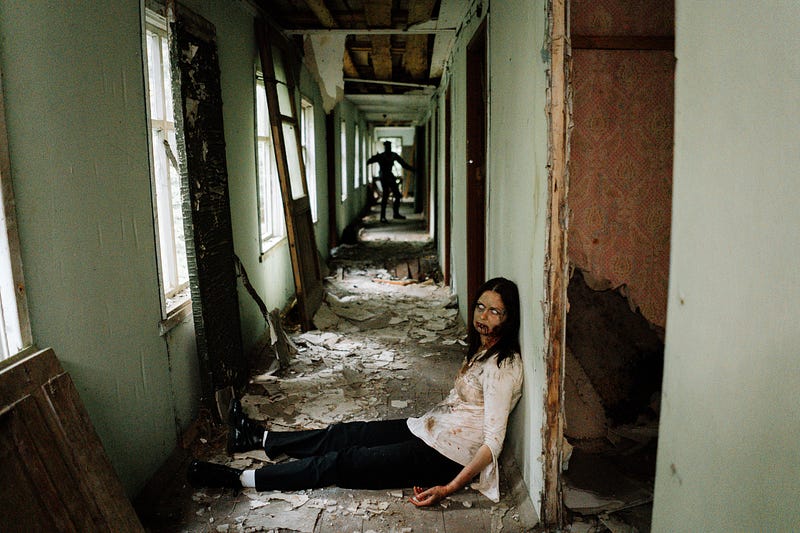
The universe is zombified
Perhaps the best symbol or microcosm of nature’s character is the virus, an odd category of pseudo-life that’s neither fully alive nor inanimate. Viruses have genes, they evolve by natural selection, and they reproduce by cloning themselves. But they lack cellular structure or a metabolism, which is why they depend on hosts to perpetuate their kind.
In popular culture, viruses are dramatized, in turn, by the fictional zombie monster which also occupies a state of magical “living death.” Zombies can’t be killed because they’re already dead — even as they appear to go on living in some rudimentary fashion, walking, groaning, and terrorizing society. By way of social criticism, zombies symbolize consumers in that respect. But the metaphysical importance of the zombie fiction is that all of nature has that paradoxical duality of being neither alive nor dead, neither intelligent or mindful nor inanimate or inert.
Nature is like the virus or the zombie in having a principled order that extends to trillions of stars and planets, and to everything from atoms to galactic clusters, even as that order has no personal, moral, or spiritual basis or purpose. Nature is animate, as the religious animists intuited, but nature’s also mindless, as scientists demonstrate.
It’s just that appalling combination which is perhaps the origin of our sense of the eerie numinous, given the naturalistic correction of Otto’s theological conception. The same paradox applies to viruses: their taxonomic status is perplexing even as the parasitic viruses have evidently declared total war on more complete organisms. A zombie monster, too, would be both fascinating and terrifying. For how could such a ruined corpse keep moving? And why spend any more time pondering that mystery when the zombie is about to eat you alive?
Animism and the paradox of a numinous universe
“Numinous” derives from “numen,” which means “divine power or spirit; a deity, especially one presiding locally or believed to inhabit a particular object.” The original Latin word means “a nod, command, divine will or power,” as in a nodding of the head in command or assent. The idea, then, is close to the animist’s, which is that even so-called natural, objective, disenchanted phenomena are “supernatural” in so far as they seem laced with “spirit,” that is, with a commanding divine nod, will, or animate order.
If we refrain from positing any such supernatural source or essence of nature, the universe’s inherent animateness can only seem like a monstrous brute fact that mocks our social intuitions and expectations. We readily project spirit, intelligent design, purposiveness, and mentality onto nature because that’s what we’re naturally adapted to do. As the philosopher Daniel Dennett explains in Breaking the Spell, we’re social animals that instinctively read each other’s intentions and that therefore would dearly prefer to negotiate with natural processes as we might socially interact with friends or neighbours.
But nature has no social or moral character. Animism is an illusion that nonetheless rests on the insight that nature is paradoxical. After all, the illusion was a natural one because nature is replete with systems, processes, and cycles. Nature is an “animate,” lively, but not living order.
Where’s the divine nod that makes the rain fall? Scientists explain the rain by positing the water cycle, they explain that cycle by positing the evolution of our solar system, and they go on to explain how that system derives from earlier and microscopic developments, and so on until you reach the brute facts of the fundamental laws of physics and cosmology.
Thus, science alone doesn’t fully refute animism since scientists push back the philosophical or religious question of why there’s any natural order at all. Why is there any ordered thing rather than nothing in the first place? That’s not a scientific question in so far as scientific explanation is methodically reductive since scientists would have to explain that original order by positing a yet deeper order.
Despite all the advances in scientific reductions and disenchantments, we’re haunted by a ghastly animism, by the natural order’s strangeness. Even contending that a supernatural person created the universe wouldn’t alleviate that strangeness because the paradoxical sense of the numinous would transfer to God, as Rudolph Otto implies. God’s supernatural order would become the inexplicable brute fact, the miraculous, arbitrary arising of something from nothing.
In any case, when we set aside the supernatural distraction and reflect philosophically on nature’s inherent character, as that’s informed by the most exhaustive scientific investigations, we have the ironic re-enchantment of that which has been thoroughly disenchanted.
Nature’s character is virus- or zombie-like. Nature is a terrifying and fascinating mystery, a colossal monster like the biblical Leviathan or Babylonian Tiamat, the chaos dragon that defies our parochial intuitions. Nature tantalizes us by enabling us to understand our existential condition and dashes our vain hopes for progress. Nature has no defense against our Promethean, Faustian, or “Satanic” urge to become godlike by investigating how the universe works — no defense apart from the horror of what we’re bound there to find.


