
Poember November
She Never Wanted Him to Know
A trauma-bonded kyrielle
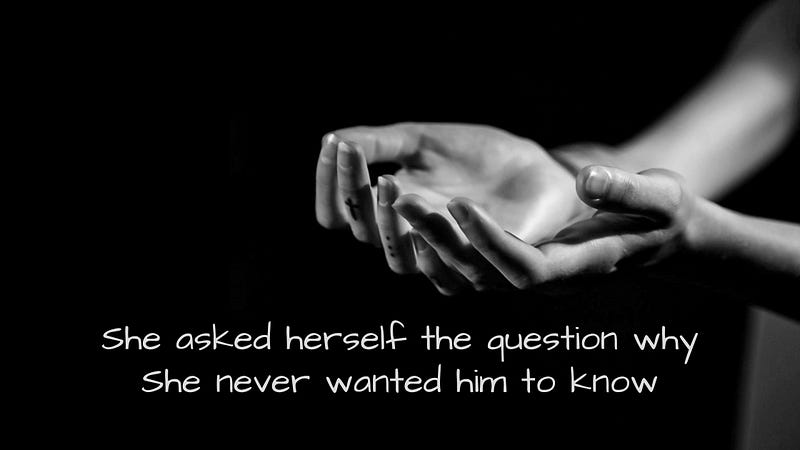
Scars on her arms told the story of what had happened years ago She kept buried the memory She never wanted him to know
“Subdermal implants,” she told him as he fingered her left elbow The truth no more than a mere whim She never wanted him to know
She was trauma-bonded to them There was no way she could let go Trapped in a distorted prism She never wanted him to know
Her scars disguised in tattoo art always there, forever on show Skin ties connected to her heart She never wanted him to know
She vowed to maintain her silence No one would hear of her sorrow Fear fed her hyper-vigilance She never wanted him to know
She didn’t like keeping secrets Not from the man who’d be her beau Her life was so full of regrets She never wanted him to know
He told her he would wait for her That love often took time to grow Yet nothing he said could deter She never wanted him to know
He spoke of his trust in the Lord Encouraged her to come, follow Find salvation from the discord She never wanted him to know
For many months she resisted telling him her answer was ‘no’ It pained her that he persisted She never wanted him to know
He had the patience of a saint A heart as soft as marshmallow Her one solitary complaint She never wanted him to know
Days and nights she would sit and cry “What if I lose him tomorrow?” She asked herself the question why She never wanted him to know
© Carolyn Hastings 2022
Disclaimer: the characters in my poem are completely fictitious. Any semblance to real people and events is unintentional. Sincere apologies to any readers who may identify and/or be distressed by the poem’s themes. Mental illness, self-harm, and childhood trauma are confronting issues that many of us deal with one way or the other and at one point or another in our lives. I, in no way, wish to diminish what is a raw reality for many people right now. I wish you peace. 🙏
While it may seem insensitive of me to have done so, I wrote the poem as a literary exercise and for the purpose of submitting it to Paper Poetry’s November prompt which features rhyme as a poetic device.
My goal was to write a kyrielle, a poetry form I’ve known about for some time but never attempted. I’ve never attempted it because it seemed too hard. How could I write a poem where the last line in each stanza is the same?
Well, as you can see, I did it!
And I can tell you this — it all began with the refrain —
She never wanted him to know
Once I had that line in my head, I was then able to start building a story around what has become a narrative poem.
What is a Kyrielle?
The kyrielle has its roots in 15th Century French troubadour poetry. Modern kyrielles are written in quatrains (four-line rhyming stanzas) whereas traditional kyrielles were often written as couplets (two rhyming lines). The last line (and in some instances, it’s only the end word in the last line) in each quatrain or couplet is repeated, thus forming the refrain.
Like many French poetry forms, kyrielles are written in eight-syllable lines. There is some suggestion that iambic tetrameter (four lots of da-DUMs) is standard, however, meter is less important than the rhyme scheme.
Having said that, the rhyme scheme is largely at the poet’s discretion providing it is consistent within all stanzas. For example, the rhyme scheme I’ve used is: axaX, bxbX, cxcX, dxdX etc with X being the refrain.
Kyrielles can be written in any number of stanzas with three generally accepted as the minimum.
Here’s a couple more kyrielles for your appreciation —
Nightly Terror by Bobbie Isabel —
A Gilded Cage by Esther Spurrill-Jones —
I’ve written this piece with Paper Poetry’s Poember November prompt in mind — it’s all about the rhyme!
I’m not the only one who’s taken the opportunity to explore a different form of rhyming poetry. Check out William J Spirdione’s terza rima, Dragon Blowing Glass Domes on the Hillside —
And an acrostic twittle, Life of a Leaf, by Megan Nicole Morgan —
Thank you all for reading. 🙏 💕
✨ If you like what you’ve read, how about —
👉 Subscribing to my email list 📩 👉 Becoming a Medium member using my affiliate referral link ✨


