
POEMBER NOVEMBER
Dragon Blowing Glass Domes on the Hillside
A story told in terza rima
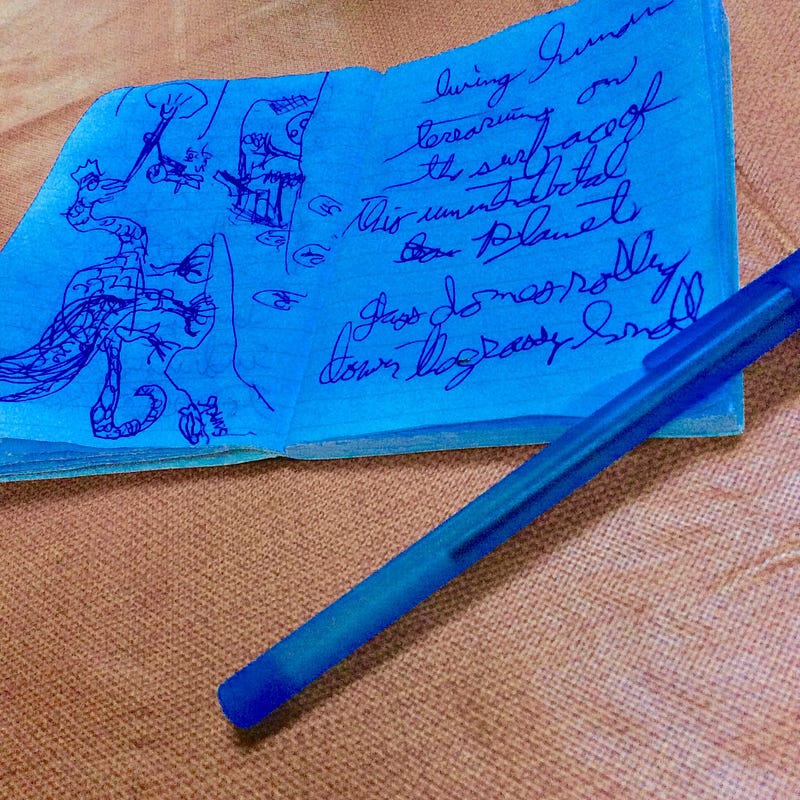
A giant serpent slithers in the grass. This dragon trained to blow these bubbles out of ultraviolet ray resistant glass.
To burn this beast’s internal rage without the hurt. To blindly build on our behalf terrariums where people lounge about.
Without a care I look and have a laugh. They live their free recycled lives so fast. None read much past the second paragraph.
The comfortable living here won’t last. Sealed off from the environment this way. These toxins take a toll, more now than past.
These dragons make the problem worse, I say. Creating more pollution by our hands. We failed to heed the headlines of today.
I hear the trumpets sound throughout these lands while banners flap unfurled above this knoll and near the dragon one glass worker stands
and wears asbestos suit. High heat’s the goal. A head comes snaking by with scales of gold. Ferocious teeth smile as it grabs the pole.
Hard to believe but this tale must be told. The dragon’s fire went up the blowpipe’s vent. Controlled exhale expands as worker rolled
this molten sphere and quickly it was sent to preexisting stone foundation down near bottom of this grassy hill it went.
Soon sealed off dome is home. The best around. This dragon blows hot air, from what I’ve found.
In the spirit of this month’s prompt with it’s emphasis on rhyming, I decided to use a form I have never written before that required plenty of challenging rhyme. I chose to write in terza rima an Italian form invented by Dante Alighieri in the fourteenth century. It was used in his epic poem, ‘The Divine Comedy’.
Terza Rima is composed of any number of tercets, or three line stanzas, linked together with rhyme. Each line is usually ten syllables, written in iambic pentameter( five iambs of an unstressed then stressed syllable, per line). The first and third line in each tercet end-rhyme with each other. The second line end-rhymes with the first and third line of the next tercet. This may continue indefinitely in the rhyming pattern of…
aba/bcb/cdc/ded/fgf/etcetera
Ending these poems can be handled in many ways with one, two or three lines. In this example the poem can be ended, fgf/f or fgf/gg, as I employed in my poem, or fgf/gfg or fgf/gag, using the second line rhyme ‘a’ from the first stanza.
Written in response to the Paper Poetry prompt, ‘Poember November’. If anyone wants to participate, please read Carolyn Hastings’ story and prompt information below…
Mia Verita, Jenine "Jeni" Bsharah Baines, Dr. Fatima Imam, Patrick M. Ohana, Indubala Kachhawa, or anyone else who wants to write another rhyming poem of any form for the prompt is welcome to join or rejoin in.


