
Shallow Stories to Hide Deep Truths — Part 1
The Russo-Ukrainian War — two narratives deconstructed
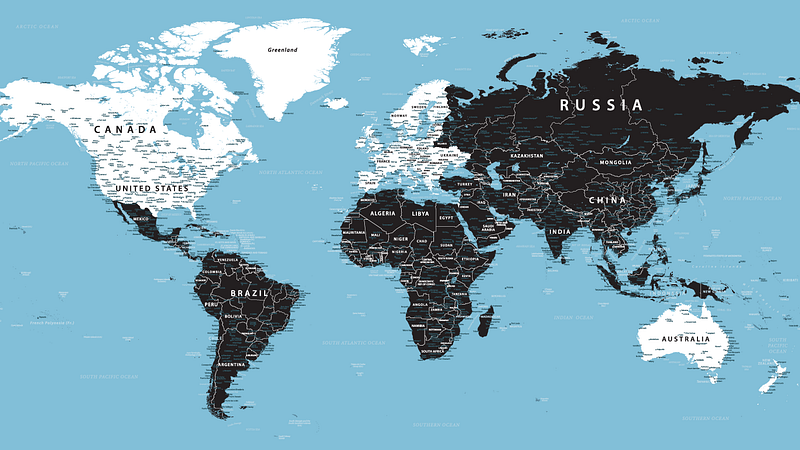
The Russian invasion of Ukraine and the subsequent Russo-Ukrainian War is among the most epochal and horrifying events of our age. That other wars receive far less attention, such as the Yemen War, is a testament to the infinite bias and bigotry of humankind. Nevertheless, the war in Ukraine is fundamentally existential, because of the actors involved and what it means for the global political order.
Two narratives striving to capture the reasons for the war are most common across the Western World.
The first is the dominant interpretation. I will refer to it as liberal hegemony (which is political scientist John Mearsheimer’s term for it) or “megaloliberalism” (which is my term) — but most often simply as the hegemonic narrative/viewpoint.
The competing narrative is vociferated by a rather broad collection of thinkers who may not ordinarily be subsumed under one grouping. However, they align in terms of their shared opposition to how the hegemonic interprets the events preceding the war and the war itself. I will refer to this as the anti-hegemonic viewpoint.
It is the aim of this article to deconstruct these two narratives.
But before we turn to the trees and timber, let us first look at the wood.
The broad brushstrokes of war
Firstly, war represents one of humanity’s core activities (this is extremely sad but nonetheless true). Along with this are things like politics, commerce, trade, education, and law and order. There is some debate about how exactly war manifested in band societies (bands differ from and predate tribes) but little debate about its omnipresence ever since.
Secondly, war always ends at some point or other. War happens, causes great harm to a great many potentially, and then ends in one way or another. It cannot perdure indefinitely owing to natural limitations — resources, will, people, stamina.
Thirdly, it can usually only end in one of three ways. The first being clear victory by one side over the other. The second is some kind of stalemate or frozen conflict. The third is a negotiated peace.
An example of the first is the victory of the Allies over the Axis in WW2.
An example of the second is Israel versus Palestine and its Muslim neighbours, Armenia and Azerbaijan in Nagorno-Karabakh, and India and Pakistan in Kashmir.
And lastly, examples of lasting peace (which will hopefully continue to last) are the Dayton and Erdut Agreements in the Balkans, which resolved the Croatian War of Independence and the Bosnian War, respectively.
There is potential for an additional eventuality. This is escalation with the conflict growing in scale and intensity, as well as potentially dragging in other actors.
Fourthly, wars will be a product of their times. Technology and resources germane to the age will be important factors. To wit, it is highly unlikely that oil will be a source of conflict for a feudal or medieval society, or that livestock will spur a post-industrial state on to war.
The political, legal, and customary conceptions and habits of the epoch will also shape how, why, and for what war is waged e.g., it is improbable that a state such as Nazi Germany would arise were the phenomenon of nationalism never to evolve: Clausewitz said it best, “every age [has] its own kind of war,” (p593).
Lastly, wars can be fought for a whole host of things, and whether you’re a liberal internationalist or a political realist or a social constructivist will mean different elements will either be emphasized or deemphasized (this does not mean however that any analyst worth their salt will simply disregard large chunks of evidence or sound arguments which don’t happen to suit their worldview — the best thinkers are always those who can bend or even break from their theories when and where necessary).
The reasons for war are, inexhaustively: survival, security, territory, resources, the rights and protection of citizens, ideology, God or gods, nationalism and megalothymia, imperialism, socio-psychological urges writ big such as revenge, personality, intractable cultural differences, self-determination, and ethnic tensions.
The sole truth to be gleaned here is that war, in general, is caused by a great many things, and factors may overlap and intertwine. Accordingly, one should take a broad view, investigating all avenues, omitting none. Any analysis positing a single predominant factor is fatally barren.
The Russo-Ukrainian War
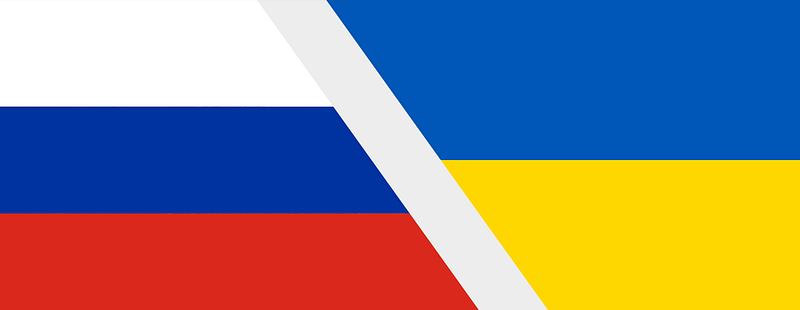
By virtue of our broad brushstrokes, we can already make a number of assertions about the war in Ukraine. These are:
- The war will end at some point (no shit Sherlock).
- It will end in unequivocal victory for one side or the other. Or some form of neither-here-nor-there stalemate doomed to burst at the seams periodically. Or a meaningful and lasting peace settlement.
- Unilateral victory for either Russia or Ukraine seems highly unlikely given the military power of the Russian Federation and its proximity to the conflict and that Ukraine is fighting in and for its homeland and being supported by the U.S.-led West.
- Therefore, the war will likely end either in some form of stalemate/frozen conflict or a lasting peace settlement that will solve the central antagonisms for a generation or two will be realised.
- Given the weapons possessed both by Russia and NATO, the potential for massive escalation does genuinely exist — it is not likely, but neither is it impossible.
- Lastly, the reasons for the war are likely not reducible to a single cause. On the contrary, it is all but certain that multiple issues have, as with most wars, stacked up and come to a head. Accordingly, we should cast our net wide and be sure to investigate all avenues in order to tell the trees for the wood. This may not suit certain politicians who are sure to have vested interests, but is of the utmost importance for all who wish to end the fighting, end the war and prevent its reoccurrence.
The Hegemonic Narrative Broken Down
IR and the Liberal Moral Order
Megaloliberalism was born after the fall of the Soviet Union at which point the USA became the last superpower standing. It reached its apogee during the early-2000s, but now, given that that formerly insuperable superpower is being challenged on multiple fronts, most forcibly and emphatically by Russia, the American reconception of the international sphere is no longer uncontested.
To gain a deeper understanding of how the U.S.-led Atlanticist Order recalibrated the international political sphere, I would suggest the works of Richard Sakwa, John Mearsheimer, Stephen M. Walt, Anatol Lieven, and, of course, my own articles on the subject.
Megaloliberalism dictates that liberal states — democracy, strong human rights, free-enough market, free-enough media (the U.S. is in 42nd position in the Press Freedom Index), reasonably transparent government — are rational, well-behaved, moral, responsible, and essentially decent when it comes to how they will act and behave internationally. Illiberal states are the opposite and will only behave badly with base motives given the chance — Liberal = good, Illiberal = bad — the external is a function of the internal.
Accordingly, the spreading of liberal democracy, by force if needs be and needs very much be, will be coterminous with making a nicer, friendlier, more prosperous, and peaceful world for us all, even if some may fall foul of the great guiding hand of universal order. And presiding over such an order is the USA, to keep powerful illiberal states in check (Russia, China, Turkey, Iran, India) and to reimagine and reengineer weak ones (Iraq, Afghanistan, Libya, Syria), for their own betterment of course.
How successful all this has been is pretty clear to see, but this is not the subject of this article.
Who are the proponents of the hegemonic narrative? Well, they come in different styles and with a variety of accessories.
We have the liberal internationalists who emphasise the primacy of liberal ideology and institutions — Biden, Obama, the Clintons, Albright.
We have the neocons who add a messianic component into the mix — Bush and Blair. Notice how Bush and Blair diverge sharply on domestic politics but converge on international matters: this can make them harder to identify, but don’t be fooled, they are both card-carrying adherents of hegemonic liberalism.
Then we have the utilitarian hawks for whom liberal hegemony is more like a good way of selling a bad deal — Cheney, Rumsfeld, Wolfowitz.
From the horse’s mouth
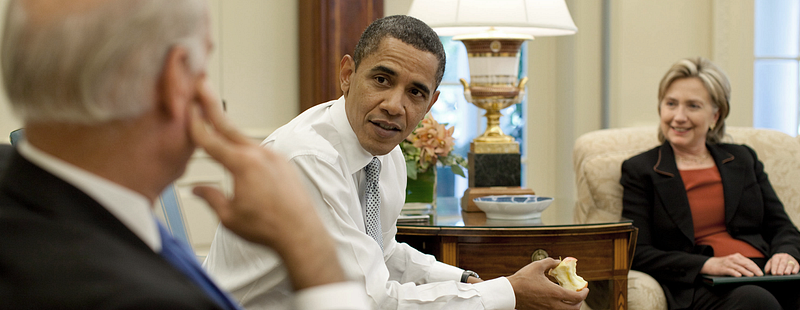
So, let’s begin with President Joe Biden.
Biden has said that the invasion of Ukraine, as he calls it, is unprovoked and unjustified and Russia is alone responsible for all ensuing death and “destruction. He also frames it as inextricably entwined with Russia’s “decades-long” drive to destroy democracy. Furthermore, he sees it as evidence of the will to “re-establish” the Soviet Union. He has also invoked the language of eschatology, warning of imminent Armageddon despite no robust intelligence to confirm this, also being subtly rebuked by Macron for such charged language.
The takeaway from Joe Biden is that it’s wholly unprovoked, wholly Russia’s fault and wholly wrapped up with the lasting and burning will to rebuild the Soviet Union or the Russian Empire.
As a sidenote, this unprovoked invasion of Ukraine has become the most obligatory of gambits for Western media outlets to expunge from the matter any ounce of doubt and to showcase their immaculate moral credentials. The EU speaks likewise, and the phrase appears thousands of times, which Noam Chomsky draws attention to.
Bill Clinton, as one of the pivotal figures pushing for the expansion of NATO in the nineties, stresses that that very expansion is not to blame for the war presently raging. Definitely nothing to do with NATO is the takeaway here.
Hillary Clinton underscores the threat Vladimir Putin poses “not just to Ukraine, as we can watch every night on our news, but really to Europe, to democracy, and [to] the global stability we thought we were building the last 20 years.”
So, for Hillary, Vladimir Putin is some universal bogeyman intent on stealing liberal democracy from the world. This is the preponderant driver for the war. She also shockingly throws a bit of the blame Donald Trump’s way.
Antony Blinken, present U.S. secretary of state, avers the premeditated, unprovoked, and unjustified nature of the attack. Furthermore, he points to Putin’s rarefied position beyond checks and balances as the “Achilles heel” of autocracies, with little chance that wise counsel can reign in their leader.
There is definitely some general truth in this as to the inherent weaknesses of authoritarian systems. However, virtually the entire political class of Russia sees Ukraine in NATO as the “brightest of all redlines” including those who have no love lost for Putin. Furthermore, protocol, and chains of command exist everywhere to limit leaders, and western politicians, more generally, have a bad habit of oversimplifying the Russian system and overstating the power of its president. Blinken seems to miss these large pieces of the puzzle, or more precisely, chooses to not acknowledge them.
So, there’s Blinken. A bit more nuanced but still the figure of Vladimir Putin as the major impetus for the war.
George Bush emphasises the poverty and poisonousness of Russia’s internal system, and sees this as leading to one man being able to “launch a wholly unjustified and brutal invasion of … Iraq.”
Such a monumental gaffe sees Dubya serve up the sort of three-layered irony that only he knows how to cook up (or is that cock up?) This deserves its own short piece in itself.
Lastly, Barack Obama points to two interrelated elements.
Firstly, he bemoans the flabbiness and fecklessness of many liberal states and exhorts the need for eternal vigilance when it comes to the “rule of law, freedom of press and conscience … independent judiciaries, [and] making elections work in ways that are fair and free.”
Secondly, he asserts Putin’s fundamental hostility to the ideals of democracy and globalisation in concert with his “ability to harness anger and resentment around an ethnonationalist mythology.”
The same sort of sentiments are echoed across Europe. Polish MEP Radek Sikorski speaks of Russia and Putin’s aggression as the predominant factor.
British academic Taras Kuzio takes pains to stress that the issue is with Russia itself, not just Putin (of which he is correct, albeit not in the way he intended).
And Garry Kasparov, the chess grandmaster, sees it in grand terms of a “battle between tyranny and freedom.”
So, there you go — from the horse’s mouth.
No dialogue with the devil
Liberal hegemony paints a black and white world where one narrative reigns supreme, with no space for dialogue or discussion, no space for compromise or conciliation, and no space for negotiation or nuance.
A perfect demonstration of this deep aversion to diplomacy and dialogue came when 30 members of the progressive caucus sent a letter to President Biden in which they affirmed their sincere belief in the need for a diplomatic solution to the war. There was no deliberation of the merits of such an idea or weighing up of the pros and cons, instead, they were publicly hung, drawn, and quartered and forced to recant their heresy: one does not do deals with the Devil.
Anatol Lieven gives us an idea of just how problematic this obstinacy is. According to Lieven, prior to the invasion, Zelenskyy and both France and Germany were genuinely seeking a neutrality agreement that could have been hammered out with Russia. Yet, both parties were loath to propose such a treaty in public; the latter fearing the U.S., the former fearing the ultranationalists at home (ultranationalist Dmytro Yarosh puts it in no uncertain terms, “he will hang from some tree … if he betrays Ukraine and those people who died in the Revolution and War.”)
There are some signs that the weight of common sense is slowly melting such intransigence, nonetheless, the U.S. remains extremely inconsistent and seems to want to look open for talks whilst simultaneously quashing any hopes for their materialisation, which was evidenced recently by the U.S. urging Ukraine to at least pretend to be open to talks with the Russians.
The war according to megaloliberalism

The hegemonic viewpoint emphasises a number of elements again and again. The corollary to this is the deemphasis or complete omission of others.
These factors are trifold: 1) The figure of Vladimir Putin as an unbridled tyrant. 2) The corrupt and illiberal inner workings of Russia that both empower and enable their leader. 3) The long-burning desire of Putin and/or Russia to reanimate the Soviet Union or Imperial Russia and/or destroy democracy and liberal ideals — the first step of course being Ukraine.
Boiling the hegemonic narrative down to its mononuclear molasses and we get — bad man in bad system did very bad thing and every ounce of blame for the latter is at the feet of the former. There is no more to the tale than this and one instantly becomes a Putin-loving pariah for suggesting the otherwise. It reveals its essence as much by what it proclaims as by what it refuses to consider.
NATO and its continuing expansion bearing even an iota of responsibility is laughed off as a wild and impossible fantasy. The asymmetrical end to the Cold War and the failure to incorporate Russia in a strong security arrangement is never discussed. The plethora of real problems with Ukraine itself, from the banning of opposition parties to the demotion of the Russian language to neo-Nazism, are swept under the carpet. The self-deterministic aspirations of Crimea and the Donbas are barely acknowledged. All of this is expunged from the discourse or torn to shreds the very minute it is proffered.
How a state behaves is dictated solely by the presence or absence of liberal institutions. Liberal states cannot help but act with noble and benevolent intentions for the betterment of humanity— illiberal states cannot act other than with base desires and nefarious motives to the detriment of humankind. Under such a bifurcated logic, anything that Russia or China do or say is wrong or self-serving or wicked or part of a plot to do this or that from the get-go because the state itself is riddled with all the very worst of the human race and so guilty a priori.
The picture is monochrome. It is a sealed room buttressed by its own insuperable commandments with a crack of light to allow in just enough history to make it seem real. And the pronouncements are bespoken — unjustifiable, unprovoked, unjustifiable, unprovoked, Putin, tyrant, Putin, despot, Soviet Union, Imperial Russia, democracy— until you don’t simply think their vision is true, you feel it is true.
There can be no fair analysis of world events under such a totalitarian order because freedom of thought and conscience is suppressed, rational inquiry is squeezed out and anyone who dares to think or speak otherwise is eviscerated. There can be no middle-ground solutions or compromise in the name of peace under such a tyranny. And it will all repeat with more wars and more death and more destruction, with only the names of the countries involved changing.
The hegemonic narrative paints a world of black and white whose validity as a worldview cannot be questioned. In Part 2, we turn to those thinkers who dare to question the unquestionable.


.jpg)