
The Power and Powerlessness of the USA
Rational Limits and Irrational Delusions

American Decline?
People love story and narrative. It is in fact far more need than love. We’re hardwired this way and it’s how we make ourselves at home in a complex world. From the cave drawings of Lascaux to Michelangelo’s Sistine Chapel to the cataclysmic prophesies of doomers, those modern soothsayers, divining our future destruction — all attempts at snaring life in a web of meaning.
Which doomer are you? One of my favourite writers on Medium, indi.ca, charts the various species of eschatology. We have rapturists and integrals, near-term extinctionists and deep green activist: truly a potpourri of minds and movements. Some, like John Gray, are at turns extremely insightful and generally grounded in science, others, not so much. But all bespeak of a doom whose shape is, even with our knowledge of how our planet is changing, unknown and unknowable. We know that the oceans will rise, we do not know how society will fall.
But we need this. We need a story upon which to hang our facts, figures, statistics and theories.
A classic narrative that most are guilty of proclaiming at one time or other is the decline of the United States of America. It even has its own Wikipedia entry, American decline. This constant talk of a fall from grace and a shift in power may even be essential to the myth of the United States.
Is the US really on the wane? Is it likely to implode any time soon?
On the wane? Yes, relatively, but mostly only relatively. Implode? No. No, it won’t. Not any time soon.
To gauge it’s power, let’s look at a few facts.
As of 2022, world military spending stands at $2 trillion. $800 billion of this, not too far off half, is accounted for by the USA. Let’s open that up a little let it breathe so to speak — the US spends more on military might than China, India, the United Kingdom, Russia, France, Germany, Saudi Arabia, Japan and South Korea all put together ($777 billion).
In terms of its defence budget, the United States is light years beyond everyone else. Admittedly, Russia does possess more atomic weapons (6257 to the US’s 5550). These, however, are not a good measure of one’s capacity to win and wage wars or gather information or control the playing field to one’s advantage: military prowess and sophistication expand far beyond one’s nuclear arsenal. And in this respect, the US is still very much king.
The USA has 750 foreign military bases in 80 countries. China has 4 or 5 depending on the source. Russia has somewhere in the region of 20. Again, the US blows its competitors out of the water. A great deal of military power stems from information, preparedness, logistics, speed of mobilisation, how organised you are and your proximity to the places where events take place. In this regard, the US military is everywhere one way or another. This claw-like grip it has over the world is both a consequence and cause of its global hegemony.
Economics is a bit less clear cut as China did take over from the US in terms of GDP calculated according to purchasing power parity (PPP) in 2017, with $30,177,926 million as of 2022. For this figure, the US stands at $25,346,805 million.
For nominal GDP, the US is the biggest economy in the world. In addition, the US has one fourth of the population of China which makes any per capita comparison heavily lob-sided. Lastly, 29.93% of the world’s wealth is held inside the USA, whereas 17.7% is contained within China.
Leapfrogging over to business, 59 of the world’s 100 largest companies are based in the US, which accounts for 65% of global total market value. Moreover, somewhere from 9 to 7 to 5 of the world’s top-10 largest companies are American, depending on what specifically you look at (revenue, market value) and who you ask.
And we could talk about the dollar or banking or Silicon Valley or industries with an incalculable cultural footprint like Hollywood and the music industry.
In one or two categories, China can compete and even surpass the US. However, for most indicators — be they economic, military, financial, business, social — the United States wins comfortably.
Yet, speculation as to the fall of the land of the free and the brave abound.
To my mind, there are two central reasons for this.
These are, firstly, the picture we paint for ourselves. This is comprised of two further elements. A rational element which connotes the well-trodden historical truth of what goes up must come down — induction. And an irrational element which resides in the shadow realm of the subconscious — our undying human attraction towards grand story and apocalyptic narrative.
The second reason is that relative decline can seem a lot like absolute decline. The world is no longer unipolar — the US is not the lone gun slinger in town. It remains top dog but now there are other dogs big and bold enough to test it and fight for what they see as in their yards. The USA now has legitimate rivals, who, in the shape of a Russian-Chinese alliance, represent a real threat and challenge.
The War in Ukraine
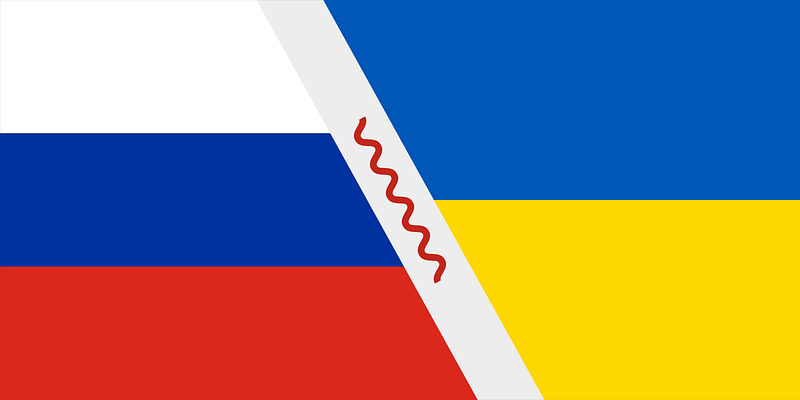
The US is exceptionally powerful and the most powerful state that has ever existed on our planet. Nevertheless, there are limits to its power. This has been most clearly demonstrated by the war in Ukraine.
A recalcitrant Russia, with all the venom and ferocity built up over decades, where it saw its dignity dragged through the mud, its lines in the sand crossed one after another and its fundamental concerns subordinated and swept aside, had finally had enough. It did the unspeakable and began the war that had been brewing for nigh on thirty years, thus shattering any remaining illusions of unipolarity and an insuperable United States. And so the world entered a new era of multipolarity and renewed contestation among great powers.
The war is abominable. Russia pulled the gun and is wholly responsible for the war itself. But the abomination didn’t come from nowhere. It’s been festering for many years with dozens of experts forecasting the coming of the beast. As current CIA Director William J. Burns wrote to Condoleezza Rice in 2008, ‘Ukrainian entry into NATO is the brightest of all redlines for the Russian elite (not just Putin). In more than two and a half years of conversations with key Russian players, from knuckle-draggers in the dark recesses of the Kremlin to Putin’s sharpest liberal critics, I have yet to find anyone who views Ukraine in NATO as anything other than a direct challenge to Russian interests.”
The slowly-evolving narrative in the Western mainstream is of course a little different. The evil leader of an evil regime is trying to snuff out a wholly innocent country and stop ii from seeking its rightful place among the civilised nations of the world. And it unquestionably came from nowhere with no one to blame bar an ex-KGB devil.
There are few experts and political analysts worth their salt who know anything about global affairs or the post-Soviet sphere — Chomsky, Kissinger, Mearsheimer, Sakwa, Walt, Cohen, Kennan, Lieven, Matlock, Ferguson — who buy into this sort of dichotomous reduction. Not that they are pro-Putin or in awe of the inner workings of modern Russia: they just don’t buy into the bifurcation. Yet, the mainstream by and large continues to cocoon complex reality within the moral universe of a cartoon.
Russia has done a terrible thing. The reasons for this terrible thing stem from a long history littered with bad decisions and worse intentions, with deep structural and security issues that extend far beyond the personality of Vladimir Putin and any talk of a recrudescence of Russian imperialism. This is not to say anything positive about Russian domestic politics but rather to point out that the inner and outer manifestations of a state are not perfect functions of one another. All states, both liberal and illiberal, will go to war for certain reasons. All states have their lines in the sand that one should not cross. This is all the truer for powerful states.
Moral Choices and Vital Interests

In some ways, the US threw everything and the kitchen sink at Russia — sanctions upon sanctions, financial isolation, political pariahhood, social excommunication, supplying arms to Ukraine — essentially barring Russia from access to what it sees as the civilised world.
In some ways, the US did everything but those things that may have stopped the war.
In truth, only two moral choices exist. I call them moral because morality behooves a person to put their money where their mouth is and bring their purported values and actions in alignment. I also call these choices moral because one of them may have led to some form of lasting resolution, stopped the war and saved lives, which is the only goal that any moral person should care about. The other would see values and actions align but would have exacerbated the situation.
These choices are — either you have the balls to start World War III and get directly involved or you have the brains to get Ukraine and Russia to the negotiation table for meaningful peace talks putting your full weight behind them. The latter is the wise and infinitely better choice and the former is the if you’re gonna be dumb you better be tough choice.
The latter is the grown-up choice of mature statecraft that knows all too well that international politics and deontological morality make poor bedfellows: to get to the best place for all you sometimes will and must get your hands dirty. The former is the crazy, unthinkable, unfathomably horrific choice, but would nevertheless be one with a clear moral base with supposed values and concerns in harmony with actions.
Either you have the balls to stop Russia with force, which you say is evil and akin to the Third Reich. Or you have the brains to understand the instrumentalist rationale of international politics and broker a deal with a government and leader you despise for the sake of peace. Either/Or.
In the end we got neither/nor. In the end we got the halfway house of half-heartedness. The sort of half-measures and reduced-fat superficialities that are easy to bring in and suit America in the short term but in actuality do nothing to stop the war or save Ukraine (and simple everyday Russian soldiers) from further suffering. In fact, sanctioning Russia into oblivion and supplying Ukraine with arms is much like pouring petrol on a fire to then stand back and watch the firefighters struggle with the blaze — it will only prolong the pain as the bodies pile up and make the chances of an unthinkable escalation more likely.
But the halfway house suits the US in many ways, in the short term. No boots on the ground means no escalation (in theory) and less political fallout (in theory). Sanctions are as easy as pie to impose with a complicit Europe bending over backwards to protect American interests not its own. War is a business booming and Ukraine becomes quite a handy tool for giving a few slaps to an unruly bear.
And here we see just how far international relations is from morality as it is commonly understood in the good versus evil/right versus wrong sense.
If you really care about Ukraine and have your head well screwed on, then you do all in your power to broker a deal and stop the fighting (incidentally, this moral choice coincides with the best choice for the LONG-TERM interests of the United States but would differ as to the intentions behind it. More on this below). If you’re strong enough and/or crazy enough to decide that you just can’t stomach dealing with Russia but do genuinely care about Ukraine, then you engage Russia directly.
But the US doesn’t care about Ukraine, regardless of what its politicians claim. And, to a large extent, it is quite natural that it doesn’t.
If it were more forward-looking and perspicacious it would realise the daft folly and danger of pushing Russia and China together and realising Henry Kissinger’s nightmare. If its politicians were playing with a full deck, they would realise, that despite caring not one iota for the welfare of Ukraine, a lasting resolution with the US playing a positive role in arbitration is good for its long-term reputation, credibility and continued supremacy.
That it seems wholly unable to stand back and do what’s needed to protect its ascendancy, shows that its political class have become deluded with power and prey to the dictates of their own creation — a moral Manichean reading of international politics — liberal = good, illiberal = evil. This creation is called liberal hegemony by the realist political scientist John Mearsheimer.
Irrespective of this delusion, that the US doesn’t care about Ukraine is both natural and reasonable. Ukraine produces nothing that it needs. Ukraine has no especial historical relationship with it. The location of Ukraine represents no security risk to the USA. Ukraine is its 67th largest goods trading partner. Ukraine does have some value in keeping Russia, a regional power and competitor, in check and chipping away at its sphere of influence, but how deep this runs is unclear.
None but the most puritanical of realists would say that the priorities and vital interests of a country are immutably set in stone. Different epochs throw up their own especial concerns, history tumbles to and fro and human thinking is as varied as it is invariable. Yet, it is hard to imagine Ukraine high on any list of US priorities.
Rational Limits

And from here we can see the first two sides of the powerlessness of the USA. The sides are interrelated but from opposing perspectives. The first is self-imposed — the USA will not risk much for things it doesn’t care much about. The second is from the point of view of the competing powers, Russia in this case — a state of sufficient power will win out over a superior state when fighting to secure a vital interest IF that interest is of little value to the superior power. It may take a while but it will win out in the end.
The vital interests of the regional powers and potential competitors to the USA — Russia, India, Iran, Saudi Arabia, Turkey — are more likely to be on their borders, meaning that both proximity and priority on the one hand and distance and non-priority on the other for America suggest these states will win out if force is required to secure this interest. Both aspects must be in effect for this rule of thumb to hold true: they are self-buttressing and work in tandem. If the US is seeking to protect something it genuinely cares about, we will have a very different scenario.
It should be noted that Russia is by far the most powerful and dangerous militarily from this list and fought to protect its interests in Syria, far from its borders. It should also be noted that the possession of nuclear weapons changes the game drastically as to how states will behave when confronting one another. It should lastly be noted that China is a special case.
We can see the logic of power and powerlessness and the matrix of interests play out historically. The mujahideen eventually repelled the Soviets from Afghanistan showing how the most vital interest of all — one’s homeland — mixed with distance from home and a less-than-vital interest for the Soviet Union can allow Davids to beat Goliaths. Similarly, both the Viet Cong and Taliban eventually ground out victories over the USA.
Tiny powers can beat titans when those titans are not sufficiently motivated.
However, Ukraine is of existential importance for Russia. It is among its vital interests whether any westerner thinks that should be the case or not. This fact along with the location of Ukraine mean that Russia is both highly motivated and extremely well-positioned to get what it wants. It will eventually grind down Ukraine. And the the arch titan, the US, is neither motivated enough nor well-located enough to do much about it.
The US knows this. It will not risk much for something it doesn’t care much about when faced with such a dynamic. If you’re Taiwan with your microchips or Cuba nestling right below Florida, then you’re of the first order of importance. If you’re not, then you’re not, and no amount of rhetoric will change this.
The situation is likely to be similar for Turkey, India, and possibly Iran when confronting the titan, unless of course the titan is sufficiently motivated. For China and Taiwan, we have a very different state of affairs.
These are the rational limits of the power of the United States of America and will always be in effect in a multipolar world. But there is also an irrational limit.
The US is not going to go to war against any of these states for something it doesn’t value. But it could and can act to prevent conflicts before they happen (often by limiting itself), play the role of arbiter and middleman when they do to resolve them as quickly as possible and play the various powers against each other, all for the sake of its continued supremacy.
But it is not doing this. It is stoking war and helping Ukraine fight Russia down to the last Ukrainian while seemingly hellbent on antagonizing China. It is pushing its two greatest rivals together — China and Russia. Why make things so hard for yourself?
Irrational Delusions
This is because of the aforementioned doctrine of liberal hegemony (I write about the doctrine at length here). The international political order was reconceived by the US following the fall of the Soviet Union. Henceforth, the world would be divided into good and bad states according to the quality or poverty of their domestic societies with the US as judge, jury and executioner. Human rights, the free market, governmental transparency, strong rule of law, democracy — light and darkness, good and evil, liberal and illiberal.
This is the doctrine of liberal hegemony and not only despite but because of the very greatness of the notions it presumes to enforce it leads to war, aggression and inextricable obdurance.
Accordingly, compromising and bargaining with vile dictators and vestigial regimes belongs to the grubby amoral universe of Kissinger, Kennan and Lavrov. Such a business is held in utter contempt and only ever conducted in the interest of some higher ideal with a complicit non-confrontational despot and/or to the advantage of America. The US cannot bring itself to hold its nose even for the sake of peace, good conflict management and its continuing global ascendency.
This is the irrational limit to its power. The doctrine of liberal hegemony legitimates war in the name of great ideas, like democracy and human rights, which it smashes the world over the head with. This has brought it into renewed contestation with Russia as it expands its apparatuses and architecture and the world to the brink of WWIII (‘NATO exists to manage the risks created by its existence’, asserts political scientist Richard Sakwa). All the while America’s rivals are being pushed together and the world is becoming an evermore dangerous place. Yet, the US is powerless to resist the pull of its own grand vision, even when it is to its own, and most everyone else’s, detriment.
Conclusion
The USA is constrained by the calculus of interests. It is powerless to stop certain things in a multipolar world and well-aware of the borders of its own powerlessness, despite what many politicians may promulgate in public. This is the rational component to its powerlessness. It doesn’t have the balls to confront Russia directly in Ukraine because it would be a mind-bogglingly stupid thing to do.
Yet is also doesn’t have the brains to do what would be best for itself in the long run — to save Ukraine, satisfy Russia and limit China. And in this we see its grand delusion — the irrational side of its powerlessness that it is powerless to resist.


