
What does Putin Want? Part 2
The Speakers of Truth
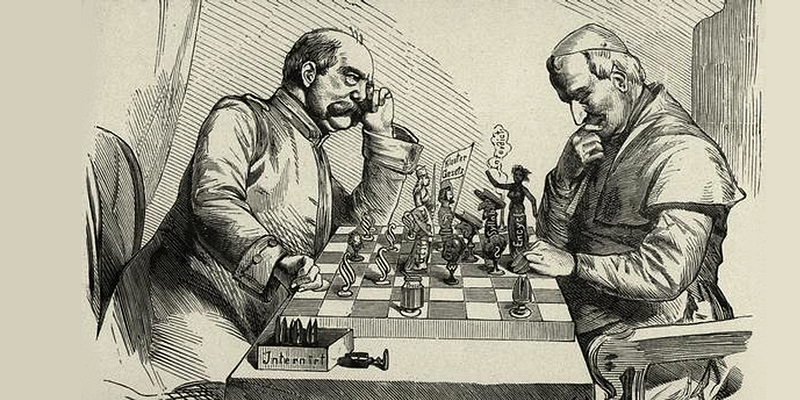
Realism and realists represent a theory that speaks to the core truths of life for states in the international system. It can trace itself back to Thucydides, ‘gets down to business’ with Machiavelli, has a large debt to Hobbes and his Leviathan, but becomes more deeply understood, formalised, practised in the form of realpolitik and codified with respect to its central propositions during the formation of the European state system in the early modern period.
These propositions being, firstly, that international politics is always, to one degree or another, anarchic, this stemming directly from the absence of a world state to ensure a high level of order and a strong rule of law. Different periods may be more or less anarchic and there are many intergovernmental organisations such as the UN and supranational organisations such as the EU, as well as a plethora of treaties and agreements, that modify the behaviour of states and bring greater order to the international sphere, but there is nothing to prevent a state pursuing its own course should it be sufficiently motivated. This is most often demonstrated by the conduct of powerful states. Secondly, states, being the only ultimate legitimate authority for their own actions, are the main and most prominent actors, not international organisations, regardless of how influential these may be. Thirdly, rational self-interest is the prime and omnipresent driver for a state’s actions, and lastly, states will try to maximise their power and influence (this manifests in different ways it should be added) to preserve themselves at all costs.
There are several branches of realism and many nuances, and, I would argue, deep socio-psychological forces that can shape the needs and aspirations of a state, but these are the core principles. Moreover, there are and can be other complementary, countervailing or competing drivers for state behaviour, but realism resides very much at the heart of what a state in the international sphere is.
Some famous realists and adherents of realpolitik are Otto von Bismarck, Charles de Gaulle, Lee Kuan Yew, Henry Kissinger, Zbigniew Brzezinski, Sergei Lavrov and George Kennan.
No Eternal Allies, No Perpetual Enemies
Realism is an ever-present fulcrum which engenders the behaviour and actions of states but it may be prudent to adduce some famous examples. The first of these is both the reasons for and solutions to the 1962 Cuban Missile Crisis. Nixon and Kissinger’s befriending of the Chinese and the rapprochement of the People’s Republic of China and the United States is also a classic instance of realpolitik and realism in action. The enemy of my enemy is my friend. It made perfect sense for both sides to put their moral distaste for one another as well as their vast ideological differences to the side, so as to limit the Soviet Union and strengthen their own positions. For China, as a means of gaining ground on and perhaps surpassing the Soviet Union. And for the US, to gain supremacy and win the Cold War. This rationale may be put forward more nobly as protecting your own people and way of life almost always trumps everything else, or more Hobbesian as it’s a dog-eat-dog world of bellum omnium contra omnes and one must do anything to get ahead. Either way the laws of good statecraft mean you must and should get your hands dirty from time to time.
George Kennan (architect of the US policy of Containment directed at the Soviet Union in order to prevent outright confrontation and war but also halt the spread of communism) understood all too well that all states have their own vital interests and will fight to protect and promote them but that war is a messy, abhorrent, unpredictable business best avoided if possible. He also knew that states couldn’t be neatly divided into good and bad, right and wrong, liberal and illiberal, as liberal hegemony promulgates and imposes.
With the collapse of the Soviet Union, the US-led West had a unique opportunity to bring its erstwhile foe, the newly-formed Russian Federation and its satellite states, into a new security and peace arrangement, and perhaps even into a new world order, to stave off some of the more egregious elements of the Hobbesian world, to usher in a more convivial and cooperative modus vivendi, and to make things better, if only for time. This could have been undertaken, even if it may have been doomed to fail, with defensive realism (which emphasises a more peaceable and collaborative form of realism) and the Kantian perpetual peace in mind.
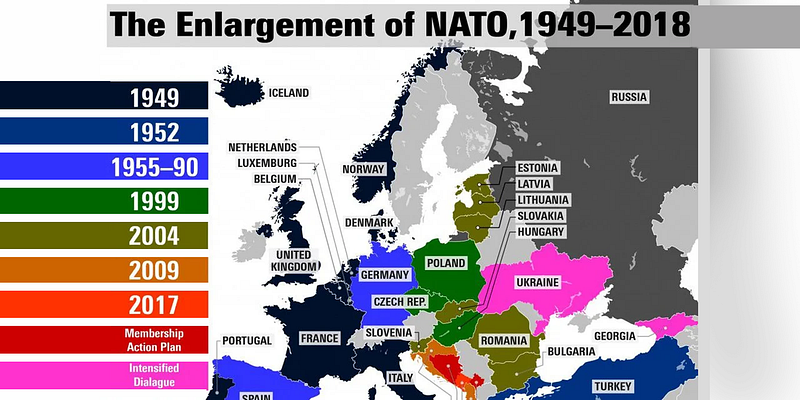
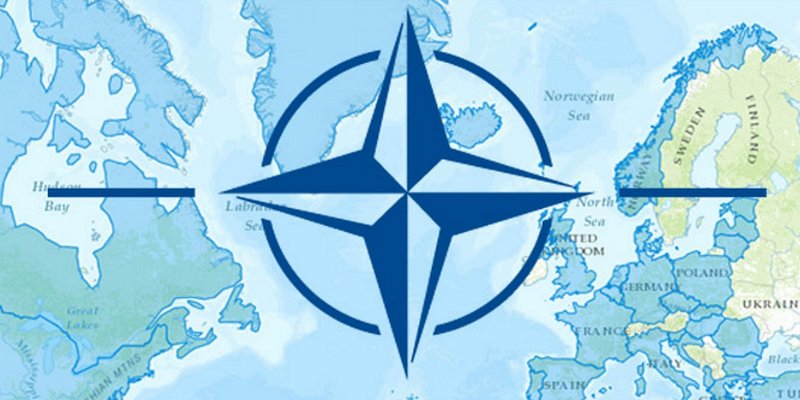
Unfortunately, the United States chose to put the blinkers on and go full steam ahead, rolling out its doctrine of liberal hegemony, expanding NATO, swallowing the whole planet with its sphere of influence and forcing its freedom into place by means of war and coercion, this, in the style of offensive realism as predicted by the political scientist John Mearsheimer.
And so, owing to the moral imperative, expansiveness and sheer impossibility of such a mission, large-scale conflict and bloodshed have again returned to the continent of Europe, as the former lone unipole is confronted by its perennial foe, reasserting itself and its realist concerns, and waging terrible war on it neighbour, all the while the portentous spectre of WWIII looms large.
It is not particularly surprising that the US chose this path from the perspective of realism. Conversely, it is surprising that the vast majority of its politicians have not woken up to the problems arising from such an undertaking, nor taken stock of how the world has changed over the thirty-odd years since the dissolution of the Soviet Union and altered their course accordingly. It may be that they believe they possess the requisite tools to strike a balance between chaos and order to their own advantage. It may be that they underestimate the power of their would-be adversaries or overestimate the power of their own moral prerogative. Or it may be that they have become too used to a world of their own making where realism is what the US decrees and liberal hegemony is the plat de jour. It is hard to know for sure, but pushing the two other most powerful military powers on the planet into each other’s arms does suggest you’re reading from an unusual playbook, as any casual analyst, let alone Henry Kissinger understands.
Kennan Sees the Future Two Years Before Putin Becomes President
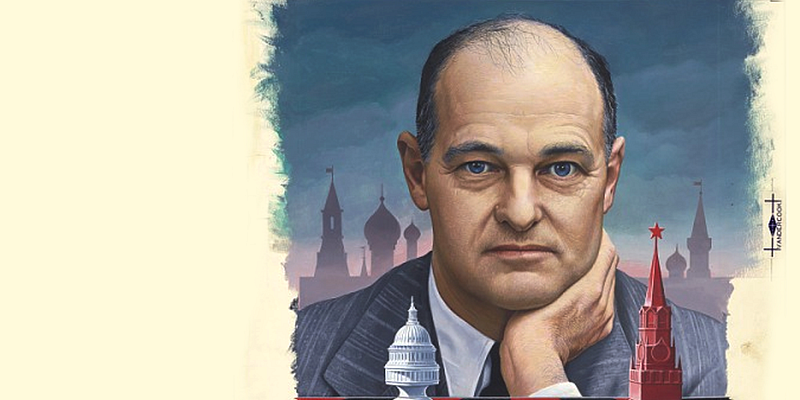
George Kennan foresaw the ineluctable consequences of the aggressive and wholly unnecessary policies of NATO expansion and liberal hegemony 24 years ago. I quote him from a New York Times’ article of 2022.
‘I think it is the beginning of a new cold war. I think the Russians will gradually react quite adversely and it will affect their policies. I think it is a tragic mistake. There was no reason for this whatsoever. No one was threatening anybody else. This expansion would make the founding fathers of this country turn over in their graves.
“We have signed up to protect a whole series of countries, even though we have neither the resources nor the intention to do so in any serious way. [NATO expansion] was simply a lighthearted action by a Senate that has no real interest in foreign affairs. What bothers me is how superficial and ill-informed the whole Senate debate was. I was particularly bothered by the references to Russia as a country dying to attack Western Europe.
“Don’t people understand? Our differences in the Cold War were with the Soviet Communist regime. And now we are turning our backs on the very people who mounted the greatest bloodless revolution in history to remove that Soviet regime. And Russia’s democracy is as far advanced, if not farther, as any of these countries we’ve just signed up to defend from Russia. Of course there is going to be a bad reaction from Russia, and then [the NATO expanders] will say that we always told you that is how the Russians are — but this is just wrong.’
And so it has turned out precisely as Kennan warned and foretold.
NATO expanded swallowing up all the former Soviet and ex-communist buffer states, and missile systems have been and are being placed all over Eastern Europe with the US leaving and hence dissolving the Anti-Ballistic Missile Treaty in 2002. The EU’s enlargements have brought it right to Russia’s borders and due to a fundamental absence of communication and consultation are viewed largely, or at the very least partly, as synonymous with the expansion of NATO. And most damning and deadly of all, that country of existential geopolitical importance and deep metaphysical meaning for Russia, Ukraine, has seen a coup at the very least in part, which both Chomsky and Kissinger agree on, which is a rare thing, being fomented by US interference, with governments hostile to all things Russian coming to power, all fully endorsed by the USA. And yet still, the American-led West are throwing petrol on the fire that rages at this very minute in Ukraine, stoking the conflagration high with Ukrainian lives telling them to fight for right is 100% on their side, whilst giving them little real military support, and all the while egging on Zelensky (he has begun to quote Churchill), making him believe he is the world’s greatest freedom fighter and everything will be his and Ukraine’s when all this is over.
But EVERYTHING is Russia’s and Putin’s fault, just as Kennan’s words presaged.
Warning after Warning after Warning
Vladimir Putin, Sergey Lavrov, Mikhail Gorbachev and dozens upon dozens of prominent Russian figures have been warning the US and Europe of the dangers of NATO expansion and the fundamental existential threat it represents to Russia for twenty-plus years. And whether Western thinkers and politicians share the view that Russia should be genuinely afraid is beside the point. Conceiving of humanity how it ought to be and dealing with people based on how they ought to see things is utopianism. Dealing with people based on how they see things is realism.
And it is not just the Russians who have been warning of their fears and the inherent dangers of such unadulterated expansionism. Jack F. Matlock Jr., historian, ambassador to the Soviet Union during the years running up to its demise and witness to the talks between Bush Sr. and Gorbachev, has been inculcating the danger and inanity of the policy since those very same years. As did Kennan.
As has John Mearsheimer, one of the leading experts on international relations and among the leading living realists, with in-depth articles, lectures and videos detailing the inevitable folly and deleterious foolishness of the eastern policies of the Atlanticist Order.
As has Richard Sakwa, one of the top political thinkers on all things Russian, in books and papers, expatiating the nature of the issue and stressing time and again the need for prudence, good sense, sober policy and realistic solutions.
As has Noam Chomsky.
As has Henry Kissinger.
As has respected journalist and academic Anatol Lieven.
As has Russian expert and political analyst, who sadly passed away not so long ago, Stephen F. Cohen.
As has even Joe Biden-appointed present Director of the CIA William J. Burns on multiple occasions.
These are not flash-in-the-pan, wild, reactionary, tendentious patsies, cut from the same cloth, made in the same style, no assembly needed, trotted out with no thinking mind of their own to spew out Kremlin propaganda. These are some of the top thinkers and professionals in the world, from very different backgrounds and opposing political persuasions, emphasising the same basic immutable truths. Of Russia and of realism.
Vital Interests
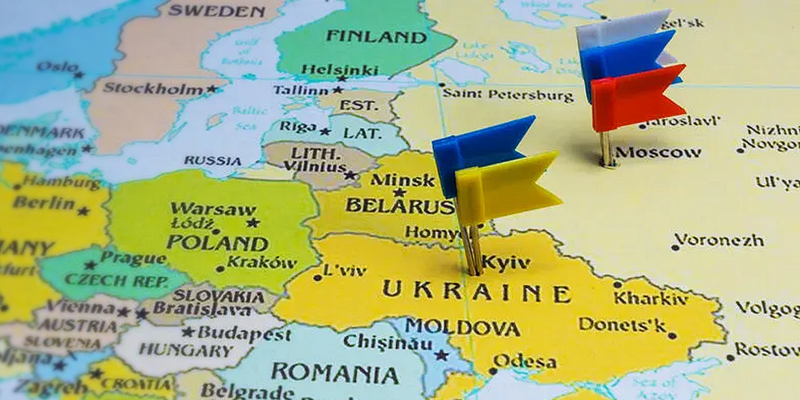
All countries have interests that they perceive as central to their survival and sense of self, as part of the essential rightfulness or rightness of things, as related to fairness or eudaimonia. Some of these are ancillary or secondary, and some are vital, being crucial for the very self-preservation and integrity of the country and/or fundamentally innate to the foundational metaphysics, or soul, of the nation — a certain, and perhaps peculiar for outsiders, sine qua non without which the country will suffer in a multitude of ways.
This essential truth can be dangerous and can lead to conflicts with other nations, but all nations claim to these it by virtue of their very existence. Nations vary dramatically, however, with regard to the enormity of their interests and the capacity to achieve and protect them, with a general rule being the more powerful the state, the grander the interests and greater scope for securing them. Jaw-jaw is infinitely superior to war-war but when you methodically ignore the vital interests of a powerful nation for decades, you should expect something to eventually crack. And many were all too aware of this, it was just impossible to know when it would crack and how bad it would be.
The US changed the game somewhat, as did Pax Britannica not so long ago, ushering in a new world where it would preside as judge, jury and executioner. It continues to oversee and undergird this new liberal arrangement but its legitimacy is all but non-existent in many countries and its power, especially in a multi-polar world, while still great, is waning and shallow. The seemingly post-realist EU has thrived up to a point under this system. Ideas such as democratic peace theory and liberal interdependence have appeared to attempt to explain the new constellation. And they do explain something about the world as it is sometimes, in part. But the essential truths of realism still live on as deep tectonic forces that forever exist below the surface to occasionally erupt, shatter the illusion of peaceful co-existence and remind us all that things are not so cosy as we may think.
It is also interesting to note how thoroughly realist the US is when it suits it to be. The Monroe Doctrine lays claim to what is in realist terms suzerainty over the entire Western Hemisphere, the whole western part of the planet; the north, the centre, the south, all within its immediate and natural sphere of influence. The thought experiment involving China placing missiles in Mexico at the democratic behest of Mexico has been done many times, but clearly illustrates just how realist the US is when its interests, as it sees it, are under threat. Any thought of such a move on its borders would be not only an affront to the US but also to reality.
What does Putin and Russia Want?
Realism tells us the basic truth of what Russia and Putin want in Ukraine. It’s not hard to figure out. It’s not the universe or to destroy liberal democracy or to bring back the Soviet Union or to raise Europe to the ground or to steal Christmas from all the children of the world. And it really isn’t to enact some grand unification between Russia and Ukraine, mending the imagined schism between the two peoples as Putin seemed to exhort. This is a powerful message for a Russian-speaking audience but nothing in Putin’s past and Russia’s present should make anyone believe these are anything other than grandiose words. Putin may even believe them; he will not act on them. To attempt to do so would greatly, and most probably fatally, impinge upon Russia’s real needs and fundamental interests. I attach his essay both in English and in Russian.
In reality, Russia has much more tangible concerns — safety and security, territorial integrity, protection of its borders, protection of Russian speakers and ethnic Russians, promotion of its language and culture, prosperity. Of course, the Russian regime has its own interests which can be wholly inline with Russia itself but also divergent, nonetheless, one can be assured that massive unpredictability and economic death are not beneficial for their plans and continued rule.
In the past, Russia was not powerful and confident enough to do much more than secure the most essential of its needs, bar continuously warning Washington and the EU of the dangers of expanding ad infinitum. Nor, perhaps, were the interests vital enough, existential enough. However, in 2008, a line was crossed with Georgia being assured of the fact that it would eventually join NATO at the Bucharest Summit in April, and in August, barely three months later, the Russo-Georgian War took place. Its vital interests as vociferated on countless occasions were at stake and Putin and Russia reacted.
In Ukraine its vital interests are again at stake but the stakes are multiplied ten-fold. Why is this the case?
Firstly, Ukraine is of fundamental geopolitical importance to Russia owing to its closeness, its contiguousness, the length of the border between the countries, and how vulnerable Russia would be to any attack from the country. For Russia and Putin, as well as any future Russian President, the presence of NATO in Ukraine cannot and will not be tolerated. It is simply too dangerous for Russia’s continued existence. Nor will any government for any length of time wholly hostile to Russia and the Russian elements in Ukrainian society be tolerated. These are interests of the first order for Russia.
Secondly, Ukraine has powerful historical, cultural and metaphysical meaning for Russia and Russians. Kiev is called the ‘Mother of Russian or Russian-Ukrainian culture and civilisation’. There are deep connections between the countries, nations and peoples, albeit this is of course not fixed in time and is naturally subject to recalibration, extreme recalibration in this case, given the nature of present events. Ukraine is a sovereign state and has a right to pursue its own course within reason. Sovereignty does not mean, however, that you can simply decide to do anything you like. There are other forces that always need to be reckoned with. Geopolitics, politics, history, cultural, ethnic and linguistic heterogeneity will forever mean that big decisions require great sensitivity, and very often, middle-ground solutions, and the involvement of the wider international community should always be done with the utmost care and consideration.
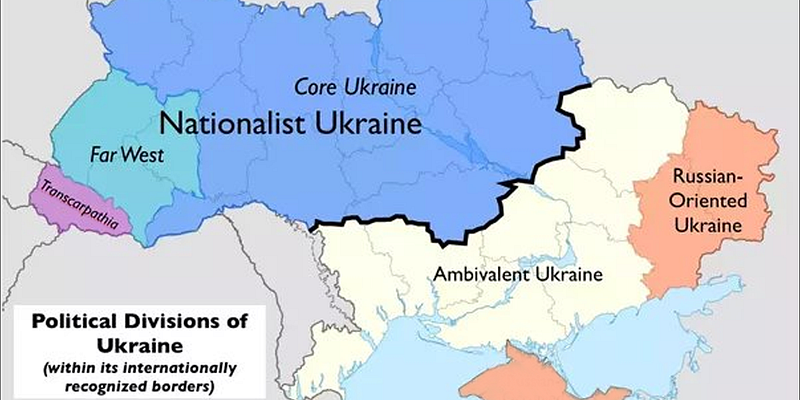
Thirdly, there are many ethnic Russians and Russian-speakers in Ukraine. This DOES not mean that these groups necessarily or naturally wish to be part of Russia, but neither does it mean that they are and would be happy with some mono-ethnic homogenised interpretation of Ukrainianess. Given the Orange Revolution of 2004, the Maidan Revolution and semi-coup of 2014, if we can call it thusly, events since then and the war at present, the staggering levels of corruption throughout the country and the pervasive toxicity of Ukrainian politics, coupled with the real but unclear danger of ultranationalist groups across the nation, both Russians and the Russian Government have real concerns about the welfare of people who identity either strongly with Russia or another reading of Ukrainianess as well as the status of the their language.
Admittedly, this can and has been leveraged, nevertheless it remains a real and genuine aim of Russia to protect these people. Much like the Muslim world with respect to Palestine and Palestinians, the Republic of Ireland and those who consider themselves Irish or closer to Ireland in Northern Ireland, and myriad cases across the planet, Russia does see the fate of these people as bound up with its own moral duties.
The above are interests of the first and probably second orders for Russia. When and if first-order interests are under threat or perceived to be under threat, and if dialogue seems to be fruitless and to have exhausted itself, military action will follow. Though the war being waged at present has gone far far beyond what would, could and should have been expected, conflict of some kind has been predicted, as adumbrated, by many analysts for many years.
Given Ukraine’s multiple issues it was not going to be joining NATO any time soon, however, it may be that the US-UK complete and repeated refusal to recognise Russia’s primary interest in this matter was tantamount to a fundamental breach of what it could tolerate. With first-order interests, it is reasonable to expect an unreasonably aggressive response. Notwithstanding, it must be strongly emphasised that the response, even with the long history leading up to it and Russia’s list of legitimate grievances, has become an act of terrible barbarism. Understanding an act is not the same as condoning it.
Apropos interests of the second order, out-right war is highly unlikely but non-acknowledgement of such issues will lead to deep resentments and this can compound matters greatly. The status of the Russian language in Ukraine is a matter of this kind.
It is perhaps conceivable that Vladimir Putin would embark on some grand thymotic crusade to revise the world were the stars to align and he be gifted with all that such an undertaking would require. Assessing such an idea, we would be wise to remember that the essence of a person is born by reference to their acts and deeds.
Accordingly, Putin has never shown himself to be bereft of a brain, bent on realising some overarching revisionist plan at the price of Russia’s basic needs and interests or particularly reckless. Putin was the first to ring George W. Bush after 9/11, later offering him support in his war on terror, recognising the advantageousness of such a move in dealing with domestic issues. Additionally, he left Saakashvili in power in 2008 and he didn’t take the Donbas in 2014, despite massive nationalist fervour across the Federation.
On the contrary, he has shown himself to be careful and considered more generally, strong and quick to act when Russia’s vital interests are endangered, but also measured and aware of where the line is. Moreover, such speculation is moot because Russia doesn’t possess anything like what would be necessitated for such a venture, with the country’s real power being somewhere in the region of 10 times less by numerous measures than the West proper.
Lest We Repeat, Let Us Learn
All this is known and has been known by any analyst who understands anything about realism, the real and reasonable worries of states, and Russia itself for many years now. It is not that the liberal world order has no impact on world affairs or that it has now crumbled. It is, rather, that certain forces were in abeyance whilst the US swept the globe with its ideology as an unassailable unipole and have now returned to show that indeed they never went away.
The world is multipolar and has been for some time. All states have interests and powerful states lay claim to spheres of natural influence which exist by virtue of that power.
The power of the US emanates across the globe but has been challenged and will continue to be challenged by China, Turkey, India, Iran, Brazil, and Russia, until such a time as it accepts that the liberal order it purports to uphold cannot and will not replace realism, and should, accordingly, yield where necessary, in order to prevent war and promote peace as best it can in a turbulent world.
Russia’s power emanates out from and around its borders not because it is some infernal presence, but because it has its own natural and sometimes rather reasonable interests, and the power and will to promote and protect them.
In a multipolar world, the USA cannot ignore the concerns and interests of such states, casting them as the recrudescence of imperialism or an expression of authoritarianism or the unsentient flailing of some primitive lifeform. These interests are not invalidated simply by virtue of the fact that a state lacks good human rights or free elections or a transparent government. These are infinitely better to have established in your country but domestic and international systems are not the same. Compromise, consultation, dialogue, acceptance of natural plurality, a reasonable impartiality and an understanding of realism and realist concerns — these are strengths and instruments for the prevention of war and the preservation of a more peaceable and convivial world. You may loathe certain countries and the core truths of realism but you would be loath to dismiss them.
The masters of fear and dread who live to perpetuate their doctrine of liberal hegemony, those who delude themselves into thinking that only they have moral truth on their side, only they have the hand of history on their shoulder, and those who make use of the notion simply to give their wares the right polish and sheen, have forgotten these basic truths of international politics and walked us all into war. For these, the true horror of the war is that an illiberal state, a creature with ‘hooves and horns’, dared to bring back power politics to the heartland of a liberal world where only one state has the right to wield the sword for the good of humankind.
The war is a horror. The war is a terrible crime. The war is an awful miscalculation. No one condones it, all condemn it. But condemnation without the will to understand dooms us all to repeat the same mistakes saecula saeculorum. The speakers of simple truths know this all too well and have been warning of the inevitable marching towards us for decades — very rarely do black swans announce their arrival so many years and in so many mouths beforehand. The greatest tragedy is that this was oh-so predictable and oh-so preventable.


