
Shallow Stories To Hide Deep Truths — Part 2
The Russo-Ukrainian War — two narratives deconstructed
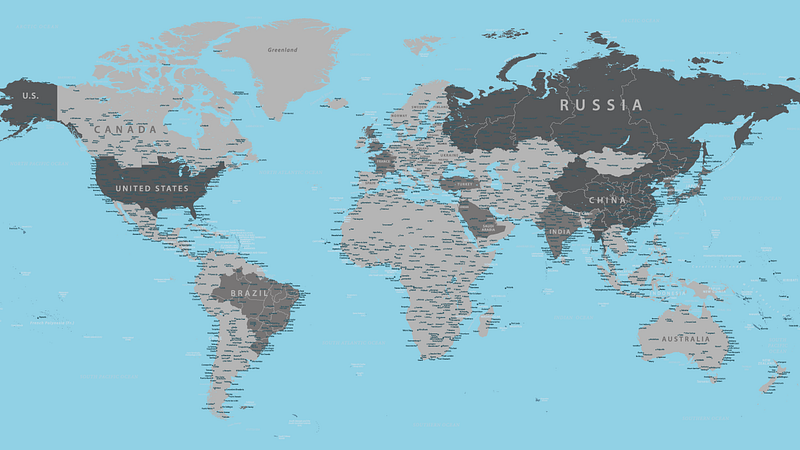
In Part 1 we discussed the hegemonic narrative — ‘megaloliberalism’— which not only insists on the validity of its position but also the impossibility of questioning such a position.
In Part 2, we move to the anti-hegemonic viewpoint and those who oppose the epistemic liberal order’s interpretation of the war.
Some of these iconoclastic figures are political realists. Some are what I would classify as the traditional left. Some are conservatives or the far right. All have been called useful idiots and accused of being Russian patsies and apologists for Vladimir Putin, and one or two have even been put on Ukraine’s kill list, the myrotvorets — from John Mearsheimer to Henry Kissinger to Noam Chomsky and Glenn Greenwald to any politician in my own country who fails to toe the company line.
Political realism is a theory of international relations that sees the state as the dominant actor on the world stage, with international institutions forever playing a secondary role. Survival is the name of the game and states will do anything and everything to ensure their continuing perdurance. This includes becoming as powerful as possible, and powerful states will claim spheres of influence commensurate to their power. All states have their own especial interests and lines in the sand which they will yield to no one, with strong states being able to back this up with military might.
In stark contrast to liberal hegemony, all the above is true regardless of the nature of a state’s domestic politics, be they liberal, illiberal, or otherwise. Famous realists include Machiavelli, Otto Von Bismarck, George Kennan, and Henry Kissinger, and, in academic circles, Hans Morgenthau, Kenneth Waltz, John Mearsheimer, Richard Sakwa, and Stephen Walt.
Then you have left-wing social commentators, such as the indefatigable and world-renowned nonagenarian Noam Chomsky and author and journalist Glenn Greenwald. These are certainly no political realists and view the state and power from a firm, anti-imperial perspective. These may be classified as traditional lefties for the purposes of our analysis.
In addition, there are conservative and right-wing commentators such as Tucker Carlson and Peter Hitchens who interpret the present world order and the events which led to the war in Ukraine in a similar vein to the others, notwithstanding their divergence, most notably in the case of Carlson, on most every other issue.
The aforementioned represent a motley crew of analysts from both left and right. Yet, they are more or less united on the reasons which brought about Russia’s invasion of Ukraine and the subsequent Russo-Ukrainian War. What are these reasons? Well, let’s see what sort of picture the anti-hegemonic view paints.
The Anti-Hegemonic Narrative Broken Down
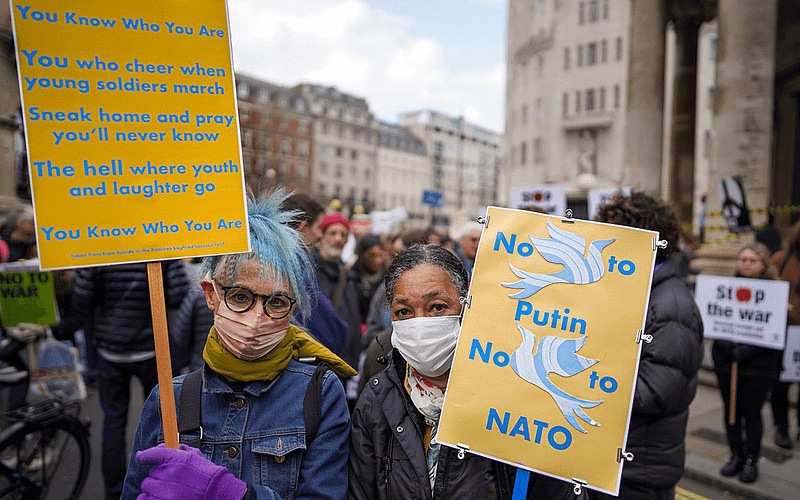
Strong condemnation, rational inquiry
Firstly, one of the core differences between that of the hegemonic and anti-hegemonic interpretations is that the latter condemns that which should be condemned; it doesn’t turn its head and refuse to see the glaringly obvious, and, moreover, it doesn’t refuse to deal with the claims of the hegemonic view.
Russia has committed a war crime of the most heinous proportions with almost universal outrage and condemnation from the anti-hegemonic perspective. Similarly, with the exception of Tucker Carlson, there is almost unanimous consensus on the egregious nature of the Russian regime and the odiousness of its president.
Noam Chomsky calls the invasion a “major war crime … [with] no justification, no extenuation.”
Mearsheimer calls the war, “sickening.”
Anatol Lieven speaks of the blunder, brutality, and hideousness of the war and sees the figure of Vladimir Putin as “ruthless and indifferent … to the dreadful suffering resulting from his actions.”
Peter Hitchens calls Putin a “sinister tyrant.”
And lastly, Stephen Walt speaks of Putin’s “macho personality cult,” and calls Russia’s actions “brutal and illegal” and deserving of “all the condemnation we can muster.”
There is absolutely no love lost for the Russian government or its president from these putative stooges.
Contrasting sharply with the hegemonic worldview, there are no omissions or repudiations or flat-out refusals to even contemplate certain aspects of its antipode. The anti-hegemonic viewpoint fully accounts for its competing narrative and the content of its claims. It addresses them but also places them within a larger picture pulling in deep underlying issues and a more nuanced political analysis that strives to see events not just from the U.S.-led West’s or Ukraine’s side of the table, but also from Russia’s.
This is the first feature of the anti-hegemonic interpretation. No one is denying the pervasiveness and seriousness of the Russian Federation’s flaws — from rampant corruption to a rather malleable rule of law — but this is a chapter in the book rather than the whole tale itself. Much like people, all states, the somewhat flawed and the deeply flawed, have certain needs and interests that cannot be wilfully and repeatedly ignored out of hand.
The expansion of NATO
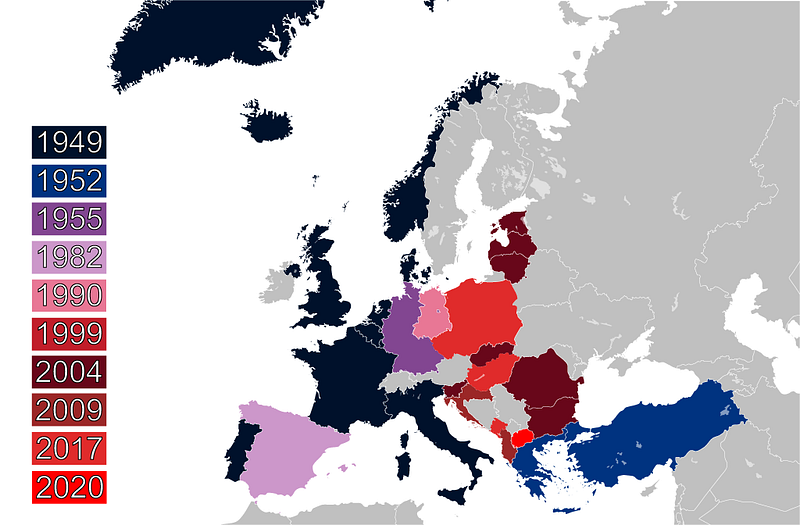
The second issue highlighted by the anti-hegemonic side is by far the most discussed in western media — the expansion of NATO.
Bill Clinton, as seen in Part 1, rejects any suggestion that the expansion of NATO may have had some bearing on how events transpired and eventually culminated.
Former U.S. Ambassador to Russia under President Obama, Michael McFaul, denies any mote of culpability on the part of NATO for the Russo-Ukrainian War, stressing the utter benignity of NATO in tweets and underscoring that “the primary threat to Putin and his autocratic regime is democracy, not NATO.”
Both Blinken and NATO Secretary General Jens Stoltenberg repeat the defensive alliance, self-defence and defence mantras as if they make hefty royalties off each iteration.
And of course, the obligatory “unprovoked” has gone viral.
But is this really true?
The critics of this branding of NATO as both purely defensive and completely blameless think not and have two rather considerable bones of contention.
The first relates to power, whether viewed from a realist perspective or the anti-imperialist left.
Security and survival are the most fundamental and eternal of all a state’s interests. The presence of arguably the largest military alliance in history, one that happens to be pretty hostile to your being, in a large unstable state on your borders, particularly in a state with the history Russia and Ukraine share, is always going to be pretty antagonistic at the very least and an existential threat to your very existence at the very most.
The same would be true for any other powerful state — be it India, China or Turkey, or, indeed, the USA. In fact, the U.S. shows it is realist to its core when it comes to its own security and sphere of influence with the Monroe Doctrine, which engulfs the whole of the Western Hemisphere with the edict to all would-be challengers — mess around here and be prepared to meet with the full might of the US of A.
From the left’s point of view, the ever-continuing expansion of NATO is imperialism 101. You can call it what you want and say it’s in the name of the most beneficent molecule of the most beneficent entity to inhabit the entire universe, but it’s always going to be the USA extending its tendrils right across Europe and beyond, snaffling up all erstwhile buffer states in its path to get right to the doorstep of a rival power. That many of these states want to be snaffled up doesn’t negate the imperialist element and it certainly doesn’t negate the scale of the threat for Russia. Even the dogs on the street would know there’s eventually going to be some pushback.
It is just plain wrongheaded and deeply dishonest to claim such a bloc would have no effect on Russia’s sense of security and calculus of interests. None whatsoever!? Of course, it would and does and will. And this will continue until such a time as American foreign policy comes to be guided by those who eschew ideology in favour of pragmatism, by those who understand the real and rational limits to the power of the USA, and by those who understand the perils of pursuing such an expansive and bellicose approach to liberal democracy and the liberal world itself.
Perhaps Richard Sakwa said it best in his investigation of the inner dynamics of Ukrainian society and its relationship with Russia: “NATO exists to manage the risks created by its existence.” That NATO is a benevolent force spreading peace and security across the globe with only the very best of intentions is just not true for those unfortunate undesirables kept out of the club.
The second issue the anti-hegemonic side has with NATO, again, relates to realism, but of a different type.
Western nations have a terrible habit of defining what should and shouldn’t be threatening to Russia. They claim a monopoly on meaning and so eo ipso do Russia the great service of interpreting the world for it.
Westsplaining is a neologism that appeared to capture the discourse of the anti-hegemonic side in relation to Eastern Europe in relation to Russia. If you think this is westsplaining, then telling Russia what it should deem harmful and harmless, safe and unsafe, right and wrong, is obviously of the exact same order.
The notion that Russians should see NATO as harmless because many Western actors say it’s harmless, is akin to a neighbour you have had extremely poor dealings with in the past telling you his rather large dyspeptic foaming-at-the-mouth Rottweiler is perfectly friendly and wouldn’t hurt a fly — “Well then (you say to yourself), he’s told me it’s perfectly safe. Great, there’s absolutely no chance whatsoever of that thing biting me or anyone I love.”
This is as dumb as it is dangerous and will only lead anyone that takes such a position to misdiagnose conflicts and misunderstand states. Realism is accepting how others view the world; utopianism is expecting them to view it as you would like.
Multipolarity

The fact that the world is again firmly multipolar after the bipolarity of the U.S./Soviet years and the unipolarity that the U.S. enjoyed for a time has been expatiated at great length by John Mearsheimer, Stephen Walt, Anatol Lieven, and others. This is not discussed as widely in the western mainstream as the issue of NATO. Nonetheless, it is extremely pertinent for making sense of events.
Vladimir Putin and Xi Jinping take great pains to stress the heterogeneity of international politics. Obviously, there is a self-serving component here, but does that mean they’re wrong? Does it mean that multipolarity has no bearing on the nature of world politics?
No, it doesn’t. Even Macron acknowledges and endorses the multiplicity of the world we find ourselves in. Much like a stopped clock is right twice a day, autocratic leaders can occasionally call it as it is (and so-called liberal leaders sometimes call it as it ain’t).
The Russian invasion of Ukraine and the Russo-Ukrainian War are both symptoms of this very multipolarity and causal factors driving it.
But why is all this talk about multipolarity important? For the reason that in a multipolar political ecosystem, where the world’s most powerful state is experiencing ever-increasing contestation from a number of powerful competitors, some actions will be wise, prudent, and advisable, whilst others will be antagonistic, dangerous, and highly counterproductive.
Under such conditions, expanding military alliances right to the doorstep of your rivals and involving yourself in every region of the world will lead to war, not peace. Under such conditions, a holier-than-thou attitude and high-horse morality will stir up conflict where it doesn’t need to arise and make it harder to resolve when it does. Under such conditions, great powers need to negotiate to find middle-ground solutions, talk should be of lesser evils and the greater good, and international relations should not be a moral battleground where one bloc dictates the rules of the game to the rest.
The anti-hegemonic view is simply that obdurance and unilateralism are no longer the call of the day. It recognises the misguidedness of such a tact and the long-term dangers for us all if the U.S. continues to refuse to alter its course and recalibrate its approach.
The Asymmetrical End to the Cold War
The asymmetrical end to the Cold War and the failure to incorporate Russia in a lasting and meaningful security apparatus is an additional element that is stressed most forcibly and compellingly by Richard Sakwa in numerous books and articles.
Most wars result in one of three outcomes — victory for one side over the other, some form of stalemate, or a negotiated peace. None of these came to pass in the aftermath of the Cold War. The U.S. did not beat the Soviet Union; it collapsed in on itself. There was no stalemate; the Soviet Union was gone and who in the world would dream of opposing the United States? But nor was there some form of peace treaty outlining the rights, responsibilities, and relationship of the two parties going forward.
Richard Sakwa (the following insights come from Sawka’s Russia Against The Rest: The Post-Cold War Crisis Of World Order p71–90) assesses this failure to establish a meaningful peace settlement in light of the last few hundred years of European history. He points to five major turning points in the history of European security and posits that how the post-conflict peace settlement takes shape, what it prescribes and what it doesn’t, who it includes and who it doesn’t, will be of the utmost importance in dictating how long peace will endure.
The Westphalian Peace of 1648, the Congress of Vienna of 1815 and Concert of Europe (1815–1854) which followed, and the establishment of the United Nations in 1945, which brought the Soviet Union into the fold as a permanent member of its Security Council, are all examples of peace settlements which were forward-looking in terms of resolving the essential roots of the conflict by incorporating all central actors in robust post-conflict architecture. These three monumental peace settlements were articulated in such a way as to overcome the central antagonisms of the age and stave off large-scale conflict for far greater periods.
Conversely, the Paris Peace Conference (1919–1920) following WWI excluded the Soviet Union, despite the Soviets fighting alongside the Allies against the Central Powers, and placed the entirety of the responsibility (which is redolent of current events) for the war on Germany and its allies in the form of the Versailles Treaty. The treaty was utterly humiliating for Germany and placed impossible burdens on the country, and the exclusion of the Soviet Union contrasts sharply with the Potsdam Agreement made between the Allies — the U.S., the U.K., and the Soviet Union — following the defeat of Nazi Germany in 1945.
The Conference didn’t include who it needed to include. The Conference sought to punish Germany as much as humanely possible instead of trying to prevent something of the same magnitude from ever occurring again. It was mind-bogglingly ill-conceived and staggeringly ill-managed. And war of a scale and horror heretofore never known was to visit Europe and the World in just only 21 years.
The years following the Cold War did not see a post-conflict peace settlement quite so monumentally ill-advised as the Paris Conference. Nonetheless, failing to not only establish a new security order and incorporate Russia within it but instead choosing to expand the old security regime and exclude Russia from it has been a critical factor in why large-scale war has returned to Europe within a thirty-year period.
If relations have any chance of normalising, which is hard to envision at present, a meaningful, far-reaching, and above all legal agreement is of fundamental importance. Indeed, precisely such a new “grand bargain” may be what Russia seeks most of all.
Conclusion
This has been an investigation of the hegemonic and anti-hegemonic interpretations of the Russo-Ukrainian War and events leading up to it. The former paints a picture of black and white where history is carved up and cherry-picked, culpability swings only one way, and negotiation and compromise are acts of the Devil. The latter paints a picture of grey with blame sitting atop many shoulders, where history is held up to the light of honest enquiry, and the highest morality is moral compromise in a world where no value system can be undisputed king, all in the name of peace.


.jpg)

