
Shakespeare Did Not Write His Plays, Claim Solid Theories
Did Shakespeare really write his plays?
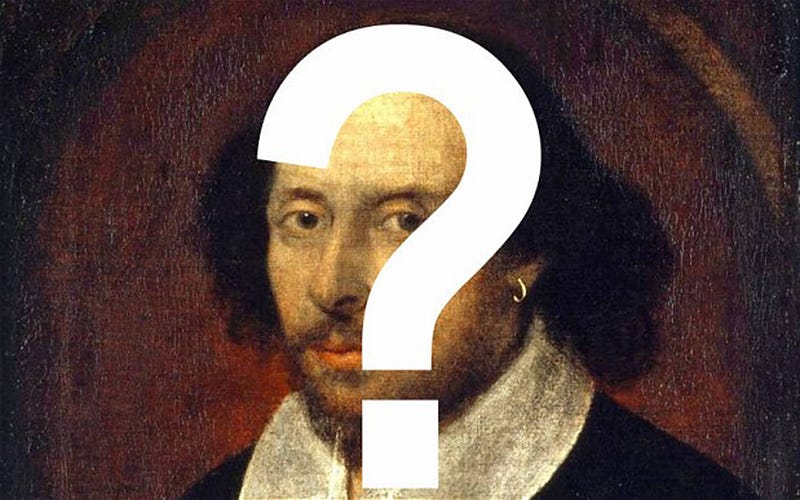
History relies on the facts and figures — it simply hates a vacuum. For years now, people have doubted the credibility of Shakespeare.
Questions like did he write his play maybe or maybe not, and if he didn’t, then who did, boggle several curious minds. Interestingly, all the seeds of doubt got sown after two centuries of his death.
In the17th and 18th Centuries in Europe — the doubts which did not exist during his life sprang up. What led to such conspiracy theories? Let’s dive in:
Reasons for questioning Shakespeare?
Several writers began questioning how a poorly schooled, untraveled man could extensively write on topics on which he did not possess any first-hand knowledge.
How could Shakespeare know about the court’s life and legal process in much detail? Similarly, questions regarding the knowledge he had about the other countries began springing up. People further began doubting the knowledge he had which never got translated into English.
The few items, which in no way testified his authorship, were: six signatures, his marriage record with Anne Hathawa, two portraits, some business translation documents, and a three-page will.
Yes, all the items found were unrelated to the writing itself. People questioned why there was no trace of a single manuscript found, as naturally, the owner of the creative material would possess a complete or at least a fragment of the work.
Lack of written evidence confused people. Desperate scholars sought documentation to flesh out his full biography, but they simply failed. The first person to doubt the authorship: James Wilmot.
The first seed of doubt that spread like fire
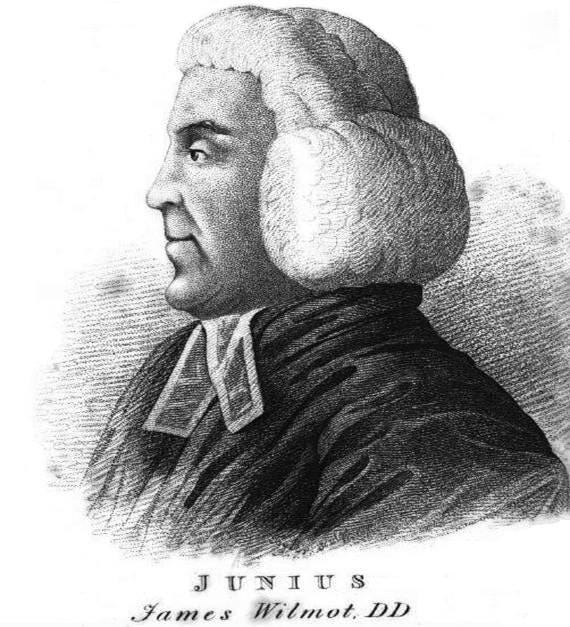
The lack of evidence didn’t bother many until James Wilmot shared his anti-Strantfordian views — that Shakespeare wasn’t the actual writer. Respected as a literary scholar, Wilmot wrote extensively about Shakespeare’s biography.
He researched his subject with utmost scrutiny. Visiting Shakespeare’s hometown, Wilmort uncovered several astonishing findings of the life of Shakespeare.
After visiting every house within a 50-mile radius of Shakespeare’s residence and checking all the libraries around. Stratford, Willmot claimed Shakespeare had never read a book in his lifetime nor wrote any letter.
Interestingly, the guy didn’t even find Shakespeare’s handwriting scribbled anywhere, be it at the bottom of old letters or the bible’s endpapers or on Shakespeare’s properties.
It was pretty hard for Wilmot to digest how a man who left no traces of any literary paper could write amazingly literate plays.
Wilmot did not publicize his findings much but privately concluded that plays were actually not written by Shakespeare— James Corton Cowell, Willmort’s friend, unveiled the conclusion in his 1805 lectures.
What was the best guess Wilmot came up with? It was Sir Francis Bacon, all the while, who had contributed to the literary world. We will come on the guesswork later but let’s first see the consequences of Wilmot's conclusion.
Famous people and their doubts on the authorship
Not only the commoners but prominent figures took the lead in questioning the authorship of the literary work — like Mark Twain, Sigmund Freud, Charlie Chaplin, and Henry James.
Twain wrote an essay Is Shakespeare Dead?” where he extensively detailed only one hypothesis:
So far as anybody actually knows and can prove, Shakespeare of Stratford-on-Avon never wrote a play in his life.
Interestingly, Freud also doubted the authorship. Hamlet heavily inspires his theories, and his work reflects similarity with the cultural impact of Shakespeare’s work. Questioning the Stratford actor, Freud stated:
It is undeniably painful to all of us . . .that even now we do not know who was the author of the Comedies, Tragedies and Sonnets of Shakespeare.
Novelist Henry James turned more outrageous and commented:
I am ‘sort of’ haunted by the conviction that the divine William is the biggest and most successful fraud ever practiced in a patient world.
Silent movie star Charlie Chaplin held similar opinions. He wrote:
I can hardly think it was the Stratford boy. . . whoever wrote them had an aristocratic attitude.
Such theories have only risen in trajectory since the mid-nineteenth century. Since that time, several websites are exploring authorship questions like Shakespearean Authorship Trust, where Anonymous actors like Derek Jacobi make the contributions.
Another website, Shakespeare Authorship Coalition under DoubtAboutWill.org, sponsors the Declaration of Reasonable Doubt about the Identity of William Shakespeare. Interestingly, it has a petition of more than 2000 signatories.
If it was not Shakespeare, then who?
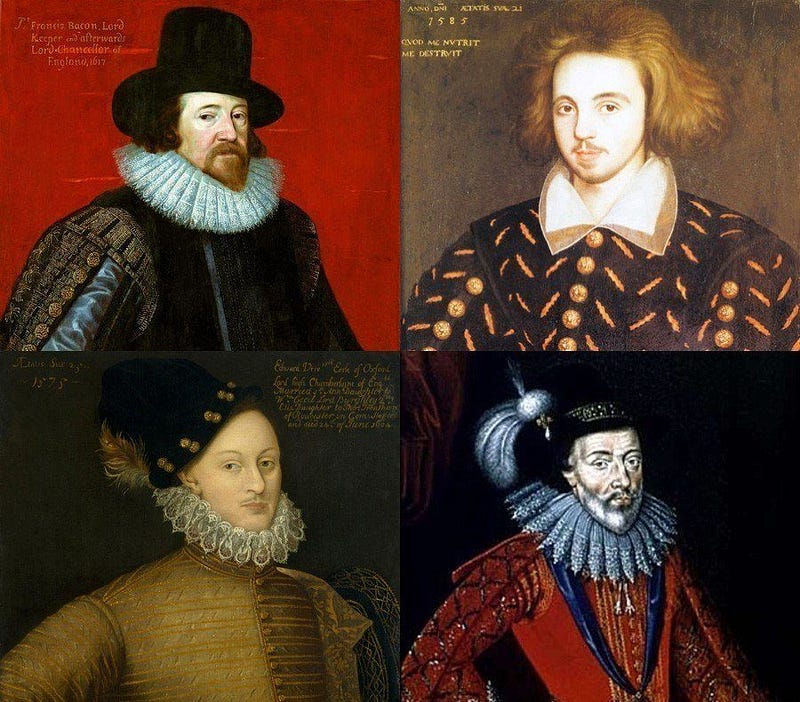
A lot of questioning minds and doubters. Aren’t there? If these people believe that it was not Shakespeare, then who do they think to be credited? Let’s begin with the suggestions:
James William named Sir Francis Bacon. What made the theorist suggest the name of Bacon? Well, they had found the pattern in Bacon’s writing and Shakespeare’s plays. Bacon had a solid legal background, and legal reference in Shakespeare’s writings hinted to Bacon to be the writer.
Interestingly, some scholars studied the writing of Shakespeare in-depth, finding clues that Bacon may have left. Isaac Hull Platt, one such scholar, tried to decipher an obscure Latin word surfacing in the work Love’s Labors Lost.
The Latin word honorificabilitudinitatibus was taken as an anagram of “Hi Ludi IF Bacon Is nati tuiti orbi” which were translated as “these plays, the offspring of F. Bacon, are preserved for the world.”.
Additionally, there was a solid theory that was quite popular throughout the 19th and early 20th Centuries, But the name of another candidate got suggested by anti-Stratfordians — Edward de Vere.
He was the 17th Earl of Oxford and a poet whom many knew for his theater patronage. Now why theorists deemed him the author? Well, Edward de Vere was a highly educated individual who traveled widely and possessed a deep knowledge of Jacobean politics.
The Earl might need protection against criticism by his peers thus channeled his exceptional knowledge through fake authorship — taking Shakespeare’s figure as a pseudonym. To protect himself from being outed for so politically provocation work, deVere protected his identity.
Interestingly, there are other potential authors like Christopher Marlowe, who was a poet and playwright, The Guardian reported a conspiracy theory that suggests Marlow faked his death to escape the trial and conviction for being an atheist. After escaping, the celebrated playwright wrote under Shakespeare’s figure.
Conspiracies: the exciting possibilities
Conspiracies and conspiracies — they offer nothing but just exciting possibilities of what might have happened.
What does the other side of the theorists believe? Well, the Stratfordians do acknowledge the absence of vital biographical documentation.
They know they cannot defend themselves in claiming the type of schooling Shakespeare had — but they say the same for any individual of Stratford at that time.
Stratfordians own a disadvantaged position in providing evidence against powerful conspiracies and hidden codes that manifested over time.
Due to lack of the ability to offer any counter-evidence, anti-Stratfordians have established Stratfordians as self-interested individuals who just defend the status quo.
If we talk about Stratfordians, then they label anti-Stratfordians as selfish individuals who, through their conspiracies, want to rewrite Elizabethan literary history, so they can cash in on the “Stratford industry” and get a share of Shakespeare scholarship money.
My two cents:
Well, I think Shakespeare’s achievement should not be discredited because I believe in the impossible talents.
His enormous successes did not quite match with his biographical data — which properly ceased to exist but it doesn’t necessarily point towards a fact that anybody else could be given the authorship.
We can never be sure because there can be impossible possibilities, but it is our opinions with which we can stand by.
Today you can write something phenomenal which people will love and a century after your death, and they will invent conspiracies, questioning was it really you!
More from the author:
References:
https://en.wikipedia.org/wiki/Shakespeare_authorship_question
https://www.theguardian.com/culture/2010/mar/14/who-wrote-shakespeare-james-shapiro