
How Ancient Egypt did Amazingly Accurate Pregnancy Tests 3,500 Years Ago?
Egyptian women even determined sex with wheat & barley.
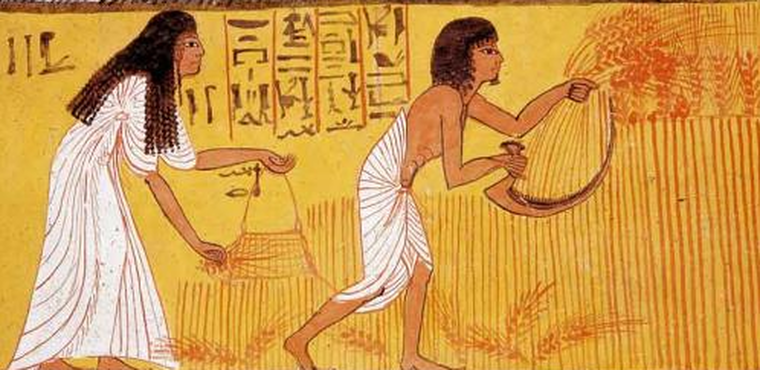
History has appreciated ancient Egyptians for various inventions and practices — they inspired the world in many ways. History glorifies Egypt was interim of its infant mortality rate and pregnancy tests.
According to the University of Chicago, it was incredibly high throughout history — the reason being Egyptian women being super cautious of proper breastfeeding and nourishment of their child, especially in the awful sanitary condition that posed a risk to the infant immune system.
Interestingly enough, the civilization was ahead in the pregnancy test as well. Let’s see how:
Accuracy of Egyptians test
Egyptians, not only were they able to conduct tests but actually provide a good accuracy upon the subject — approximately 70%, which is a decent rate, actually more than what we have today despite being so advanced.
Back then, the test alone could decide the gender of the child born. Ancient Egyptians used the same procedure of determining the pregnancy through urine samples, but they did it 3500 years ago!
They knew it millennials ago how urine samples directly connected with fertility — not just smart, but super intelligent.
The fascinating method
You might be questioning the method they deployed for such a practical pregnancy test which was able to determine the sex too. Well, of course, they didn’t possess pregnancy strips, upon which peeing would provide with yes or no results.
Instead, the method was of peeing in a barley bag and emmer wheat bag. According to The National Institute of Health, if any of the bad sprouted any seedlings, it confirmed a woman’s pregnancy to about 70 percent.
Why the use of two different bags?
One might question the purpose of peeing in two backs if sprout in any of the bags would do the work. Well, the two different bags were used for determining sex.
Upon a close watch, seeing which of the bag would sprout first would decide if the child be a male or female — where sprout from the barley bag first indicated the news of a baby boy. Likewise, the sprout from the emmer wheat bag before barely signaled the report of a baby girl. So fascinating.
Why not effective today?
Historians didn’t deem the test reasonably accurate, especially if we bring back the inventions of such techniques in modern times. Why? Well, because a lot has to do with female biology.
With time, our biology has evolved and changed as needed. If we talk about the ancient Egyptian women, they owned different biology that proved the experiment of barley and emmer bag to be valid.
Those women had a much higher concentration of estrogen, making the test more accessible, effective, and accurate, but for the woman’s biology of that very time.
Helpful papyrus decoded the mystery for us.
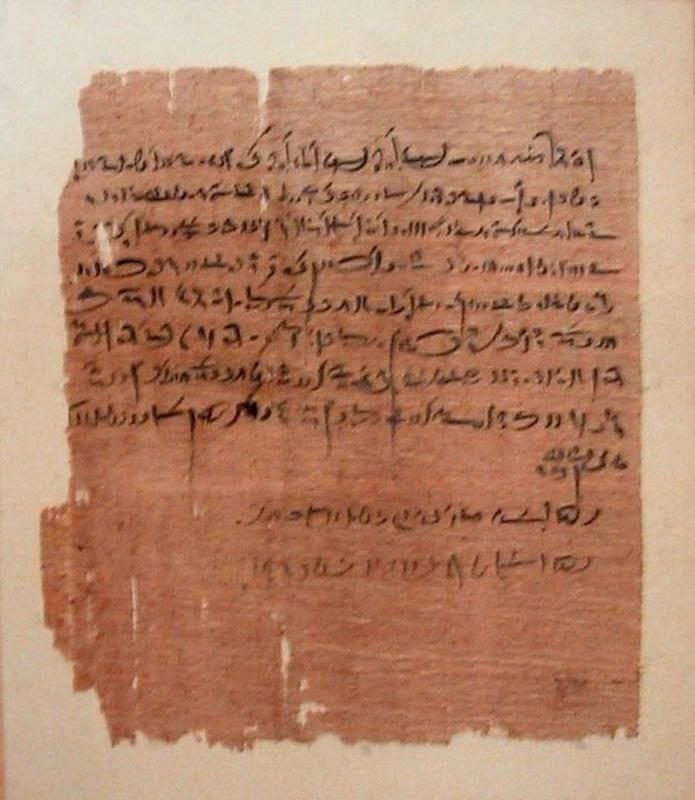
Sofie Schiødt, Ph.D.’s research says:
Many of the ideas in the medical texts from ancient Egypt appear again in later Greek and Roman texts… From here, they spread further to the medieval medical texts in the Middle East, and you can find traces all the way up to premodern medicine.
History uncovered this reason why barley bag and emmer wheat bag were effective, owing to the spiked estrogen level of women that time, through the pieces of evidence found in the papyrus.
The documents revealed several mysteries, which later were either translated into Greek or Roman text.
This test through writing spread across Greece and interestingly found in medieval medicine, proving Egyptians had gotten several things sorted through correct logical thinking.
Sadly, we have so few preserved ancient Egyptian texts, devoiding us of the chance of learning the wisdom they once possessed.
Another process for the pregnancy test
Another finding was when researchers found another way of testing pregnancy, but the method was introduced in the middle ages.
Mixing wine with urine and waiting for the reaction was an indication of some pregnancy signs. Another extremely bizarre way of
testing pregnancy was by soaking a ribbon in a woman’s urine. Once soaked, people would burn it and make the woman smell it. If she gagged, then it signaled her pregnancy. Yes, I know what you are thinking — things got weird in the middle ages.
Determining sex upon guesswork
Some people also have weird ways of determining the sex back then — craving for sweets, eating garlic, and owning a lot of acne signaled the coming of a baby girl. While owning a healthy glow with a dilated pupil surfaced news of the baby boy’s arrival.
More from the author:
References:
https://www.theatlantic.com/health/archive/2015/06/history-home-pregnancy-test/396077/