
Sexless Marriages in Japan: Why Are They So Common?
Can you imagine married life without sex? In Japan, why is this becoming the norm?

“I’ve been in a sexless marriage for 6 years,” she said.
“You haven’t had sex for 6 years?” I answered, incredulously.
She shook her head.
“No, no, no. That’s not what I said. I said I’ve been in a sexless marriage for 6 years…”
That was my first introduction to the world of sexless marriages in Japan. I was teaching up at a university just east of Tokyo in 2005 and supplementing my income by doing conversation classes in the evenings with suited workers from the office skyscrapers nearby.
Over the next 3 years, I spoke with dozens of men and women in similar situations — a sex-life with their spouses that had wilted and withered like an unloved flower left out in the scorching summer sun.
Some were entirely sexless. Others had secret lovers on the side. A few were in open relationships.
Surprised?
Perhaps you doubt the veracity of my anecdotal evidence or still have lingering doubts that sexless marriages could be so ubiquitous in The Land of the Rising Sun…
Let me give you some more sources then:
- There’s this report, written in The Guardian
- And this one, from Savvy Tokyo
- This one, from nippon.com
- And this one, from The South China Morning Post
And if you don’t want to read about the prevalence of sexless marriages in Japan, then you can watch this Japanese couple openly discuss their sexless marriage.
“Sexless” is even a word in the Japanese language, borrowed from English and written in Katakana: セックスレス
So why are there so many sexless marriages in Japan? After living here for 18 years, I’ve got my own theories I’d like to share with you.
1. Work Culture
I’m going to stick two fingers in your eyes here and shock you: Japanese people are not hard workers. They are not efficient. Offices still use fax machines for God’s sake!
That said, they work ridiculously long hours, even if they don’t do a whole lot while they’re there.
Most of the time salarymen and women move pieces of paper from the left side of their desks to the right side, then change some columns in an Excel spreadsheet from bright yellow to red, then go to a meeting called to discuss last week’s meeting that was called because the meeting before that left things open-ended.
Then they go back to their desks and move the papers back to their original positions.
Lots of long hours even though not a lot gets done.
And because Japan is a hierarchic, top-down society, younger underlings usually have to wait until their older superiors leave the office and go home before they, too, can exit the building.
Consequently, after all their “busy work” and waiting for bosses to shuffle off, younger workers often get home close to midnight. Scoff some dinner, have a shower, brush their teeth, fall into futons.
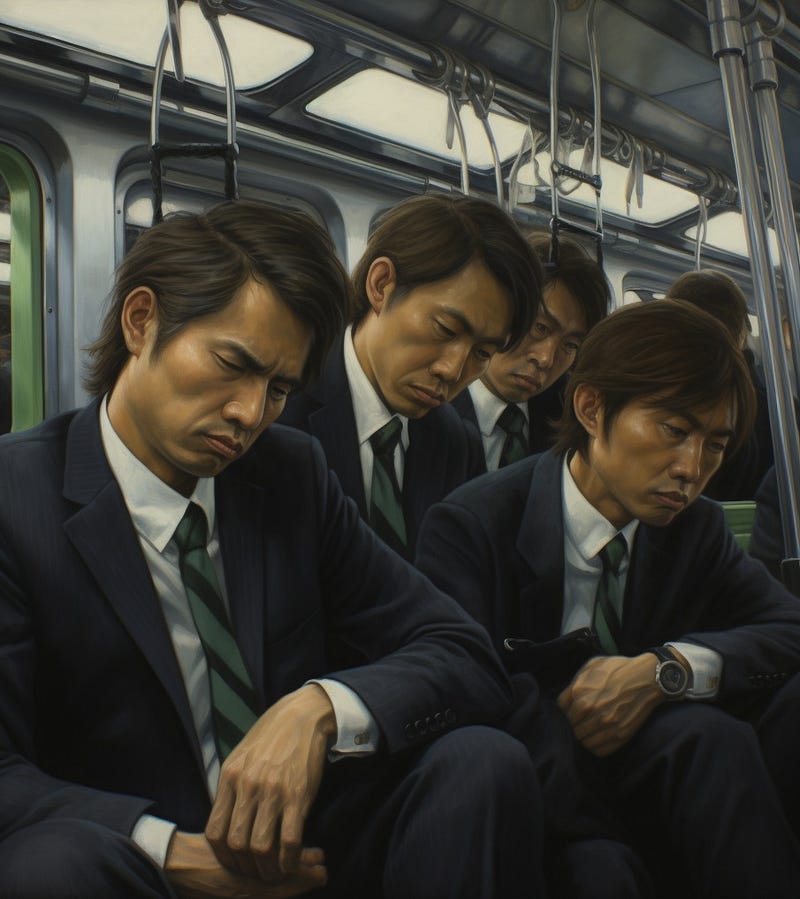
Work time sucks the life out of them, which then leaves them with no life to give when it’s time for business with the spouse.
“Too tired!” was always the most common response during my years of confessional listening work.
2. Children
The irony, huh?!
You go at it like two little jack-rabbit jackhammers for as long as it takes to make those cherubic little sleep-killers, then use them as an excuse to nix your night-time nookie.
Any parent knows how hard it is when you’ve got a little one pooing, spewing, cooing, and doing anything they can to keep you awake all night every day, but Japan takes it to another level.
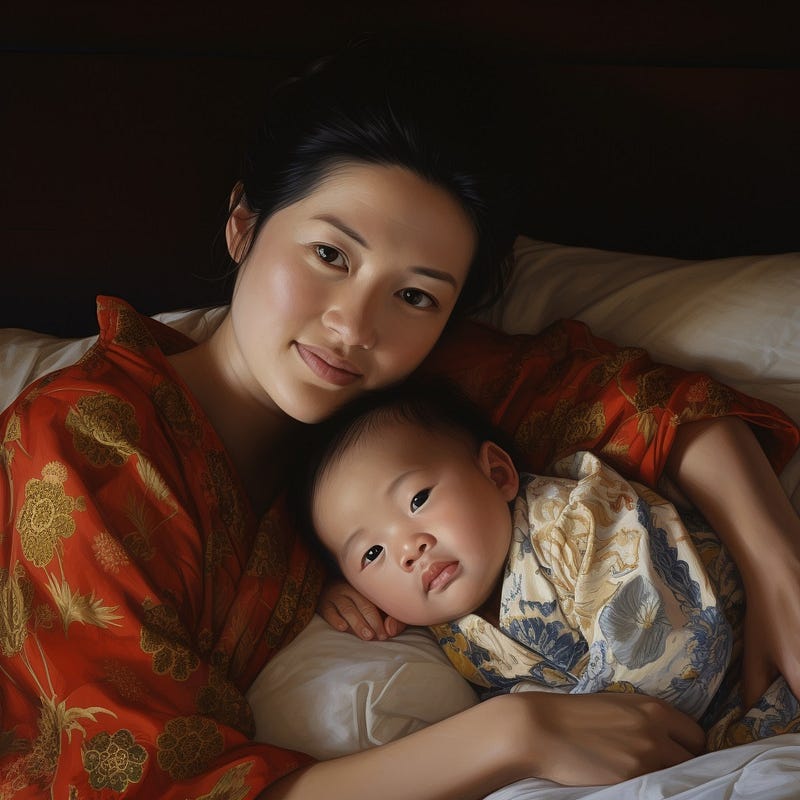
That’s because the wives typically sleep with their babies on a futon on the floor. Cots, baby monitors, and separate rooms while mummy and daddy sleep together is almost a non-existent phenomenon here.
Mum sleeps with baby, dad sleeps on a separate futon, or in another room. I’ve written about my own experiences of such things here.
That means there’s a cumulative effect: Husband (or wife) gets home from work late every night and values 5 hours’ sleep over any kind of regular sex.
They somehow manage to make a baby, but then start sleeping separately.
So, now you’ve got too tired and too distant — not even in the same room!
3. Role Changes
For many years I taught a university class on Intercultural Communication here in Japan. One of the topics we covered was relationships, and it always amazed me that year on year, the answers coming from 20-year-old male and female Japanese students was always the same: the husband/wife relationship ceases to exist once you become father/mother.
When you’re single, unmarried, and/or childless, have as much fun inside and outside the bedroom as you want.
But when you become parents, the time for fun and frivolity is done: you are now mother and father. The kids get all your time and attention.
Heck, couples go from calling each other by their names to calling each other “Otousan” (Father) and “Okaasan” (Mother). No shit. My wife calls me “Daddy” (in English) when she’s trying to get my attention at home.
And no, it ain’t in a sexual, role-play kind of way.
I honestly can’t remember the last time she called me Iain. Weird? Shit yeah.
But it’s part of the Japanese psyche: once you have kids you are now father and mother, and the naughty hanky-panky stuff gets put deep inside the yesteryear drawer.
4. Alternative Options
The adult-video industry in Japan is the most profitable in the world, pulling in up to USD $20 billion annually. In short, Japan loves its sex.
Just not with your own spouse, it seems.
While you might be busy doing motherly and fatherly things at home, you’re not so busy you can’t be doing other naughty things elsewhere.
I can’t remember how many times my conversation partners told me they were in sexless marriages but qualified it by emphasising they weren’t sexless. Many of them were having more sex than they’d ever had.
Just not with the person they’d walked down the aisle with.
In Japan, a common term is sex-friend, or sefure (セフレ), where you meet up with a person purely for sex.
Or if there’s a little more emotion involved, it’s termed a furin (フリン) — a fling.
There are hundreds of websites for Japanese people of all ages to register for secret hook-ups on the side.
As long as you don’t bring your business or your lover home and keep everything discreet, it’s as common as meeting up with your friends for morning coffee and brunch.
The love hotels in every city big and small that offer time service stays are testament to the canoodling and copulation going on behind closed doors here.

Add the fact that Japan is not a monotheistic country that believes in an all-powerful God who punishes extra-marital sins of the flesh, and you get an inkling into why there aren’t as many moral/religious hangups as in the West.
Summing Up
Depending on which source you get your information from, up to 45% of married couples in Japan haven’t had sex for more than a month. For many couples that timespan has stretched into years.
There are many reasons, four of which I’ve given you here.
Perhaps what’s most stunning is that while marriages might be sexless, the spouses are quite often enjoying very healthy sex lives.
Just one of the many fascinating conundrums that make Japan such an intriguing place to live.
Do you like reading about life in Japan? I’m a Medium Top Writer for Japan, so these articles might be of interest to you.
This is my most popular, with 90k views
This is a quirky look at Japan, with 34k views
And this looks at things my Japanese wife has taught me about size!
Thanks for reading, and I look forward to hearing from you.


