
My Japanese Wife Taught Me Size Does Not Equal Happiness: Here’s Why
She made me understand why sometimes, smaller is better
Go big or go home – bigger is better in every facet of life, isn’t it?
When I arrived in Japan in 2005, I was a big-spending gallivanter at the peak of my heights, who loved nothing more than partying under Tokyo’s bright lights. Dropping ¥10,000 notes on Roppongi bar tabs was standard practice for the single-set and coming home with money in my pockets was the sign of a night badly spent.
Even when I left the fast pace of the capital and had to cough up a small country’s GDP on the 1,800kms drive south to my new home in the Kyushu countryside, I thought nothing of the car costs because I had me some grunt under the hood and power in the pedal.
When I met my wife, however, she soon showed me why smaller can sometimes make you happier.
Why Yellow is Better Than White
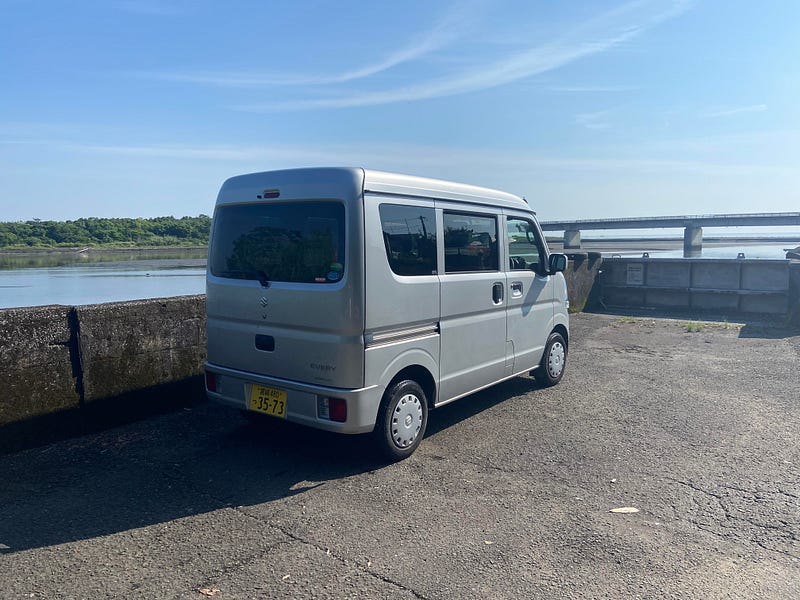
Cars in Japan are divided into two categories: yellow number plates and white number plates. Yellow plate cars are tiny and, by designated law, must have engines smaller than 660cc. If you don’t like grease under your fingernails or comparing carburettors, a 660cc engine probably means very little.
Bypassing technicalities, engines sizes are expressed either in liters (L) or cubic centimeters (cc), which basically amount to the same thing. This means that a 2300cc engine is the same as a 2.3L engine. Let’s go for some real-life examples:
- Hummer H2 1st Generation: 6.0L (about 6000cc)
- Ferrari F430 1st Gen: 4.3L
- Toyota Yaris: 1.5L

Roughly speaking, the bigger the car, the bigger the engine; the bigger the engine, the more power and oomph.
For people who like to flex their metaphorical muscles out on the roads, it’s easy to see why they go for the grunt and the roar of a big engine.
Before I met my wife, I did too.
That all changed one day when her yellow plate 660cc (0.66L) car tax bill came in at the same time as mine.
She laughed when she sneaked a peek at my bill. Not jokingly, literally. Why?
Because her annual tax fee came in just north of $50. Mine? A whopping $350!
That made me sit up and take notice. Then I had to lie back down and put a wet towel over my head once I found out how much she paid for her biannual car inspection and registration renewal: about $550. Mine? Around $1400!
For the triple-treat trifecta, I worked out she was spending half on gas each month. Half!
Put them all together, and I cringed at how much more I was shelling out for my white-plate car each year.
Once I’d wiped the pain of waste away, I dispensed with big and white and went with small and yellow — a 660cc Suzuki Every van.
Happy days as I now tear my little van through the rice paddies of rural south-west Japan while dodging tractors and racing farmers on mopeds.

Horses For Courses
To most in the western world, where big is often best, a car with a 660cc engine (0.66L) is so cartoonishly small you might think it belongs under the hood of a Minnie Mouse mobile.
However, in Japan, these yellow plate cars, called ‘kei jidosha’, are ubiquitous.
Indeed, in 2020, 3 of the top 4 car models sold were ‘kei jidosha’. But why are ‘kei jidosha’ so popular? Aside from the obvious economic savings, there’s another big reason: they suit the local environment, particularly in rural areas.
Japan has some great (and expensive) expressways, but its local roads, especially in the countryside, are small, narrow, and often in disrepair. In short, not great for big, high-end cars.
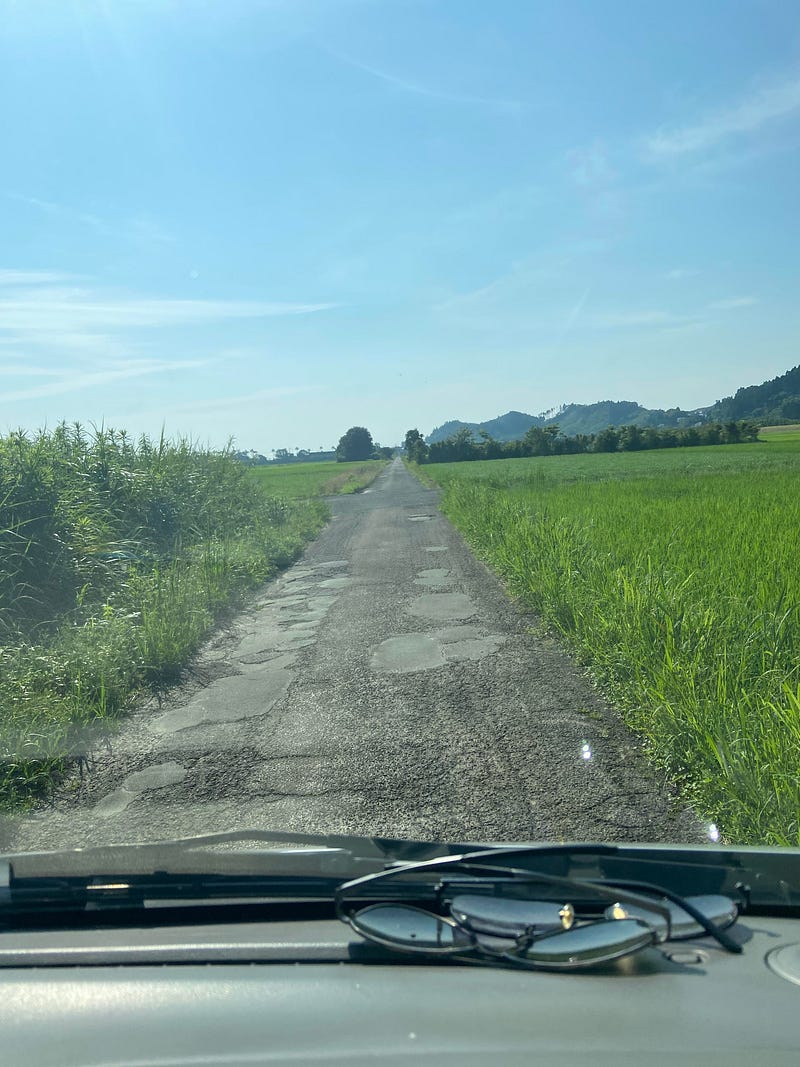
Once I’d finally acknowledged that the potholed tracks in these parts I live weren’t quite the perfectly paved Pacific Highway and got myself an appropriate car, weaving through flower fields and single lane mountain tunnels every day became incredibly fun.
As did tooting the wayward goats on my drive to the beach — even my horn sounds like it’s swallowed a can of helium.
Even better, the farmers in their little vans smile toothless grins full of camaraderie and the kids on bicycles no longer stare samurai swords through me for hogging the entire road.
If you drive on small roads that require tight turns round cramped corners, it makes sense to drive a small car that matches your environment. Life is so much easier fitting my little van into spaces I could never have dreamed of with my big, old tanks.
Pointless Power
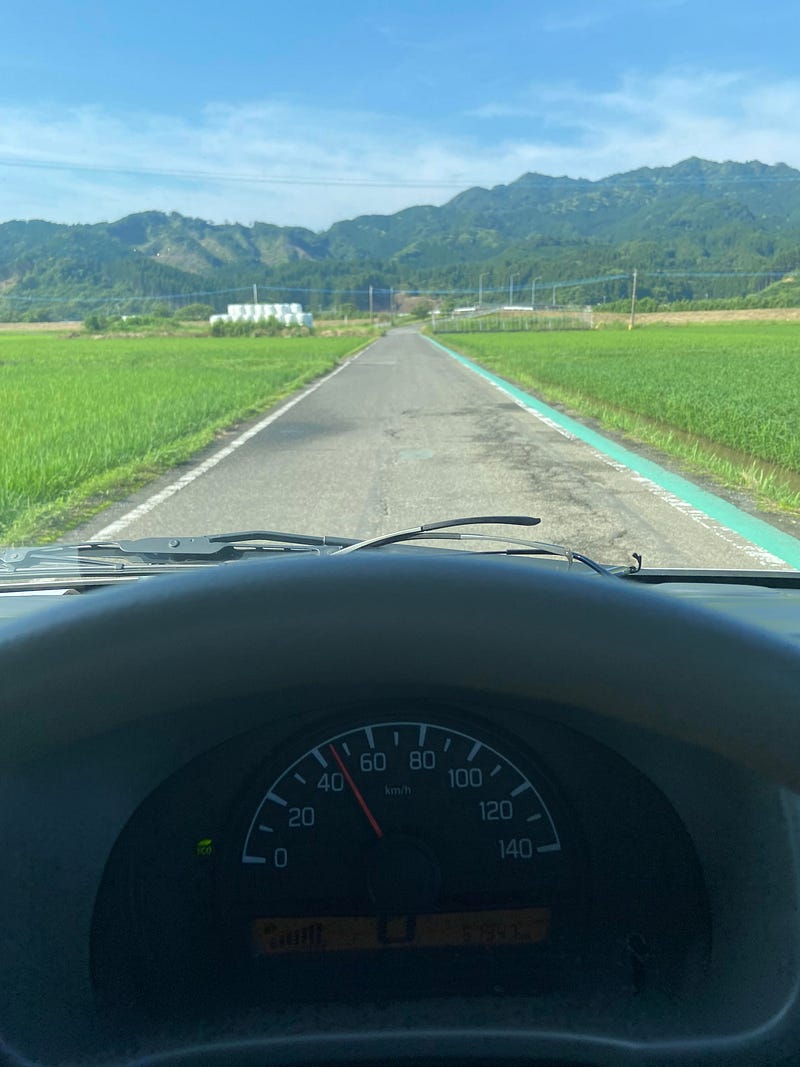
The speed limits here in rural Japan are often 40. That’s not 40mph, but 40kmph, which equates to about 25mph.
Yes, you read that right. 25 miles per hour. Granted, most people drive over that, but not by much. It’s simply too dangerous on the small, narrow roads.
And believe me, the cops here love nothing more than hiding in bushes and getting their speed guns out to catch you flying along at 60…
So tell me this: What’s the point of having a rip-roaring grunter with thunder under the hood that can hit 100 in less than 10 seconds when even the expressways cap the speed at 50mph?
It’s utterly pointless.
In my 18 years in Japan, I’ve had three run-ins with the local boys in blue. For what? Speeding. All three of them.
Cruising in 2nd gear at 30mph when you’ve got 5th gear wasting away in idle disuse gets pretty frustrating after a while. I felt like I’d been castrated half the time.
But when I got my little 660cc Suzuki Every yellow plate van, that all changed because when you zip along at 40mph in those little things, it feels like you’re going at 150 anyway.
Power to the feeble!
Summing Up
I miss my old rides but I’m no longer a single man with an ego needing constant inflation.
My misguided arrogance driving white-plate cars was costing me well over triple each year; there’s nothing funny about skimping on sushi or saying no to an Asahi because car costs are crucifying you.
My blonde hair might stick out here, but since my wife taught me that size ain’t everything, I’ve joined the crowd and waved sayonara to my big wank-tank gas guzzlers for good.
I couldn’t be happier.
Toot toot!
If you liked this post and you’d like to know how I consistently make a happy 2nd income from Medium, click here to get my free 10-point guide to Medium writing.
Do you like reading about Japan? I’m a Top Writer on Japan, so these might be of interest to you.
Curious about the ever-expanding world of sexless marriages in Japan? Read this
For a look at the seedier side of Japan, you might enjoy this article, which has had 90k views and counting
Here’s a look at my sleeping habits with my wife…
Here’s a quirky look at the funnier side of life in Japan


