
September Theme: Swopping Conventions
By month-end, you’ll feel like you’ve wandered into the wrong panel at ComicCon

Last month was tough, challenging and tricky
All that conflict, interacting layers and stringing together series of stories that are all connected somehow— phew! That’s all fine and good for a contest month — it’s good to stretch our writing muscles in unexpected ways.
But this month, we’re due a bit of a breather. So, we’re playing and trying out new things. Seeing what our creative minds can do with new boxes. New constraints, new literary Legos, if you will.
Because trust me next month, is going to a hair-raiser — Paul’s so excited about it we might be in for trouble. There will be blood. There will be ghosts. There will be mayhem. But that’s next month. (note from Paul — dude, that’s every month for me)
This month we’re launching a prison break out of our categories.
“Don’t classify me, read me. I’m a writer, not a genre.”― Carlos Fuentes
I’m usually a Science Fiction or Fantasy writer. But this month, I’ll tear my way out of those boxes. I’ll step away from my unhappy little villages or my cartwheeling space stations.
This month I’m gonna try something new. I’ll try new conventions, new patterns and new tropes.
This month I’ll step outside my comfort zone. This month I’ll write something truly different.
Who’s with me?
Why should we try different genres?
You’re used to your box; you know the corners, you like it in there! It’s comfy, and the walls are covered with all your little notes, and your crib sheets are tucked in the back. (note from Paul — and the psychiatrists won’t unlock my box)
But it’s familiar. It’s the same. And that’s not how we grow.
When the pandemic first hit and my country was locked down hard, some say it was the hardest lockdown on the planet. We couldn’t leave our homes for weeks.
My wife and I tried something new to fight off the madness. And all the extra time that suddenly sprung up because we couldn’t see anyone.
We tried to write a romance.
It was called Shadow of the Sun (it was a pun on “corona” — it felt clever at the time). Starring a young female doctor from New York who unknowingly moves to Italy a few weeks ahead of the virus, only to find herself in a love triangle with a former flame (slash stalker) and her new boss. There was going to be a series featuring the major epicentres: that Italian town I can’t remember, New York and Cape Town.
But… the novel was terrible, and it was hard work.
But I learned a new respect for the romance genre, and I can now write relationships between characters far better. Because I learned that in the beginning, at least two lovers are their own antagonists. They need to fight before they fall. It’s these ideas and skills I won’t forget and ones I wouldn’t have picked up if I didn’t step out of my familiar book store aisles.
So what exactly is a genre?
It’s a set of conventions that feed or meet reader expectations.
“Good writing is good writing. In many ways, it’s the audience and their expectations that define a genre. A reader of literary fiction expects the writing to illuminate the human condition, some aspect of our world and our role in it. A reader of genre fiction likes that, too, as long as it doesn’t get in the way of the story.”
―
Rosemary Clement-Moore
So what do readers expect?
There are conventions to every genre. But if they’re not followed, if the expected tropes and obligatory scenes are not there, the reader will likely be disappointed.
They may not even know why. They could say something like, “I don’t know it — just didn’t work for me. It didn’t grab me. It was ok, but something was missing.”
What’s a trope, you might ask?
It’s a literary device that is used so often your readers will recognise it immediately. Things like “the noble savage” or the “reluctant hero.” Some tropes like the former have baggage and could or should be jettisoned, but that’s another discussion. Here’s more info on Tropes.
So what are obligatory scenes?
Here are essential scenes for any story that follows a Hero’s journey; these exist in their own shape or form for each genre.
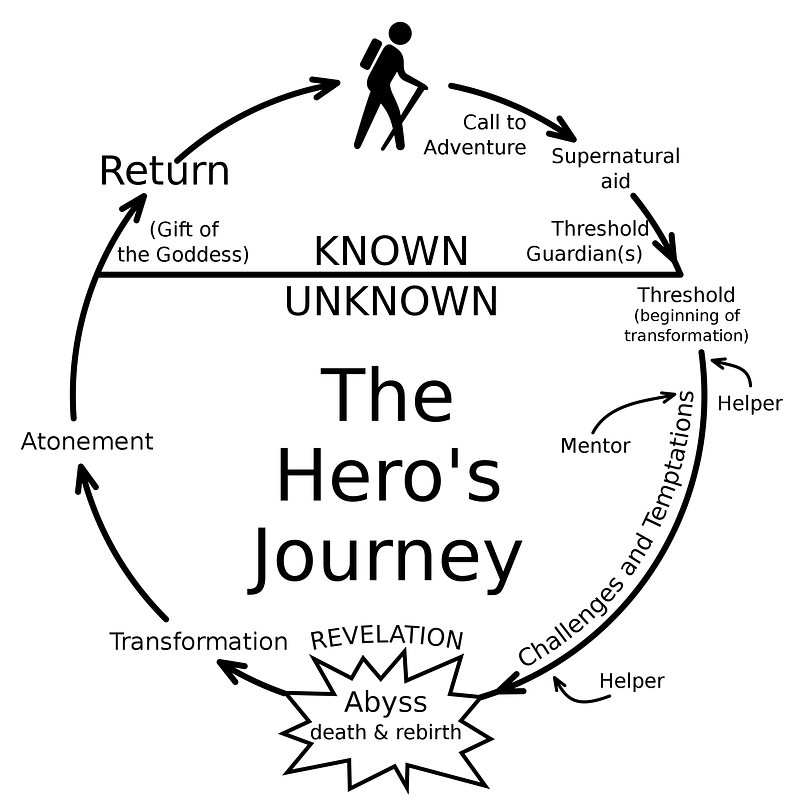
- Hero gets a wake-up call (the Snap-Out-Of-It Scene)
- Hero refuses the call
- Hero faces an all is lost moment
- Hero decides to change
- Hero wins on one level but loses on another
But hey — we’re writing Flash Fiction!
So we don’t need to worry too much about all this detail. Instead, we’re going to work with the lightest research we can muster and go for the genre's feel.
We’ve all watched enough or read enough that the first couple of rounds should be easy enough. After that, a little bit of googling will do us fine.
Our first week will push us to choose another major genre, stepping away from what we find familiar. I’ll challenge myself and other writers like Nanji Erode not to write Sci-Fi. Or Paul Mansfield can’t write horror or anything remotely Noir. 😉 (note from Paul — erotica, perhaps? Classy erotica, of course.)
We’ll try a major genre’s children the following week, selecting an unfamiliar sub-genre such as Dark Fantasy or Urban Fantasy. We’ll take those usual genre conventions and give them a new twist.
Lo! Then, in the third week, things get really interesting because we’ll face down a selection of Microgenres. These genres niche down even further and get downright deliciously silly.
But I’ll keep those a surprise because they’re fun, and that’s the energy for this month.
I’ll do the heavy lifting in the prompts so that you can pick up a genre and go for it. I’ll be your faithful butler, your holiday Alfred.
Because this is a “bye” month, we’re taking a rest, taking a trip and exploring somewhere new.
Our first prompt lands Friday, the 3rd; pack your boots, spare spacesuit, toothbrush, and zombie bug spray. It’s going to be an adventure.
Holy Time Travelling Batman, it’s the future, here are all the prompts
If you thought this was helpful, awesome, inspiring or helped you as a writer, please consider supporting Microcosm directly.
We’re building something special.


