
Science Monday: How Grapefruit Juice Can Be Fatal
Refreshingly tart breakfast beverage, or poison? In the wrong circumstances, this citrus turns deadly.
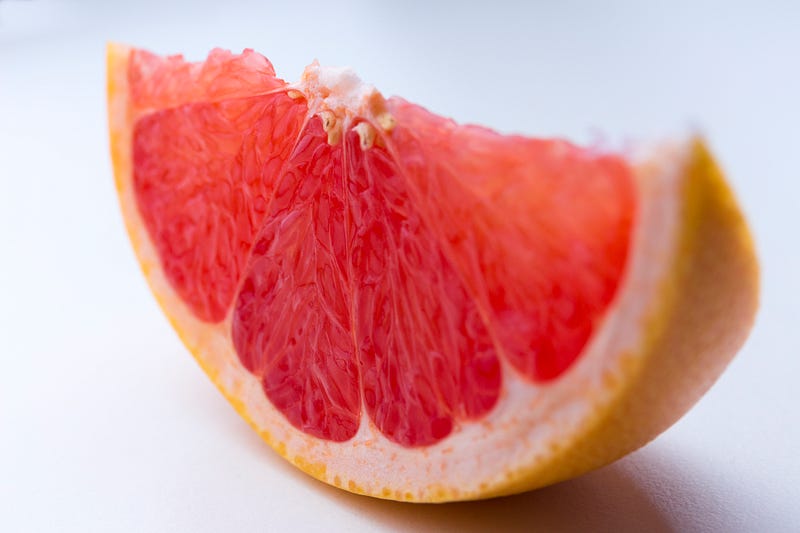
Although I avoided it as a child, I had an adolescent love affair with grapefruit.
Perhaps it was my changing tastes, where I started to appreciate the taste of tart and bitter foods instead of just craving sugar. It might have been because my family, every December, took a trip to Florida to escape the bitter cold of the Minnesota winters. In Florida, my mother took every opportunity to visit the grove stand and purchase pounds of oranges — and grapefruit.
Grapefruit was a nice break from the sweetness of their smaller, brighter orange cousins. Fresh ruby red grapefruit from Florida were tart but not bitter, bursting with juice, and a great wake-up in the morning for breakfast (especially when on vacation!).
And besides, grapefruit is healthy! Yes, it still contains a bit of sugar (the average grapefruit contains about 16 grams of sugar, about the same as 30 M&M pieces), but it also contains lots of vitamins A and C, potassium, fiber, and even antioxidants — even though those are bullshit.
So, grapefruits are… well, great. No danger in adding them to your diet, right?
In most cases, they’re fine. But it turns out that, in some cases, grapefruit can be potentially life-threatening.
The Drugs That Grapefruit Clobbers
A handful of medications have a weird warning on their labels: “Do not consume grapefruit, grapefruit juice, or grapefruit derived supplements when consuming this medication.”
Drugs that may bear this warning include:
- Some statins, which are taken to lower cholesterol levels
- Some drugs that treat high blood pressure
- Some drugs that help prevent organ rejection, in people who have received an organ transplant
- Some anti-anxiety drugs
- Some corticosteroids, which may be taken for ulcerative colitis or Crohn’s disease
- Some drugs that treat abnormal heart rhythms
- Some over-the-counter antihistamines, which may be consumed by people with allergies
Not all drugs in each of these categories is at risk of being altered or blocked by grapefruit, but some are — and it’s worth checking the labels and warnings of any drug to make sure that you’re not putting yourself at risk by consuming some grapefruit at breakfast.
But How? And Why Grapefruit, Specifically?
It turns out that the reason why grapefruits are tricky, medication-wise, is because they contain some specific molecules, called furanocoumarins (pronounced FUER-a-no-co-marins). These complex molecules are produced by some plants as a defense mechanism against predators, most commonly to stop fungi.
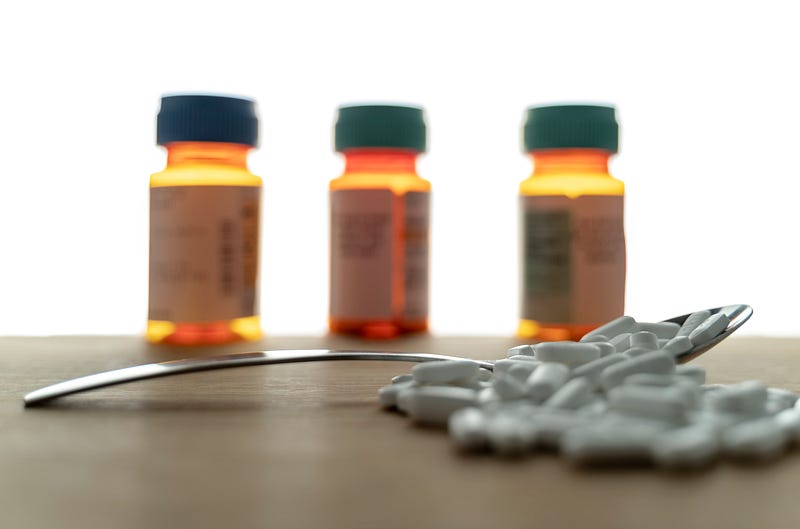
Furanocoumarins affect humans by inhibiting, or blocking, the action of drug metabolizing enzymes. The enzyme most affected is called cytochrome P450 3A4 (CYP3A4). This enzyme is responsible for breaking down nearly 50% of the drugs that humans consume.
This enzyme is found in two places in our body — in our intestines, and in our liver. Consuming grapefruit interferes first with the enzyme levels in our intestines, but larger doses of citrus can cause interference with the liver-located drug inhibiting enzymes as well.
When this enzyme is inhibited, such as by the furanocoumarins in grapefruit, any drugs we consume are broken down much more slowly — which means that more of the drug enters our body, and it sticks around for longer. In some cases, this could lead to an apparent overdose — even when no additional medication was consumed.
So: grapefruit stops our body from breaking down a drug we may take, giving it a stronger effect, for longer.
In some other drugs, such as Allegra, a common antihistamine, furanocoumarins have the opposite effect. These drugs rely on our enzymes to turn them from an inactive precursor into the active drug. When that enzyme is blocked, the drug is stuck in its inactive precursor stage — and we don’t get the effect that we need.
These furanocoumarins are present in other citrus, admittedly at lesser levels. Some medications may recommend that patients avoid citrus entirely — at least until they know how they respond to the combination of citrus plus the drug.
Each person has differing levels of drug metabolizing enzymes, and so some people are more affected by the impact of grapefruit consumption than others — but it’s always a good idea to avoid complications, especially when it comes to our health.
For most of us, grapefruit is a good addition to a diet: it adds fiber, vitamins A and C, potassium, and it’s far lower in calories and sugar than other junk foods that could take its place at breakfast (I’m looking at you, delicious cream-filled chocolate-glazed donuts).
But for those of us who may consume medications, it’s important to read the fine print — namely, to check whether grapefruit or other citrus may interfere with the breakdown of that medication. If this is the case, consuming grapefruit with the medication may result in too little, or too much, of the drug reaching our bloodstream and sticking around in our body.
It’s especially important to consider whether supplements, such as antioxidant or dietary supplements, are derived from citrus. Even if we know that we aren’t sucking down tart grapefruit juice, consuming some supplements that are derived from citrus may have similar drug-amplifying effects.
One last fun fact: the way that scientists first discovered that grapefruit could mess with medications?
They were testing for possible interactions between drugs and alcohol — and they hid the taste of alcohol by mixing it with grapefruit juice. Imagine their surprise when both the control AND experimental groups showed a weird interaction!
Sam Westreich holds his PhD in genetics, focusing on methods for studying the gut-associated microbiome. He currently works at a bioinformatics-focused startup in Silicon Valley. Follow on Medium, or on Twitter at @swestreich.
Have a science-related question? Comment to suggest a topic for my next story. Or check out this related story: