avatarSam Westreich, PhD

Free AI web copilot to create summaries, insights and extended knowledge, download it at here

3029

Abstract

us that preys on bacteria, has a coat made of protein, which is why it’s so rigid. This is NOT the COVID-19 virus, which has a soft, squishy coat of lipids (fat). Image from <a href="https://commons.wikimedia.org/wiki/File:PhageExterior.svg">Wikipedia</a>.</figcaption></figure><p id="a1c9">Viruses are even simpler — but also more variable, depending on the specific virus. A virus contains DNA or RNA in the middle, which is surrounded by a protective layer. For some viruses, this layer is a protein coat (which is what we see in bacteriophages). For other viruses — COVID-19 among them — the protective layer is made of lipids, or fat droplets, with some proteins embedded in the layer.</p><p id="551e">This lipid layer is important; to the bacteria or viruses that have it, this lipid layer is their skin. If it’s disrupted, the organism dies, since all of its insides are now floating away and becoming its outsides.</p><p id="730a">There are a number of different ways that this membrane can be disrupted, “popping” the bacterium or virus. It can be done through osmosis, where the organism absorbs so much water that it explodes. It can be done with a zap of electricity, which is known as electroporation.</p><p id="860f">Or, it can be done by exposing the lipid layer to a surfactant, a chemical that breaks the surface tension. And the most commonly known surfactant? Soap.</p><h1 id="caa9">Just Like When Washing Out Mouths, Plain Ol’ Soap Is Best</h1><p id="6945">Soap is a nifty little molecule.</p><p id="bd4a">If you could see a soap molecule, it would look like a little tadpole; it’s got a round head and a long, skinny tail.</p><p id="1007">The round “head” of a soap molecule is <i>polar, </i>which means it holds a charge and is attracted to water (just like salt, which is made of two polar ions, sodium and chloride, which dissolve nicely in water).</p><p id="c27c">The long, skinny “tail” of the soap molecule, on the other hand, is <i>non-polar</i> — which means that it does not like water at all.</p><p id="755f">When soap is in water, those tails will stick to other particulates in the water — like dirt — while the heads face out, attracted towards the water. This is how soap washes away dirt — the tails cling to the dirt, while the heads are pulled by the water so that the water washes away the soap, and the dirt with it.</p><p id="ede4">When the lipid skin of bacteria or viruses (that have it) is exposed to soap, that skinny tail burrows into the lipid layer. This disrupts the layer and destabilizes it, making it come apart, popping the bacterium or virus.</p><p id="2323">Alcohol works in a similar fashion; the alcohol molecules work their way into the lipid membrane, weakening it until it comes apart, dissolving the bacterium or virus.</p><p id="1eb1"><b>This is especially important for COVID-19: it’s the soap, not any additive in it, that pops the membranes and kills this virus.</b></p><p id="9607">What about antibacterial soaps? What’s so special about them, and are they better

Options

or worse?</p><p id="bb97">As it turns out, there’s no benefit to using antibacterial soap (in this case, against COVID-19). Antibacterial soaps contain an additive, usually a compound called triclosan, that jams up some of the machinery inside bacteria. <a href="http://www.ncbi.nlm.nih.gov/pubmed/14996673">The FDA, however, has found in multiple studies that antibacterial soap is <b>no more effective than normal soap.</b></a></p><p id="3bcb">But since COVID-19 is a virus, that additive does nothing, in any case. It’s the soap part, not the antibacterial part, that matters.</p><p id="857f">So, let’s recap (or, if you scrolled all the way to the bottom of the article because “too long, didn’t read, just tell me the answers”):</p><ul><li>All types of soap work on bacteria, and on viruses that have lipid membranes, by disrupting that membrane so it falls apart and the organism “pops”.</li><li>Since COVID-19 has a lipid membrane, soap will kill it. This doesn’t work on all viruses, since some are protected by protein coats that aren’t broken apart with soap.</li><li>Alcohol also disrupts the lipid membrane, leading to the bacterium or virus popping.</li></ul><p id="542f">And lastly, what about the 20 second rule? Where did that come from?</p><p id="40b7"><a href="https://www.cdc.gov/handwashing/show-me-the-science-handwashing.html">There’s no hard evidence for why 20 seconds is the recommended washing time — but it’s generally accepted that washing for a longer period is better</a>, since it (hopefully) leads to washing all parts of the hands and giving the soap enough time to absorb into, and pop, the membranes of any bacteria or viruses present.</p><p id="ca11">Don’t discriminate when choosing soap — as long as it’s lathering up, leaving bubbles, and acting as a molecular surfactant, it’s killing bacteria or coronavirus!</p><p id="2ef3"><i>Sam Westreich holds his PhD in genetics, focusing on methods for studying the gut-associated microbiome. He currently works at a bioinformatics-focused startup in Silicon Valley. <a href="https://medium.com/@westwise">Follow on Medium</a>, or on Twitter at <a href="https://twitter.com/swestreich?source=post_page---------------------------">@swestreich</a>.</i></p><p id="c2e3"><i>Have a science-related question? Comment to suggest a topic for my next story. Or check out this related story:</i></p><div id="4863" class="link-block"> <a href="https://readmedium.com/science-monday-does-coffee-dehydrate-us-3bba4050e46f"> <div> <div> <h2>Science Monday: Does Coffee Dehydrate Us?</h2> <div><h3>And what about beer? Do our favorite drinks actually strip needed water our of our bodies?</h3></div> <div><p>medium.com</p></div> </div> <div> <div style="background-image: url(https://miro.readmedium.com/v2/resize:fit:320/0*SMwaRwX_x1ZHXX_5)"></div> </div> </div> </a> </div></article></body>

Science Monday: What Soap Types Work on COVID-19?

The science behind how “scrub for 20 seconds” battles a virus
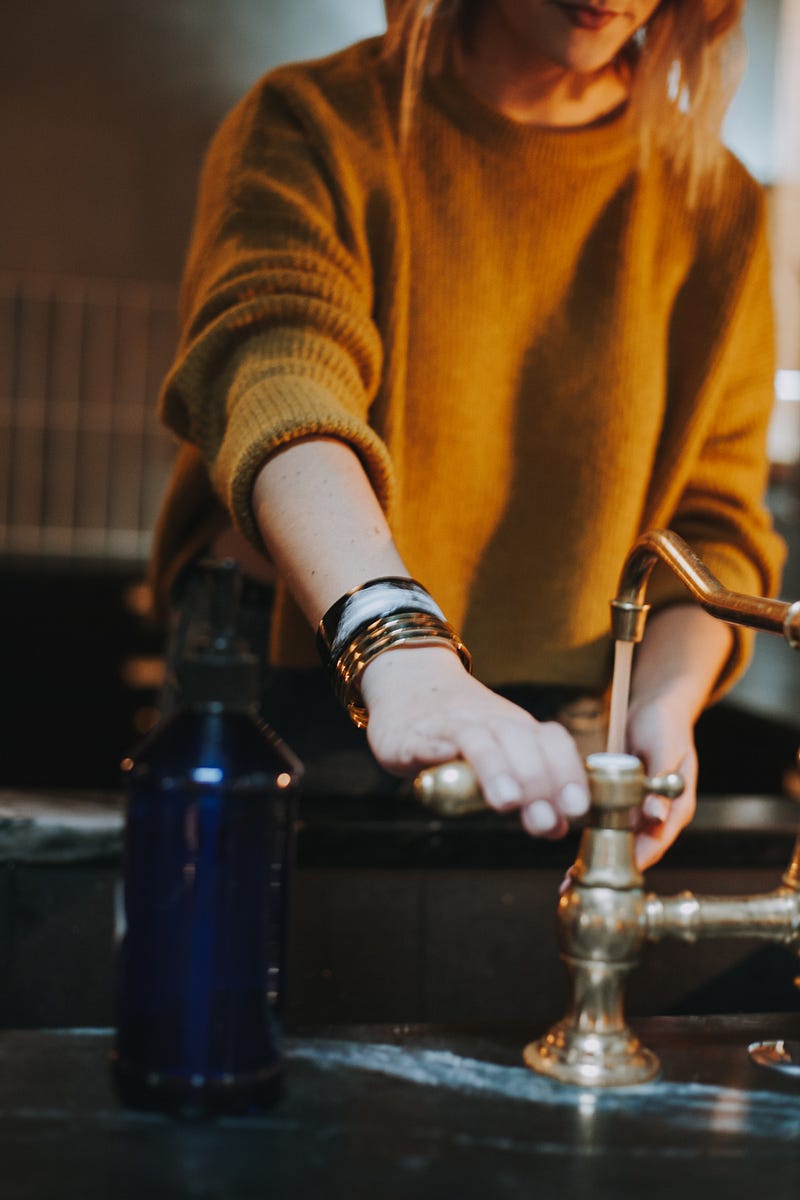
“I hear water running, young lady, but I don’t see any SOAP! Why don’t I see SOAP in use??” — my mother, probably, if she saw this photo. Photo by Christin Hume.

Even when I was a child, my parents were always instructing me to wash my hands. Now, with the spread of COVID-19, this same piece of advice from my childhood is once again ever-present.

It’s probably the single most-repeated advice for keeping safe from this disease, and it comes from all sources. Even in states where formal shelter-in-place orders haven’t been issued, the call has still gone out to keep your hands clean, especially after going outside or making contact with others.

But while hand-washing removes visible dirt, it’s always a little harder to tell what effect it’s having on the invisible bacteria and viruses that are present. I’ve previously written about what happens to the bacteria after we kill them, either with antibacterial soap or with hand sanitizer.

One interesting discussion point that’s come up in the past is the fact that, while many of our hand soaps proudly proclaim that, thanks to additives, they are antibacterial, COVID-19 is a virus.

Does antibacterial soap work on viruses?

Does hand sanitizer work on viruses?

What about normal soap, the old-fashioned bar kind that we find in hotel rooms and our grandparents’ houses? Is that enough to fight COVID-19?

Let’s find out!

Some Viruses Can Hold Their Liquor

Bacteria and viruses are relatively simple organisms. Because bacteria are only a single cell, you can think of them as a water balloon, filled with their DNA and proteins and held together by a thin membrane.
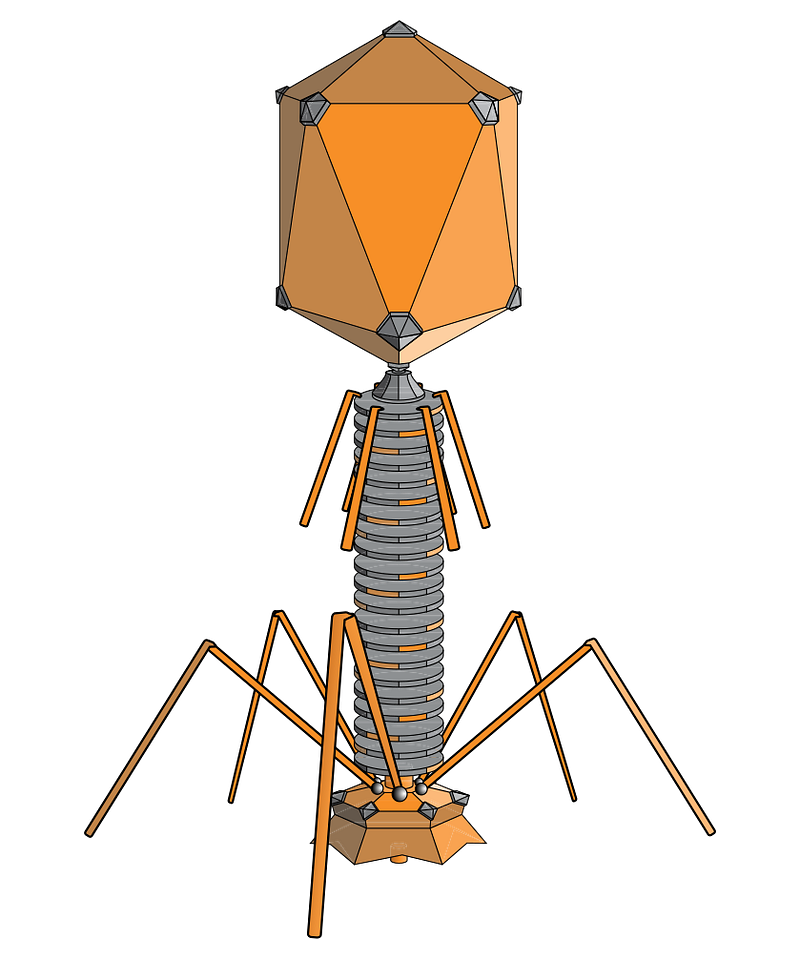
This bacteriophage, or virus that preys on bacteria, has a coat made of protein, which is why it’s so rigid. This is NOT the COVID-19 virus, which has a soft, squishy coat of lipids (fat). Image from Wikipedia.

Viruses are even simpler — but also more variable, depending on the specific virus. A virus contains DNA or RNA in the middle, which is surrounded by a protective layer. For some viruses, this layer is a protein coat (which is what we see in bacteriophages). For other viruses — COVID-19 among them — the protective layer is made of lipids, or fat droplets, with some proteins embedded in the layer.

This lipid layer is important; to the bacteria or viruses that have it, this lipid layer is their skin. If it’s disrupted, the organism dies, since all of its insides are now floating away and becoming its outsides.

There are a number of different ways that this membrane can be disrupted, “popping” the bacterium or virus. It can be done through osmosis, where the organism absorbs so much water that it explodes. It can be done with a zap of electricity, which is known as electroporation.

Or, it can be done by exposing the lipid layer to a surfactant, a chemical that breaks the surface tension. And the most commonly known surfactant? Soap.

Just Like When Washing Out Mouths, Plain Ol’ Soap Is Best

Soap is a nifty little molecule.

If you could see a soap molecule, it would look like a little tadpole; it’s got a round head and a long, skinny tail.

The round “head” of a soap molecule is polar, which means it holds a charge and is attracted to water (just like salt, which is made of two polar ions, sodium and chloride, which dissolve nicely in water).

The long, skinny “tail” of the soap molecule, on the other hand, is non-polar — which means that it does not like water at all.

When soap is in water, those tails will stick to other particulates in the water — like dirt — while the heads face out, attracted towards the water. This is how soap washes away dirt — the tails cling to the dirt, while the heads are pulled by the water so that the water washes away the soap, and the dirt with it.

When the lipid skin of bacteria or viruses (that have it) is exposed to soap, that skinny tail burrows into the lipid layer. This disrupts the layer and destabilizes it, making it come apart, popping the bacterium or virus.

Alcohol works in a similar fashion; the alcohol molecules work their way into the lipid membrane, weakening it until it comes apart, dissolving the bacterium or virus.

This is especially important for COVID-19: it’s the soap, not any additive in it, that pops the membranes and kills this virus.

What about antibacterial soaps? What’s so special about them, and are they better or worse?

As it turns out, there’s no benefit to using antibacterial soap (in this case, against COVID-19). Antibacterial soaps contain an additive, usually a compound called triclosan, that jams up some of the machinery inside bacteria. The FDA, however, has found in multiple studies that antibacterial soap is no more effective than normal soap.

But since COVID-19 is a virus, that additive does nothing, in any case. It’s the soap part, not the antibacterial part, that matters.

So, let’s recap (or, if you scrolled all the way to the bottom of the article because “too long, didn’t read, just tell me the answers”):

  • All types of soap work on bacteria, and on viruses that have lipid membranes, by disrupting that membrane so it falls apart and the organism “pops”.
  • Since COVID-19 has a lipid membrane, soap will kill it. This doesn’t work on all viruses, since some are protected by protein coats that aren’t broken apart with soap.
  • Alcohol also disrupts the lipid membrane, leading to the bacterium or virus popping.

And lastly, what about the 20 second rule? Where did that come from?

There’s no hard evidence for why 20 seconds is the recommended washing time — but it’s generally accepted that washing for a longer period is better, since it (hopefully) leads to washing all parts of the hands and giving the soap enough time to absorb into, and pop, the membranes of any bacteria or viruses present.

Don’t discriminate when choosing soap — as long as it’s lathering up, leaving bubbles, and acting as a molecular surfactant, it’s killing bacteria or coronavirus!

Sam Westreich holds his PhD in genetics, focusing on methods for studying the gut-associated microbiome. He currently works at a bioinformatics-focused startup in Silicon Valley. Follow on Medium, or on Twitter at @swestreich.

Have a science-related question? Comment to suggest a topic for my next story. Or check out this related story:

Science
Health
Coronavirus
Covid-19
Soap
Recommended from ReadMedium