
Science Monday: When I Kill Bacteria, Where Do They Go?
“Hand sanitizer, check… but now, are my hands covered in tiny bacterial corpses?”
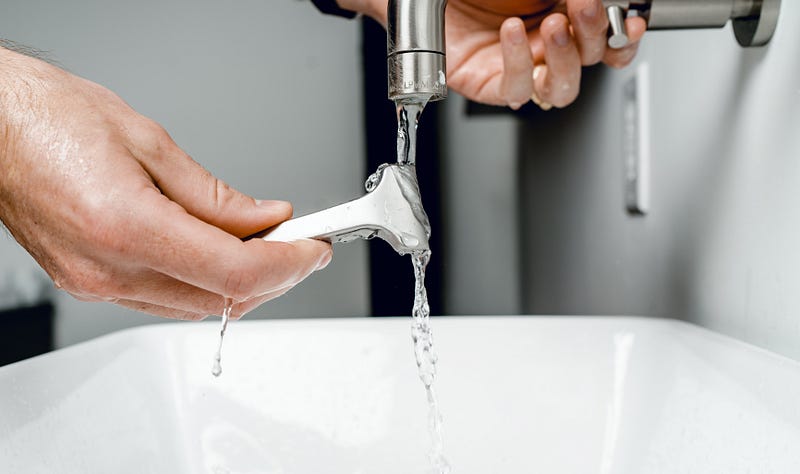
Hand sanitizer is great.
What’s that? I’ve got a delicious muffin in front of me, but I’ve been using my hands to dig holes in the backyard all day, occasionally squishing mosquitos, and now they’re covered in grease and grime and countless species of nasty bacteria?
No problem! Squeeze out a bit of this clear goop, rub it around on my hands until it evaporates, and presto! Bacteria gone!
Right? The bottle says it kills 99.9% of bacteria.
So they’re dead, at least.
But are they really gone?
Dead But Not Forgotten (Or Really Gone)
At this point, we should probably clarify the difference between a live versus a dead bacterium.
Live bacteria are metabolically active — they’re eating things, growing, reproducing, and moving about (if they have the components necessary to move). They’re always reproducing; some forms of Escherichia coli can reproduce, doubling their population, in as few as 12 minutes!
Dead bacteria are either stuck and unable to reproduce, or they’ve been blown to pieces.
Dead bacteria, on the other hand, are no longer metabolically active. They may still be blown apart into little fragments, no longer held together by a nice cell membrane (like popping a balloon). Or, they may still be intact — but their metabolism is blocked somewhere, like jamming a stick into the wheel of a bike, and they can no longer grow or reproduce.
So, bacteria are either alive and dividing, or they’re dead. If they’re dead, they’re either stuck (arrested) and unable to reproduce, or they’ve been blown apart into bits.
Got it? Good! Now, let’s look at how we kill bacteria.
When I Drink Alcohol, I Just Go To Pieces
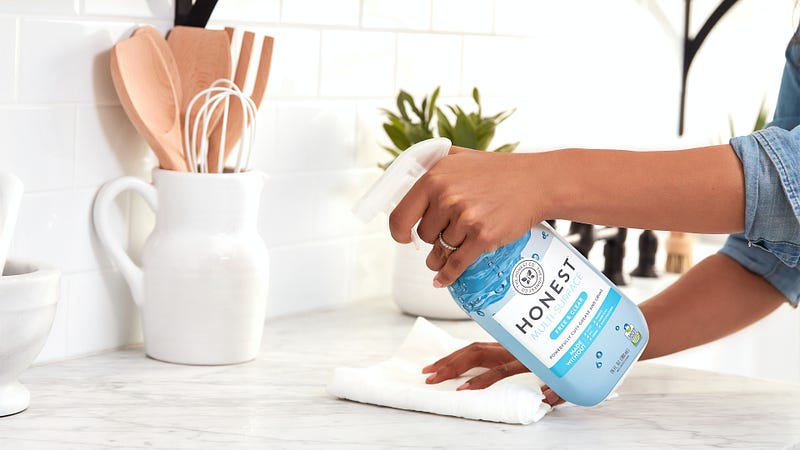
Hand soap and hand sanitizer work in different ways.
When I peruse the hand sanitizer aisle at my local superstore, most of the mixtures that promise to “kill 99.9% of germs” do so by including an ingredient called triclosan. Triclosan uses the “stick through the bike spokes” method of killing bacteria — it locks up one of the enzymes that a bacterium needs to produce fatty acids. Fatty acids are a vital component of the membrane (balloon skin) of the bacterium.
No fatty acid synthesis? No membrane synthesis.
No membrane synthesis? No more dividing into multiple offspring — essentially, no more growth.
No more growth? The bacterium is effectively dead.
Hand sanitizers, on the other hand, generally contain alcohol. Alcohol doesn’t block a part of a bacterium’s machinery; instead, it breaks apart the bacterial membrane, causing the bacteria to literally dissolve and come apart at the seams. It also denatures bacterial enzymes, meaning that it melts the machinery used by bacteria so it can no longer properly function.
This is why, in movies, the injured action hero often grits his teeth and pours some vodka onto his bullet wound. The alcohol will pop any bacteria present, so he can fish around for the bullet without risking further infection.
(By the way, the outer layers of our skin are dead, dehydrated skin cells, which shield our own cells so that the alcohol doesn’t hurt our own body.)
So, antibacterial soap locks the bacteria so they cannot reproduce, while alcohol in hand sanitizers breaks the bacterial cells apart into fragments.
New Death Metal Song Idea: My Hands Are A (Bacterial) Graveyard
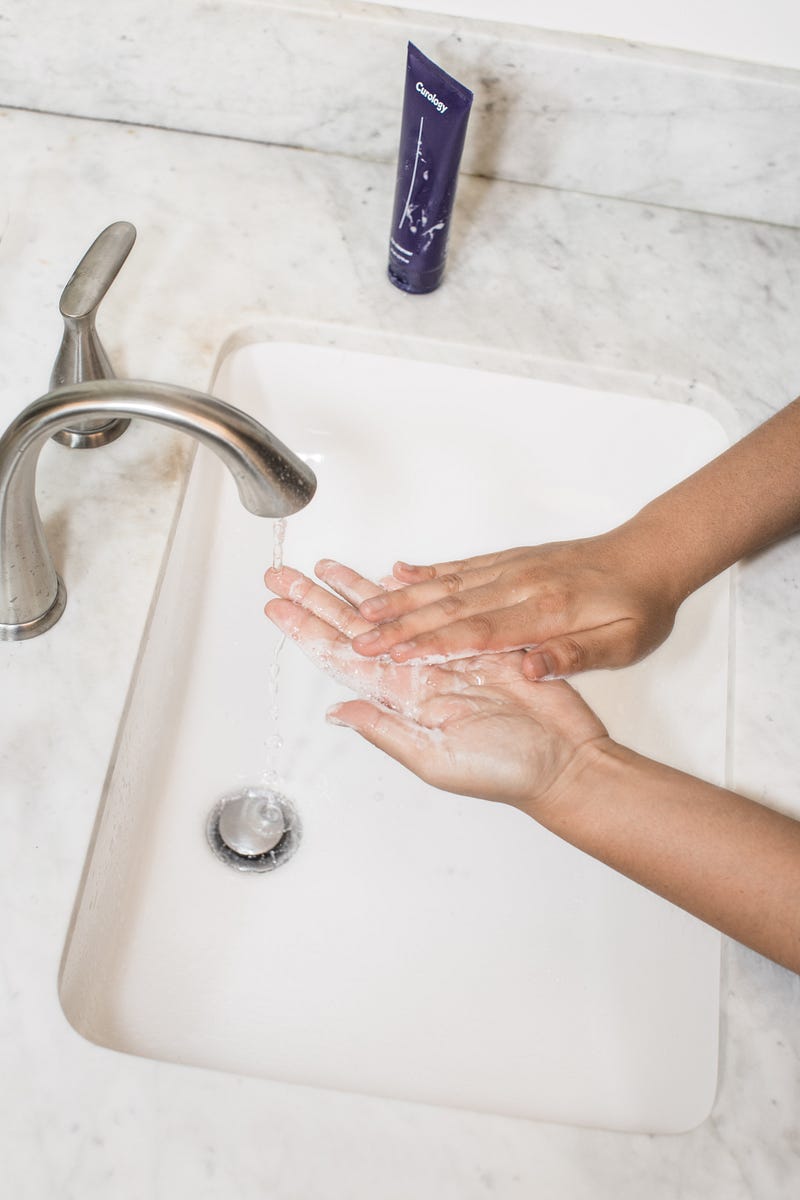
Even after killing the bacteria, however, they’re still present.
“Ah,” you might say, “but I’m also washing my hands with soap and water! Won’t that carry away the corpses down the drain, leaving my hands immaculate and bacteria-free?”
Unfortunately not. At the microscopic level of bacterial cells, water doesn’t have the same properties, and it won’t remove individual cells. Water can carry away large chunks and dirty debris, but it won’t remove the bacterial corpses.
If I wanted to destroy the bacterial corpses now covering my hands, there are a few different methods, none of them very pleasant. (The name for removing fragments or components left behind by bacteria, by the way, is depyrogenation, as these little fragments are known as pyrogens.)
The first method for depyrogenation is heat. Remember our injured action hero? Remember how he takes his knife and holds it in a flame to heat it up before using it to cut out the bullet?

Bacterial corpses are made mostly of proteins, which are long chains of amino acids folded into complex shapes. Heating these proteins makes them denature, or melt, and they can no longer perform their function. Heat is the most commonly used method to fully destroy bacteria, including any proteins they leave behind.
The second method is filtering. If you’re trying to make sure that a liquid, such as drinking water, is completely free of bacteria, you can pass it through a very fine filter. This filter has such small holes that even little bacterial proteins won’t make it through.
The final method is by using chemicals, such as bases, to break down and destroy the bacterial fragments. Hydrogen peroxide is one of the most commonly used chemicals to break down any lingering bits of bacteria.
“I’m not putting hydrogen peroxide on my hands. Am I cursed to forever carry around dead bacteria?”
I’ve got good news, bad news, and some more good news for you.
The first bit of good news is that no, you won’t be carrying around dead bacteria on your hands — at least not for more than a few seconds, in the time right after you apply hand sanitizer or wash with antibacterial soap.
The bad news is that, instead, you’ll be carrying around live bacteria. Look at your hands right now. No matter what you’re doing, I can promise you that they’re covered with live bacteria.
So’s the rest of your skin. Your mouth is full of bacteria, and they’re coating your teeth. They’re in your nose, on your clothes, between your toes.
But the second bit of good news: this is okay. We’ve evolved with bacteria. The bacteria that we find growing on our skin have evolved alongside us, and our body is totally happy with them existing there — as long as they stay on the outside of our skin.
Even if we don’t wash our hands before putting food in our mouth, our mouth has its own bacteria that live there, and they don’t make much room for newcomers. Bacteria that transfer from our hands to our food end up in the stomach, where our stomach acid makes short work of them.
We mainly want to (temporarily) cleanse our hands of germs when we’re doing something that risks infection. This could be working with raw meat or feces, which can contain harmful bacteria. This could be bandaging a cut or scrape that pierces the skin and provides a potential access point for bad bacteria to gain access. Or this could be working with the elderly or infants, who have weakened immune systems.
Finally, one last bit of good news: over time, the bacteria present on our hands, skin, and bodies will reset back to a ground state. If I dip my finger in salmonella, it could cause a problem if I stick that finger into my nose or mouth; but if I were to just sit and do nothing, the salmonella bacteria would die in 4 to 6 hours, and be replaced by my normal skin bacteria.
So, to wrap up: when I kill bacteria on my hands, where do they go?
Even if they’re “dead” (either by stopping them from dividing with antibacterial soap components like triclosan, or by blowing them up with alcohol-based hand sanitizers), the bacterial corpses still stick around. This isn’t too much of a problem, however, since they’re no longer able to grow.
After a short period of time, they’ll be replaced by new bacteria, as we always have base levels of bacteria living on our skin (and on pretty much any other surface).
These methods can help remove dangerous bacteria we may pick up (such as by touching raw meat), but we can’t keep our hands sterile — and that’s okay.
Want to know more about how alcohol based hand sanitizer works? Here’s a great video from the American Chemical Society:
Sam Westreich holds his PhD in genetics, focusing on methods for studying the gut-associated microbiome. He currently works at a bioinformatics-focused startup in Silicon Valley. Follow on Medium, or on Twitter at @swestreich.
Have a microbiome-related question? Comment to suggest a topic for my next story. Or check out this related story:


