
Antioxidants Are Bullshit for the Same Reason Eggs Are Healthy
Remember back when eggs were unhealthy? That same mistake is now fueling the antioxidant craze — don’t be suckered.
Do you remember the red wine craze, back in the second half of 2006 and early 2007?
A small pilot study suggested that resveratrol, a compound found in wine, may help prolong lifespan in mice. Now, all it takes is a quick scan of the study to find a whole handful of red flags:
- Humans are not mice, and many observations in mouse models end up not happening in humans.
- This was a small study and larger meta-analyses have failed to replicate its effects.
- Perhaps most importantly is the dosage: the amount of resveratrol consumed by these mice is equivalent to drinking multiple hundreds of glasses per day of red wine, or popping dozens of supplement pills.
Despite these shortcomings, the study was widely publicized, and the public went crazy. Resveratrol was featured on Oprah’s television show, and endorsed by Dr. Oz. (One company used this for its marketing strategy, and was later sued by Oprah and Dr. Oz for falsely claiming that their specific product received an endorsement.)
Red wine started flying off the shelves, even though, as mentioned above, no one can conceivably even manage to drink enough red wine per day to get to the resveratrol doses used in the study. After all, people insisted, red wine is healthy! People who drink it live longer, probably because it’s full of all those antioxidants.
Antioxidants. What a buzzword! It’s touted on way too many foods as a panacea for all ailments, a cure for every disease, and my wife takes great pleasure in teasing me by pointing out foods that advertise they’re a good source of antioxidants.
The problem? Most antioxidant-rich food is healthy in spite of, not because of the level of antioxidants.
“It’s the egg problem, all over again!” I tell my wife, who rolls her eyes.
But first, let’s explain what an antioxidant is — because even though most people know that it’s “good,” they don’t know what an antioxidant actually is, or why we might want them.
Antioxidants, Nature’s Equivalent of Nitrogen Gas in Chip Bags
First, what is an antioxidant? Is it:
A) A chemical linked with potentially extending the telomeres in cells, allowing them to divide longer before dying
B) A chemical that raises the pH of our blood, removing acidity and preventing damaging acid effects on our cells
C) A chemical that binds to free radicals, oxygen atoms with an unpaired electron, to prevent them damaging our cells
All three of these are real, semi-BS health effects, but if you guessed answer C, you’d be correct!

The simple explanation is this: as our cells perform metabolic processes — breaking down molecules to make the energy to power our bodies — they generate waste products. One of these waste products is free radicals — oxygen atoms, but with an odd number of electrons.
Electrons like to be in pairs, so they can form a stable orbit in an atom. When an atom has an unpaired electron, it will rip that electron away from something near it. In our cells, this means that free radicals can cause a chain reaction of swiped and stolen electrons, which leads to damage to our cellular machinery.
Antioxidants, on the other hand, are molecules that carry an extra electron. They’re happy to hand off their extra, excess electron to neutralize a free radical.
This is good for our cells — if we have antioxidants in abundance, they’ll contribute their bonus electrons to the free radicals, neutralizing them and preventing them from damaging our cells.
That sounds great, doesn’t it? Seems like antioxidants are amazing, and we should keep a big stock of them in all our cells, all the time, to make sure we’re safe from dangerous free radicals!
This is true — but there’s a missing step. And to understand why adding resveratrol, or any other antioxidant, to our diet isn’t beneficial, we need to look at the history of eggs in our diet.
Them Eggs Are Out To Kill Me
Tell me if you’ve heard this one: if you’ve got high cholesterol, you should avoid eating eggs. Eggs are full of cholesterol, and you want to instead pick a low-cholesterol diet.
Seems plausible, right? If you have high cholesterol, more cholesterol is the last thing you’d want to eat.
But it’s a myth, and eggs are perfectly safe to eat, even if you’ve got sky-high cholesterol.

See, there’s one big difference: eggs are full of dietary cholesterol, while heart attacks are linked to blood cholesterol level. And while some consumed cholesterol makes it into your blood, it doesn’t have much overall effect on your blood cholesterol levels.
If you never ate a single molecule of dietary cholesterol, you’d still have cholesterol in your blood. Your body needs a certain level of cholesterol in order to maintain the membranes around cells. If you aren’t eating cholesterol in your diet, your body synthesizes it in your liver and deposits it in your blood. If you are eating plenty of cholesterol, your liver senses that there’s plenty coming in, and ceases production.
You end up with about the same amount of cholesterol in your blood either way — whether you eat it, or make it internally.
This doesn’t mean that you can feast on anything you want without impacting your cholesterol levels. Eating foods high in saturated fat can shift the balance of cholesterol from high-density (HDL) to low-density (LDL). You want to avoid low-density cholesterol, so unsaturated fats (avocados) are a better choice than saturated fats (red meat and butter).
Weren’t We Talking About Antioxidants?
The dietary myth of eggs causing heart attacks is interesting, but how does this relate back to antioxidants, and the uncontrollable eye twitch I develop whenever I see this as big, splashy branding on a package of processed food?
Here’s the heart of the article, the thing to highlight on Medium so other people can see it: just like cholesterol, our body naturally produces antioxidants. We naturally make all of the antioxidants that we need to neutralize free radicals, right in our own bodies.
And furthermore, most of the antioxidant molecules that are found in food are NOT the same type of antioxidant molecules that our own bodies produce! Most of the ones in food aren’t even useable to us! Antioxidants are complex molecules, and we don’t just suck them straight into our bodies — we rip them into tiny little constituent pieces, which means that, by the time they’re inside our bodies, they aren’t going to be antioxidants any longer.
Most of them aren’t even absorbed. They end up passing into our large intestine, where they become food for our gut microbes instead.
And don’t just take the word of a random (top!) science and health writer on Medium; the USDA removed its database of antioxidant compounds from the website, citing that they found no evidence of benefit from consuming antioxidants.
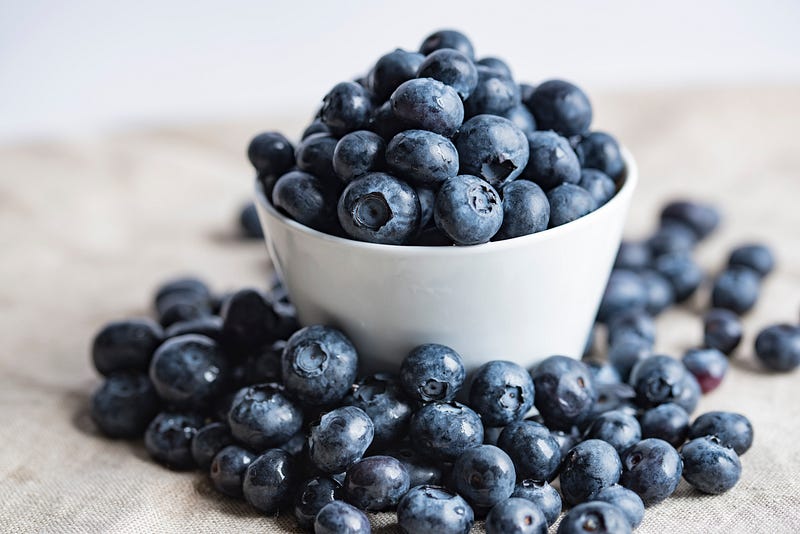
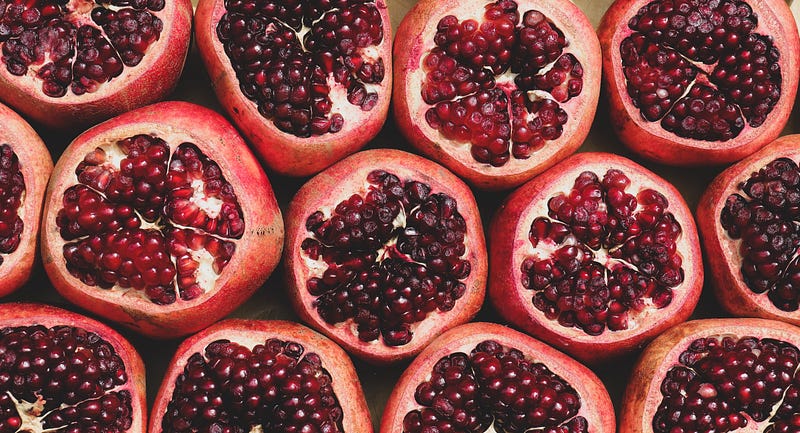
But what about all the health benefits of antioxidants? It turns out that the benefits of eating these foods is probably in spite of, not because of, their antioxidant level. After all, foods like blueberries, spinach, pomegranates, beans, and kale are all rich in vitamins and minerals, without a ton of calories. The antioxidants from these foods don’t do anything for the human body — but the vitamins and minerals certainly provide a benefit.
“So in the end, what should I do?”
In the end, don’t choose foods based on antioxidants. Eating antioxidant-rich foods, such as kale, beans, spinach, fresh berries, and nuts, are all good dietary choices — but not because of the antioxidant compounds that they contain.
Instead, choose these foods because they’re high in vitamins and nutrients. You should, however, worry about taking supplements that advertise that they contain antioxidants. Not only are these supplements unlikely to provide any benefit, but they can even be dangerous — some antioxidant compounds, such as selenium, can even be deadly at high doses.
And whenever you see some food claiming that its primary benefit is that it’s “chock full of antioxidants”, your bullshit detector should start going off on high alert. Foods should be healthy despite their antioxidant content, not because of it.
Oh, and feel free to eat as many eggs as you want.
Sam Westreich holds his PhD in genetics, focusing on methods for studying the gut-associated microbiome. He currently works at a bioinformatics-focused startup in Silicon Valley. Follow on Medium, or on Twitter at @swestreich.
Have a science-related question? Comment to suggest a topic for my next story. Or check out this related story: