
Ryan, You Make Me Want to Be a Lyrical Writer!
Ah, how the poetry illuminates the reading and the message.
In humor, it’s Roz Warren. For writing, it’s Shaunta Grimes.
But for the sheer joy and beauty of the written word, the places it can explore, and how it can sing, I look to Ryan Frawley.
I often warm up by reading one of his pieces. Light or heavy, it’s pure delight. My fingers hover over the computer keys, saying, watch this!
I first encountered him in a wonderful travel writing pub, Writers On the Run. These were not just recommendations on accommodations and succulent meals.
These were stories of the transformative power of place. For me, Ryan’s did that the best. His descriptions of place are not just vivid, they’re evocative magic.
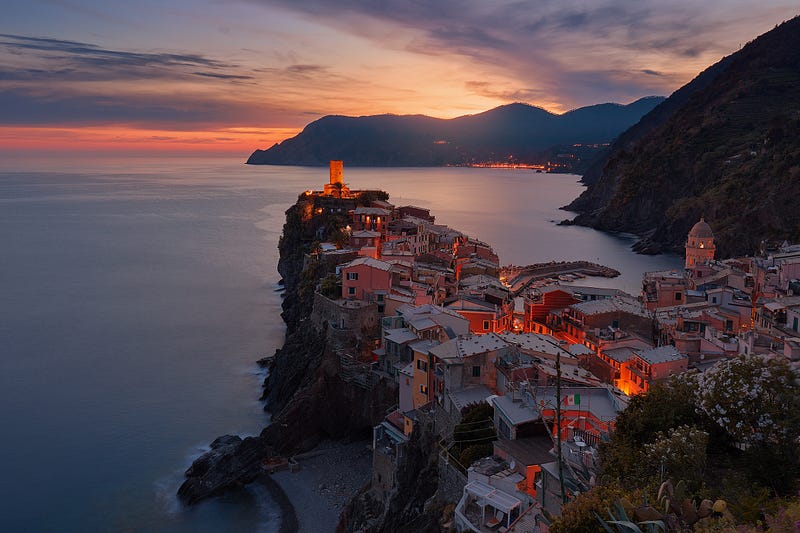
I not only saw and smelled what he saw and smelled on the sun-kissed Mediterranean shores of Southern Italy, but I felt his pangs at leaving a place where life is so simply lived. I was hooked. I had to read more.
Ryan writes for P.S. I Love You and Illumination, among other pubs. One of his recent pieces here is:
No One’s Going to Find Your Tweets on the Beach
Tweets on the Beach sounds like a pink-umbrella drink in a coconut shell next to your cell phone. But the centerpiece of his story is a message in a bottle that washed ashore 150 years later. Not just a story, but an unsolved mystery with a bit of mystique.
As Ryan points out, this gets our attention in a way that thousands of tweets per second hurling through cyberspace do not. Even though it’s one of the least effective SOS’s — outranking only the ABBA song by the same name, there’s a story behind the iceberg tip that made it onto the curl of paper.
We’re curious story seekers by nature. Did she survive her ordeal? We want to know immediately. And the fact that we can’t in this age of instant information catches us where we live. And makes us think.
Not only about what kinds of people put messages in bottles and for what kinds of reasons, but about our own forms of communication. And their permanency.
Will my blog posts last 150 years like her missive? Are any worth saving? If so, in what form — ebook? Are they worth killing trees to put on paper?
Ryan writes: …there’s a special magic in the physical, the carved graffiti you can run your fingers over, the paper that yields as a pen kisses it.
So it’s tactile!
Which explains why so many of us cling to our books, rather than go 100% digital. Is it the smooth feel of paper under our fingers, or the texture of beveled edges tickling our palms? Remember cracking open new textbooks on the first day of school, nose-tickling with that fresh ink smell?
These provocative ideas are elicited with his command of language. I’m not sure what to call it — poetic? Literary? Soulful? When he writes about the fate of Josephine, he could have ended with the word downward. But look at the parenthetical he added:
Or maybe nothing was ever heard from her again, and she slipped at last into the steel-colored water of the North Pacific, drifting ever downward, deaf to the music of whales that hummed in the ocean all around her.
Without it, my mind’s eye had an image of her sinking out of view into bitter cold rising waters. With it, my mind’s camera changed angle. Now I’m under the surface seeing her floating, skirt swirling around her jelly-fish like, surrounded by whales singing to each other, hailing this new creature in their midst.
Now, her death becomes a ballet, choreographed by Ryan’s Balanchine. Did we need that detail to understand his point? Nope. Does it add to our reading pleasure? You betcha!
This Is Life in the Amphitheater
Who else do I know who can start in the Roman Amphitheater surrounded by gladiator’s ghosts, meander over to mindfulness, and bring us back to the broken statues and history’s whispers to show us their shimmering beauty?
If this is not lyrical writing, I don’t know what is.
But it’s not done for effect or to show off. It’s done, IMHO, to help us see, feel, hear and smell the details Ryan starts from, so we’re with him on this metaphysical journey.
If the devil is in the details, as we shall see below, then those carefully selected and described details are the breadcrumbs that got Hansel and Gretel, or in this case, we readers all the way home.
According to Ryan, …staying mindful allows you to have a richer experience of life. Every second, fully inhabited, contains the entire universe.
So there is the before of the amphitheater environs and the after — after this slowing down to fully inhabit. The after painted with words glowing thusly:
A slow train pulled us back to the city, groaning along smiling steel rails while the trees marched past. The sudden black gulf of a tunnel glowed with firefly phone screens. The sun returned with a yell. Why shouldn’t it yell? Why shouldn’t we tip back our heads and sing? We only recognize beauty when we see it infrequently, but it surrounds us everywhere. It’s the water we swim in.
While the prose is eloquent, the point I get is not that the words transform the experience in hindsight, but that the mindfulness in the moment reveals the beauty of even the most mundanities.
Don’t Be Afraid of the Dark Source of Creativity
In this piece, Ryan unpacks the creative process for us, illustrated by ancient myths and Biblical allegories. We refer to God as our Creator and are in awe of all that She created as well as the mystery of Creativity itself.
We are never so alive as when we emulate that aspect of the Divine.
Words are how we writers imitate Nature:
You learned what words were, and you saw that they were magical. Every spell requires an incantation. Nature makes magic in silence, a bright star pulling trees out of wet dirt. But we need words to weave our spells.
Whether it’s writing, in our cases, or art or music, we approach God when we make something out of nothing.
But from whence do our creative impulses and ideas spring?
In our dichotomized duality-driven cultural constructs, heaven is above and full of lofty light. Hell is below, dark and forbidding.
Our willingness to plumb those depths, exploring our “sinfulness,” or as I write about in TBI, our “bad” side, leads to the juiciest dramas and images for our artistic output.
As Ryan explains: …we all know it’s the devil that has the best tunes. Robert Johnson didn’t go to the crossroads at midnight to meet with God. It’s the dark powers that have dominion over the unconscious, the bottomless source of all inspiration. Monsters move down there.
We need those monsters for our plots, our poetry, our pleasure. We transform them on the page, often reversing the impact they’ve had on our lives:
Your stories come to you in the language of hell. It’s your job to write what they say to a tune the angels can sing.
So whether you’re here for the mythology, the philosophy, the zen-like reverence beholding nature, lessons in lyricism or, like me, all of the above, I dare you to be disappointed with the writings of Mr. Ryan Frawley.
A special thank you to Dr. Mehmet Yildiz for encouraging peer recognition:
Marilyn Flower writes political humor and satire to delight socially and spiritually conscious folks. She’s a regular columnist for the prison newsletter, Freedom Anywhere, where she writes about faith and prayer. Five of her short plays have been produced in San Francisco. Clowning and improvisation strengthen her resolve during these crazy times.


