avatarWorld As One 4PEACE

Free AI web copilot to create summaries, insights and extended knowledge, download it at here

3704

Abstract

fertilizer consumption. China restricted exports in 2021 and Belarus’s potash industry has been the target of USA and European sanctions.</p><blockquote id="519a"><p>Read more about what’s happening in the global fertilizer industry with this story I published on Medium about Nutrien Ltd.’s CEO transition: <a href="https://readmedium.com/what-went-down-at-the-worlds-largest-potash-producer-nutrien-ltd-c174d19e403d">https://readmedium.com/what-went-down-at-the-worlds-largest-potash-producer-nutrien-ltd-c174d19e403d</a></p></blockquote><p id="bcf2">It shows in the diagram that Russia leads over all other countries in Brazil’s nitrogen (N) fertilizer import dependency. With China’s fertilizer currently out of the picture, this scenario is likely to see more Russian imports.</p><p id="29b4">As mentioned earlier, Russia’s Acron Group has been the target of a Countervailing Duties (CVD) dispute at the United States International Trade Court. The United States’ largest nitrogen and ammonia producer, CF Industries,<a href="https://www.federalregister.gov/documents/2021/12/03/2021-26313/urea-ammonium-nitrate-solutions-from-the-russian-federation-preliminary-affirmative-countervailing"><b> petitioned</b></a> the court alleging that Russia’s subsidies of urea ammonium nitrate solutions (UAN) put Amercian producers and exports at an unfair advantage in the marketplace.</p><p id="4f9f">It’s likely that Russia will lose the case, because the preliminary determination was already ruled in favor of CF Industries. This effectively will put Acron Group out of the American UAN marketplace, where it was one of the leaders. Russia probably intends to continue exporting as much nitrogen fertilizer as it can to countries who need it. Brazil will be one of its main targets.</p><div id="e01b" class="link-block"> <a href="https://readmedium.com/the-concept-of-fertilizer-diplomacy-b710b2fb1a35"> <div> <div> <h2>The Concept of Fertilizer Diplomacy</h2> <div><h3>On May 3, 2022, Brazil announced that the government was taking a trip to North Africa for the purpose of engaging…</h3></div> <div><p>medium.com</p></div> </div> <div> <div style="background-image: url(https://miro.readmedium.com/v2/resize:fit:320/0*jfihIdZyTYlLcH_c)"></div> </div> </div> </a> </div><h1 id="2ef1">Kazakhstan’s Dependence on Russia for Exports</h1><p id="e1cb">On <a href="https://eurasianet.org/amid-sanctions-kazakh-firm-stops-supplying-russian-steelworks"><b>18 May 2022</b></a><b> </b>Kazakhstan’s<b> </b>largest iron-ore exporter and enricher, Sokolov-Sarybai Mining Production Association (SSGPO), decided to temporarily stop supplying Russia’s Magnitogorsk Iron and Steelworks (MMK) located in Siberia.</p><p id="aa01">Russia’s MMK responded by <a href="https://www.vedomosti.ru/business/articles/2022/05/17/922281-posle-otkaza-kazahstana-metalloinvesta"><b>blaming</b></a> the situation on USA and Western sanctions.</p><p id="5a3f">Iron-ore mining projects in <a href="https://readmedium.com/crude-oil-iron-ore-are-signaling-a-reboot-in-the-global-commodity-supercycle-2e87325a8a05"><b>Guinea</b></a> reveal that strong demand for metals is going to see an upside during the <a href="https://readmedium.com/goldman-sachs-bull-market-for-battery-metals-is-over-ab3a41e29d48"><b>global commodity supercycle</b></a>, irrespective of geopolitics, as countries like China and Australia compete for supply and demand of iron-ore and other metals.</p><p id="5b88">That’s why this most recent situation between Kazakhstan and Russia should not b

Options

e taken lightly. Just look at what happened on the Caspian Pipeline Consortium (CPC) to understand the geopolitical nature of energy and commodities right now.</p><div id="1396" class="link-block"> <a href="https://readmedium.com/how-russia-disrupted-the-caspian-pipeline-consortium-cpc-and-global-supplies-in-2022-9fc1799eca6e"> <div> <div> <h2>How Russia Disrupted the Caspian Pipeline Consortium (CPC) and Global Supplies in 2022</h2> <div><h3>I wrote this story due to a report on 3 June 2022 that Kazakhstan would change the name of its vital oil exports to…</h3></div> <div><p>medium.com</p></div> </div> <div> <div style="background-image: url(https://miro.readmedium.com/v2/resize:fit:320/0*lfPMABtw09eaVYfY.jpg)"></div> </div> </div> </a> </div><p id="05c5">The<a href="https://forumspb.com/en/"><b> St. Petersburg International Economic Forum</b></a> was used as a stage for Russia to show the world how it is committed to its political agenda.</p><p id="622e">In the words of Russia’s President Vladimir Putin:</p><p id="e172"><i>The Forum’s anniversary is taking place at a difficult time for the entire international community. The mistakes of Western countries in economic policy over many years and illegitimate sanctions have led to a wave of global inflation, the disruption of usual supply chains, and a sharp increase in poverty and food shortages. Yet, as can be the case, along with these challenges, new prospects are emerging. This is why the Forum’s slogan — New Opportunities in a New World — seems so relevant.</i></p><p id="5f41">“New Opportunities in a New World” sounds like classic revisionism, but it also indicates how important Russia is — or at least thinks it is — to the global commodity supercycle. For instance, China’s President and Chairman <a href="https://www.reuters.com/world/europe/putin-dismisses-stupid-western-sanctions-blitzkrieg-2022-06-17/"><b>Xi Jin Ping</b></a> stood by Russia at the St. Petersburg Forum in claiming that <a href="https://www.cnn.com/2022/06/17/europe/russia-president-vladimir-putin-speech-spief-intl/index.html"><b>“the era of the unipolar world”</b></a><b> </b>being<b> </b>led by the United States was over.</p><p id="1856">While most people will understandably focus on the inhumane war effort launched by Russia against Ukraine, with the surge of international refugees and internally displaced peoples (IDPs) all over the world, the Global Commodity Supercyle is driving the economic power of countries like Russia.</p><p id="21e1">This allows Russia to revise the whole situation in the post-Soviet territories of Central Asia. Kazakhstan is worried — extremely — so the country had to use the St. Petersburg Forum as a way to show the world that its <a href="https://eurasianet.org/kazakhstan-russia-frictions-over-ukraine-war-go-public"><b>territorial integrity</b></a> is secure in the face of looming Russia threat on its border.</p><p id="c9f3">This is in many ways of desperate plea to the world — The United States? — for promoting the cause of Kazakhstan’s sovereignty for a country that has much to lose from USA and European sanctions on Russia’s oil and gas industries.</p><figure id="59bc"><img src="https://cdn-images-1.readmedium.com/v2/resize:fit:800/0*xMzgIhE0VOfU8uVd.jpg"><figcaption>Source: St. Petersburg International Economic Forum, “To participants, organizers and guests of the 25th St. Petersburg International Economic Forum” <a href="https://forumspb.com/en/">https://forumspb.com/en/</a></figcaption></figure></article></body>

Russia is flexing its muscles in South America and Central Asia

I’m writing this story in response to what I read about the G7 Summit being held in Germany this week. With China’s Belt and Road Initiative (BRI) high on the agenda of the G7, they reportedly have asked other countries — Argentina, India, Indonesia, Senegal and South Africa — to join in discussions with the world leaders about the current global food security situation.

This situation was initially caused by the outbreak of the COVID-19 pandemic but was exacerbated by the war in Ukraine — for which Russia has been ostracized by the rest of the world for restricting grain exports from Ukraine and blocking ports on the Black Sea that are critical to food exports around the world.

Energy and Commodities are the biggest concerns of the global economy due to the Russia-Ukraine Conflict, among other factors, as Germany is preparing for more coal plants, the United States is preparing for more mining projects like the Copper World Complex in Arizona, and France’s President Macron is in talks with Romania to revive an old railroad transportation route from Odesa to the Danube River to increase grain exports from Ukraine to international markets.

All of this economic activity is occurring under the backdrop of USA and European sanctions on Russia’s critical LNG industry, such as Novatek’s Arctic LNG 2 project.

Energy and Commodities are becoming a staple of diplomacy and politics. Here are two examples of how Russia is causing problems for South America’s and Central Asia’s biggest economies: Brazil and Kazakhstan.

New to trading? Try crypto trading bots or copy trading

Russia’s Key Position in Brazil’s Fertilizer Market
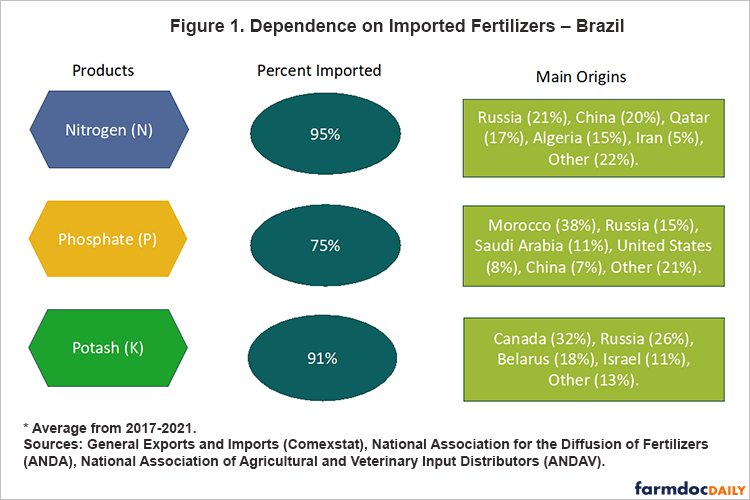
I received the data from this diagram on the University of Illinois’s Farm Doc Daily. It’s a university publication from the Department of Agricultural and Consumer Economics. See the full report here: https://farmdocdaily.illinois.edu/2022/03/war-in-ukraine-and-its-effect-on-fertilizer-exports-to-brazil-and-the-us.html

I want to talk about Russia’s prior dominance in Brazil’s fertilizer market.

Look at the chart above. Russia pops up at the top of all three categories — 21% of Nitrogen exports, 15% of Phosphate exports and 26% of Potash exports. It’s also important to point out here that both China and Belarus have been struggling to meet the needs of Brazil’s fertilizer consumption. China restricted exports in 2021 and Belarus’s potash industry has been the target of USA and European sanctions.

Read more about what’s happening in the global fertilizer industry with this story I published on Medium about Nutrien Ltd.’s CEO transition: https://readmedium.com/what-went-down-at-the-worlds-largest-potash-producer-nutrien-ltd-c174d19e403d

It shows in the diagram that Russia leads over all other countries in Brazil’s nitrogen (N) fertilizer import dependency. With China’s fertilizer currently out of the picture, this scenario is likely to see more Russian imports.

As mentioned earlier, Russia’s Acron Group has been the target of a Countervailing Duties (CVD) dispute at the United States International Trade Court. The United States’ largest nitrogen and ammonia producer, CF Industries, petitioned the court alleging that Russia’s subsidies of urea ammonium nitrate solutions (UAN) put Amercian producers and exports at an unfair advantage in the marketplace.

It’s likely that Russia will lose the case, because the preliminary determination was already ruled in favor of CF Industries. This effectively will put Acron Group out of the American UAN marketplace, where it was one of the leaders. Russia probably intends to continue exporting as much nitrogen fertilizer as it can to countries who need it. Brazil will be one of its main targets.

Kazakhstan’s Dependence on Russia for Exports

On 18 May 2022 Kazakhstan’s largest iron-ore exporter and enricher, Sokolov-Sarybai Mining Production Association (SSGPO), decided to temporarily stop supplying Russia’s Magnitogorsk Iron and Steelworks (MMK) located in Siberia.

Russia’s MMK responded by blaming the situation on USA and Western sanctions.

Iron-ore mining projects in Guinea reveal that strong demand for metals is going to see an upside during the global commodity supercycle, irrespective of geopolitics, as countries like China and Australia compete for supply and demand of iron-ore and other metals.

That’s why this most recent situation between Kazakhstan and Russia should not be taken lightly. Just look at what happened on the Caspian Pipeline Consortium (CPC) to understand the geopolitical nature of energy and commodities right now.

The St. Petersburg International Economic Forum was used as a stage for Russia to show the world how it is committed to its political agenda.

In the words of Russia’s President Vladimir Putin:

The Forum’s anniversary is taking place at a difficult time for the entire international community. The mistakes of Western countries in economic policy over many years and illegitimate sanctions have led to a wave of global inflation, the disruption of usual supply chains, and a sharp increase in poverty and food shortages. Yet, as can be the case, along with these challenges, new prospects are emerging. This is why the Forum’s slogan — New Opportunities in a New World — seems so relevant.

“New Opportunities in a New World” sounds like classic revisionism, but it also indicates how important Russia is — or at least thinks it is — to the global commodity supercycle. For instance, China’s President and Chairman Xi Jin Ping stood by Russia at the St. Petersburg Forum in claiming that “the era of the unipolar world” being led by the United States was over.

While most people will understandably focus on the inhumane war effort launched by Russia against Ukraine, with the surge of international refugees and internally displaced peoples (IDPs) all over the world, the Global Commodity Supercyle is driving the economic power of countries like Russia.

This allows Russia to revise the whole situation in the post-Soviet territories of Central Asia. Kazakhstan is worried — extremely — so the country had to use the St. Petersburg Forum as a way to show the world that its territorial integrity is secure in the face of looming Russia threat on its border.

This is in many ways of desperate plea to the world — The United States? — for promoting the cause of Kazakhstan’s sovereignty for a country that has much to lose from USA and European sanctions on Russia’s oil and gas industries.
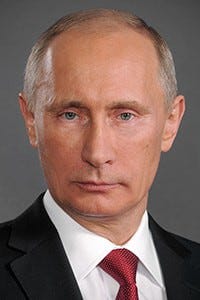
Source: St. Petersburg International Economic Forum, “To participants, organizers and guests of the 25th St. Petersburg International Economic Forum” https://forumspb.com/en/
Diplomacy
War
Commodities
Energy
Geopolitics
Recommended from ReadMedium