Reviewing NIST Guidance for ECC Curves for GPG Encryption Keys
Ensuring you are configuring encryption algorithms correctly using security standards
~~~~~~~~~~~~~~~~~~~~~~~~~~~~~~~~~~~~~~~~~~~~~~~~~~~~~~~
⚙️ Check out my series on Automating Cybersecurity Metrics | Code.
🔒 Related Stories: Encryption | Cybersecurity
💻 Free Content on Jobs in Cybersecurity | ✉️ Sign up for the Email List
~~~~~~~~~~~~~~~~~~~~~~~~~~~~~~~~~~~~~~~~~~~~~~~~~~~~~~~
I had to revisit my GPG key today and wanted to make sure I’m using the appropriate configuration. I wrote in a prior post how to configure up a key for GPG to encrypt documents in email showing use of an RSA key but mentioned that some had stated that RSA was not the best choice. An ECC (Electric Curve Cryptography) key would be better.
After that post some researchers announced a new vulnerability involving SSH and RSA encryption.
I explained how to use ECC on AWS instead of RSA. AWS only gives you one choice when you are setting up your ECC key for encryption so you use it. I wrote about some ways to govern the SSH algorithm selection as well.
However, when you are using ECC there are actually different curves and ways to configure it. Because I am not a cryptography expert, meaning I don’t study the underlying math all day long (some people think they are experts who are not), I generally rely on the guidance of others when selecting and implementing cryptography. But which expert guidance should you use?
NIST (National Institutes of Standards and Technology) sets standards for the US government. Many security people (at least in the US) follow their guidance.
Different types of encryption algorithms serve different purposes. NIST provides guidance for all algorithms here:
You can find ECC under “Additional Security Research”
NIST updated its guidance for ECC in February 2023.
Here’s the executive summary for the document at the time of this writing. Check for updated documents if you are reading this at a later date. These guidelines call out curves you should specifically not be using.
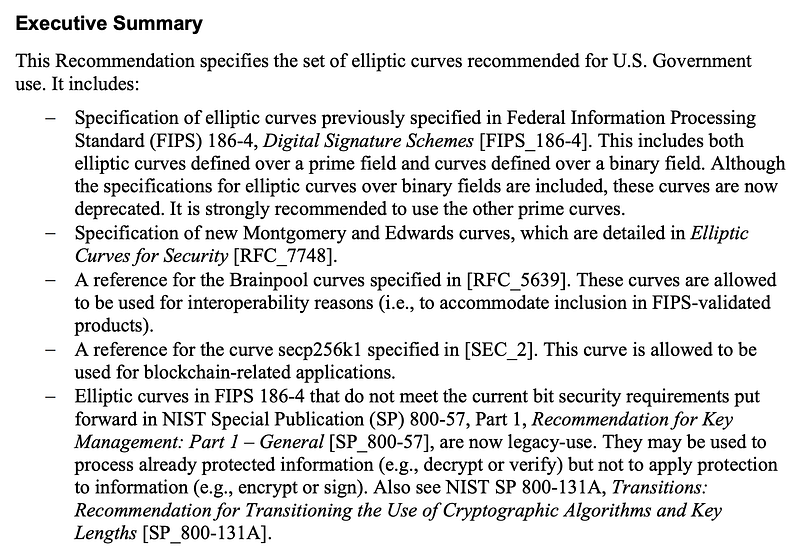
https://nvlpubs.nist.gov/nistpubs/SpecialPublications/NIST.SP.800-186.pdf
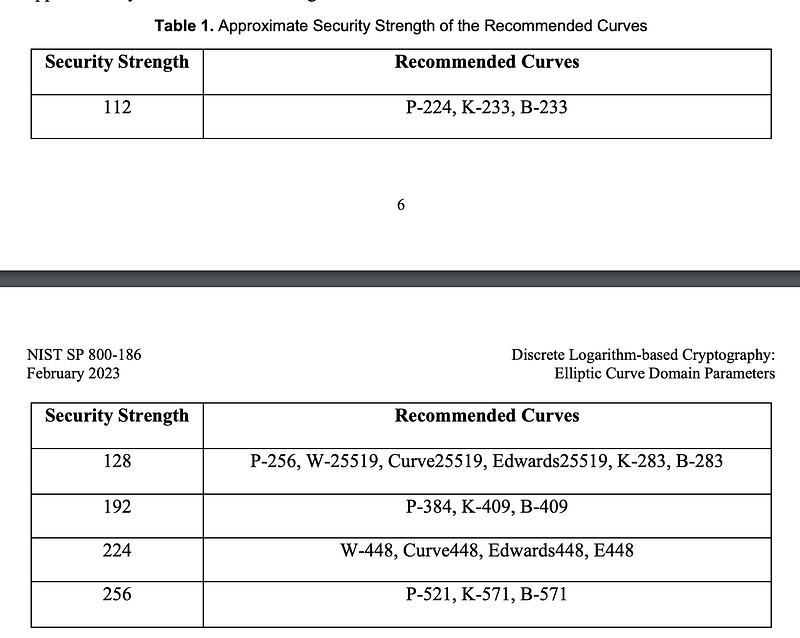
The document is a bit wordy but you can find the recommendations in section 3.

Here’s the table of the curves and their related strength, which unfortunately falls on a page break.
This table shows curves that have been deprecated.
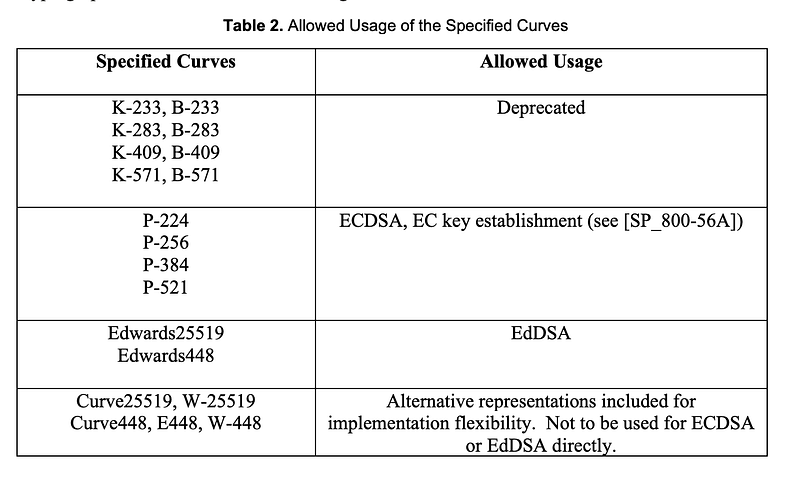
If you’re reading this post long after I wrote it, check NIST for the most up to date guidance.
Now that you know how to find the latest NIST guidance for encryption algorithms, here’s how to configure GPG to use ECC with one of the acceptable curve choices.
Follow for updates.
Teri Radichel | © 2nd Sight Lab 2023
About Teri Radichel:
~~~~~~~~~~~~~~~~~~~~
⭐️ Author: Cybersecurity Books
⭐️ Presentations: Presentations by Teri Radichel
⭐️ Recognition: SANS Award, AWS Security Hero, IANS Faculty
⭐️ Certifications: SANS ~ GSE 240
⭐️ Education: BA Business, Master of Software Engineering, Master of Infosec
⭐️ Company: Penetration Tests, Assessments, Phone Consulting ~ 2nd Sight Lab
Need Help With Cybersecurity, Cloud, or Application Security?
~~~~~~~~~~~~~~~~~~~~~~~~~~~~~~~~~~~~~~~~~~~~~~~~~~~~~~~~~~~~~
🔒 Request a penetration test or security assessment
🔒 Schedule a consulting call
🔒 Cybersecurity Speaker for PresentationFollow for more stories like this:
~~~~~~~~~~~~~~~~~~~~~~~~~~~~~~~~~~~~~~~~~~~~~~~~~~~~~~~~~~~~~
❤️ Sign Up my Medium Email List
❤️ Twitter: @teriradichel
❤️ LinkedIn: https://www.linkedin.com/in/teriradichel
❤️ Mastodon: @teriradichel@infosec.exchange
❤️ Facebook: 2nd Sight Lab
❤️ YouTube: @2ndsightlab