Rethinking Realism: A Discerning Eye on Midjourney V6 Alpha — and New Ways to Spot AI Images!
When Photorealism Feels Like a Step Back: A Candid Look
Hey there, tech enthusiasts and Whisperinos! Let’s chat about something that’s been on my mind: Midjourney V6 Alpha. I’m just going to say it. I don’t like it. I know, I know — it’s the hot new thing in the world of AI-generated art. But as someone who’s spent time in the trenches of a magazine’s photography department, I’ve got a different take on this.
At First Glance: The Good News about Midjourney V6 Alpha
Midjourney V6 Alpha is a new benchmark in AI-generated generators. Thanks to improved prompt coherence and model training, MJ V6 can generate more visually coherent and beautiful outputs. The increased language capacity, heightened sensitivity, and more accurate interpretation requires users to be more precise and detailed in their prompts (Christie C. wisely recommends using the journalistic “What Who Where When How”).
All this gives us more artistic control to make the output align better with what we want to see: the envisioned concept in your mind as you craft the prompt. Key features include enhanced control over color and shading, subtle and creative modes in upscalers, and increased resolution. This creates more, well, realistic imagery than previous versions. Or does it?
Hyper-Realism in AI: Impressive or Overdone?
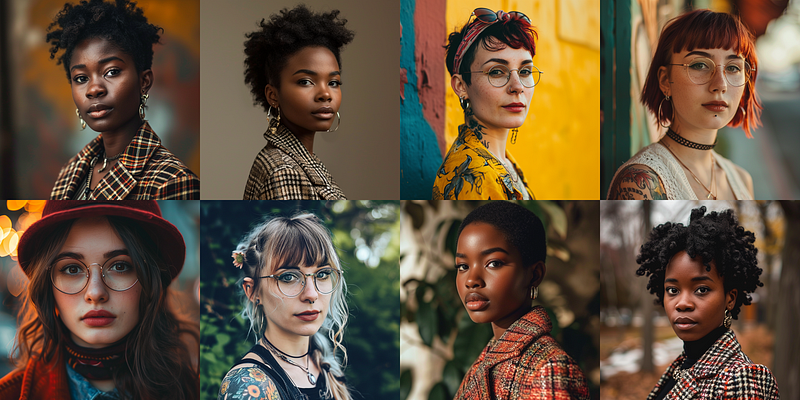
Midjourney V6 Alpha is touted for its hyper-realism, but let’s pause for a second. Have you seen those images? They look like really good CGI or motion capture, but not real. Sure, it’s visually stunning, but to someone who’s scrutinized photos for a living, it strikes a peculiar chord. It’s like watching an Avatar film — breathtaking, yet something is intuitively off.
The Devil’s in the Details
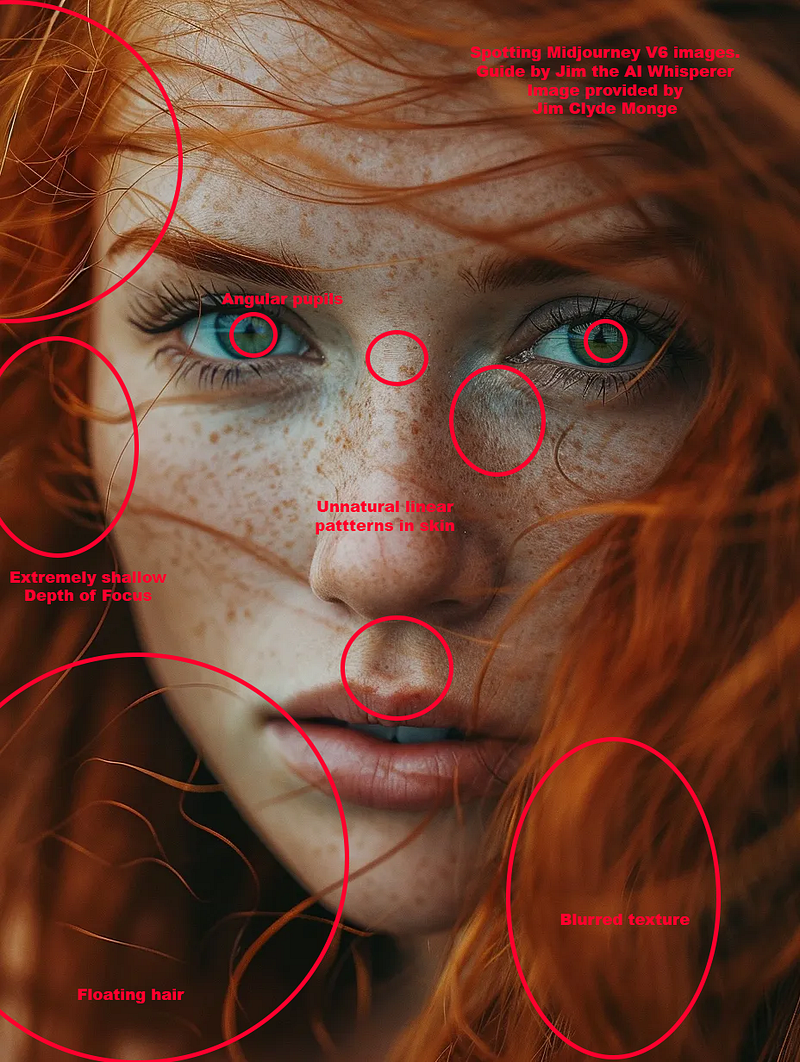
The default level of detail in these images is undoubtedly beautiful, but sometimes beauty isn’t synonymous with reality. If you look closely, you’ll notice new grid patterns on skin textures — a telltale sign of Midjourney V6.
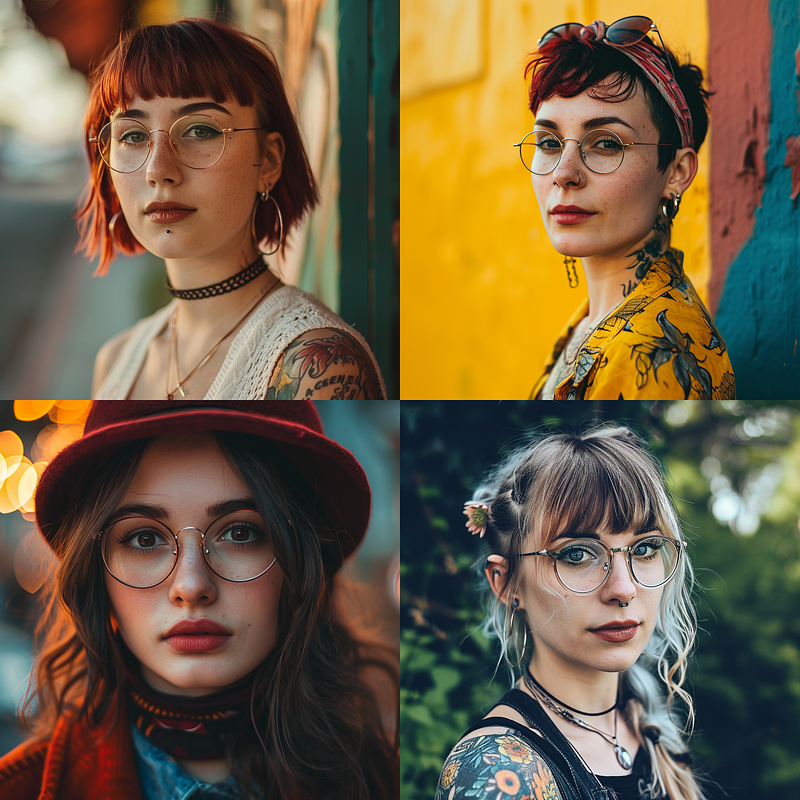
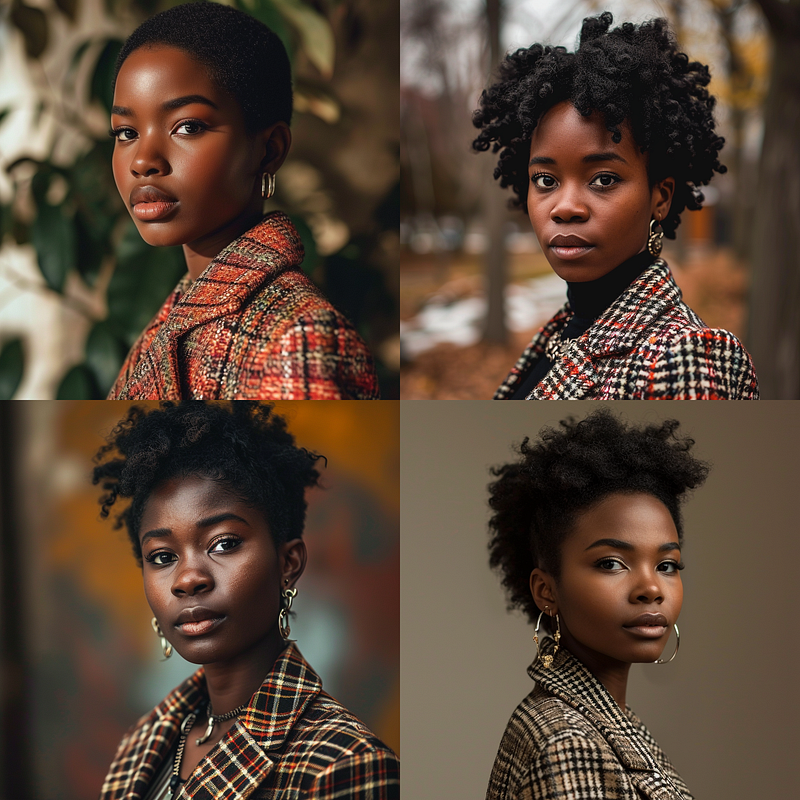
These unnatural linear patterns look like 3D printing, cross hatching, or even fingerprints. Sometimes there is a stippled effect, with a latticework of tiny bumps that from a distance add surface texture, but up close look fake.
Another give away that we haven’t seen since earlier versions is strands of hair looking detached and nonsensical. These aren’t flyway; they seem to float. Similarly, fabrics and textures are nonsensical, especially the grain.
Depth of Field Dilemma
Have you noticed how parts of the face, like ears, seem out of focus in the images? It’s like someone went wild with Photoshop’s depth of field tool. It doesn’t just look artificial; it’s almost hard on the eyes. This aspect makes V6 creations more identifiable as AI-generated than the previous version.
Check out the wrinkles below. They defy musculoskeletal logic. On the flip side, other images look overly smooth, giving off that ‘vaseline lens’ effect.
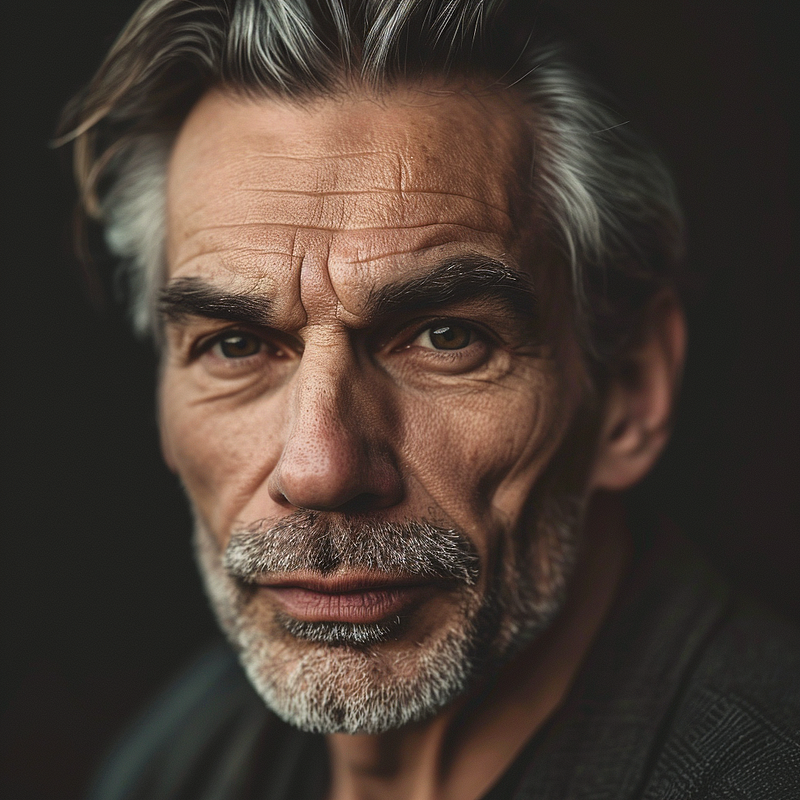
It’s a curious mix of too real and not real. It’s not just photographic elements; there are structural ones. Take the pupils, for example…
Eyes: The Windows to AI’s Soul?
Alright, let’s zoom in on a specific feature that’s another dead giveaway in AI-generated images: the eyes. Have you ever looked into the eyes of an AI image and felt a little… unsettled? You’re not alone. Eyes are said to be the windows to the soul, but they might just be windows to an AI’s lack of one.
In the real world, our pupils are round, a basic biological fact. But in AI art, some rules of anatomy get bent. The most striking oddity? Angular pupils. Corneas with corners are a subtle signal that something’s not quite right. From the very start, irregular pupils have been used to detect AI images:
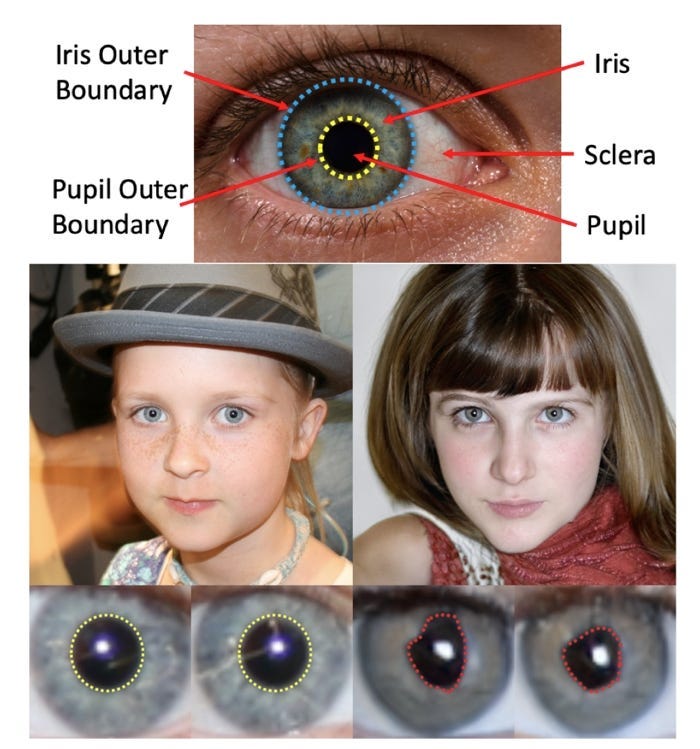
Perhaps it is the heightened attention to detail and resolution in MJ V6, but we’re seeing an increase in angular irregularities that contradict anatomy. These digital eyes, while striking, lack the organic shapes of human eyes.
(Thankfully it can be resolved by a good GFP-GAN, and honestly I’m flummoxed as to why MJ V6 Alpha hasn’t incorporated this step yet).
The Creep Factor of AI-Generated Eyes
Psychologically, we’re wired to read a lot into eyes — they’re central to our interpretation of human faces. When AI gets it wrong, it doesn’t just look odd; it’s subconsciously unsettling. This ‘creep factor’ turns an otherwise beautiful image into something eerily uncanny. What does it mean for art when the eyes — the focal point of connection — are the very elements that betray a creation’s artificial origins? That’s my gut reaction to Midjourney V6, and the deal with the Uncanny Valley is that it gets worse the closer it gets to resembling reality. Paradoxically, photorealism is more ‘real’ than real, and enters into the regions of hyperreality and digital simulacrums:
Balancing Act: Realism vs. Professional Standards
As a former insider in the photography world, I’m accustomed to spotting digital images that wouldn’t pass muster if certain professional standards were applied. Midjourney V6 Alpha has taken a peculiar step back in this journey forward, as now AI generated images come complete with what looks like heavy use of Photoshop. At best it emulates the aesthetics of post production digital effects, making images look like they have been polished and simulating this whole other layer of the artistic process. Not only have the subject, camera, and photographer been artificially replaced, but also an imaginary post production team that edit, tweak and enhance images.
(Note, you can diminish the effects of MJ’s inbuilt beautification by adding --style raw and a lower --stylize 80 parameter to the end of your prompt).
The problem isn’t that Midjourney V6 does this. It’s actually impressive that it can. It’s definitely a distinctive style, a look. The issue is that it’s now the default, whether you want these faux post production effects or not. This gives MJ V6 images a signature style; and to the trained eye — or a cautious observer — it’s instantly recognisable as AI. But maybe that’s a good thing?
Safeguards or Overreach?
With the raised stakes of deepfakes and concerns around potential misuse, are Midjourney intentionally nerfing their own photorealism? Perhaps it’s an automatic safeguard, like the watermark sequence embedded in AI text by OpenAI to easily differentiate AI-created content from human writing.
Or perhaps it’s just the pursuit of perfection gone overboard. Either way, the challenge isn’t to correct a technical glitch; it’s about determining the fine line between hyperrealism and true mimesis. While Midjourney V6 Alpha pushes the boundaries of detail, real images embrace imperfection and the unpredictable, and not algorithmic adherence to perfect patterns.
Rethinking the ‘Real’ in AI Art: The Photorealism Paradox
Arguably that’s why we’re seeing the linear grid surface textures; it’s operating at such a high level of definition that it’s rendering printing artefacts, digital compression or resolution constraints, and depicting limitations of previous technology in replicating visual data accurately. We’re seeing how AI perceives images, and not the things themselves.
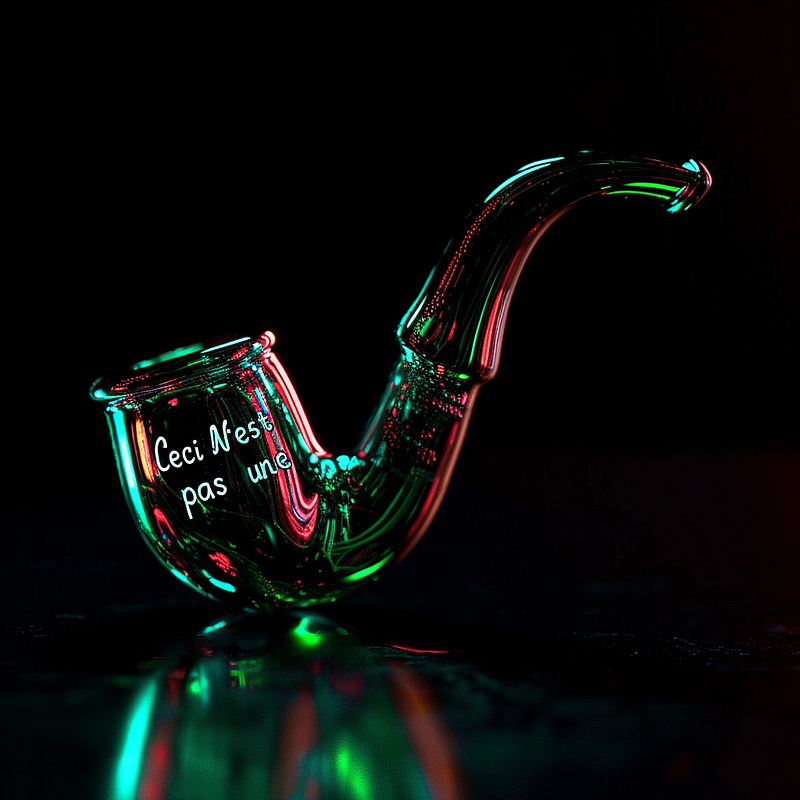
And of course that is the case because ultimately AI’s knowledge base is trained on images, not people, with no firsthand experience. At certain layers of the neural network it’s processing a cluster of core invariances that it has learned to associate with images of the thing that are not truly representational of the form itself (i.e. “The Treachery of Images”). AI’s world knowledge is fundamentally at a remove from reality (which also explains why it looks so photogenic; AI has no other frame of reference).
Yes, I realise V6 is still in Alpha, and the potential is undeniable. But it’s a reminder that ‘photorealism’ doesn’t mean resembling reality so much as being like a real photo. Nobody says anything authentic is ‘photorealistic’, it’s an expression of being impressed by how close it is without being the real deal. Currently, V6 images look like photos of things twice removed, a simulacrum and not a depiction. It puts the artifice back in ‘AI generated’.
💭 So, what’s the verdict? Is Midjourney V6 Alpha a revolutionary leap, or a misstep in the pursuit of hyper-realism? I want to hear your thoughts now!
✍️ Leave a comment! Tech is an ever-evolving field, and dissenting voices like mine are part of what drives innovation and improvement. Let’s open up a boader conversation about the nature of realism in AI-generated art!
🤝 Spread the Word: If you found my guide helpful, please share it with friends and colleagues. Let’s expand our collective understanding of AI!
👏 Enjoyed this article? Medium rewards writers through your applause. Here’s a tip: to clap for 50 times, just tap and hold the clap button to save your fingers from multiple clicks. Your claps keep the AI guides coming!
📬 Stay Informed: Eager to keep up with the evolving world of AI? Follow and Subscribe to get an email when I publish my latest tips and articles!
Who is Jim the AI Whisperer?
Jim the AI Whisperer offers private coaching on how to use AI generators to create stunning visuals, as well as how to write compelling professional content. If you’re interested in discovering more, feel free to contact me.
I’m also available for podcasts, interviews, fine-tuning AI prompts. I create prompt libraries, custom GPTs and AI imagery for companies.


