
Research Reveals Terrific Results Made by Beautiful Music
Dancing Elephants prompt 1 of 52
Dear Reader,
I would like to thank Dr. Gabriella Korosi for providing this writing prompt. She has asked us to write about how music and sounds affect our lives. She went further to ask what healing effects can come from the sound and vibrations of music. I will endeavor to provide my responses in this article. I hope that if you are affected in a similar way that you will let us know.
Music Defined
So, what is music? Research revealed that music is vocal or instrumental sounds combined in such a way as to produce beauty of form, harmony, and expression of emotion. Music has also been defined as the art or science of composing music. Still, another definition of music is a sound perceived as pleasingly harmonious.
These definitions while accurate do not provide detail as to what the basic elements that make up music are. Music can be soft or loud, slow or fast, and regular or irregular tempo. Knowing the basic elements of music will help you appreciate better what you are hearing and experiencing. So, let’s begin with the elements of music.

Beat and Meter
A beat is the basic unit of time or the pulse of the music. A beat is what gives music its rhythmic pattern. The beat can indicate the tempo, meter, rhythm, and groove of the music. Beats are grouped in a measure, notes and rests correspond to the number of beats.
The meter is rhythmic patterns grouped together by strong and weak beats. For example, a meter can be in duple (two beats per measure), triple (three beats per measure), or quadruple (four beats per measure).An Introduction to the Essential Components of Music (liveabout.com)
Dynamics
Dynamics help musicians sustain variety and interest in music and communicate emotions or feelings. In written compositions, dynamics are indicated by abbreviations or symbols that signify the intensity of the note or passage played or sung. An Introduction to the Essential Components of Music (liveabout.com)
Harmony
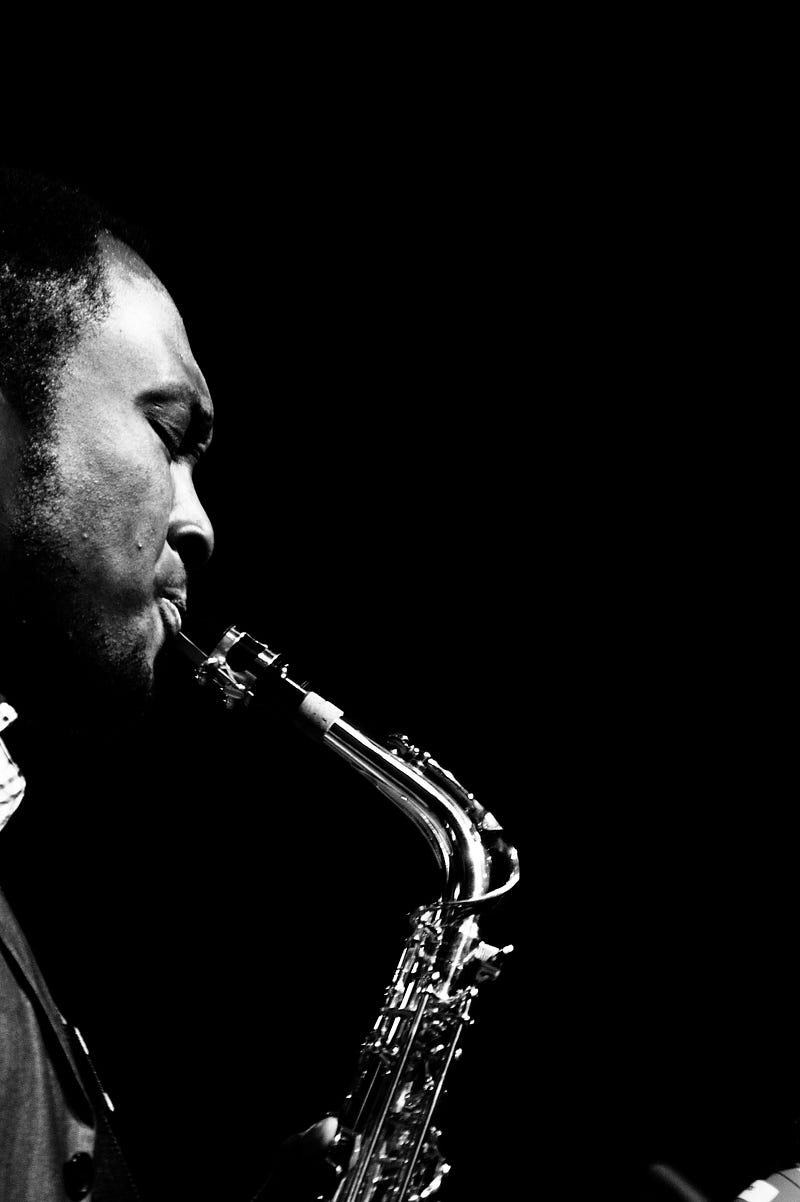
When you hear two or more notes or chords played together or one after the other that is harmony. Harmony supports the melody and gives it texture. Harmonic chords are classified as major, minor, augmented, or diminished depending on notes played together.
For example, if you were to listen to a barbershop quartet, someone could sing the melody and the other singers could sing tenor, bass, and baritone. All of these would be sung in a complimentary manner in perfect pitch with one another. An Introduction to the Essential Components of Music (liveabout.com)
Melody
A sequence of pitches of varying lengths produces a melody. This is the overarching tune created by playing a series of notes and is affected by pitch and rhythm. A musical arrangement could have a single melody. In rock and roll music there may be multiple melodies arranged in a verse-chorus form. In classical music, the melody may be repeated as a theme that varies as the piece continues. An Introduction to the Essential Components of Music (liveabout.com)

Pitch
This is the number of times a sound wave can repeat in one second. It is based on the frequency of vibration and the size of the vibrating object. Slower vibration means the vibrating object is large and the pitch is lower. Faster vibrations come from smaller vibrating objects and the pitch is higher. An Introduction to the Essential Components of Music (liveabout.com)
Rhythm
Rhythm is the pattern and timing of sound and silence in music. Rhythm is shaped by meter, there are certain elements such as beat and tempo. An Introduction to the Essential Components of Music (liveabout.com)
Tempo
This is the speed that the music is played at. For example, in compositions tempo is indicated by an Italian word at the beginning of a score. “Largo” indicates a slow pace, “moderato” a moderate pace, and “presto” a fast pace. Once the tempo has been set it is effective throughout the duration of the music unless the composer changes it. An Introduction to the Essential Components of Music (liveabout.com)
Texture
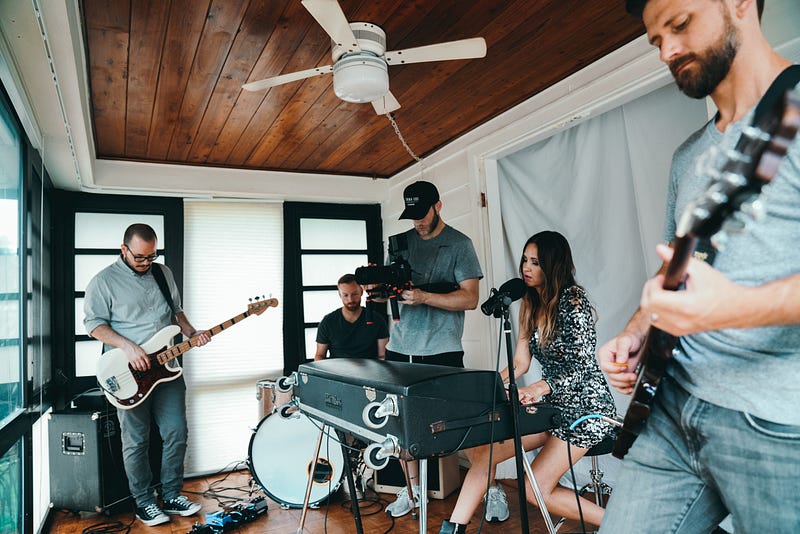
This is how the melody, rhythm, harmony, and number of voices or layers in a piece of music affect the way it sounds. A texture can be “monophonic” (single melodic line), “polyphonic” (two or more melodic lines), and “homophonic” (the main melody accompanied by the chords). An Introduction to the Essential Components of Music (liveabout.com)
Timbre
This is the quality of the sound that distinguishes one voice or instrument from another. It is what makes a musical note sound different from another note. An Introduction to the Essential Components of Music (liveabout.com)
How Music Affects Us
Music can boost memory, build endurance, lighten our mood, and reduce worry, anxiety, and depression. It can also help us beat fatigue and improve how we respond to pain. An Introduction to the Essential Components of Music (liveabout.com)
When we listen to music the blood flow to our brain regions increases. Music also generates control of our emotions. Music can make us happy, sad, calm, and energetic. Music can change how we think and process information. An Introduction to the Essential Components of Music (liveabout.com)
Examples of where listening to music have been effective are in the treatment of conditions such as premature birth, depression, and Parkinson’s disease. Music can improve sleep, reduce blood pressure, and increase memory and mental alertness. An Introduction to the Essential Components of Music (liveabout.com)
Music Therapy
Music therapy is an approach that uses the natural mood-lifting properties of music to help people improve their mental health and well-being. It is a goal-oriented intervention that could involve making music, writing songs, singing, dancing, listening to music, and discussing music. Music Therapy: Definition, Types, Techniques, and Efficacy (verywellmind.com) Verywellmind, What is Music Therapy? Cathy Wong November 17, 2022
There are many varied approaches in music therapy that include:
Analytical — this is where you use a made-up musical dialogue through singing or playing an instrument to express your unconscious thoughts and reflect on and share them with your therapist. Music Therapy: Definition, Types, Techniques, and Efficacy (verywellmind.com) Verywellmind, What is Music Therapy? Cathy Wong November 17, 2022
Benenson — Combines concepts of psychoanalysis with the process of making music. This includes the search for your musical sound identity. Musical sound identity is the external sounds that match your internal psychological state. Music Therapy: Definition, Types, Techniques, and Efficacy (verywellmind.com) Verywellmind, What is Music Therapy? Cathy Wong November 17, 2022
Cognitive behavioral — Combines behavioral therapy with music. Music is used to reinforce or modify behaviors. This is a structured approach and could include listening to music, dancing, singing, or playing an instrument. Music Therapy: Definition, Types, Techniques, and Efficacy (verywellmind.com) Verywellmind, What is Music Therapy? Cathy Wong November 17, 2022
Community — The focus here is on using music to facilitate change on the community level. This approach is done in a group setting and requires everyone in the group to participate. Music Therapy: Definition, Types, Techniques, and Efficacy (verywellmind.com) Verywellmind, What is Music Therapy? Cathy Wong November 17, 2022
Nordoff-Robbins — This is creative music therapy and involves playing an instrument (such as a cymbal or drum) while the therapist plays another instrument. This encourages self-expression. Music Therapy: Definition, Types, Techniques, and Efficacy (verywellmind.com) Verywellmind, What is Music Therapy? Cathy Wong November 17, 2022
Bonny Method of guided imagery and music — Uses classical music as a way to stimulate the imagination. You explain the feelings, sensations, memories, and imagery that you experience while listening to the music. Music Therapy: Definition, Types, Techniques, and Efficacy (verywellmind.com) Verywellmind, What is Music Therapy? Cathy Wong November 17, 2022
Vocal Psychotherapy — You use various vocal exercises, natural sounds, and breathing techniques to connect with your emotions. Music Therapy: Definition, Types, Techniques, and Efficacy (verywellmind.com) Verywellmind, What is Music Therapy? Cathy Wong November 17, 2022
Music therapy and sound therapy are distinctive. Each approach has its own goals, protocols, tools, and settings.
Music therapy is a relatively new discipline, while sound therapy is based on ancient Tibetan cultural practices. An example of this is the singing bowls that Dr. Korosi introduced us to in her article https://readmedium.com/music-in-the-air-c3c807998ccb.

Singing bowls are said to promote relaxation and offer powerful healing properties including stress relief. Other benefits include improved sleep, lowered blood pressure, reduced depression, stimulation of the immune system, pain relief, and body balancing. Tibetan Singing Bowl: Benefits, Risks, and Uses (verywellmind.com) Can Tibetan Singing Bowls Help Relieve Stress? Kendra Cherry, April 10, 2023
Sound therapy uses tools to achieve specific sound frequencies, while music therapy focuses on addressing symptoms.
Music therapists most often work in hospital settings, substance abuse centers, or private practice. Sound therapists offer their service as a component of complementary or alternative medicine. Music Therapy: Definition, Types, Techniques, and Efficacy (verywellmind.com)
Research provides that music therapy may be helpful for people experiencing Alzheimer's, Parkinson’s, anxiety, autism, cardiac conditions, pain, depression, negative mood swings, headaches, post-traumatic stress disorder, attention deficit and hyperactivity disorder, rehab after an injury, trouble with movement, and a whole host of other conditions. Music Therapy: Definition, Types, Techniques, and Efficacy (verywellmind.com)
The positive feelings that can be brought about by music therapy include calmness, reduced depression and anxiety, improved confidence, enhanced emotional intimacy, connection, and a feeling of overall well-being.
Music truly makes the world worth living in. I LOVE music! What I appreciate most about it though is what it takes to understand and provide it to other people. I also enjoy many of its therapeutic benefits. Without music, I believe the world would be a very dull place. I believe that without music therapy there would be many more problems in society than what we currently experience.
I have listened to music in the United States, Korea, Japan, Saudi Arabia, the United Kingdom, Italy, Germany, Guam, Turkey, France, Spain, and Austria. I have enjoyed listening to it in the language of each of these countries.
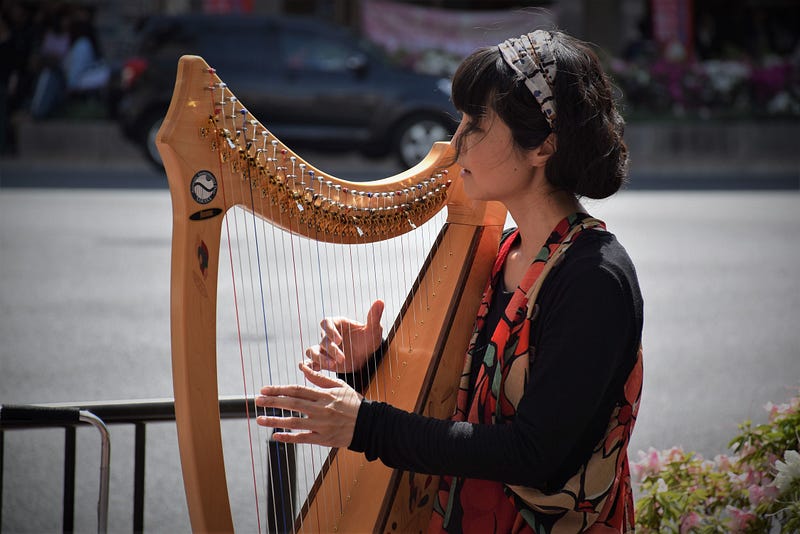

I have been to rock concerts, country western concerts, and symphony performances, and listened to acapella, barbershop quartets, choirs, and high school and college bands. Now thanks to Dr. Korosi I have heard bowls played. I have also listened to harp music (one of my all-time favorites) being played and bells being played as well. These are beautiful examples of relaxing music.
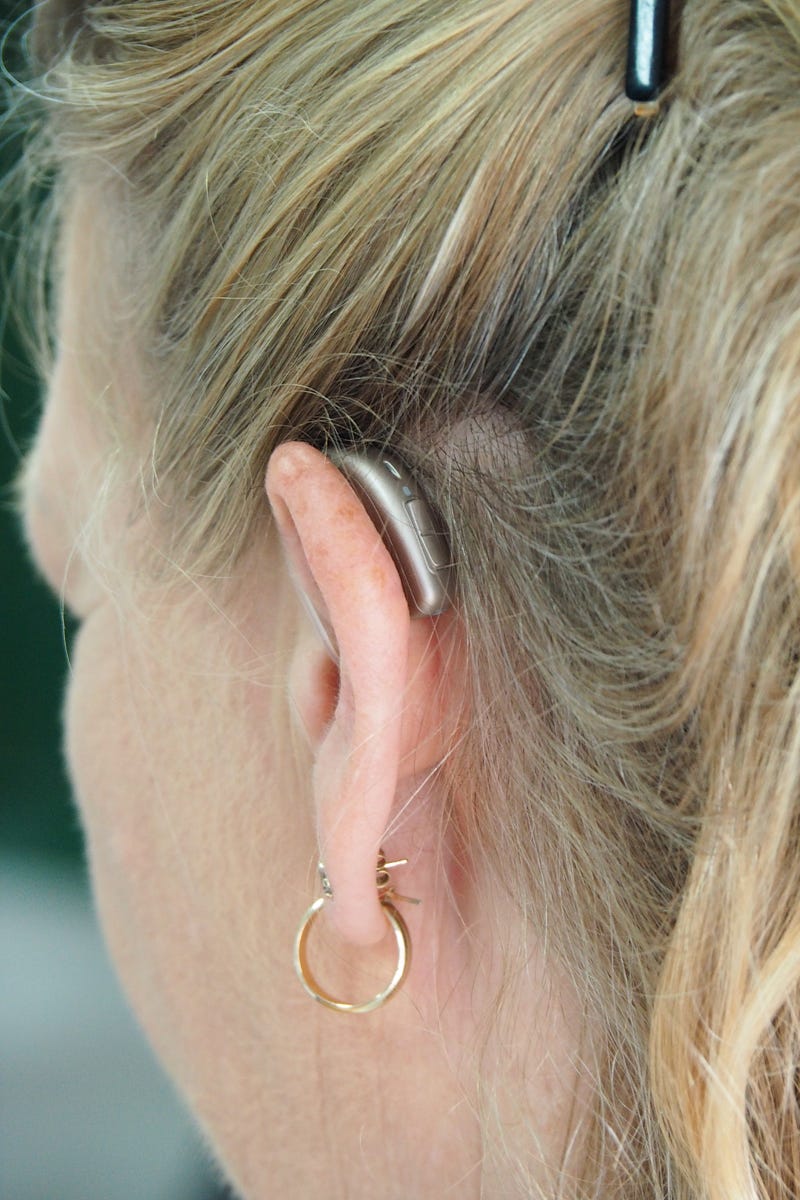
Music Therapy for the Hearing Impaired
People with hearing impairment can feel the music through their hands and feet. The vibration from music allows them to safely feel the music on the skin. Research revealed that clinical practice in music therapy with the hearing impaired has focused on auditory training, speech production, and language development. Music therapy has a secondary effect in improving socialization and self-esteem.
Music is also highly adaptable and can be modified to suit the person’s hearing level, language level, maturity, and music preference. For persons with hearing impairment, music therapy can enhance auditory training and expand the use of residual hearing.
Music therapy can be used to address objectives in auditory training. Attention to sound, attention to differences in sound, recognition of objects and events from the sounds, and use of hearing to determine the distance and location of sound can all be trained through musical experience. Hearing Impaired — Music Therapy Association of BC (mtabc.com) Music Therapy for the Hearing Impaired, Undated.

Sound and What It Can Do for Us
I would now like to shift our focus to the effects sound has on us. What is sound? Sound is a vibration that propagates as an acoustic wave, through a transmission medium such as a gas, liquid, or solid.
Sound is the reception of such waves and their perception by the brain. Sound affects us whether we want to admit it or not. Understanding how sound affects us is important so that we can be cautious when we need to be.

For example, as I write this article, the National Weather Service in Tallahassee is issuing weather alerts and warnings. We are currently under severe thunderstorm warnings with golf ball-sized hail. Conditions are favorable for tornado activity. I consider these warnings to be very helpful for those smart enough to listen and detrimental to those who choose to ignore them.
Sound affects most things that we do in life. There are other effects that sound can have on all of us, and I will cover that now. Sound affects us:
Psychologically — Our bodies are 75% water and sound conducts very well in our body. Our hearing ability is our primary warning mechanism. An example could include a truck horn blaring and tires skidding as we begin walking across the street without checking to see if that truck is going to hit us. This sudden sound would increase our awareness of the danger and hopefully keep us from getting hit. The Spring Resort & Spa | The Effects of Sound On The Human Body (the-spring.com)

Psychologically — Think for a minute about birds chirping in a peaceful natural setting or a river flowing serenely down a mountain as you walk along a path. Think also about various types of music and the effect the music has on you. For example, listening to rock and roll music might have you a bit amped up while listening to classical music may help you to relax. The Spring Resort & Spa | The Effects of Sound On The Human Body (the-spring.com)
Cognitively — When you are working out do you enjoy music with a fast or quick tempo? Does the beat of the music affect your mood and make you want to speed up if it is fast or slow down if it is slow?
Tasks that require deep thought such as reading critical manuscripts or studying for the bar exam may be less stressful if you either have slow music or no music at all. The Spring Resort & Spa | The Effects of Sound On The Human Body (the-spring.com)


Behaviorally — People move toward pleasant sounds and away from noise or unpleasant sounds. Unpleasant sounds can frighten us, make us experience higher stress levels, or they can even make us angry. Pleasant sounds help us to destress, relax and even to sleep easier. The Spring Resort & Spa | The Effects of Sound On The Human Body (the-spring.com)
I hope that this article was informative and that you were able to enjoy reading it. I tried to bring the elements of music, music therapy, music therapy for the hearing impaired, and sound and what it can do for us.
I enjoy hearing constructive criticism and try hard to learn from it. I also am able to improve my writing by listening to others who have good advice. So, if you feel inclined to do so, please write me a short blurb with your helpful thoughts. Thank you for reading my article.
If you liked this article, please clap for it, mark yourself as a follower of mine, and join me on my journey in writing as I contribute to various publications on medium.com.
The more time people spend reading my articles, the more it encourages me to continue writing. Many thanks for taking the time to read what I have written.
If you are not yet a medium member, please consider membership.
Please join my email list, this allows you to be notified when I post something new. My writing success depends on readers like you who appreciate and support my writing. Thanks so much for taking the time to read and support me.
I would like to give a big shout-out to Dr. Preeti Singh for her outstanding article https://readmedium.com/sounds-of-nature-transmit-spiritual-signals-of-joyand-positivity-55c81ad1a25e. She is an accomplished author and I enjoy reading her work. This is one about nature and connecting with it. Great job! Definitely recommended reading.
I would like to give a big shout-out to DR Rawson - The Possibilist for his article https://readmedium.com/are-we-there-yet-35c51be73a90. This article was about his going to see his grandmother and the things she would do for him. It brought me back to my childhood and to my own grandmother. Thanks for the article and for generating the memories!