
Red Meat Protein is More Easily Absorbed Than Mock Meat: Good or Bad?
Red meat increases blood amino acids more than plant-based mock meat.

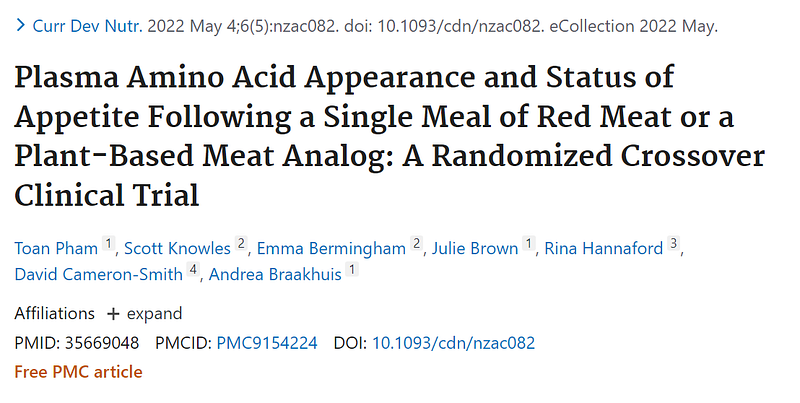
I recently read a study entitled “Plasma Amino Acid Appearance and Status of Appetite Following a Single Meal of Red Meat or a Plant-Based Meat Analog: A Randomized Crossover Clinical Trial” which concluded that red meat protein is more bioavailable than plant-based mock meat.
As a nutrition scientist, I believe the study is well-designed to answer the research question. I’ll take this opportunity to write my commentary for this study.
Context of the study
The study’s research question was to understand whether mock meat (Beyond Meat in the study) can deliver an equivalent amount of amino acids to the human body compared to red meat. Both mock meat and red meat has similar total protein content.
This is an excellent research question. Mock meat companies, such as Beyond meat, want to develop plant products that can replace meat as a protein source. Meanwhile, these mock meats are designed to look, smell, taste, and cook like a genuine meat.
Simply put, they want to make plants as “meaty” as possible.
Therefore, it makes sense to understand whether the appearance of amino acids derived from red meat and mock meat protein is similar.
The study involved 29 healthy young people consuming a serve (160g cooked weight) of red meat vs mock meat in the format of mince in a burrito-style wrap. The investigators collected blood samples over 4 hours and measured the blood amino acids after the meal. Without surprise, more amino acids, especially the branched-chain amino acids (BCAAs), appear in the blood after consuming red meat compared to mock meat.
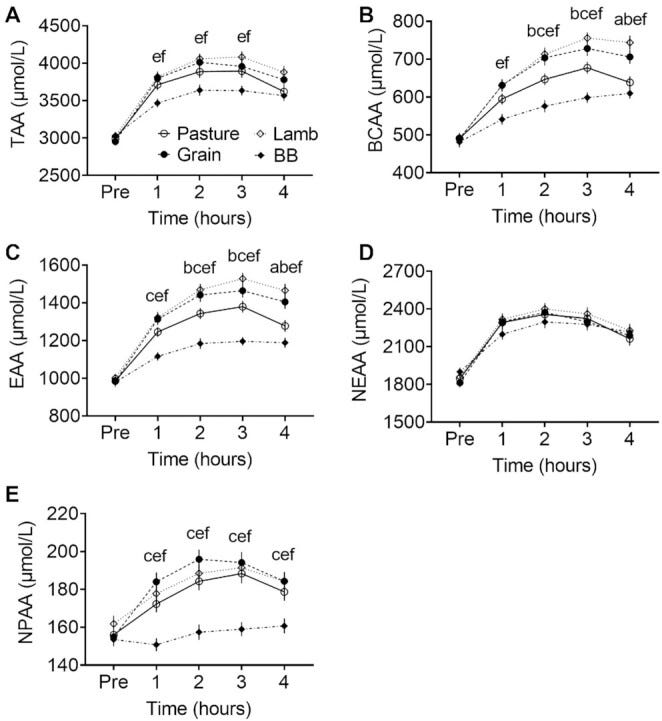
The study concluded that protein or amino acids from red meat are more readily available for intestinal absorption than that from mock meat.
The study was well conducted, the conclusion was irrefutable.
So, what do more amino acids in the blood mean?

This is a very challenging question to answer for many research studies. However, there are a few ways to discuss.
Lean muscle mass retention
This study acknowledges that despite more amino acids appearing in the blood after consuming more red meat, they did not measure muscle protein synthesis rate. Hence, the study cannot be sure whether a higher concentration of blood amino acids after a meal is better for maintaining lean muscle mass.
Generally, the amino acid leucine in the blood acts as a trigger for muscle protein synthesis. When blood leucine concentration reaches a certain threshold, it triggers muscle protein synthesis. In turn, muscle cells will utilize the blood amino acids to build muscle protein. This is when the blood supply of amino acids is crucial!
In older adults, building muscle protein is more biologically difficult, scientifically termed anabolic resistance. Interventions to increase consumption of high-quality protein, when coupled with exercises, have successfully promoted the retention of muscle mass in older adults. Without exercise, the effect of high protein intake is not convincing.
Prof Stuart Phillips has plenty of such scientific output if you are interested.
Based on my scientific opinion, protein quality, hence the availability of amino acids, (and exercise), is crucial when there is a need for building muscle protein.

Risk of diabetes
Meat alone does not cause diabetes. But, excessive meat intake, when coupled with high fat and high sugar intake, can lead to the progression of diabetes.
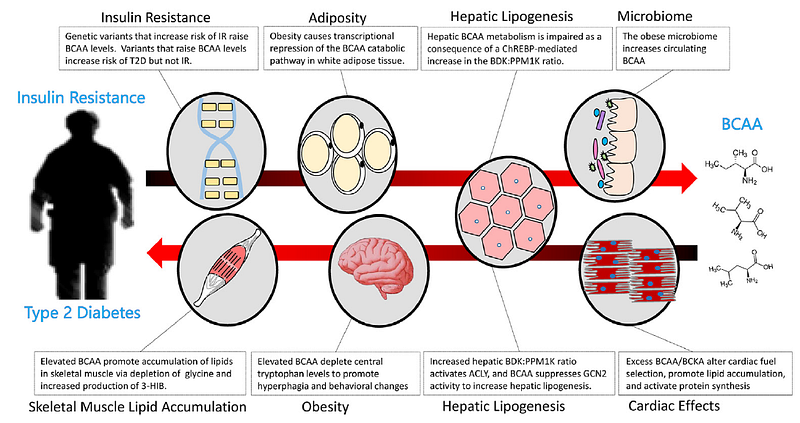
High blood sugar comes to mind when we talk about diabetes. In fact, many people with diabetes also have poor blood cholesterol control and high blood BCAAs (the amino acids that increase significantly after consuming red meat compared to mock meat).
But, why do people with diabetes have high blood BCAA? Although the mechanism is not well understood by scientists yet, the progression of diabetes is characterised by a long-term increase in both blood sugar and BCAAs.
During insulin resistance, there is increased muscle protein breakdown, in turn, releasing an excessive amount of BCAAs into the blood. Furthermore, high concentrations of blood BCAAs “clog” the enzymatic mechanisms that degrade BCAAs in muscle and liver.
This situation results in the accumulation of byproducts which further alter the normal metabolic pathway into a diseased state. In this case, loading a large amount of BCAAs from the diet into the blood within a relatively short time after a meal may not be a good idea.
A comprehensive hypothesis that explains the relationship between BCAAs and diabetes is described by White et al. (2021):
Is there a need to increase the bioavailability of protein or amino acids in mock meat?
I honestly do not know whether the mock meat companies are trying to increase their bioavailability. However, they try to improve the protein content of their products by incorporating non-animal derived ingredients higher in protein, such as mycoprotein, soy, pea, peanuts, and seaweed.
As a nutrition scientist, I think there is no urgent need to increase bioavailability. It is not as if the bioavailability of protein from mock meat is extremely poor. Although there is no direct comparison between the bioavailability of protein from mock meat vs plant protein in their less processed state, i.e. tofu, tempeh, chickpeas, whole beans, peanuts, etc, these mock meat products may have already increased the bioavailability of protein by mashing up the source ingredients, and breaking up the fibre that hinders absorption of amino acids from the intestine.
Furthermore, the target consumers of mock meat products are in the affluent countries, with high, if not excess, accessibility to food. Hence, there is minimal protein deficiency risk due to the switch to using more mock meat in their diet. However, red meat is also associated with other good micronutrients and minerals, such as iron.
The situation would be very different in countries where meat intake is low.
Takeaway Messages
- Suppose you have a high requirement for amino acids, such as doing a lot of physical activity at work, meat intake will benefit you in that case.
- Suppose you are living a sedentary lifestyle, loading a large amount of dieatry amino acids will not benefit you as body muscle protein synthesis rate will only increase with physical activity plus amino acid intake.
- Suppose you are overweight, have insulin resistance, or have pre-diabetes or diabetes. In that case, consuming less red meat and more plants may help improve your metabolic health. Remember that a high amount of blood BCAAs is one of the characteristics related to diabetes progression.
- Suppose you are a healthy young individual, you are free to enjoy a moderate amount of red meat (2 servings a week) in a diet balanced with plant foods.
Finally, there is a role of every protein for human health. The challenge is to understand which protein is best for you under specific circumstances.
For more protein stories, you may like:


