
Recently Discovered Dinosaur Swam Hundreds of Miles to Reach New Continents
Meet Ajnabia odysseus, the first duck-billed dinosaur to be found in Africa…
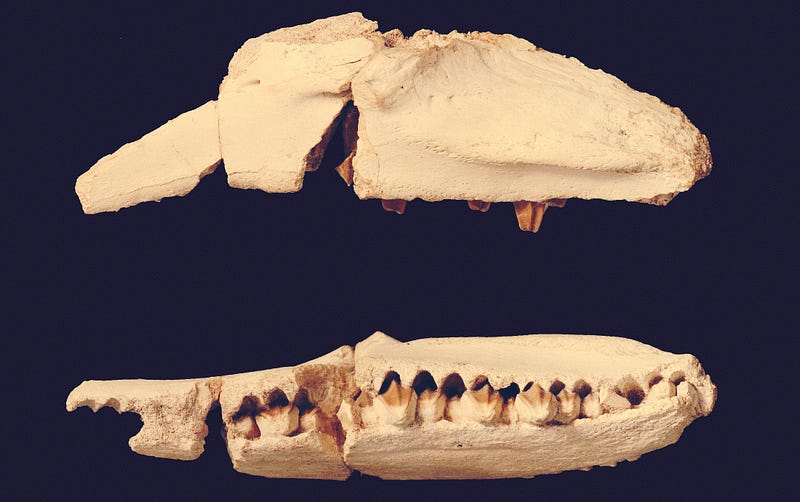

“The discovery of Ajnabia was about the last thing in the world you would expect. It was completely out of place, like finding a kangaroo in Scotland.” — Dr. Nicholas Longrich, paleontologist.
Paleontologists around the world were astonished by the discovery of a new dinosaur species found last week in Morocco. Retrieved from the phosphates of the Ouled Abdoun Basin, Ajnabia is the first hadrosaur (duck-billed dinosaur) to be found in the African continent.
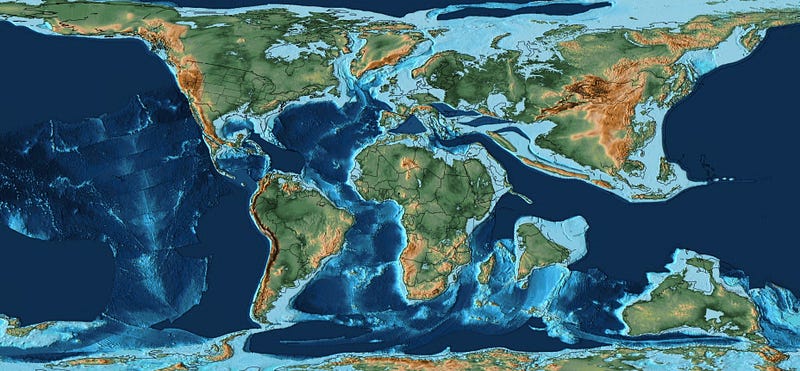
The discovery of Ajnabia came as a surprise to paleontologists because, at the time this dinosaur lived, Africa was an island continent, isolated from the rest of the world. Since hadrosaurs evolved long after continental drift had split the continents, scientists suggested Ajnabia must have crossed hundreds of miles of open water to colonize Africa.
A Stranger in a Strange Land
Ajnabia derives from the Arabic ajnabi, meaning “stranger” or “foreigner”, referring to the animal as part of a lineage that immigrated to Africa from elsewhere. The arduous journey this animal must have taken to reach its destination is reflected in the type species name: A.odysseus, a reference to the Greek hero and legendary sea voyager Odysseus.
Paleontologist and lead paper author Dr. Nicholas Longrich remarked: “It was impossible to walk to Africa. These dinosaurs evolved long after continental drift split the continents, and we have no evidence of land bridges.”
“The geology tells us Africa was isolated by oceans. If so, the only way to get there is by water. As far as I know, we’re the first to suggest ocean crossings for dinosaurs.” Dr. Longrich said.
Meet the Family
Hadrosaurs or duck-billed dinosaurs (named after the flat duck-bill appearance of the bones in their snouts) flourished during the Late Cretaceous Period mostly -but not exclusively- in the Northern Hemisphere.
Phylogenetic analysis suggests that Ajnabia was a member of the Lambeosaurinae, and specifically a member of the Arenysaurini, a clade of hadrosaurs otherwise known only from Europe.
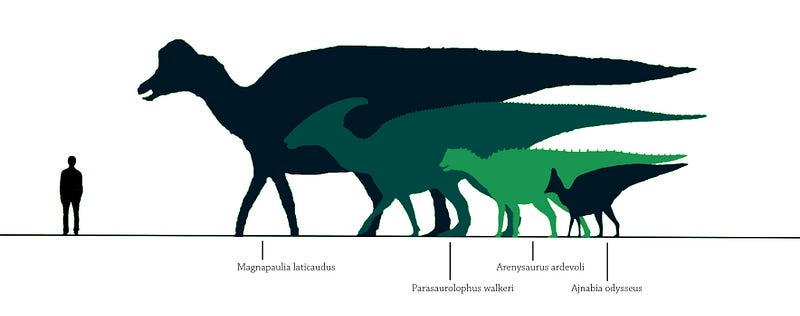
Hadrosaurs were universally herbivorous and most of them could grow quite large. The famous lambeosaurine Parasaurolophus walkeri, for example, could reach lengths of 10 meters (30 ft) and weigh as much as 3.6 tonnes. A lambeosaurine from Mexico was even larger: Magnapaulia laticaudus is estimated to have been more than 12.5 meters (41 ft) long. Reaching only about 3 meters (10 ft) in length, Ajnabia was small compared to its relatives.
Late Survivor
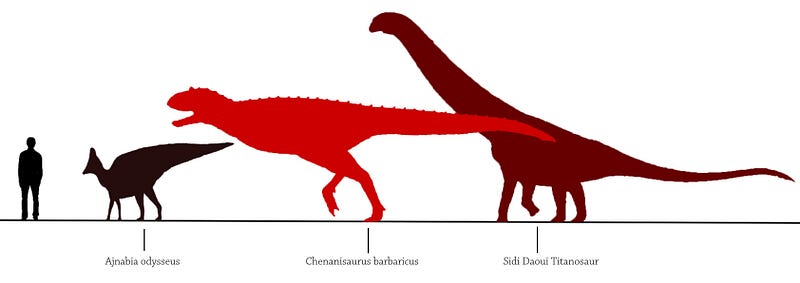
Ajnabia remains were found in a nearshore marine environment. While the dominant fauna included sharks, fish, and marine reptiles, a couple of dinosaur species have also been discovered in the region. It seems that Ajnabia shared its paleo-environment with the large abelisaurid Chenanisaurus barbaricus and the still-unnamed titanosaur of Sidi Daoui.
These creatures lived during the latest part of the Mesozoic Era and they provide a unique view of African fauna right before the Cretaceous–Paleogene extinction event that wiped out non-avian dinosaurs 66 million years ago.
Epilogue
The surprising discovery of Ajnabia illustrates dinosaurs were even more diverse and specialized than we ever dared to imagine. Despite this, most people still associate these creatures with failure and obsolescence. Indeed, the cultural interpretation of the word “dinosaur” is greatly misunderstood.
To find out more about the subject, check the article below:
Relevant Read:
References
Longrich, Nicholas R.; Suberbiola, Xabier Pereda; Pyron, R. Alexander; Jalil, Nour-Eddine (2020). “The first duckbill dinosaur (Hadrosauridae: Lambeosaurinae) from Africa and the role of oceanic dispersal in dinosaur biogeography”. Cretaceous Research. doi:10.1016/j.cretres.2020.104678
News Staff (5 November 2020), Meet Ajnabia odysseus, First Duck-Billed Dinosaur from Africa, Sci-news, Link: http://www.sci-news.com/paleontology/ajnabia-odysseus-09023.html