
Ray and Charles Eames: The Mid-Century Power Couple of Design
“The most important thing is that you love what you are doing, and the second — that you are not afraid of where your next idea will lead.”
― Charles Eames
Part 1: Visionaries Ahead of Their Time — Ray and Charles Eames
Forging the Foundations
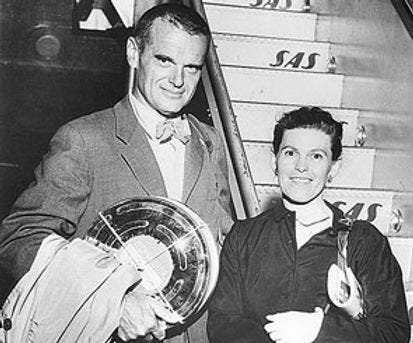
Ray and Charles Eames, born in the early 20th century, were products of a world in flux, a world redefining itself through industrialization and artistic exploration. Ray’s journey began on the West Coast in sunny California, while Charles hailed from the heartland of St. Louis, Missouri.
Ray’s early fascination with color, shape, and the expressive power of art found its roots in her studies under the tutelage of abstract expressionist Hans Hofmann. Meanwhile, Charles’s mind was nurtured by the structured world of architecture at Washington University.
Their paths converged at the Cranbrook Academy of Art, a hallowed ground of creativity, where Charles was a respected educator and Ray a student eager to soak up the wisdom of this design sanctuary. This intersection marked the dawn of a partnership that would transcend traditional design boundaries, fusing artistry with functionality in unprecedented ways.
Dynamic Synergy: The Power of Collaboration
In the realm of design, partnerships often hold the key to unlocking new dimensions of creativity. Ray and Charles were not only partners in life but also creative collaborators whose unique synergy birthed designs that echoed across generations. Their distinct talents and perspectives merged like brushstrokes on a canvas, resulting in a harmonious blend of aesthetics and utility.
Their pioneering approach to design was encapsulated in their motto:
“The best — for the most — for the least.”
This ethos reflected their commitment to creating designs that were accessible to a wide audience without compromising on quality or elegance. Their collaboration knew no bounds, extending from their innovative furniture designs to the realms of film, architecture, and education.
“Take your pleasure seriously.”
― Charles Eames
Revolutionizing Furniture Design: Icons of Elegance and Comfort
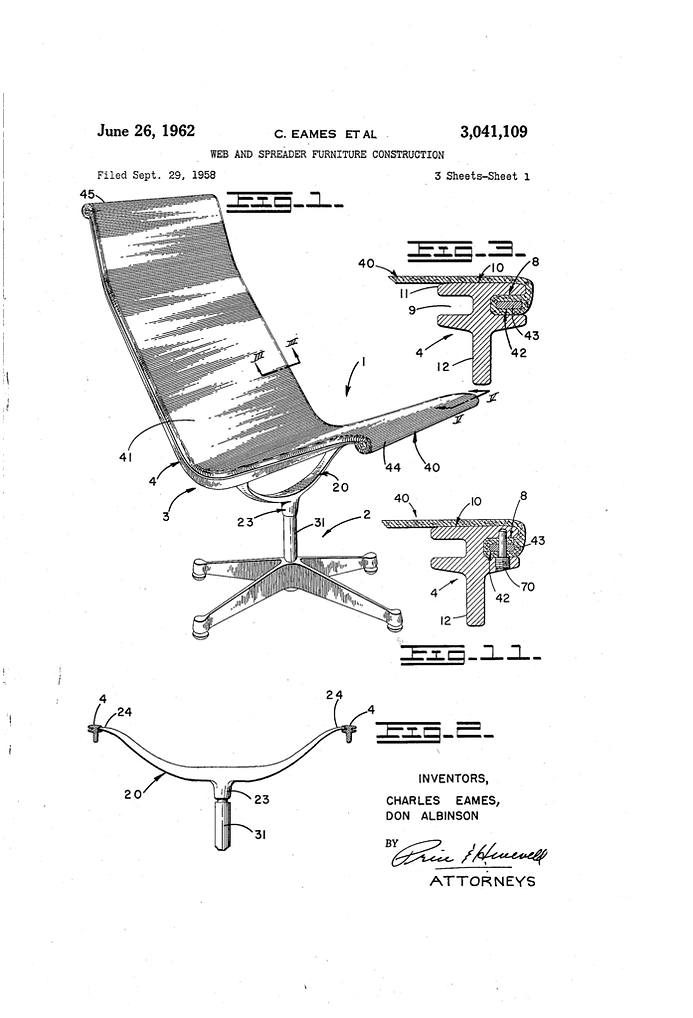
Part of Ray and Charles’s enduring legacy lies in their transformative impact on furniture design. The mid-20th century witnessed the emergence of their iconic creations, which redefined how we interact with and experience furniture.
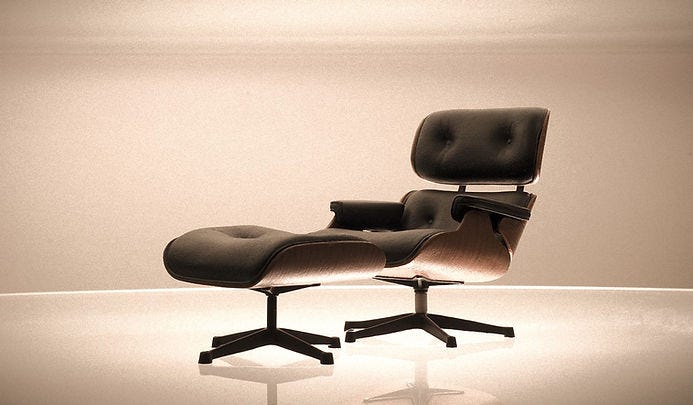
The Eames Lounge Chair and Ottoman, introduced in 1956, epitomize their design philosophy — a fusion of form, function, and aesthetics that still captivates hearts today. With its graceful curves and innovative use of materials, the chair became a symbol of mid-century modernism, an emblem of sophistication that transcends time.
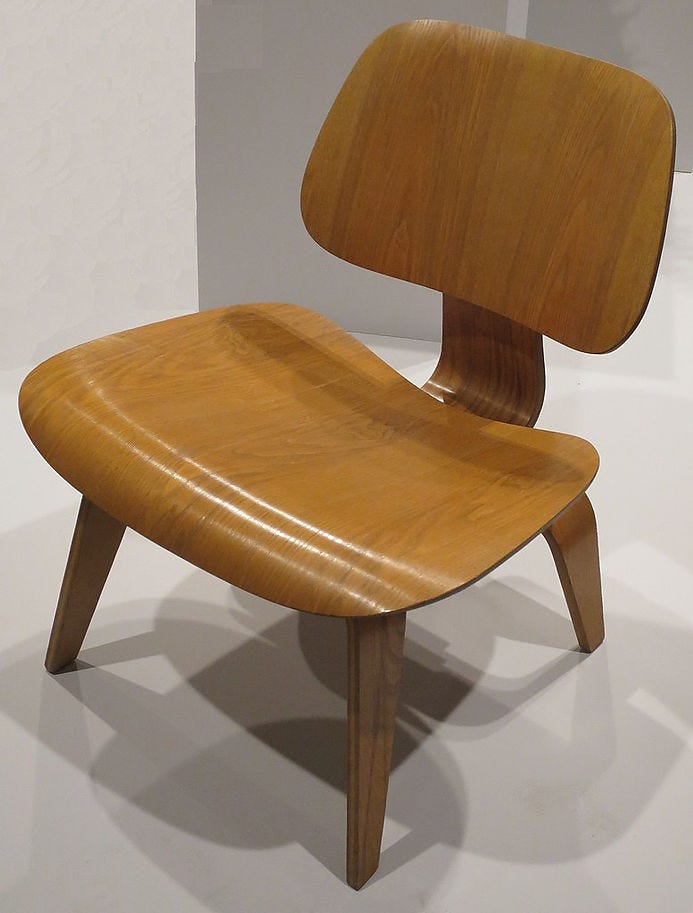
But the Lounge Chair was just the beginning. Ray and Charles breathed life into molded plywood, bending it to their will to create the Eames Molded Plywood Chair series. These designs embodied the couple’s ability to transform humble materials into artful masterpieces that seamlessly merged comfort and elegance.
Part 2: Crafting Creativity on Screen and in the Classroom — The Eames Legacy Expands
From Furniture to Film: An Unveiling of Visions
Imagine a world where ideas literally come to life on the silver screen — a world where the ordinary becomes extraordinary through the lens of creativity. Ray and Charles Eames embarked on a cinematic adventure that infused mundane subjects with a touch of magic, giving birth to a collection of short films that danced between art and science, form and function.
In 1950, the Eameses joined forces with their dear friend and designer Eero Saarinen to create the groundbreaking short film “Toccata for Toy Trains”. This whimsical journey showcased a miniature world of trains and toys, transformed into a vibrant ballet of movement and color. Their films, including the celebrated “Powers of Ten,” celebrated the universe’s intricate interconnectedness, presenting complex concepts through captivating visuals accessible to all. Their approach, a blend of animation, live-action, and sheer imagination, paved the way for a new era of visual storytelling that continues to inspire creatives and filmmakers today.
Inspiration through Education: The Eames Approach
As the Eameses conquered the realm of visual media, they cast their visionary gaze upon the world of education. Their belief in design’s transformative power led to the creation of exhibits, presentations, and educational materials that captivated the imagination of learners both young and old. They believed in a holistic approach to learning, one that embraced a multisensory experience, engaging the mind, heart, and hands in equal measure.
“Eventually everything connects.”
― Charles Eames
Their most enduring contribution, perhaps, was their work with the “Mathematica” exhibition, commissioned by IBM. This interactive display turned complex mathematical concepts into tangible experiences, inviting visitors to touch, manipulate, and comprehend the beauty of numbers. Their innovative approach to design education was a testament to their commitment to accessible learning, a legacy that resonates through modern design education practices.
Partnership with a Purpose
As we venture further into the Eameses’ world, it becomes clear that their partnership was not merely a collaboration — it was an embodiment of a shared purpose. Their films and educational initiatives were more than just vehicles of expression; they were tools to bridge the gap between the artist’s vision and the viewer’s understanding. Ray and Charles Eames crafted a legacy that redefined design as a catalyst for connection and knowledge, a legacy that continues to inspire generations of designers to think beyond aesthetics and embrace the power of communication.
Part 3: The Everlasting Echoes
Form and Function in Harmony: A Timeless Aesthetic
The Eameses’ design philosophy distilled form and function into a harmonious symphony, creating works that transcended trends and embraced timelessness. Their focus on accessibility and comfort revolutionized not only the world of furniture but also the way we interact with our surroundings. Their designs, such as the iconic Eames Lounge Chair and Ottoman, continue to be revered as benchmarks of elegance and ingenuity. These pieces have gracefully transitioned through decades, proving that the Eames touch is not bound by temporal limitations.
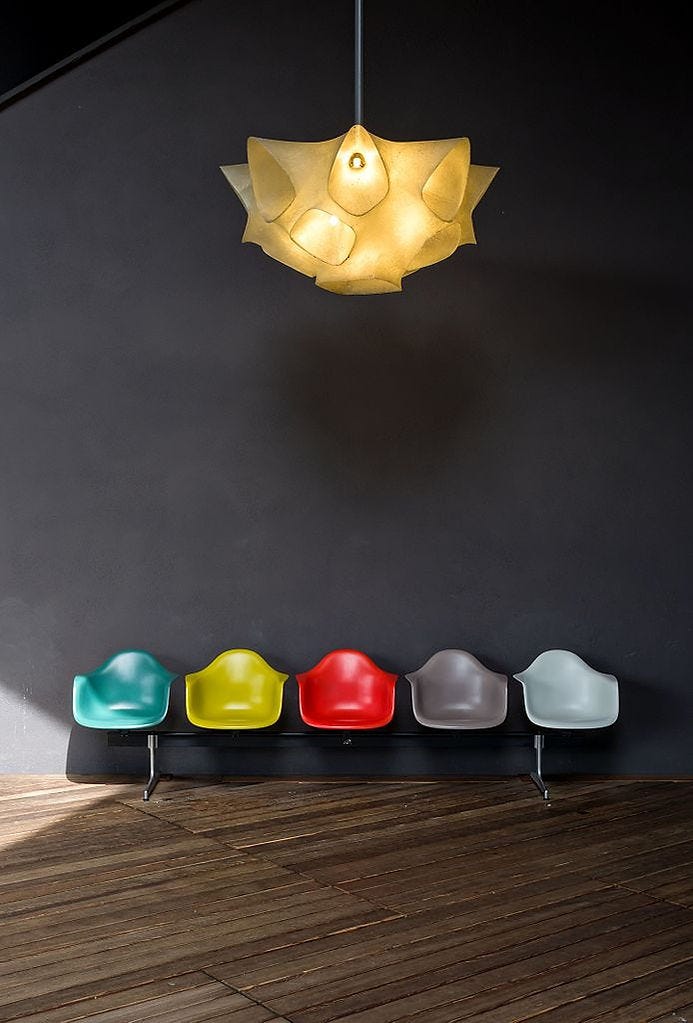
But their influence extends beyond individual pieces; it resides in the principles they championed. The Eameses’ emphasis on user-centric design, thoughtful craftsmanship, and the marriage of aesthetics and purpose continues to inspire contemporary designers who seek to create objects that not only serve but delight.
Inspiring a New Generation: The Eames Influence Today
As the world of design evolves, the Eames legacy remains a guiding star for those who strive to make a meaningful impact. Their multidisciplinary approach, which effortlessly melded different fields of creativity, has become a blueprint for innovation in the 21st century. Designers today, whether in furniture, architecture, film, or education, draw inspiration from the Eameses’ boundless curiosity and fearless exploration.
“Choose Your Corner, Pick Away At It Carefully, Intensely, & To The Best Of Your Ability, & That Way, You Might change The World.”
― Charles Eames
Furthermore, the Eameses’ commitment to accessible design has gained renewed relevance as sustainable and inclusive practices take center stage. Their belief that design should be for “the best for the most for the least” has evolved into a mantra for those seeking to create a better world through design that is accessible, environmentally conscious, and socially responsible.
“Genius? Nothing — we just worked harder.”
― Charles Eames
From furniture that cradles us in comfort to films that awaken our sense of wonder, from educational endeavors that ignite curiosity to a design philosophy that transcends time, Ray and Charles Eames have bequeathed a legacy that is as timeless as it is transformative. Their story is a testament to the potential of human creativity, a reminder that when passion and purpose converge, the results are nothing short of extraordinary.
#eames #interiordesign #design #hermanmiller #midcenturymodern #lecorbusier #architecture #vintage #knoll #vitra #midcentury #eameschair #mcm #bauhaus #marcelbreuer #art #interior #furniture #militares #minimalism #jeanprouve #pierrejeanneret #charlotteperriand #pierrepaulin #modernism #homedecor #eam #painting #photography #miesvanderrohe


.jpg)


_jm03475.jpg)