
Arne Jacobsen: A Pioneer of Danish Design and Architectural Revolution
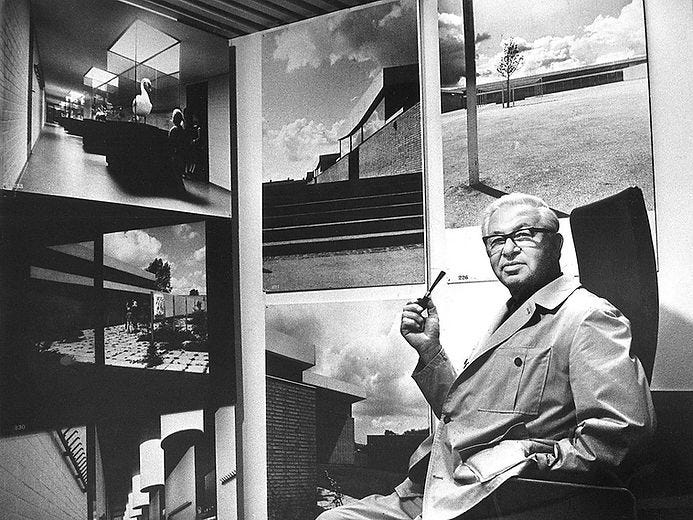
The Early Years and Formative Influences
In the realm of design and architecture, few names reverberate as profoundly as Arne Jacobsen. An icon within Danish design, Jacobsen’s legacy is a testament to his innate creative genius and unwavering commitment to pushing the boundaries of architecture and interior.
Early Life and Education
Arne Jacobsen was born on February 11, 1902, in Copenhagen, Denmark, into a world that was on the cusp of transformative change. Raised in a middle-class family, Jacobsen displayed a penchant for drawing and design from an early age. His parents, a wholesale trader and a bank clerk, recognized his talents and enrolled him in the Royal Danish Academy of Fine Arts, School of Architecture, where he would lay the foundation for his remarkable career. Though Arne was himself an aspiring painter, his parents believed that architecture was a safer living.
If a building becomes architecture, then it is art.
Arne Jacobsen
The Intersection of Tradition and Modernity
Jacobsen’s educational journey coincided with a period of architectural transition. Denmark was grappling with the aftermath of World War I and the emergence of modernist ideologies that sought to challenge established norms. The clash between tradition and modernity would go on to shape Jacobsen’s design ethos, as he navigated the delicate balance between embracing innovative concepts and honoring his country’s rich architectural heritage.
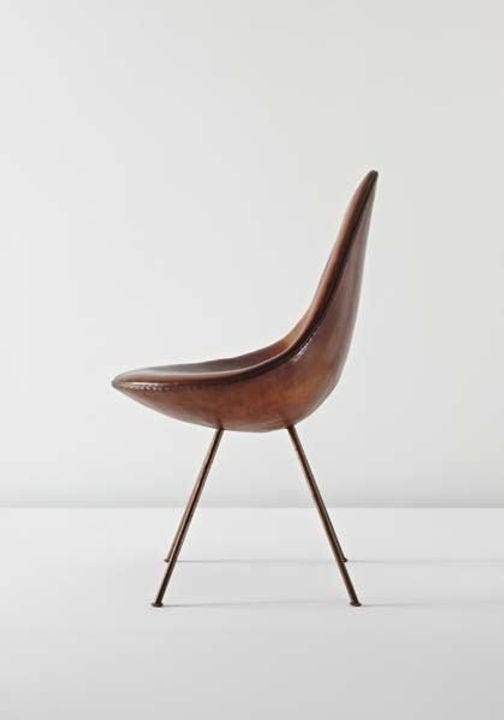
Arne Jacobsen, Drop Chair, SAS Royal Hotel, Copenhagen, Denmark. (Image source: Wikimedia Commons).
Functionalism and the Bauhaus Influence
The 1920s witnessed a surge of interest in functionalism, a design philosophy that championed the idea of form following function. This movement resonated deeply with Jacobsen, who found inspiration in the works of the Bauhaus, a German school renowned for its avant-garde approach to art, design, and architecture. The teachings of luminaries like Walter Gropius and Ludwig Mies van der Rohe left an indelible imprint on Jacobsen’s creative psyche, influencing his perspective on the intrinsic relationship between design, functionality, and craftsmanship.
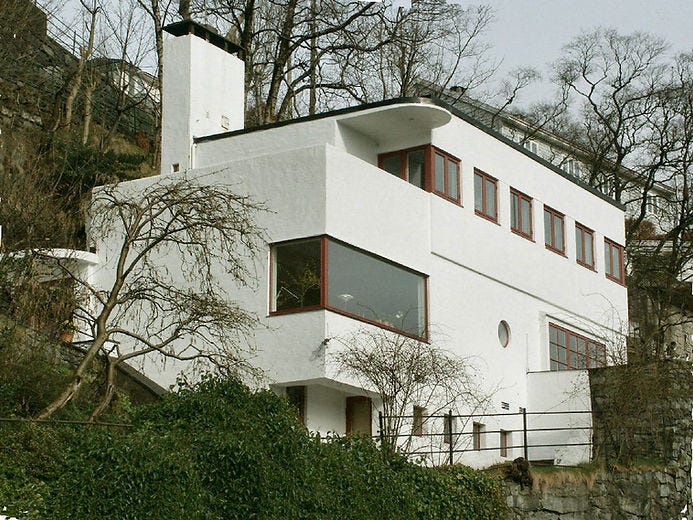
Residence of Lou Eide, Bergen, Norway. Architect Per Grieg 1943. Example of functionalist architecture in Norway. (Image source: Wikimedia Commons). Creative Commons license: CC BY-SA 3.0, Photo by: Frode Inge Helland.
Nature as a Muse
While the Bauhaus ethos ignited Jacobsen’s imagination, it was his innate connection to nature that set his designs apart. His deep appreciation for organic forms, clean lines, and the interplay of light and shadow manifested in his early architectural ventures. Jacobsen’s 1928 “House of the Future” project, with its harmonious integration of indoor and outdoor spaces, was a testament to his visionary ability to bridge the gap between human habitation and the natural world.
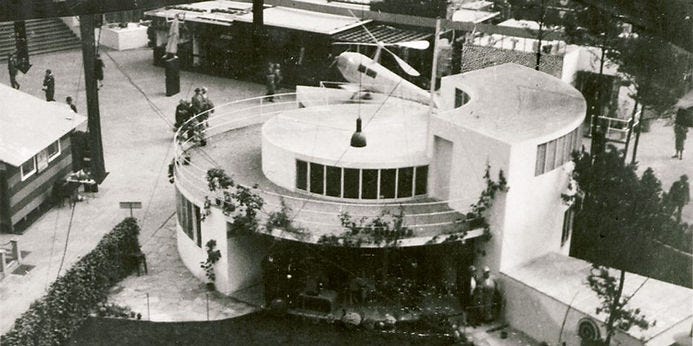
Arne Jacobsen’s House of the Future in 1929. (Image source: Wikimedia Commons).
The Emergence of Scandinavian Modernism
As the 1930s dawned, Jacobsen found himself at the epicenter of a burgeoning design movement that would come to define an era: Scandinavian modernism. Characterized by simplicity, functionality, and a celebration of natural materials, this movement resonated deeply with Jacobsen’s design sensibilities. His collaboration with Danish furniture manufacturer Fritz Hansen resulted in a series of iconic chairs that would become emblematic of the mid-century modern aesthetic.
Proportions are what makes the old Greek temples classic in their beauty. They are like huge blocks, from which the air has been literally hewn out between the columns.
Arne Jacobsen
The Egg Chair: A Design Icon
No discussion of Arne Jacobsen’s legacy would be complete without a spotlight on his iconic Egg Chair. Created in 1958 for the lobby and lounge areas of the SAS Royal Hotel in Copenhagen, the Egg Chair’s organic shape and enveloping form epitomized Jacobsen’s fusion of aesthetics and comfort. The chair’s sculptural elegance and innovative upholstery techniques showcased Jacobsen’s meticulous attention to detail and his ability to push the boundaries of materiality.
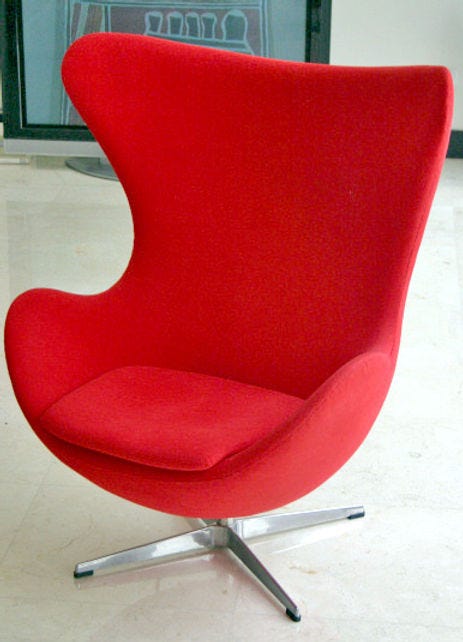
My favourite chair — The best seat in the house. The Egg Chair, by Arne Jacobsen. (Image source: Wikimedia Commons). Creative Commons license: CC BY-SA 2.0.
The Swan Chair: Elegance in Motion
Continuing his exploration of curvilinear forms, Jacobsen introduced the Swan Chair alongside the Egg Chair at the SAS Royal Hotel. The Swan Chair’s sinuous silhouette was a testament to Jacobsen’s mastery of fluid lines, and its swiveling base added an element of playfulness to its design. Like the Egg Chair, the Swan Chair seamlessly combined artistry and functionality, transcending the realm of “mere furniture” to become an enduring symbol of mid-century modern design.
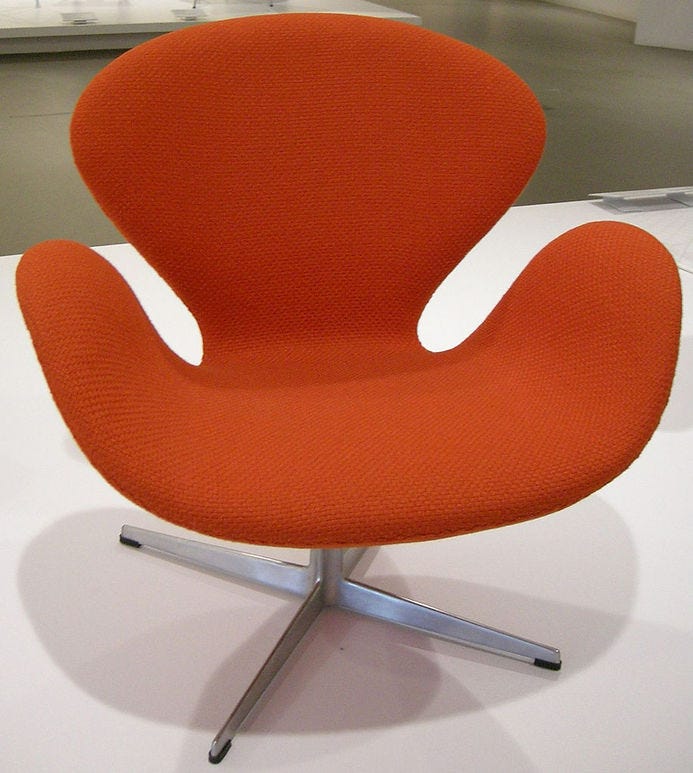
Arne Jacobsen’s Swan Chair, 1958. (Image source: Wikimedia Commons). Creative Commons license: CC BY-SA 2.0.
Architectural Marvels: SAS Royal Hotel and Beyond
While Jacobsen’s furniture designs garnered widespread acclaim, his architectural achievements were equally groundbreaking. The SAS Royal Hotel, often referred to as the Radisson Blu Royal Hotel, stands as a testament to Jacobsen’s holistic design approach. Completed in 1960, the hotel’s minimalist façade and innovative use of materials were a reflection of his commitment to functionalism and modernist principles. Every aspect of the hotel, from the building’s structure to its interior furnishings, bore the imprint of Jacobsen’s visionary touch.
Arne Jacobsen & SAS Royal Hotel | Fritz Hansen. Source: YouTube.
The Bellevue Theatre: A Marriage of Form and Function
Another jewel in Jacobsen’s architectural crown is the Bellevue Theatre, situated just north of Copenhagen. Completed in 1936, this project showcased Jacobsen’s ability to create spaces that harmonized with their natural surroundings. The theater’s streamlined design and fluid lines were a nod to the maritime setting, embodying Jacobsen’s belief in the interconnectedness of architecture, nature, and human experience.
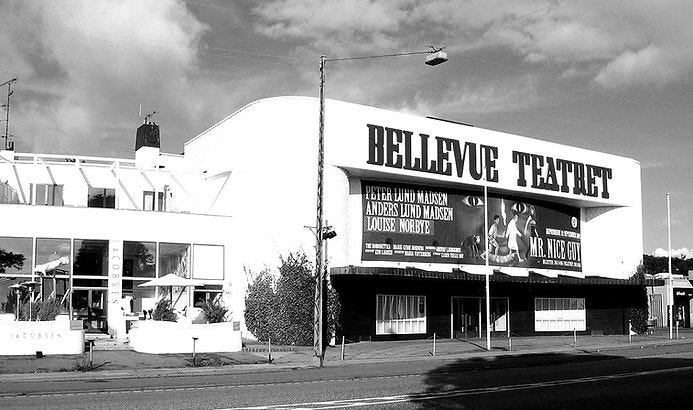
The Bellevue Theatre and Restaurant, Strandvejen, Klampenborg (Copenhagen, Denmark). Architect Arne Jacobsen. (Image source: Wikimedia Commons). Creative Commons license: CC BY-SA 3.0.
A Lasting Legacy
Arne Jacobsen’s influence extended far beyond individual designs; it was a philosophy that championed the marriage of aesthetics and functionality, tradition and innovation. His commitment to creating environments that enhanced the quality of human life was evident in every project he undertook. From furniture that embraced the human form to architectural spaces that seamlessly integrated with their surroundings, Jacobsen’s legacy is one of timeless elegance and unwavering dedication to design excellence.
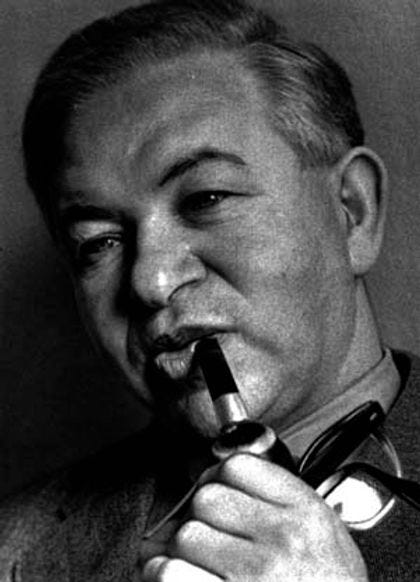
Arne Jacobsen. Danish architect and designer, 1960. (Image source: Wikimedia Commons).
#ArneJacobsen #DanishDesign #ArchitecturalInnovation #ScandinavianModernism #DesignIcon #MidCenturyModern #Functionalism #DesignPhilosophy #FurnitureDesign #ArchitecturalMasterpieces


