avatarAvi Kotzer

Free AI web copilot to create summaries, insights and extended knowledge, download it at here

3683

Abstract

rogs and toads are both… frogs. At least, taxonomically speaking. There is a small exception, in that the members of the <b>family</b> <b>Bufonidae</b> are the ones considered to be “true toads”. However, because a family of animals belongs to an order ––and not the other way around–– these true toads are still taxonomically frogs.</p><figure id="ef4c"><img src="https://cdn-images-1.readmedium.com/v2/resize:fit:800/1*nT8YQ19CNyCFUbVcW8cFYg.png"><figcaption>Screenshotted by Iva Reztok</figcaption></figure><p id="67d9">Can you guess which of the above is a “true toad”? Hint: none of them.</p><p id="b5e8">As the Encyclopedia Britannica explains…</p><blockquote id="fc80"><p><i>Toad</i> is such a wobbly descriptor, in fact, that one member of a family may be called a frog while another is called a toad. Within the Brachycephalidae family, for instance, is a species (<i>Brachycephalus didactylus</i>) that goes by the names Brazilian gold frog, Brazilian flea frog, Brazilian flea toad, and Izecksohn’s toad.</p></blockquote><p id="7136">How about now? Can you tell which of these is a “true toad”?</p><figure id="0465"><img src="https://cdn-images-1.readmedium.com/v2/resize:fit:800/0*90mKycxitX2OTL5I.jpg"><figcaption>Credit: wikicommons</figcaption></figure><p id="06c3">If you said Number 6, pat yourself on the back (or have someone nearby do it, so that people on the bus don’t stare). It’s the <i>bufo japonicus</i>, or Japanese common toad. Now, if you also thought Number 2 was a “true toad”, you were in the ballpark. While not belonging to the <b>Bufonidae</b> family, <i>Bombina bombina</i> is known as the “fire-bellied toad”. Now, it may surprise you to learn that Number 8 is also a “true toad”, known as the Balearic green toad (<i>Bufotes balearicus</i>).</p><p id="73a6">What does all this prove? Mostly that when it comes to the Order Anura and the families that belong to it, things are messy. Considering there are more than 7,000 species of frogs and toads, that isn’t surprising. There is a lot of wonderful variation in the physical traits of these amphibians. The tiniest one (<i>Paedophryne amauensis</i>) measures less than an inch, while the largest frog, the aptly named Goliath (<i>Conraua goliath</i>), can reach lengths longer than a foot–- and that’s without the legs stretched out! Some frogs are eaten, some are used for insect control, and some provide indigenous peoples with poison for their arrows and darts.</p><p id="4c70">By far some of the most fascinating frogs are the ones belonging to the <b>Centrolenida </b>family. The first fifty seconds of this video will tell you why:</p> <figure id="ecf1"> <div> <div> <img class="ratio" src="http://placehold.it/16x9"> <iframe class="" src="https://cdn.embedly.com/widgets/media.html?src=https%3A%2F%2Fwww.youtube.com%2Fembed%2FU7zARByAu1c%3Ffeature%3Doembed&amp;display_name=YouTube&amp;url=https%3A%2F%2Fwww.youtube.com%2Fwatch%3Fv%3DU7zARByAu1c&amp;image=https%3A%2F%2Fi.ytimg.com%2Fvi%2FU7zARByAu1c%2Fhqdefault.jpg&amp;key=a19fcc184b9711e1b4764040d3dc5c07&amp;type=text%2Fhtml&amp;schema=youtube" allowfullscreen="" frameborder="0" height="480" width="854"> </div> </div> </figure></iframe></div></div></figure><p id="7f96">Almost all the frogs we’ve discussed so far are not “true frogs”, however. Which brings us to…</p><h2 id="bc3a">True frogs</h2><p id="63ea">Duh! What did you think this section was going to be about?</p><p id="80bc">I wrote “almost all the frogs” because there are two that are <i>ranids</i>. No need to scroll back up to try and figure out which; we here at Si

Options

lly little Dictionary! want our readers to always scroll down to the end.</p><figure id="a508"><img src="https://cdn-images-1.readmedium.com/v2/resize:fit:800/1*FHmCe7BmyegKrortauncEA.png"><figcaption>Screenshot collage by Iva Reztok</figcaption></figure><p id="654d">Both the Cyprus frog on the left and the pool frog on the right belong to the genus <i>Pelophylax</i>, which in turn belongs to the <b>Ranidae</b> family. This family of frogs has over 600 species, or about 8–9% of all the Anuras. Considering there are 54 more families, the <i>ranids</i> have more than their share, which includes the bullfrog. <i>Ranids</i> are also found on all continents except Antartica.</p><p id="40e0">Most of these frogs conform to what you typically expect: they live in the ponds or rivers, catch insects with their long tongues, lay eggs, and undergo the classic metamorphosis from tadpole to adult. But some <i>ranids</i> give birth to live babies, while others prefer living in trees or burrowing to spending time in the water.</p><p id="be79">Speaking of catching flies… did you know that frog spit undergoes a change when they do that? Neither did I. You can watch some frogs catch insects in this slo-mo video set to the tune of Johann Strauss II’s “The Blue Danube”.</p> <figure id="ba3d"> <div> <div> <img class="ratio" src="http://placehold.it/16x9"> <iframe class="" src="https://cdn.embedly.com/widgets/media.html?src=https%3A%2F%2Fwww.youtube.com%2Fembed%2FMFlHHG57V2U%3Ffeature%3Doembed&amp;display_name=YouTube&amp;url=https%3A%2F%2Fwww.youtube.com%2Fwatch%3Fv%3DMFlHHG57V2U&amp;image=https%3A%2F%2Fi.ytimg.com%2Fvi%2FMFlHHG57V2U%2Fhqdefault.jpg&amp;key=a19fcc184b9711e1b4764040d3dc5c07&amp;type=text%2Fhtml&amp;schema=youtube" allowfullscreen="" frameborder="0" height="480" width="854"> </div> </div> </figure></iframe></div></div></figure><p id="ae80">That’s it for today. Next time you run into an amphibian claiming to be a true frog, forget about inquiring if it has teeth, smooth skin, a long body, and lives in the water. Just ask if it’s a <i>ranid</i>. Don’t be surprised if that poor amphibian has no idea what you’re talking about, however… because the editors of the Spelling Bee decided that <i>ranid </i>is a dord*.</p><p id="e578">You can check out my previous entry on another <b>dord* </b>here:</p><div id="d5a3" class="link-block"> <a href="https://readmedium.com/ananym-a97052629b97"> <div> <div> <h2>Ananym</h2> <div><h3>siht drow sesrever gnihtyreve</h3></div> <div><p>medium.com</p></div> </div> <div> <div style="background-image: url(https://miro.readmedium.com/v2/resize:fit:320/0*ahn2dysoNdHJhYd3)"></div> </div> </div> </a> </div><p id="74fb">*What the heck is a <b>dord, </b>you ask? Here’s the answer:</p><div id="ab20" class="link-block"> <a href="https://www.merriam-webster.com/words-at-play/dord-a-ghost-word"> <div> <div> <h2>'Dord': A Ghost Word</h2> <div><h3>One of the questions people like to ask lexicographers is this: Can you sneak something into the dictionary? Can you…</h3></div> <div><p>www.merriam-webster.com</p></div> </div> <div> <div style="background-image: url(https://miro.readmedium.com/v2/resize:fit:320/0*hbOP4JWPhxWVGaYy)"></div> </div> </div> </a> </div></article></body>

Ranid

A frog is a toad is a frog is a toad
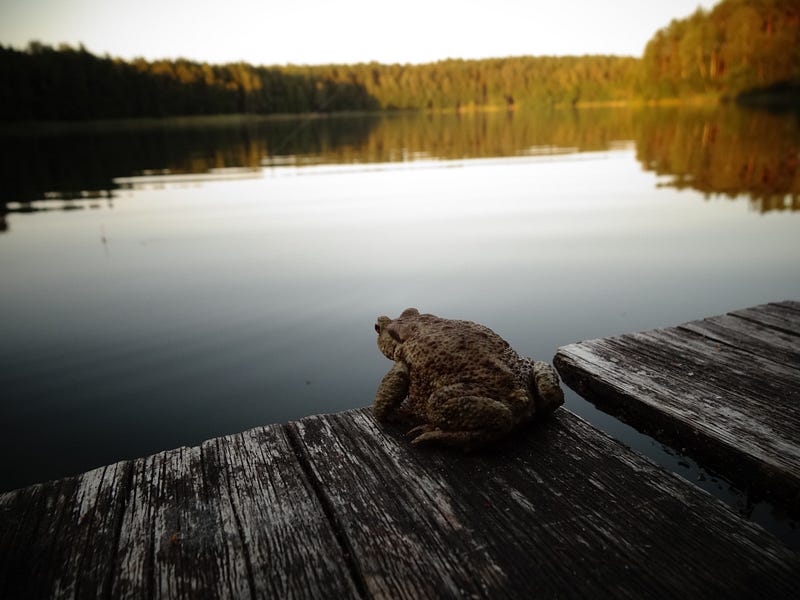
Photo by Firanka Mipinska on Unsplash

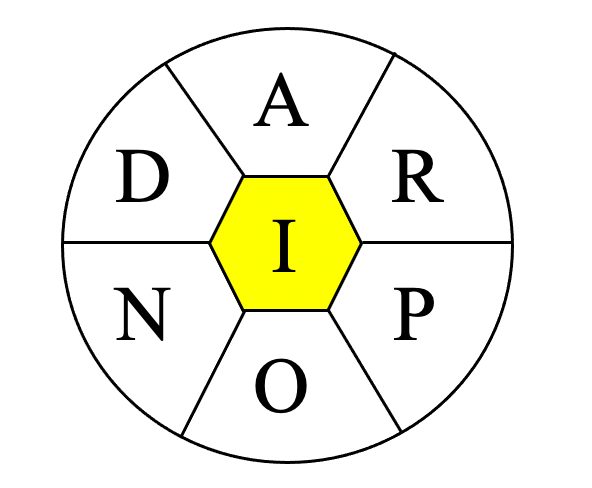
Today’s New York Times Spelling Bee letters:
Art: Iva Reztok

A, D, N, O, P, R, and center I (all words must include I)

Merriam-Webster says…

Credit: merriam-webster.com

…and…

Credit: merriam-webster.com

Silly little dictionary! Don’t you know that ranid can’t possibly be a word if the New York Times says it ain’t?

For further fascinating facts, check out the Spelling Bee Master.

What’s your favorite dord* from today’s puzzle?

My Two Cents

Pop quiz for my eagle-eyed readers ––all four of you. Does the photo at the top of today’s column show a frog or a toad? If you answered both, you might be right.

The animal in the picture looks more like a toad than a frog to me. And when I write “frog”, I mean “true frog”. Did you know there are “true frogs” and “true toads”? On Monday we briefly mentioned “true cobras”, so maybe this is the week in which we put to shame all those phony animals pretending to be something they’re not.

You may agree with me that the creature sitting on the dock of the bay is a toad. After all, it’s a squat, brownish amphibian with relatively dry skin covered in warts. And yet, even if it is a toad, you could still call it a frog and be perfectly right. How is that possible? Read on to find out.

Frogger vs Frogger

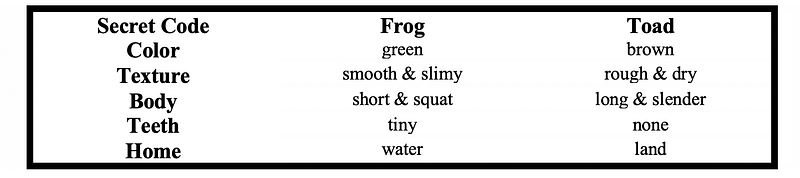
When I was a kid, we were given the secret code for distinguishing frogs from toads. This was quite an important thing to know back then if you wanted to keep your school cred intact among your fifth-grade peers.

Back then I knew nothing about creating beautiful tables on computers to display my knowledge. Mostly because I didn’t have a computer at home. It was 1980 and almost nobody had them. Today things have changed a whole lot and most of us carry more computer power in our phones than what our desktops had three decades ago. One thing hasn’t changed: I still don’t know how to create beautiful tables to display my knowledge. So here’s a simple, bland one that we made.
Simple, bland table by Iva Reztok

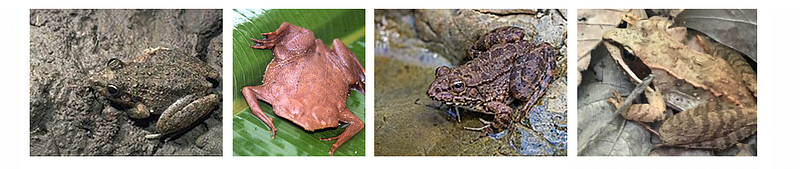
We thought this information made us experts on the Anuras, the order of tail-less amphibians. (That’s what Anura means in Greek, literally: without tail.) What we didn’t know is that it didn’t matter, because frogs and toads are both… frogs. At least, taxonomically speaking. There is a small exception, in that the members of the family Bufonidae are the ones considered to be “true toads”. However, because a family of animals belongs to an order ––and not the other way around–– these true toads are still taxonomically frogs.
Screenshotted by Iva Reztok

Can you guess which of the above is a “true toad”? Hint: none of them.

As the Encyclopedia Britannica explains…

Toad is such a wobbly descriptor, in fact, that one member of a family may be called a frog while another is called a toad. Within the Brachycephalidae family, for instance, is a species (Brachycephalus didactylus) that goes by the names Brazilian gold frog, Brazilian flea frog, Brazilian flea toad, and Izecksohn’s toad.

How about now? Can you tell which of these is a “true toad”?
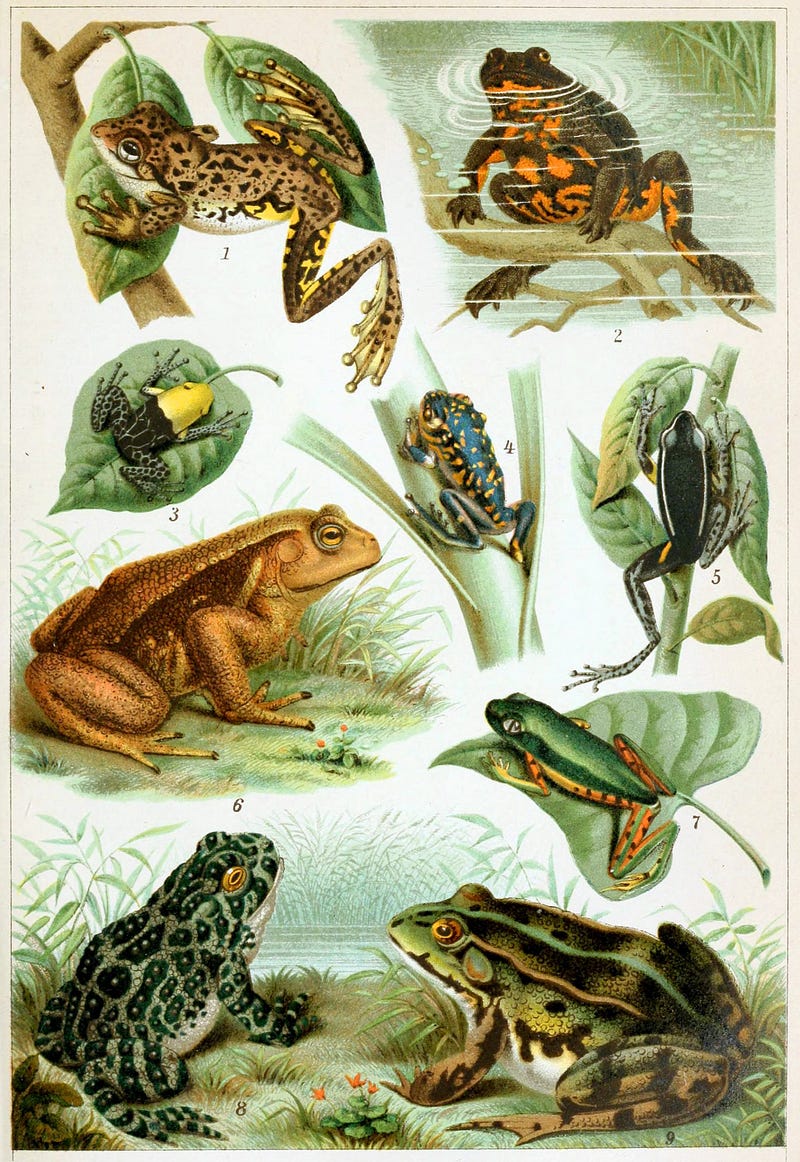
Credit: wikicommons

If you said Number 6, pat yourself on the back (or have someone nearby do it, so that people on the bus don’t stare). It’s the bufo japonicus, or Japanese common toad. Now, if you also thought Number 2 was a “true toad”, you were in the ballpark. While not belonging to the Bufonidae family, Bombina bombina is known as the “fire-bellied toad”. Now, it may surprise you to learn that Number 8 is also a “true toad”, known as the Balearic green toad (Bufotes balearicus).

What does all this prove? Mostly that when it comes to the Order Anura and the families that belong to it, things are messy. Considering there are more than 7,000 species of frogs and toads, that isn’t surprising. There is a lot of wonderful variation in the physical traits of these amphibians. The tiniest one (Paedophryne amauensis) measures less than an inch, while the largest frog, the aptly named Goliath (Conraua goliath), can reach lengths longer than a foot–- and that’s without the legs stretched out! Some frogs are eaten, some are used for insect control, and some provide indigenous peoples with poison for their arrows and darts.

By far some of the most fascinating frogs are the ones belonging to the Centrolenida family. The first fifty seconds of this video will tell you why:

Almost all the frogs we’ve discussed so far are not “true frogs”, however. Which brings us to…

True frogs

Duh! What did you think this section was going to be about?

I wrote “almost all the frogs” because there are two that are ranids. No need to scroll back up to try and figure out which; we here at Silly little Dictionary! want our readers to always scroll down to the end.
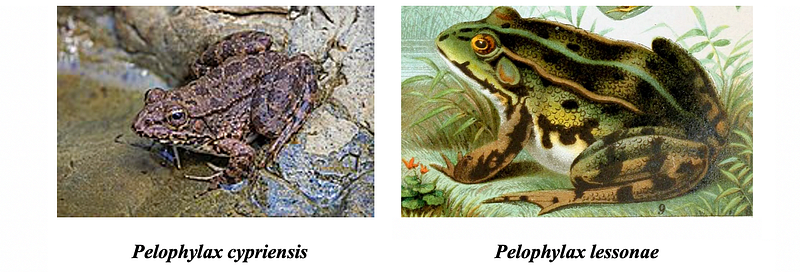
Screenshot collage by Iva Reztok

Both the Cyprus frog on the left and the pool frog on the right belong to the genus Pelophylax, which in turn belongs to the Ranidae family. This family of frogs has over 600 species, or about 8–9% of all the Anuras. Considering there are 54 more families, the ranids have more than their share, which includes the bullfrog. Ranids are also found on all continents except Antartica.

Most of these frogs conform to what you typically expect: they live in the ponds or rivers, catch insects with their long tongues, lay eggs, and undergo the classic metamorphosis from tadpole to adult. But some ranids give birth to live babies, while others prefer living in trees or burrowing to spending time in the water.

Speaking of catching flies… did you know that frog spit undergoes a change when they do that? Neither did I. You can watch some frogs catch insects in this slo-mo video set to the tune of Johann Strauss II’s “The Blue Danube”.

That’s it for today. Next time you run into an amphibian claiming to be a true frog, forget about inquiring if it has teeth, smooth skin, a long body, and lives in the water. Just ask if it’s a ranid. Don’t be surprised if that poor amphibian has no idea what you’re talking about, however… because the editors of the Spelling Bee decided that ranid is a dord*.

You can check out my previous entry on another dord* here:

*What the heck is a dord, you ask? Here’s the answer:

Spelling Bee
Language
Animals
Frog
Toad
Recommended from ReadMedium