avatarDarren Weir

Free AI web copilot to create summaries, insights and extended knowledge, download it at here

4867

Abstract

Mahal, the Palace of Wind. The Pink City was originally painted pink (representing hospitality) in honor of a visit by Prince Albert, who later became King Edward VII. The Maharaja made it the law in 1877 that buildings in the old city must be painted pink, which remains on the books today.</p><figure id="f404"><img src="https://cdn-images-1.readmedium.com/v2/resize:fit:800/1*_Zp3Uk05PFW3lnO0CbD4VA.jpeg"><figcaption></figcaption></figure><figure id="979b"><img src="https://cdn-images-1.readmedium.com/v2/resize:fit:800/1*jivQzkHRr8mGsk-RPp4WPg.jpeg"><figcaption>Hava Mahal — Jaipur, India — author’s photos</figcaption></figure><p id="90bc">Hawa Mahal was built in 1799 for Maharaja Sawai Pratap Singh, grandson of Maharaja Sawai Jai Singh ll, the founder of Jaipur. The pink palace was constructed with pink and red sandstone, although the inner courtyard is pale yellow as are other buildings outside of the old city.</p><p id="700e">The palace is 5-stories high and its 953 small windows now look down over the traffic mayhem below.</p><figure id="9f92"><img src="https://cdn-images-1.readmedium.com/v2/resize:fit:800/1*Fb2JYrnYiMGis5zZHFdpwA.jpeg"><figcaption></figcaption></figure><figure id="afc3"><img src="https://cdn-images-1.readmedium.com/v2/resize:fit:800/1*o784gYnBJuoPUEG-NAUSMg.jpeg"><figcaption>View of Jaipur traffic from Hawa Mahal — author’s photo</figcaption></figure><p id="d1fe">The windows allow a cooling breeze to blow through the building, cooled further by fountains in each of the rooms. Some of the concrete screened windows have unique patterns and some windows have stained glass which creates patterns of light on the floor at certain times of the day (depending on the sun’s position).</p><figure id="cfad"><img src="https://cdn-images-1.readmedium.com/v2/resize:fit:800/1*B5zdLHOhVjcagz1NEiidLQ.jpeg"><figcaption></figcaption></figure><figure id="e841"><img src="https://cdn-images-1.readmedium.com/v2/resize:fit:800/1*u8q29nRcMmHtHDe6iDfj0A.jpeg"><figcaption>Window screen patterns and stained glass — author’s photos</figcaption></figure><p id="582c">We wandered through the marketplace around the palace, as we headed next door to our next stop.</p><figure id="c894"><img src="https://cdn-images-1.readmedium.com/v2/resize:fit:800/1*sKxxZJDDZU1zRMf7fP_EAg.jpeg"><figcaption></figcaption></figure><figure id="8db8"><img src="https://cdn-images-1.readmedium.com/v2/resize:fit:800/1*g8gJPf8HDfQ9a6PbHG86YA.jpeg"><figcaption></figcaption></figure><figure id="86d3"><img src="https://cdn-images-1.readmedium.com/v2/resize:fit:800/1*KCKHp2nyRDK2ZDfspHUZCA.jpeg"><figcaption>Jantar Mantar Giant sundial; Small sundial; Astrological guide — author’s photos</figcaption></figure><p id="ceaf">Next to the Hawa Mahal is <a href="https://www.jantarmantar.org/">Jantar Mantar</a>, a world heritage site, and a center of astronomy. Construction was completed in 1730, by Maharaja Sawai Jai Singh II, who was also a famous astronomer in his own right. It is filled with all kinds of astronomical inventions; two sundials, the world’s largest sundial which is accurate to within just 2 seconds, and a smaller one accurate to within 29 seconds.</p><p id="aa3e">There is also the Rasivalayas Yantra which has 12 structures (or instruments) used to measure the latitude and longitude of an object in the sky, each corresponding to a sign of the zodiac.</p><figure id="6dbd"><img src="https://cdn-images-1.readmedium.com/v2/resize:fit:800/1*UtdzsN_cCpZhiq9VeD-pSQ.jpeg"><figcaption>Wedding preparations — Jaipur — author’s photo</figcaption></figure><p id="90d7">The on-site museum was getting prepared for a massive wedding later that evening, an elaborate undertaking for hundreds of guests. The museum is filled with regal antiques, containing many costumes of the Maharajas (including a massive pair of pants for one of the kings who was 7 feet tall and weighed 250kg- that’s more than 550 pounds) and a separate facility containing the various weapons of the Rajasthani fighters. Unfortunately, no cameras were allowed inside.</p><figure id="a2ec"><img src="https://cdn-images-1.readmedium.com/v2/resize:fit:800/1*CtofV9lGdNjhQAZtDfEEOA.jpeg"><figcaption></figcaption></figure><figure id="869c"><img src="https://cdn-images-1.readmedium.com/v2/resize:fit:800/1*kE6R4hnewQUfm1P6HsjgsQ.jpeg"><figcaption>Inner Courtyard; City Palace gate — author’s photos</figcaption></figure><p id="d18e">We went into the room where the King would hold court with his advisors and the prime minister… again no photos inside. But outside in the courtyard, there were some magnificently painted doors that I did take pictures of. We didn’t go inside the City Palace, you can get a tour but it costs about $50 USD/person, more than I was willing to pay for a look around.</p><figure id="a5a6"><img src="https://cdn-images-1.readmedium.com/v2/resize:fit:800/1*C

Options

2-WtWPtK4pc1V1YMxG4HQ.jpeg"><figcaption>Maharaja’s Giant Silver Water Bottle — author’s photo</figcaption></figure><p id="cb32">In the area where the wedding would be held were two massive silver jars on display, the largest silver objects in the world, each made of 14,000 silver coins, for Maharaja Sawai Madho Singh II, who filled the jars with sacred water from the Ganges River to take with him on his voyage to England for the coronation of King Edward VII in 1902.</p><figure id="cea5"><img src="https://cdn-images-1.readmedium.com/v2/resize:fit:800/1*9vs9mxEGxJe8ng5aPbxJ-A.jpeg"><figcaption>The King is in — author’s photo</figcaption></figure><p id="a635">The museum is set next to the City Palace, the home of the current King. There are still 21 Kings in India, none have real power but are considered figureheads. You can tell when the monarch is in Jaipur based on the two flags flying over the palace.</p><figure id="643c"><img src="https://cdn-images-1.readmedium.com/v2/resize:fit:800/1*oeri7W8PNt3WbGQ7tu1nJQ.jpeg"><figcaption>wild peacock — author’s photo</figcaption></figure><p id="f163">Our final stop for the day was the monkey temple where we saw numerous wild peacocks along the way.</p><figure id="5cf4"><img src="https://cdn-images-1.readmedium.com/v2/resize:fit:800/1*MXXSGWG1Q1uPSvUGlOJSnQ.jpeg"><figcaption></figcaption></figure><figure id="a717"><img src="https://cdn-images-1.readmedium.com/v2/resize:fit:800/1*Ju-yhVFTv5YwYd4NmVvgQQ.jpeg"><figcaption></figcaption></figure><figure id="7aef"><img src="https://cdn-images-1.readmedium.com/v2/resize:fit:800/1*sw6hrN-kA5eqFUzHbh-4mQ.jpeg"><figcaption>Feeding the monkeys at the Monkey Temple — Jaipur — author’s photo</figcaption></figure><figure id="80f8"><img src="https://cdn-images-1.readmedium.com/v2/resize:fit:800/1*0XzginVKUNj06rBsOPFf2g.jpeg"><figcaption></figcaption></figure><figure id="a7a9"><img src="https://cdn-images-1.readmedium.com/v2/resize:fit:800/1*B-H1kK4PElOKyxCbpwYyRA.jpeg"><figcaption>Gray Langurs with bananas; Red-Faced monkeys have none- author’s photos</figcaption></figure><p id="6ba2">We had picked up 3 bunches of bananas to feed the “holy” monkeys which drew a crowd of them all around us. They were very polite though, and I was told we didn’t need to fear getting scratched or bitten.</p><figure id="1bed"><img src="https://cdn-images-1.readmedium.com/v2/resize:fit:800/1*Fy-9SRhHFfiVGYgbTpclZA.jpeg"><figcaption>Taking a dip in sacred water pool — author’s photo</figcaption></figure><p id="e564">Next to the temple, there’s a small waterfall where sacred water pours into a pool where young men were taking a dip in the holy water. There was also a temple where I was invited to pray by the Punjari (Hindu priest). It ended with a swipe of color between my eyebrows; the bindi represents the third eye which focuses inward.</p><p id="0667">The day ended with a perfect full moon and a wedding next to the hotel where a DJ played wild Rajasthani music with a driving beat. I wandered over and checked it out before anyone arrived and was invited to join them, but I wasn’t really dressed properly to attend a wedding celebration. Later, fireworks were set off to honor the newlywed couple.</p><p id="ac02"><i>Coming up in Part Three is a tour of Pushkar and Bikaner.</i></p><div id="8d16" class="link-block"> <a href="https://readmedium.com/rajasthan-my-epic-journey-in-the-land-of-maharajas-6b4a1f93bca8"> <div> <div> <h2>Rajasthan: My Epic Journey In The Land of Maharajas</h2> <div><h3>Part Three of Five — Pushkar and Bikaner</h3></div> <div><p>medium.com</p></div> </div> <div> <div style="background-image: url(https://miro.readmedium.com/v2/resize:fit:320/1*gN8jk-ySRGdiX6nYOX6-Qg.jpeg)"></div> </div> </div> </a> </div><p id="51d6">__________________________________________________________________</p><p id="cc7a"><i>You could read so much amazing content on Medium and it could be your next step in becoming a writer. And if you sign up with this link you will also be supporting my writing.</i></p><div id="8135" class="link-block"> <a href="https://darrenweir.medium.com/membership"> <div> <div> <h2>Join Medium with my referral link — Darren Weir</h2> <div><h3>As a Medium member, a portion of your membership fee goes to writers you read, and you get full access to every story…</h3></div> <div><p>darrenweir.medium.com</p></div> </div> <div> <div style="background-image: url(https://miro.readmedium.com/v2/resize:fit:320/0*McKjp06-A_l4GrV2)"></div> </div> </div> </a> </div></article></body>

Rajasthan: My Epic Journey In The Land of Maharajas

Part Two of Five — Jaipur
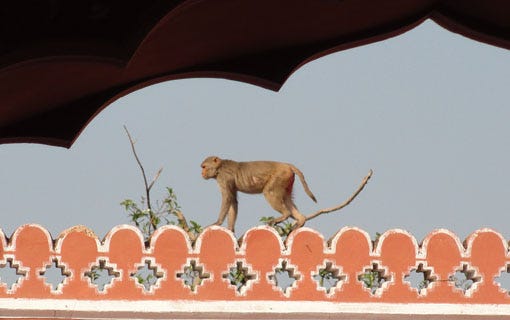
Jaipur monkey — author’s photo

As I continued my tour through Rajasthan, my next stop on my tour is Jaipur, the pink city, and the capital of Rajasthan. Everywhere you look there is something interesting to see; the people, their dress, and the architecture.
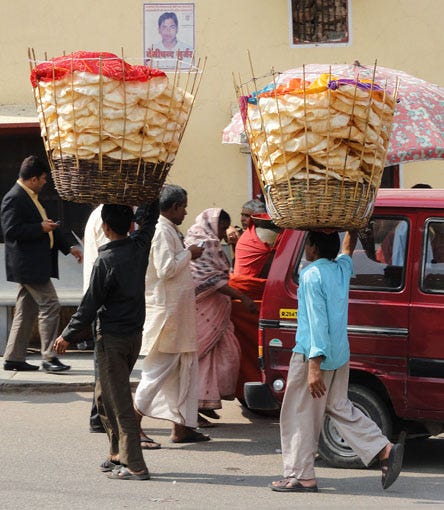
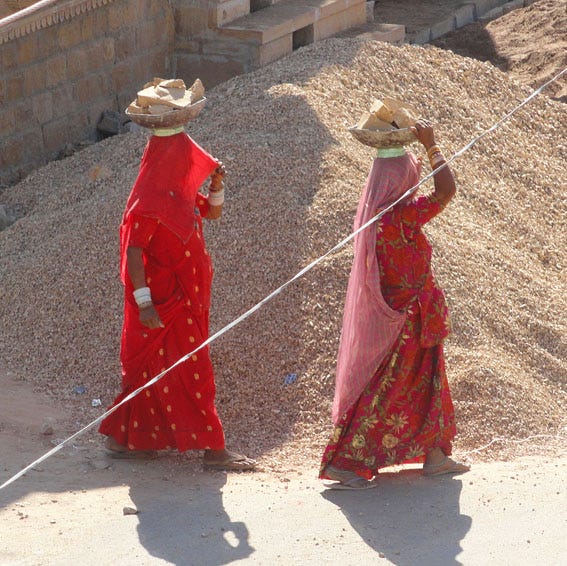
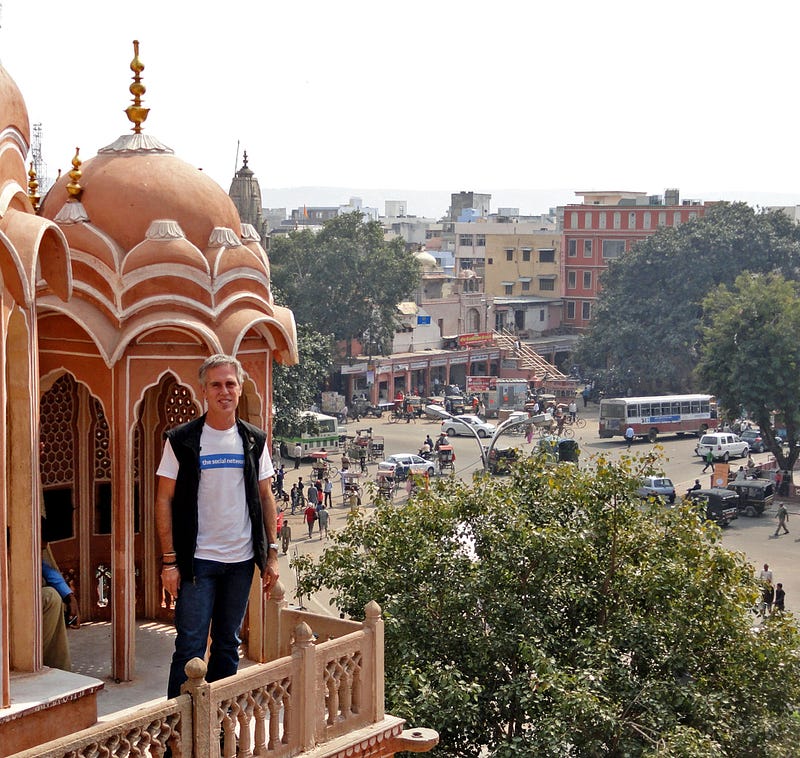
Carrying Papadums; carrying stones; me on balcony overlooking Jaipur traffic — author’s photos

I had a full day of sightseeing starting at the Amber Fort, also known as Amer Fort because it is located in the town of Amer just outside Jaipur.
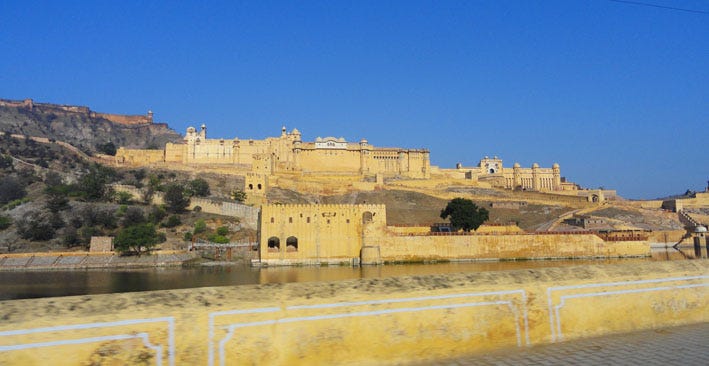
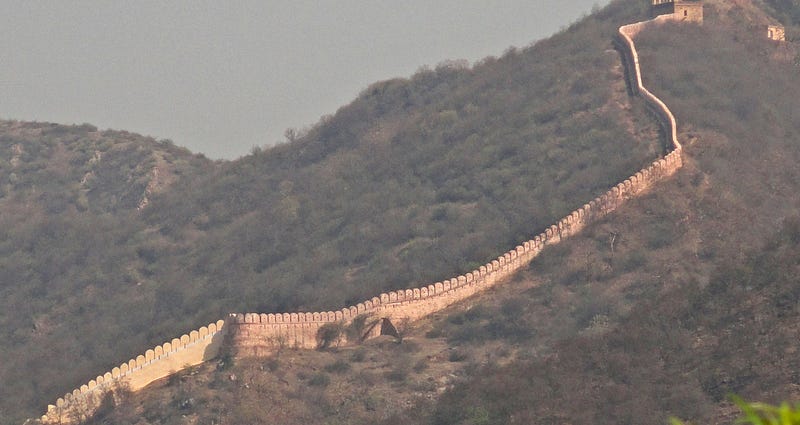
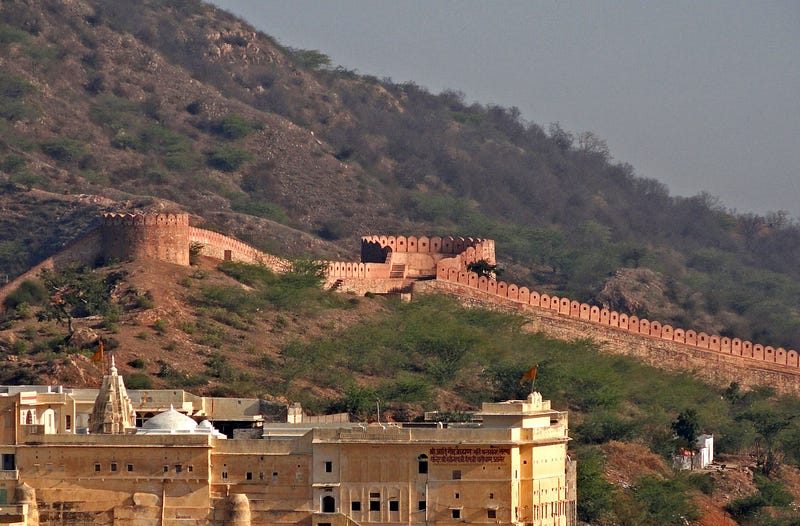
Amber Fort and its wall — author’s photos

The highlight of the fort is a magnificent palace set inside a walled city. The wall climbs the hills and mountains and is reminiscent of the Great Wall of China but is only about 12km long. The fort is high up on a big hill overlooking the entire city of Jaipur and was home to the Maharaja (King).
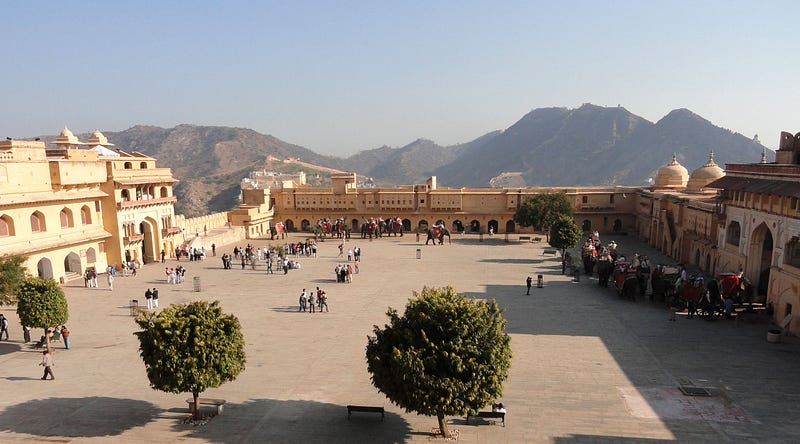
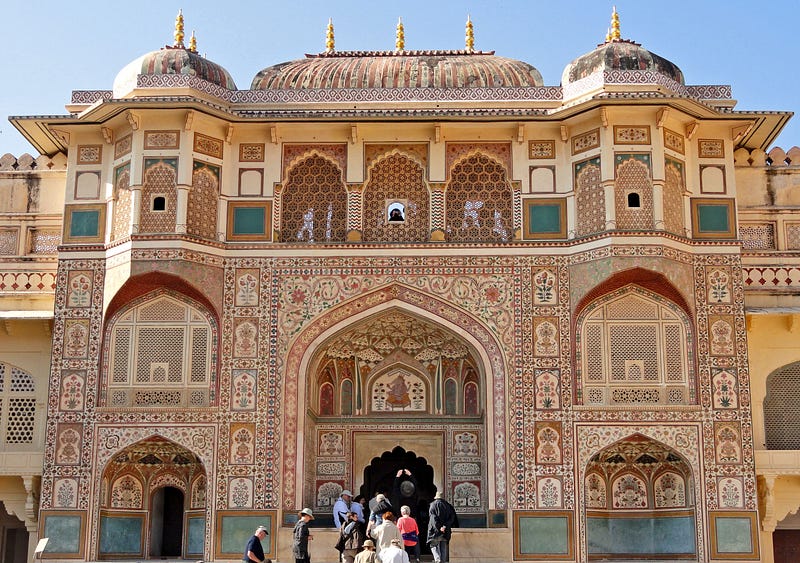
Amber Fort Palace and view — author’s photos

My guide Dev, was so knowledgeable about every place we went to, explaining not only the history of the Maharaja but also the palace and what each room and area was used for.
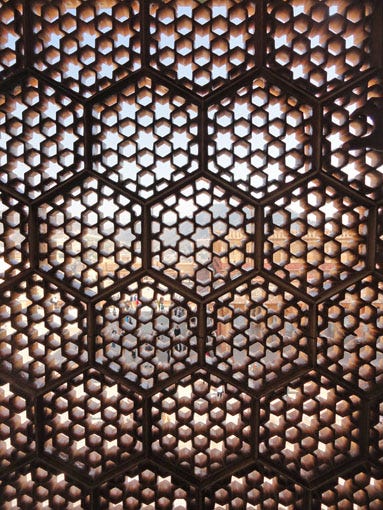
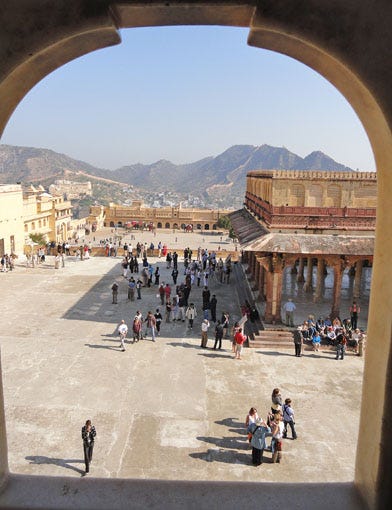
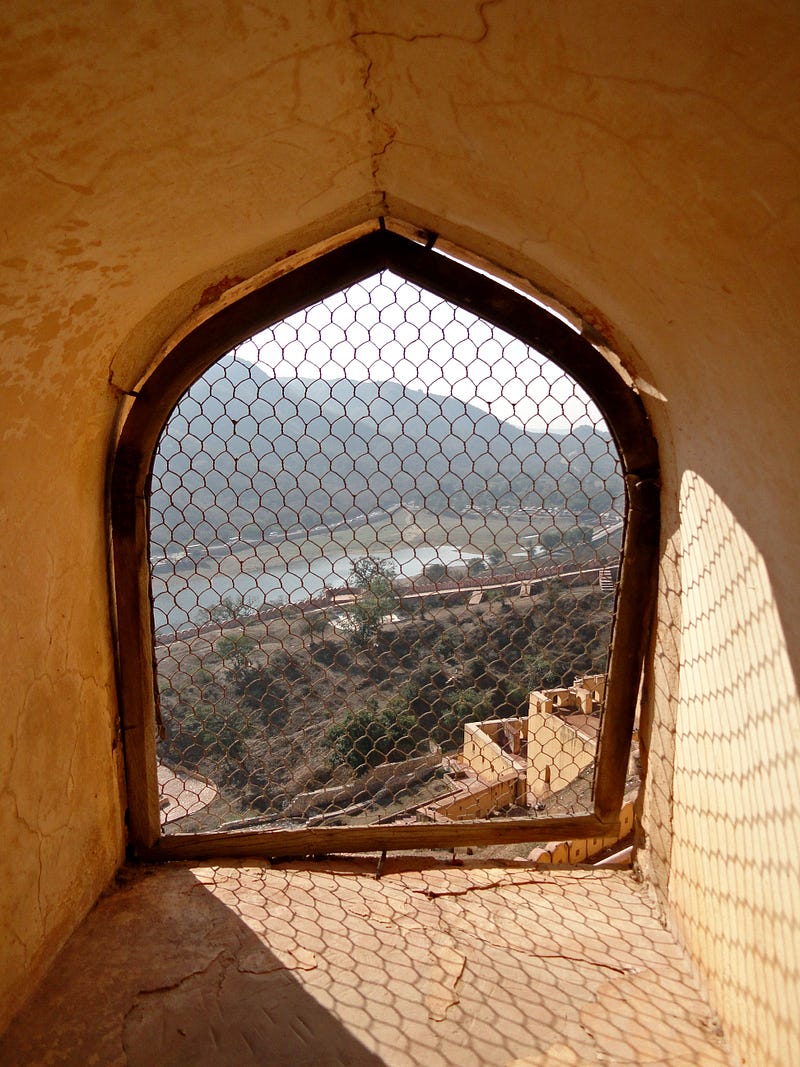
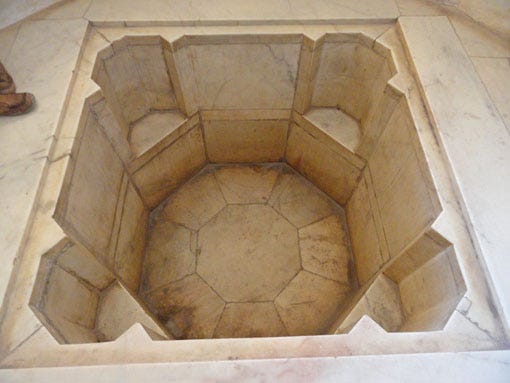
Jaipur Amber Fort screened window; view of courtyard; royal bathtub — author’s photos

I saw the area where the Queens and princesses would watch, through latticed stone windows (because they couldn’t be seen in public), as the King held court below. I even toured the area where the royals would be bathed and I was able to go down a tunnel that was an escape route in case of invasion.
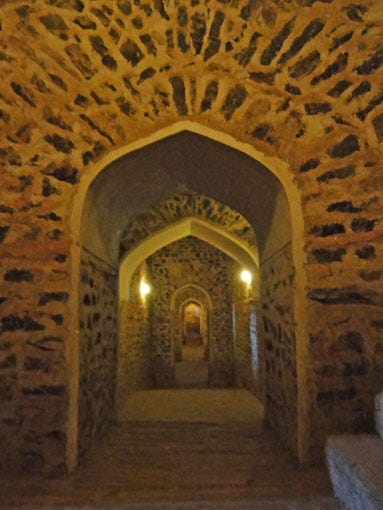
Amber Fort Escape Tunnel — author’s photo
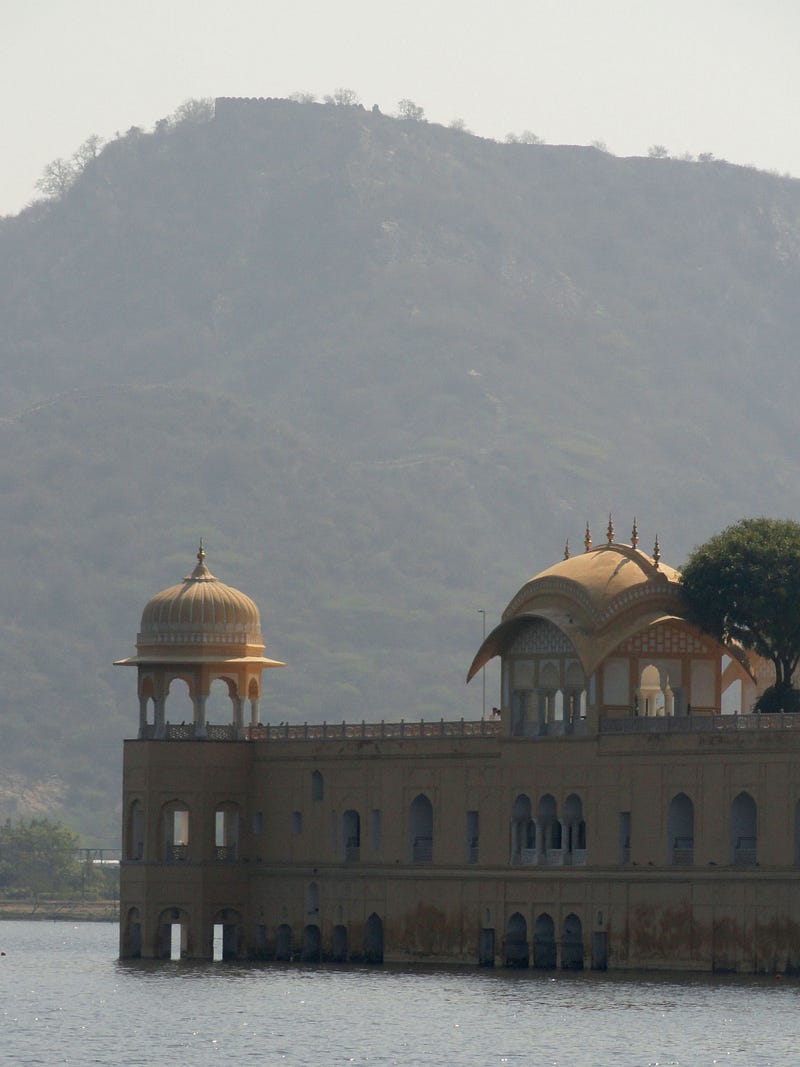
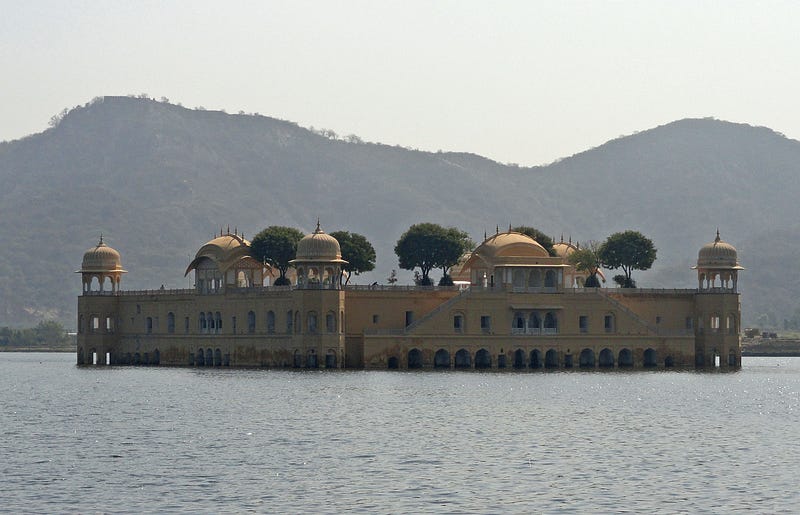
Jaipur Water Palace — author’s photos

As we left the fort, we made a quick stop at the nearby Water Palace, on a manmade lake that the King used to entertain visiting men. It’s kind of like a summer cottage just down the hill from the palace.
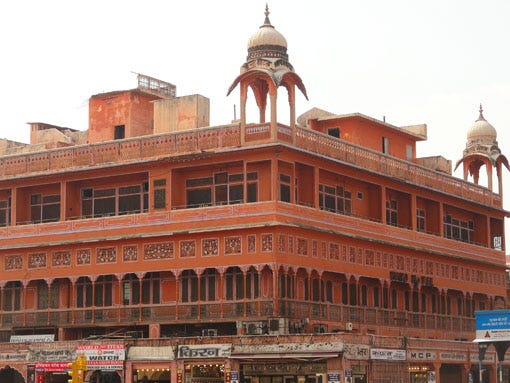
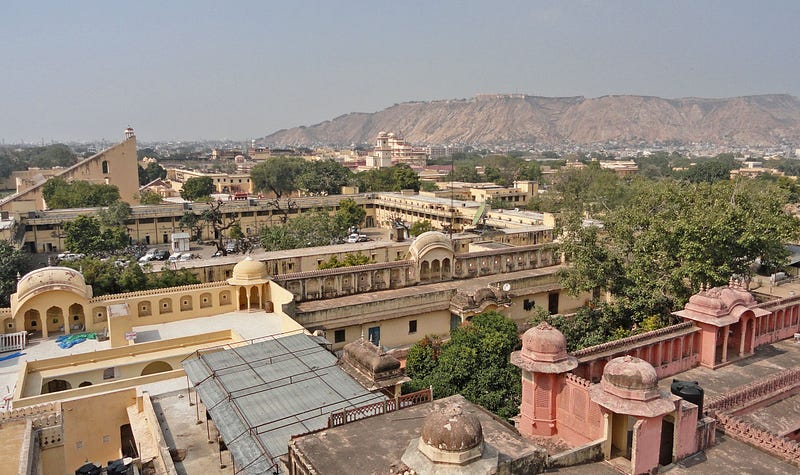
Jaipur, the Pink City and view of Jantar Mantar — author’s photos

We picked up a few samosas from a street vendor for lunch before we headed to the old city to visit the Hawa Mahal, the Palace of Wind. The Pink City was originally painted pink (representing hospitality) in honor of a visit by Prince Albert, who later became King Edward VII. The Maharaja made it the law in 1877 that buildings in the old city must be painted pink, which remains on the books today.
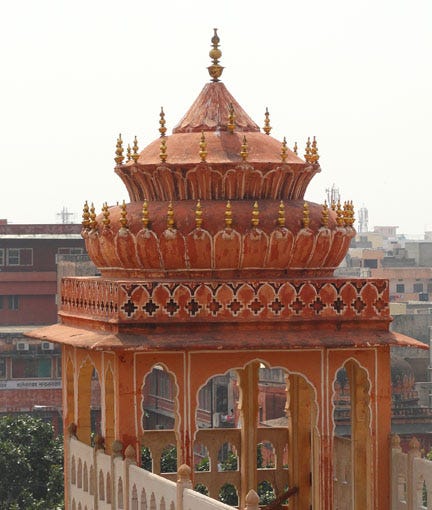
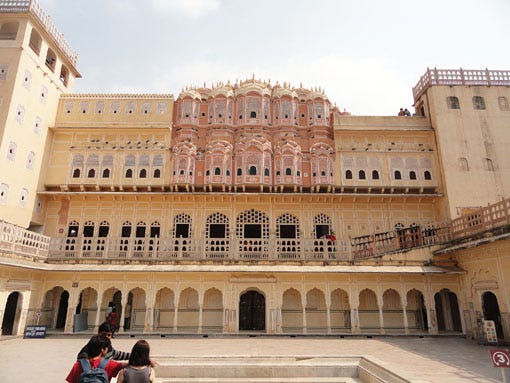
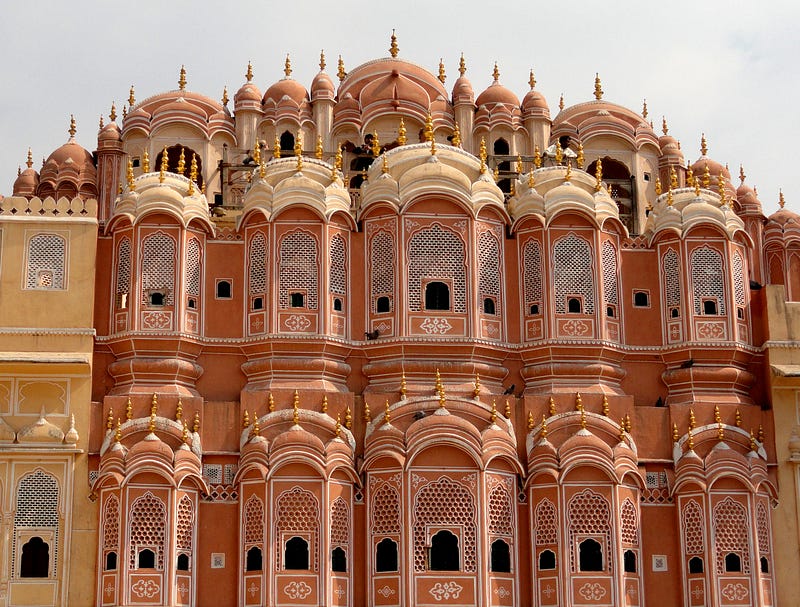
Hava Mahal — Jaipur, India — author’s photos

Hawa Mahal was built in 1799 for Maharaja Sawai Pratap Singh, grandson of Maharaja Sawai Jai Singh ll, the founder of Jaipur. The pink palace was constructed with pink and red sandstone, although the inner courtyard is pale yellow as are other buildings outside of the old city.

The palace is 5-stories high and its 953 small windows now look down over the traffic mayhem below.
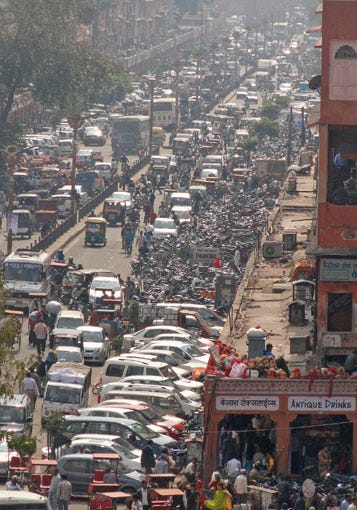
View of Jaipur traffic from Hawa Mahal — author’s photo

The windows allow a cooling breeze to blow through the building, cooled further by fountains in each of the rooms. Some of the concrete screened windows have unique patterns and some windows have stained glass which creates patterns of light on the floor at certain times of the day (depending on the sun’s position).
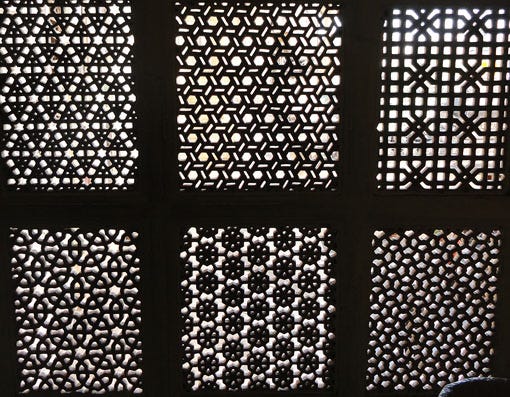
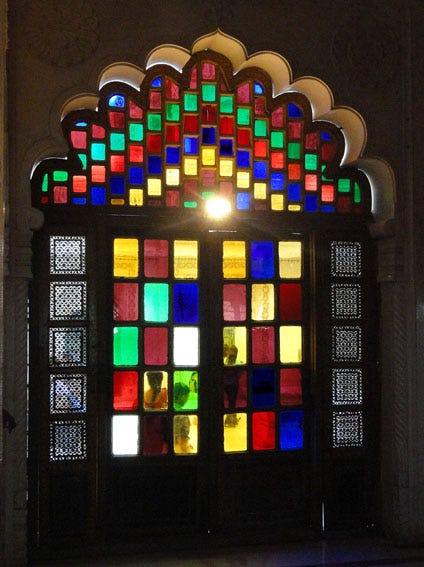
Window screen patterns and stained glass — author’s photos

We wandered through the marketplace around the palace, as we headed next door to our next stop.
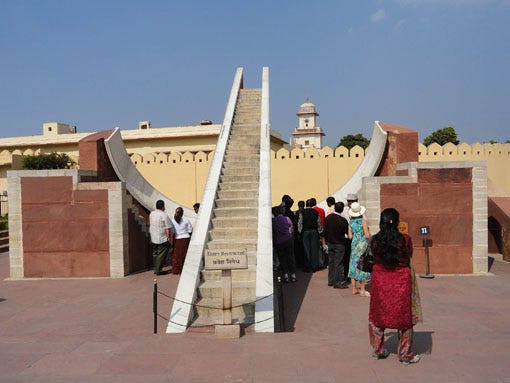
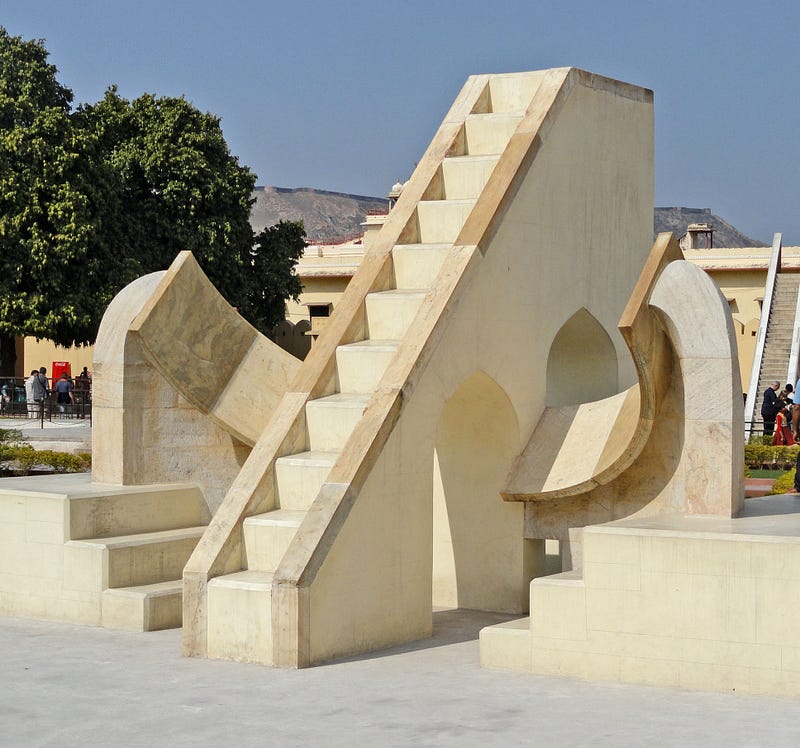
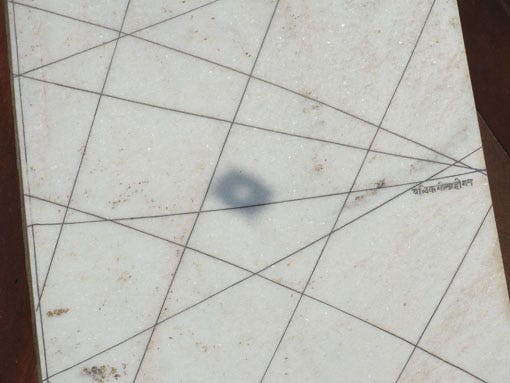
Jantar Mantar Giant sundial; Small sundial; Astrological guide — author’s photos

Next to the Hawa Mahal is Jantar Mantar, a world heritage site, and a center of astronomy. Construction was completed in 1730, by Maharaja Sawai Jai Singh II, who was also a famous astronomer in his own right. It is filled with all kinds of astronomical inventions; two sundials, the world’s largest sundial which is accurate to within just 2 seconds, and a smaller one accurate to within 29 seconds.

There is also the Rasivalayas Yantra which has 12 structures (or instruments) used to measure the latitude and longitude of an object in the sky, each corresponding to a sign of the zodiac.
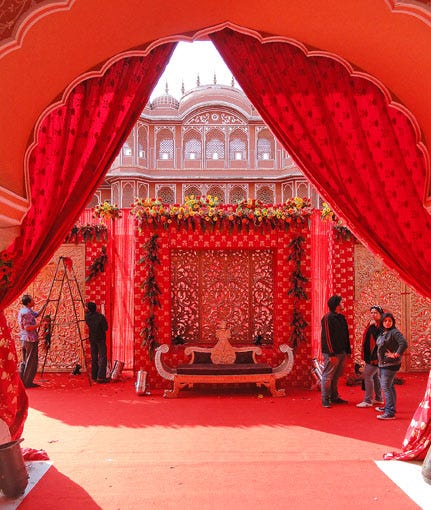
Wedding preparations — Jaipur — author’s photo

The on-site museum was getting prepared for a massive wedding later that evening, an elaborate undertaking for hundreds of guests. The museum is filled with regal antiques, containing many costumes of the Maharajas (including a massive pair of pants for one of the kings who was 7 feet tall and weighed 250kg- that’s more than 550 pounds) and a separate facility containing the various weapons of the Rajasthani fighters. Unfortunately, no cameras were allowed inside.
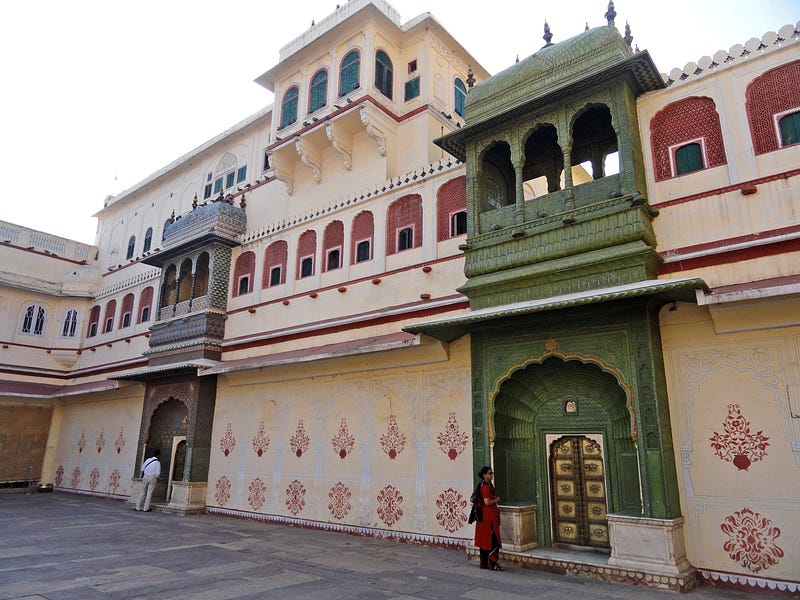
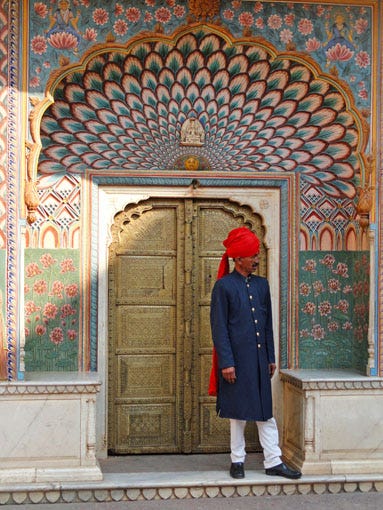
Inner Courtyard; City Palace gate — author’s photos

We went into the room where the King would hold court with his advisors and the prime minister… again no photos inside. But outside in the courtyard, there were some magnificently painted doors that I did take pictures of. We didn’t go inside the City Palace, you can get a tour but it costs about $50 USD/person, more than I was willing to pay for a look around.
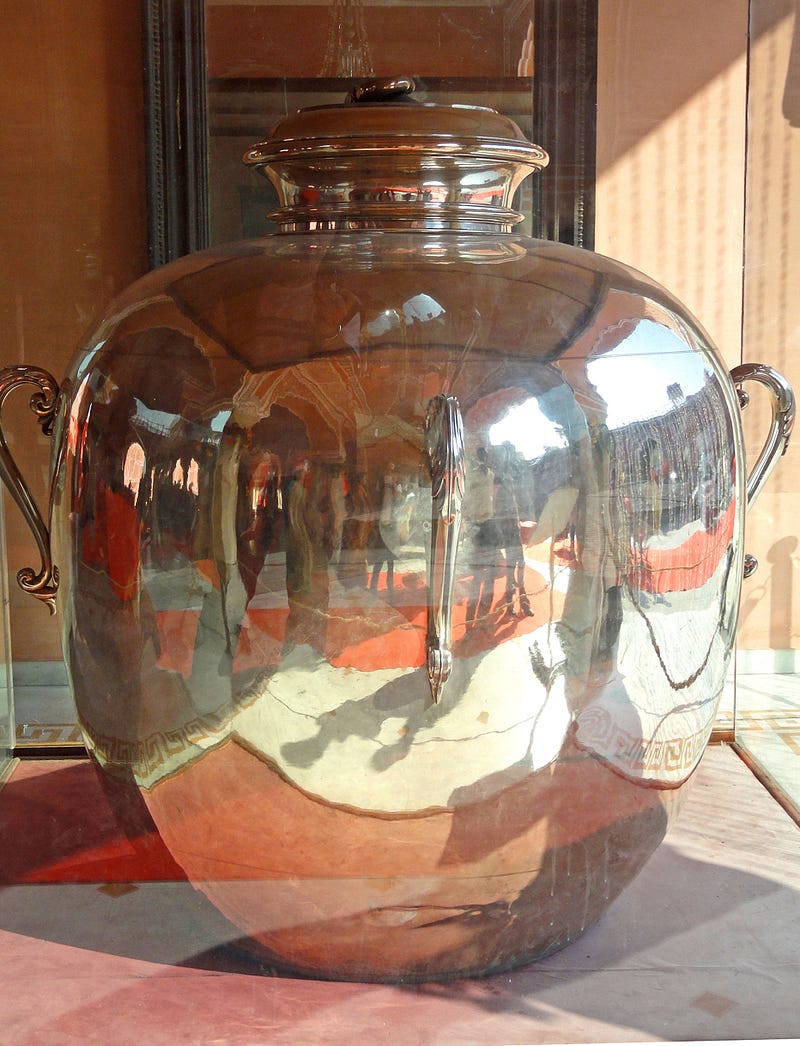
Maharaja’s Giant Silver Water Bottle — author’s photo

In the area where the wedding would be held were two massive silver jars on display, the largest silver objects in the world, each made of 14,000 silver coins, for Maharaja Sawai Madho Singh II, who filled the jars with sacred water from the Ganges River to take with him on his voyage to England for the coronation of King Edward VII in 1902.
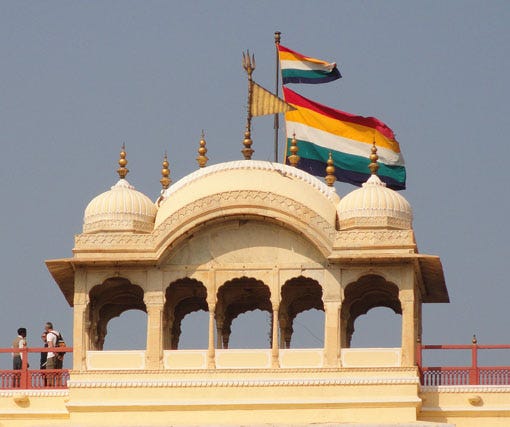
The King is in — author’s photo

The museum is set next to the City Palace, the home of the current King. There are still 21 Kings in India, none have real power but are considered figureheads. You can tell when the monarch is in Jaipur based on the two flags flying over the palace.
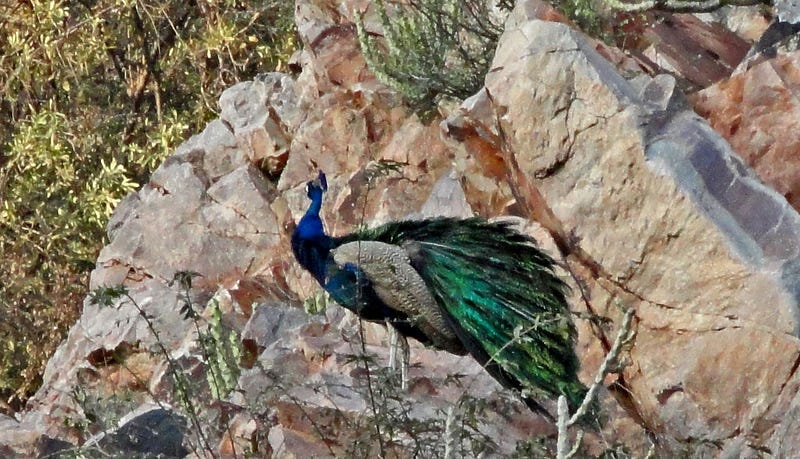
wild peacock — author’s photo

Our final stop for the day was the monkey temple where we saw numerous wild peacocks along the way.
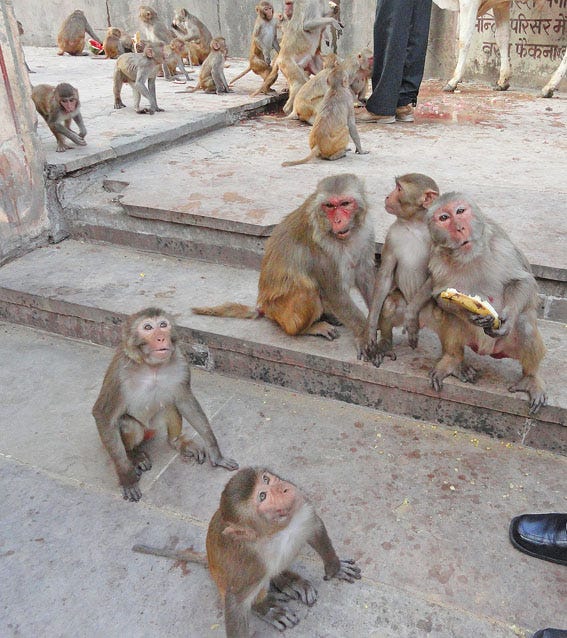
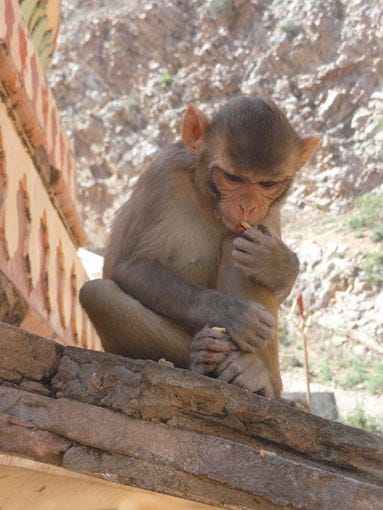
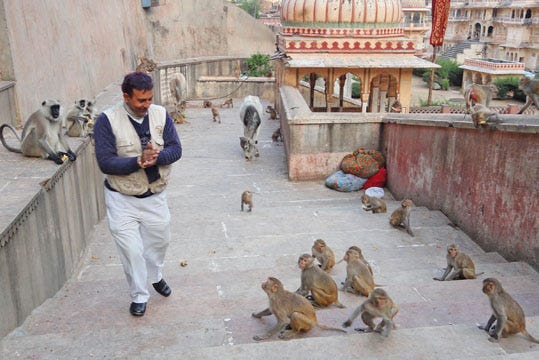
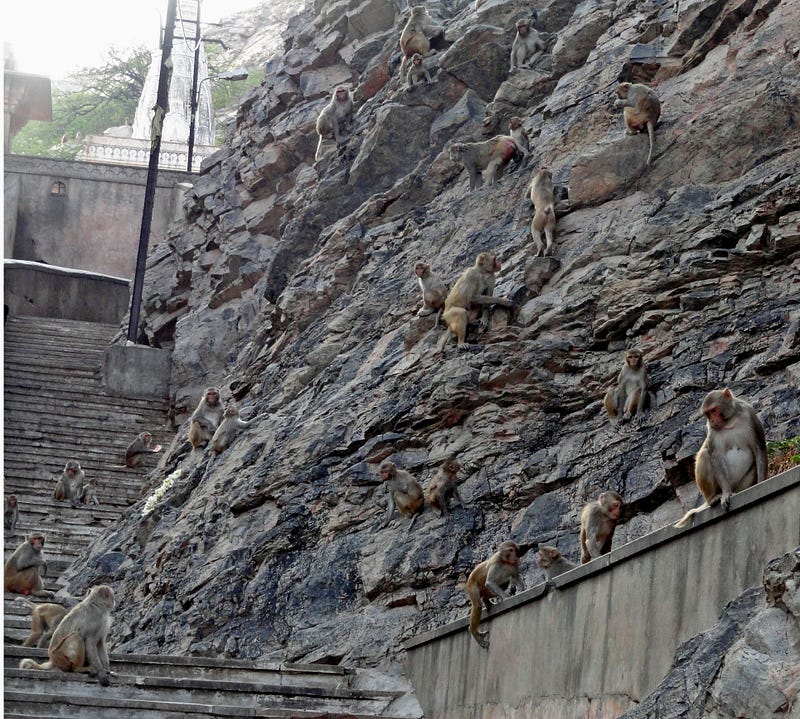
Feeding the monkeys at the Monkey Temple — Jaipur — author’s photo
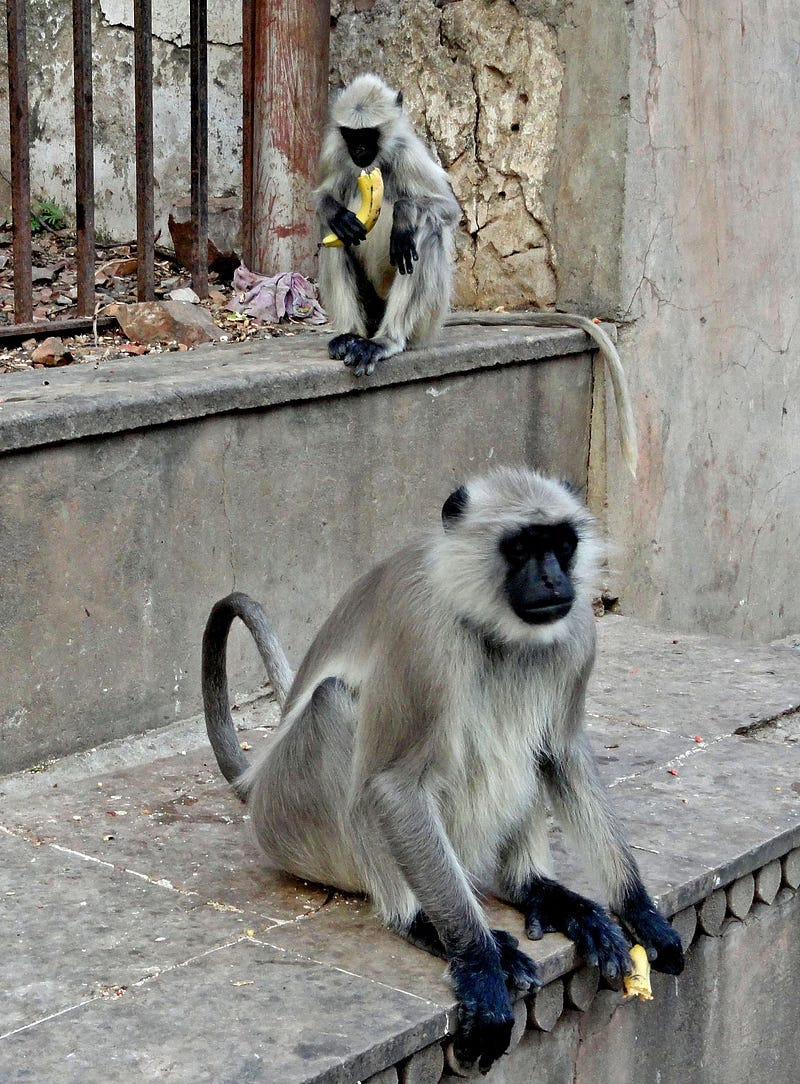
Gray Langurs with bananas; Red-Faced monkeys have none- author’s photos

We had picked up 3 bunches of bananas to feed the “holy” monkeys which drew a crowd of them all around us. They were very polite though, and I was told we didn’t need to fear getting scratched or bitten.
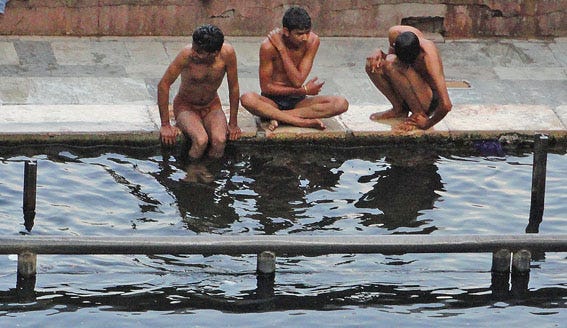
Taking a dip in sacred water pool — author’s photo

Next to the temple, there’s a small waterfall where sacred water pours into a pool where young men were taking a dip in the holy water. There was also a temple where I was invited to pray by the Punjari (Hindu priest). It ended with a swipe of color between my eyebrows; the bindi represents the third eye which focuses inward.

The day ended with a perfect full moon and a wedding next to the hotel where a DJ played wild Rajasthani music with a driving beat. I wandered over and checked it out before anyone arrived and was invited to join them, but I wasn’t really dressed properly to attend a wedding celebration. Later, fireworks were set off to honor the newlywed couple.

Coming up in Part Three is a tour of Pushkar and Bikaner.

__________________________________________________________________

You could read so much amazing content on Medium and it could be your next step in becoming a writer. And if you sign up with this link you will also be supporting my writing.

Rajasthan
India
Travel
Jaipur
Maharajas
Recommended from ReadMedium