
Prompt: Precise Observation
“The art of art, the glory of expression and the sunshine of the light of letters is simplicity. Nothing is better than simplicity . . . . nothing can make up for excess or for the lack of definiteness.” Walt Whitman
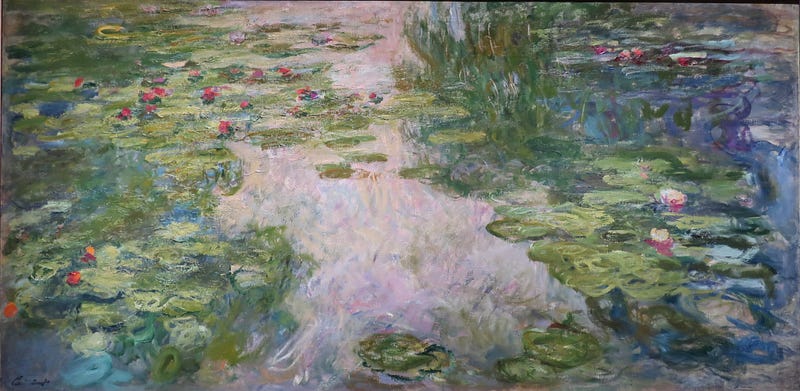
I can’t think of a great poet who was not also an astute observer.
Poetry at its core is translating the visible world into language of the heart.
When my poems fall flat, it is often because I am trying to vocalize vague ideas rather than making a concrete observation about the world first, articulating second, drawing conclusions third. . .if conclusions come at all!
The more precise and concrete I am in poems, the happier I am with the outcome.
As Whitman said, the art of art is simplicity.
Should I not learn from Monet, legendary for painting water lilies again and again and again? Precise observation of light and water and color — in this lies magic!
For this week’s prompt, create a poem based on a precise observation.
Please let me know in the comments if you would like to be added as a writer.
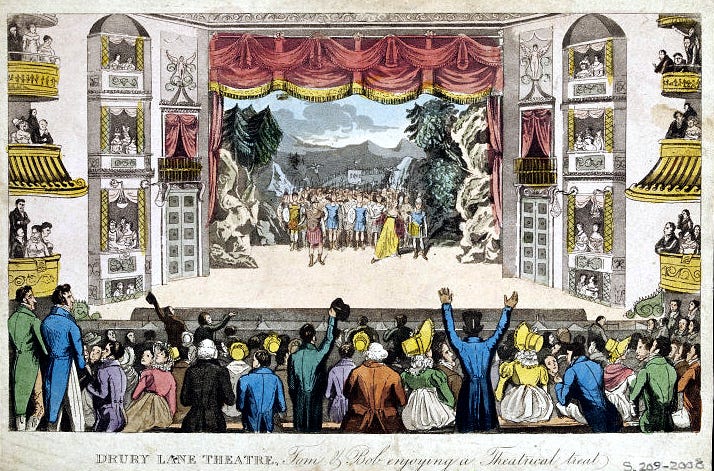
The Show
The show is not the show But they that go Menagerie to me My neighbor be. Fair play- Both went to see -Emily Dickinson
What am I actually looking at? What am I actually seeing?
What is the real story, the true magic?
Dickinson explains it well in this brilliant observation, the true show is to dress up, see and be seen, not to look at a stage or screen.
The fruition of beauty is no chance of hit or miss . . .
it is inevitable as life . . . .
it is exact and plumb as gravitation.
— Walt Whitman
Exact, plumb. Not words we often associate with poetry, but precise observation is as vital to poetry as meter or rhyme.
The art of art, the glory of expression and the sunshine of the light of letters is simplicity. Nothing is better than simplicity . . . . nothing can make up for excess or for the lack of definiteness. . .
But to speak in literature with the perfect rectitude and insousiance of the movements of animals and the unimpeachableness of the sentiment of trees in the woods and grass by the roadside is the flawless triumph of art.
If you have looked on him who has achieved it you have looked on one of the masters of the artists of all nations and times. You shall not contemplate the flight of the graygull over the bay or the mettlesome action of the blood horse or the tall leaning of sunflowers on their stalk or the appearance of the sun journeying through heaven or the appearance of the moon afterward with any more satisfaction than you shall contemplate him.
The greatest poet has less a marked style and is more the channel of thoughts and things without increase or diminution, and is the free channel of himself. He swears to his art, I will not be meddlesome, will not have in my writing any elegance or effect or originality to hang in the way between me and the rest like curtains. I will have nothing hang in the way, not the richest curtains. What I tell I tell for precisely what it is.
— Walt Whitman
Whitman was not succinct in Leaves of Grass, but he was marvelously simple, turning long-form observation a poetic art form.
Look here, this is what I see. The seen thing is of interest in and of itself and needs no further adornment, just deep observation, and words to accompany!
Going Blind
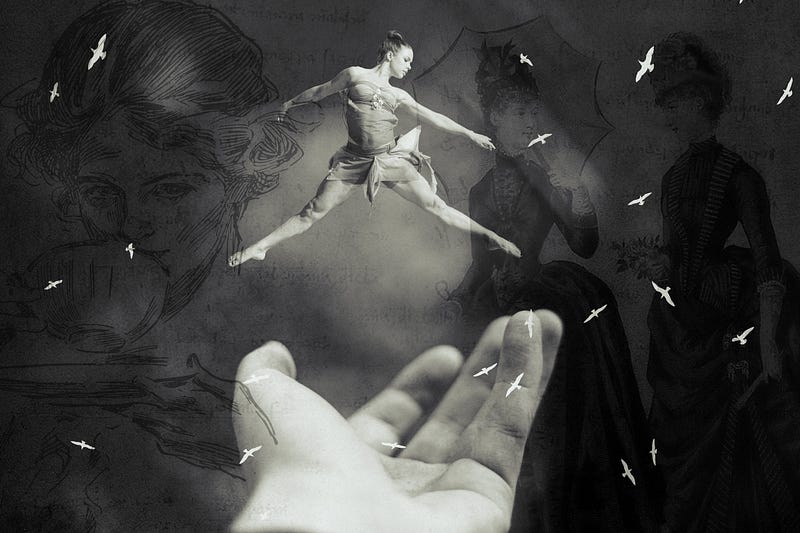
She sat just like the others at the table. But on second glance, she seemed to hold her cup a little differently as she picked it up. She smiled once. It was almost painful. And when they finished and it was time to stand and slowly, as chance selected them, they left and moved through many rooms (they talked and laughed), I saw her. She was moving far behind the others, absorbed, like someone who will soon have to sing before a large assembly; upon her eyes, which were radiant with joy, light played as on the surface of a pool. She followed slowly, taking a long time, as though there were some obstacle in the way; and yet: as though, once it was overcome, she would be beyond all walking, and would fly.
— Rainer Maria Rilke
Simply, wow. A movie scene, filmed with steady-cam (a century before the steady-cam was created), following a woman on a physical and spiritual journey. Master-class in observation of person and feeling.
The Panther Rainer Maria Rilke
His vision, from the constantly passing bars, has grown so weary that it cannot hold anything else. It seems to him there are a thousand bars; and behind the bars, no world. As he paces in cramped circles, over and over, the movement of his powerful soft strides is like a ritual dance around a center in which a mighty will stands paralyzed. Only at times, the curtain of the pupils lifts, quietly — . An image enters in, rushes down through the tensed, arrested muscles, plunges into the heart and is gone.
— Rainer Maria Rilke
Observation.
by David S.
I rack my brain for inspiration, imagination, best thoughts come from deep observation, meditation, interpretation Give me ears to hear eyes to see hunger to study the situation, majesty and tragedy of life in front of me. Make me an astute observer, a scientist a critic a fighter a believer, Make me a dictionary with vocabulary to say to the world unfolding before me, “This is what you are, what you have been, what you will be.” Give me the humility, to define but not possess to name, to describe, not with arrogance, not with ownership but with neverending wonder in the discovery.
In case you missed:
Recent highlights from DPL writers.
This invisible song has traveled a long way
Dead Poets Live Prompt: Time~Place~Love~Death
medium.com
Guérin Asante Sylvia Wohlfarth Dennett Anna Rozwadowska Lindsay Lonai Linegar Carver Bain Michelle Muses Aaska Ejaz Chiedza Kikumi LB Blue Fences kurt gasbarra Tre L. Loadholt
Jo Ann Harris FILZA CHAUDHRY Suwimali Bandara Kurt Gasbarra Crystal E.Wild Flower Sarah Book Amy Jo Reynolds antoinette nevitt Dennett Joe Váradi Austin Briggman Dana Sanford Shringi Kumari Anisesh Tracy Aston


