
Pressing Publish Is Just the Beginning
How to effectively promote blog posts
One of the biggest misconceptions among bloggers that I regularly chat with is the notion that pressing the publish button (and submitting an article to Medium or any other platform) is the final step in the blog post life-cycle.

Pressing publish is only the beginning if you want your articles to reach a wide audience and have the potential to go viral.
The Average Writer’s Blog Post Publishing Process
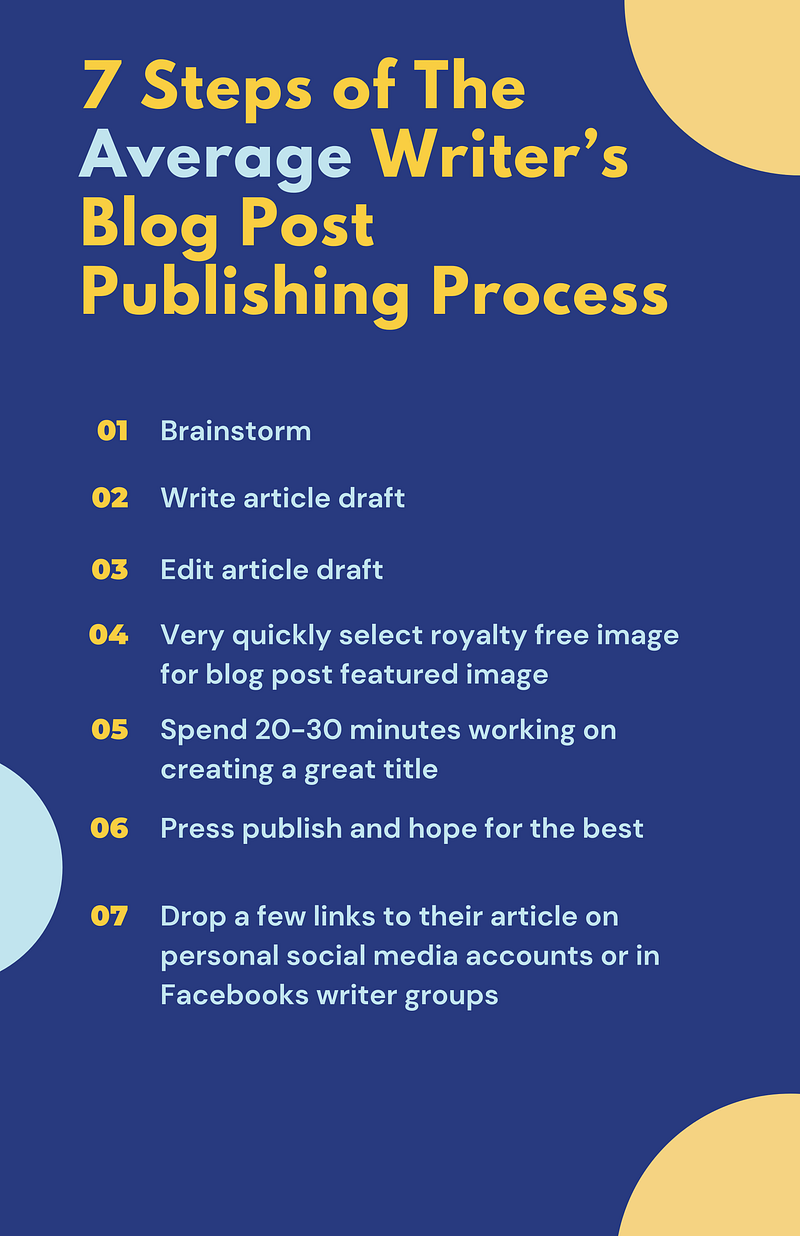
As someone who works in content marketing, this is frustrating to watch.
Producing an article is like producing any other digital asset. It needs to be something people can easily find, something they can recommend or share with their own audience, and the content needs multiple opportunities to get in front of the right audience.
The Internet is saturated with writing from bloggers. So the key is making sure that your article at least has a fighting chance at reaching a wider audience.
This is a difficult balance to strike, because it’s very easy to go overboard marketing an article that has run its course. This typically includes articles that are topical or time sensitive.
If you are trying to break a news story before a major media or news publication, that is fine, but even if you somehow beat them to publishing online, there content will quickly outrank you in most search engines.
However, if you are producing entertaining content that is not time sensitive or high value content that is evergreen, it is worth setting aside some time to properly market these articles after you publish them.
So how do you go about marketing an article that is high value but initially receives very low visibility?
This article will outline several strategies to properly promote your blog posts. I cannot guarantee that these strategies will make your content go viral, but they will give your posts a fighting chance.
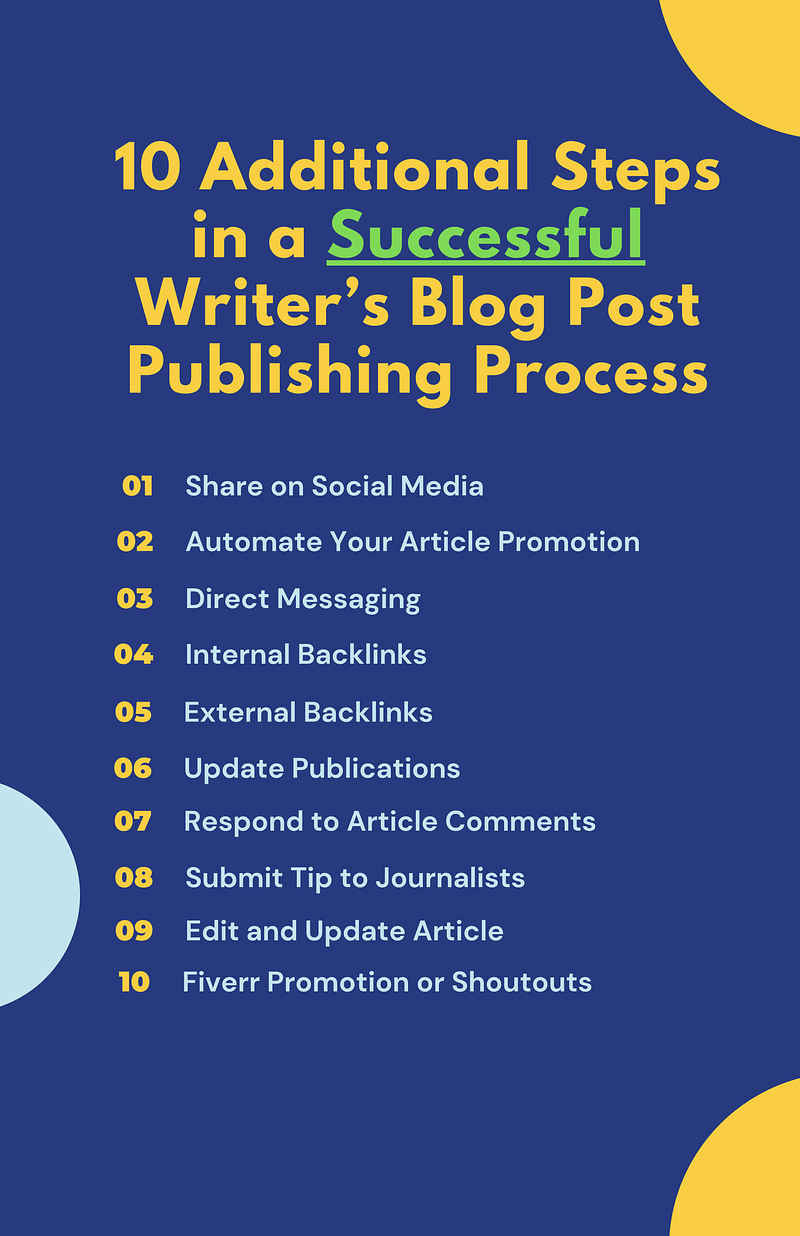
1. Social Media
Although I was complaining about authors who drop their post in random Facebook groups and then vanish, social media does play a vital role in marketing your content.
In a perfect world, writers would be logged into all of their possible social media accounts, and would start promoting their article immediately after it is published.
However, most writers hate spending time marketing. So I’m going to try to make this guide a bit more practical and efficient.
Instead of blindly posting a link to your article across 10 social media platforms or groups, take a second and think about the actual content of your article.
Ask yourself:
Did I create any custom visuals or infographics for this article? Did I customize my article title image?
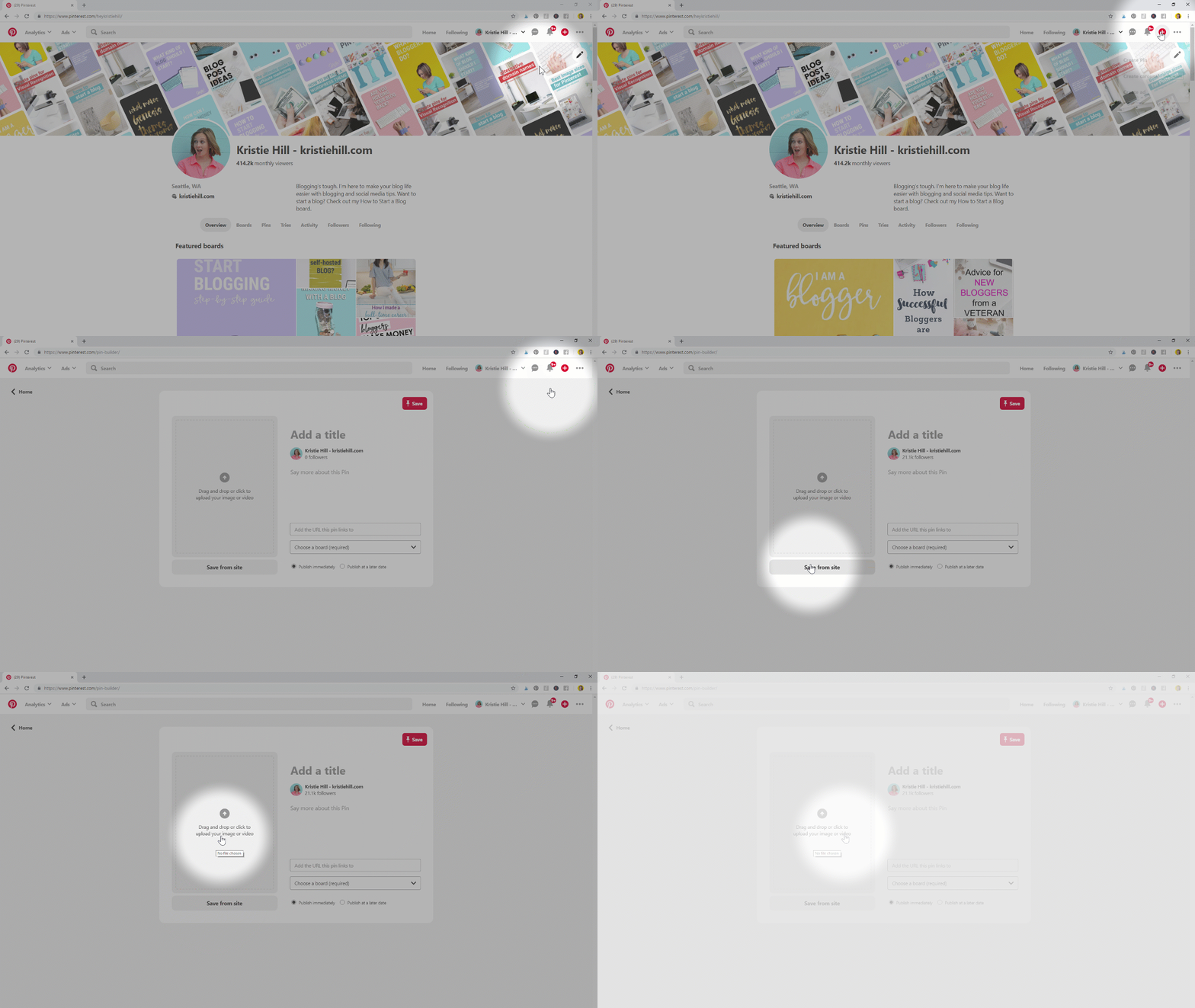
If so, Pinterest is an easy way to promote your post quickly.
They key with Pinterest is to write custom descriptions for your pins. While this can be annoying, this is the main part of your Pinterest pin that search engines will use to differentiate your content (after scanning your visual content for originality). To speed up the description writing process on Pinterest, choose a few captivating sentences from your article.
Is your article about business, finance, productivity, or work?
Posting on LinkedIn is a must.
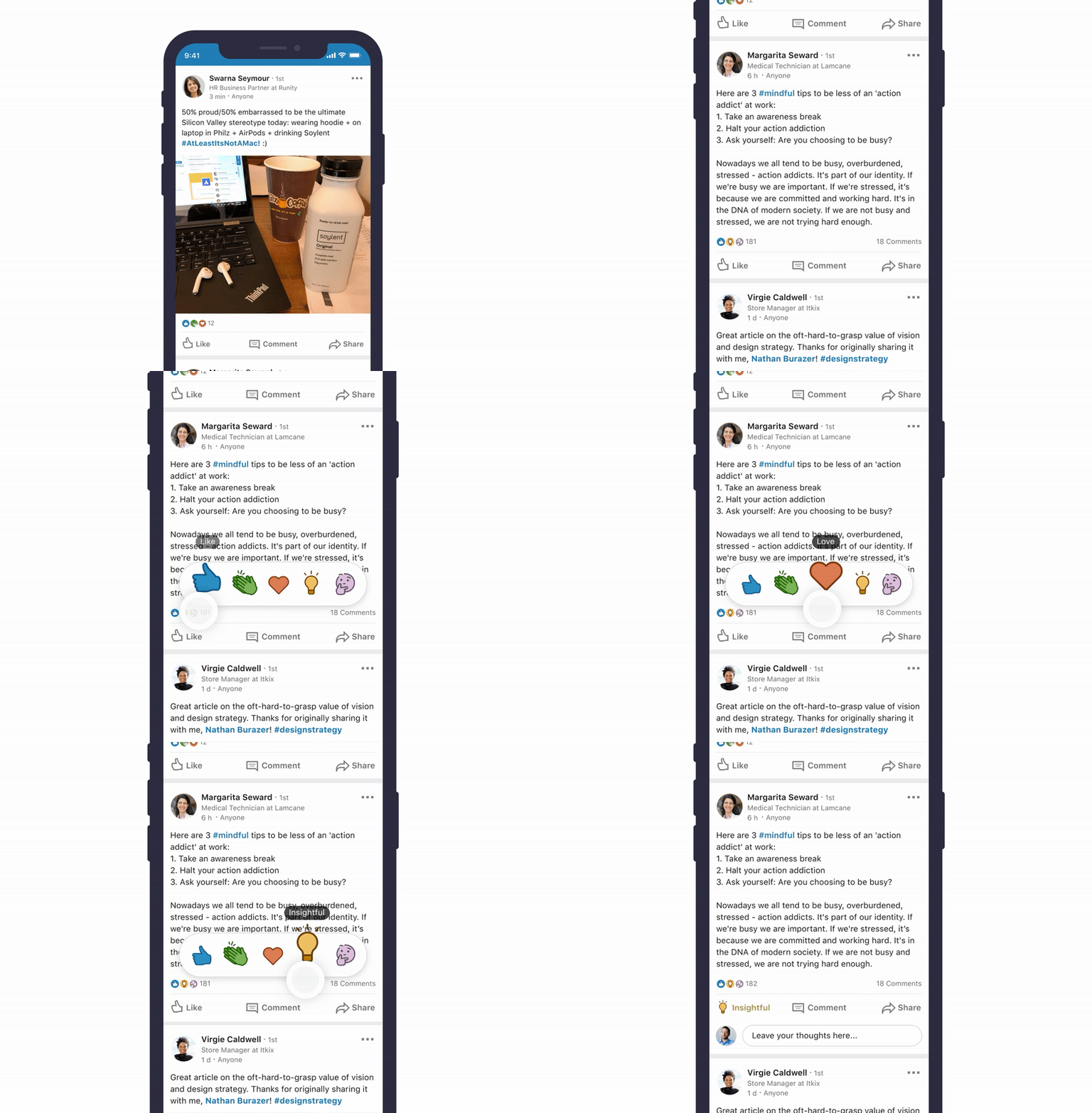
Articles on LinkedIn can be posted directly from your profile. This makes sense and is the easiest option if you’ve built a large following. But if you haven’t, “piggy backing” off a trending article by a major influncer or trending topic can be the best way to promote your article.
This can be done by “reacting” to trending LinkedIn posts that have a similar topic or use a similar hashtag:
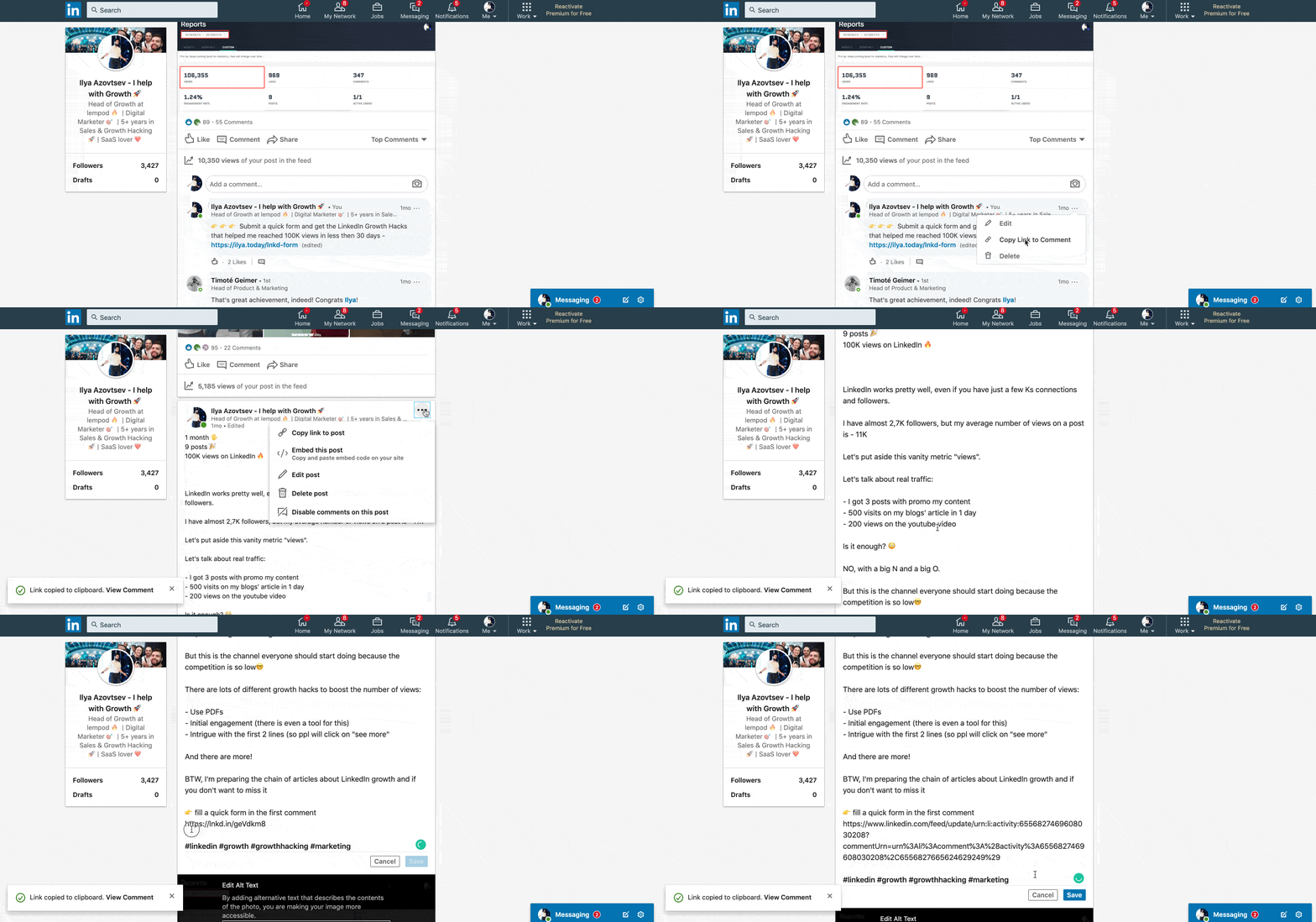
You can also add links to your article in the comments section:
Is your story personal, political, or semi controversial?
If so, Facebook may be the perfect platform for you.
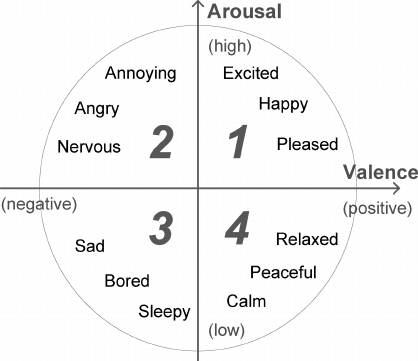
In my experience, Facebook is the best platform for articles with high valence titles and article themes.
Valence refers to the intrinsic attractiveness (positive valence) or aversiveness (negative valence) of an event, object, or situation.
Unless you already have large followings, don’t bother posting to TikTok, Instagram, Snapchat.
The one exception being if you are trying to sell a product. But even then, high quality video content and a large audience are basically required, rendering these platforms ineffective and a low ROI on your time.
Facebook groups are important distribution networks in the first 45 minutes after publishing an article because there tends to be high levels of reciprocity.
Sharing a post link in the correct group could generate the first 30–100 views which allow your article to start building momentum as it is shared or commented on.
However, as noted above, you cannot just post a link and expect others to spend their time promoting your article.
Take the time to read 5 articles from a daily share thread. Comment, highlight, and clap for these articles (if you like them).
In my experience running one of the largest Medium Facebook groups, this step is essential. It increases the odds that other active Medium members will read or engage with your story.
It also increases the likelihood that someone will comment on your story, on Medium. Even if they don’t do that, getting your article a like on a long Facebook thread can help it stand out to other authors, who are also scanning that day’s articles to find a few to read.
This is the very minimum you should do for all articles you publish.
However, the following steps are required to really give your article a chance at having any longevity or viral growth.
2. Automate Your Article Promotion
Time is your most precious commodity. Take advantage of all the code-free technology which allows users to schedule their posts to be automatically reposted on platforms like Twitter on a regular interval.
There are many platforms that can accomplish this, but I personally use the tool developed by long time Medium veteran, Lincoln W Daniel, called Signal.
Signal can auto-tweet your Medium articles (or any article, for that matter), on Twitter, according to the schedule you set. This can be used to promote new content or revive old content that has faded out of view on Medium’s featured articles, tags, topics, or publications.
Sounds to good to be true?
Here is a screenshot of some of my data from Signal:

In less than 2 years, Signal has generated 33,754 clicks on tweets containing my articles. These are all previously published articles!
3. Direct Messaging
Sending your articles to a group of supportive readers and fellow writers can do wonders. This can be accomplished through a system with a built-in email marketing service (sending an email blast through something like Mailchimp or Substack).
This can also take the form of sending your article link to a Slack channel or even just directly emailing it. You can even text it to people.
Obviously, you don’t want these people to become overwhelmed with your content, so only use this group for articles you strongly feel have a chance at succeeding.
4. Internal Backlinks
Internal backlinks are created on your site or blog and there’s no external element in their creation. The reason behind the creation of internal links it to make navigation around the site easier.
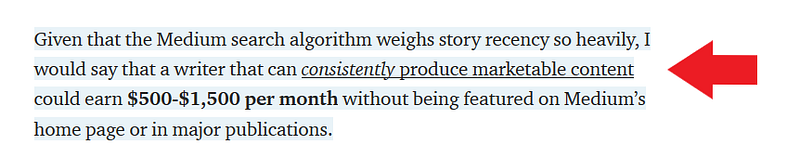
You can create internal links by adding links to keyword phrases in other articles you have written:
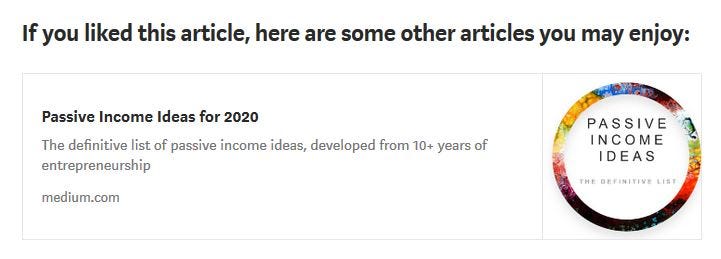
You can also create internal links by utilizing Medium’s sleek embedded links below a call-to-action in your article:
5. External Backlinks
External backlinks are those links that link to your site or any of its pages/content and these links are counted as if those sites are vouching for your site’s high quality. This gets noticed by search engines and as a result your site’s ranking can improve significantly. It is better to get backlinks or vouched by those sites which are either equal to your site’s quality, content, repute etc. or better than your site with higher Page Rank (PR). Otherwise, getting links from sites with low PR and/or no established reputation won’t help much in creating the much needed ‘link juice’.
This can take many forms when promoting your blog post:
- Answering questions on Quora using an excerpt from your article. You then include a small and unobtrusive backlink to your Quora answer directing readers to your blog post.
- Sharing your post on a forum like Indie Hackers which encourages writers and entrepreneurs to document their progress. You should add some commentary explaining why your post is significant.
- Reaching out to blog owners covering a similar topic to your article. Say you write a blog post about the lessons you learned from your grandparents. You could reach out to third party blogs that specifically cover content related to your article. Send them a polite email, mention your article, and explain why it may be useful to their readers. They may repost the article in its entirety (a huge win!) but more likely they will at least consider linking to your article in a relevant article they have already published.
6. Update Publications
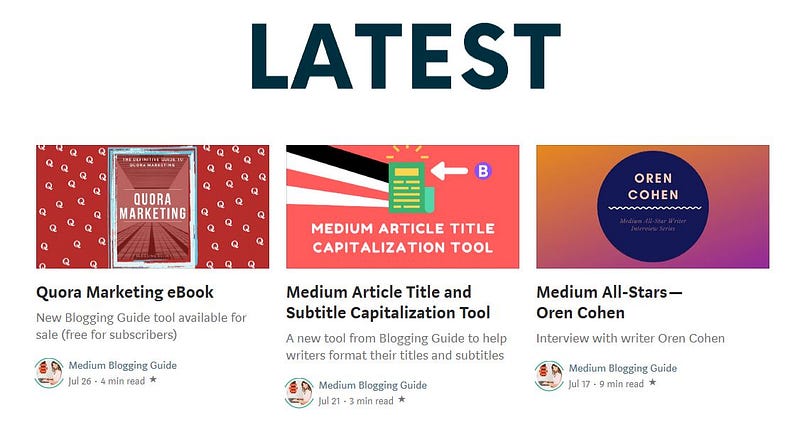
If you have a Medium publication (which, if you don’t, click here to create one) it is important to update your publication to feature your latest article.
Readers who visit your publication will have no way of knowing that you have a new post unless you feature it prominently:
7. Respond to Any Article Comments
There have been a number of posts from top writers reaffirming their belief that they should not be bullied or pressured into responding to every comment. This is a completely reasonable stance.
However, from the perspective of someone who has been involved with writing and digital content creation for over 10 years, I feel I would be remiss if I didn’t point out some of the obvious and some of the more subtle benefits to engaging with your readers. Some of these benefits require the examination of the intent behind Medium’s design, consideration of search engine optimization (SEO), the gratitude you cultivate as a content creator, and the unexpected advice/tips you may receive from readers.
8. Submit Tip to Journalist
Many writers are surprised to learn just how truly lazy most journalists and bloggers for medium-large media organizations are. Armed with this knowledge, send them strategic tips which include subtle links to your article.
In defense of journalists, they have to constantly publish content involving new stories. So a win-win scenario is you sending them a link to your article, emphasizing how useful it may be to their readers (it will help if you are genuinely one of their regular readers/commenters).
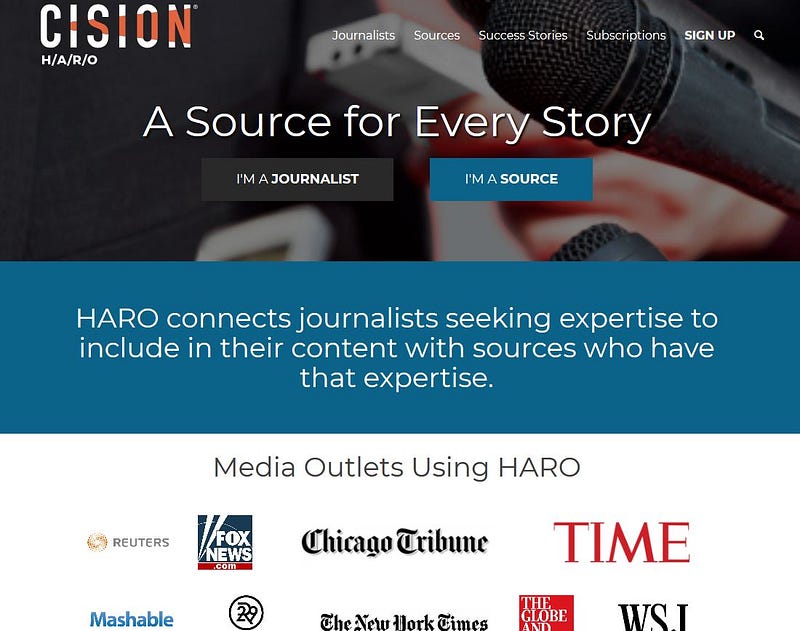
If you don’t want to reach out yourself, services such as Help A Reporter Out (HARO) make the process much easier.
You may be quoted as a source for an article, and the reporter may include a backlink to relevant articles you have written.
9. Edit and Update Your Article
Editing and updating your article is probably the most overlooked tip on this list. There are a number of reasons that you should update your articles regularly after publication:
- SEO — If your article fails to gain traction in search engines, you may need to adjust the title, subtitle, kicker, or the article’s meta description.
- Corrections — All writer make errors. These can range from small grammatical errors to substantive errors in the content of an article.
- Reader feedback — If readers are all commenting on how much they love a specific section of your article (or commenting on how they need further elaboration on a section of your article), you should make these changes. Yes, you can always write a new article based off of these suggestions, but if multiple readers are requesting the same content change, it is definitely worth revisiting and potentially editing your article after publication.
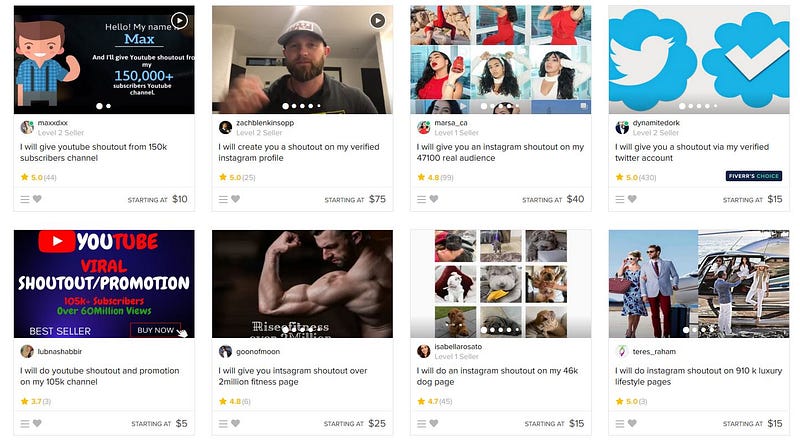
10. Fiverr Promotion or Shoutout
If all of the tactics mentioned in the previous nine steps do not lead to the traffic/exposure your article needs, consider spending $5–10 and having an influencer in your niche giving your article a shoutout.
You can reach out directly to influencers to negotiate such deals. But this can be time intensive and usually is more expensive.
My go to solution for shoutouts (or pretty much any other digital service that I need done at the lowest cost possible) is Fiverr.
Some writers may scoff at paying someone to promote an article that they already invested hours of time into.
However, if you value your time and have confidence in your article, spending a little money can help your content go from just a few views to thousands.
This is basically a more affordable version of traditional social media advertising, in which you pay a company like Facebook or Quora to promote your article link beside relevant content on their site.
This traditional social media advertising can indeed be effective. However it requires a much larger budget and experience using the platforms marketing tools.
Takeaway
The Internet is saturated with writing from bloggers. So the key is making sure that your article at least has a fighting chance at reaching a wider audience.
One of the biggest misconceptions among bloggers is the notion that pressing the publish button is the final step in the blog post life-cycle.
Pressing publish is only the beginning if you want your articles to reach a wide audience and have the potential to go viral.
Thanks for reading this article! Leave a comment below if you have any questions. Be sure to sign up for the Blogging Guide newsletter, to get the latest tips, tricks, and news about writing on Medium and to join our Facebook group, Medium Writing, to share your latest Medium posts and connect with other writers.
If you liked this article, here are some other articles you may enjoy:

Casey Botticello is a partner at Black Edge Consulting. Black Edge Consulting is a strategic communications firm, specializing in online reputation management, digital marketing, and crisis management. Prior to founding Black Edge Consulting, he worked for BGR Group, a bipartisan lobbying and strategic communications firm.
Casey is the founder of the Cryptocurrency Alliance, a Super PAC dedicated to cryptocurrency and blockchain advocacy. He is a graduate of The University of Pennsylvania, where he received his B.A. in Urban Studies.
You can connect with him on LinkedIn, Twitter, Facebook, or by following his Medium publication, Blogging Guide.