
Living on a boat
Pre-Voyage Stresses at Low Latitudes and High Temperature
Arnhem Land weather is like a pressure cooker right now as we prepare to cross the Timor Sea into South East Asia
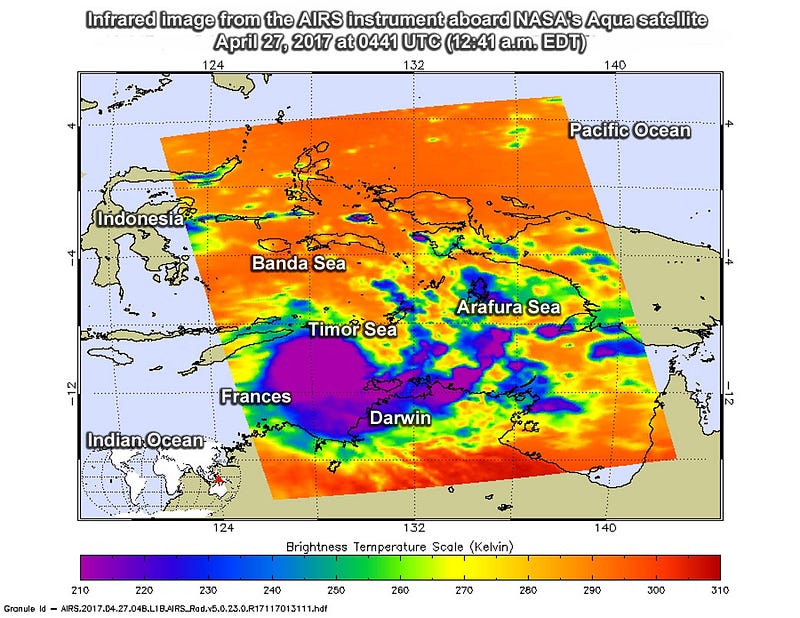
By the time this is published the First Mate and I should be somewhere in Indonesia.
Fixing a hole where the rain gets in
As ever, there’s a long list of things to be fixed on the boat, pre-departure. Some items are irreparable, like the compass sensor on our old autopilot. We have alternatives — wind vane steering and a backup tillerpilot — but none of them are ideal for some maneouvres, like a gybe at 0200 hrs in a heavy sea and howling wind. The two of us sail more conservatively nowadays and plan to avoid such events after several ocean crossings and a few storms.
We just had an engineer aboard to check our small freezer (I do most things myself, but not freezers). Nowadays one has to have a licence to fix them as greenhouse gases may be involved. Ours has been under-performing and he found that the heat exchanger was blocked with dust. Easily fixed, and I’ll be able to do it myself next time. No gas.
It’s said that cruising on a boat is about long periods of fixing things, interspersed with short periods of sailing.
That’s not far off the mark.
Hopefully only a few days
The crossing to Indonesia should only take a few days and the weather forecast looks OK today. It’s autumn here and the cyclone season officially starts on 1 November. The Timor Sea is a breeding ground for them but we should be OK for the next couple of weeks until we’re in safer waters north of 10 degrees southern latitude.
The Timor Sea (Indonesian: Laut Timor, Portuguese: Mar de Timor, Tetum: Tasi Mane or Tasi Timór) is a relatively shallow sea bounded to the north by the island of Timor, to the east by the Arafura Sea, and to the south by Australia.
The sea contains a number of reefs, uninhabited islands and significant hydrocarbon reserves. International disputes emerged after the reserves were discovered resulting in the signing of the Timor Sea Treaty.
It is possible that Australia’s first inhabitants crossed the Timor Sea from the Malay Archipelago at a time when sea levels were lower. — Wikipedia
And then…
If we get our visas (still waiting) we expect to be in Indonesia for maybe six months until the cyclone season ends and we can make plans to cross the Indian Ocean to South Africa, with maybe some time in Madagascar along the way. We’d also do some stops at islands like Cocos Keeling, Mathurin and Reunion.
Man plans and God laughs, as they say. I hoped I haven’t jinxed the next year by talking about our planning, even in outline.
Originally we hadn’t planned to spend long in Indonesia, just a passing visit to Bali. However Covid got in the way and led to our being in New Zealand for two years. Then after a stormy Tasman Sea crossing from Opua in NZ to Bunderberg in OZ we fell behind schedule yet again and tried to catch up, to no avail, as we sailed round the north of Australia. I wrote about that 2,200 mile trip up Australia’s Great Barrier Reef here.
Indonesia
Indonesia is in the news this week with a 15' python swallowing a woman whole…
It’s a country of 17,500 islands spread across 3 time zones.
With a population of 275 million people it’s the world’s fourth most populous and is the world’s largest archipelagic state at 1,904,569 square kilometres (735,358 square miles) in area.
With a staggering 1,300 ethnic groups and 700 languages it’s very diverse, and some parts are subject to civil unrest.
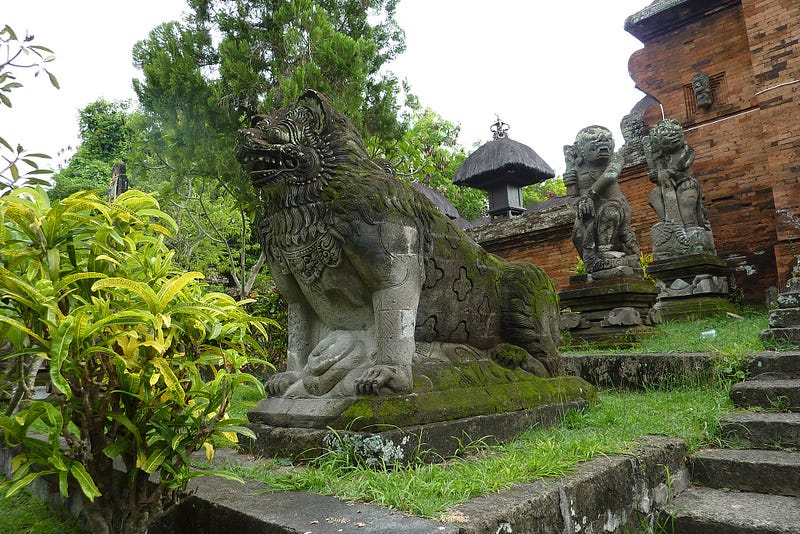
It should be interesting…
And the stress
We always get stressed as departure approaches but this one should be a relief. Neither of us is finding the weather easy with 34 C temperatures and high humidity here in Arnhem Land, although we’re both sun lovers. So, we’re having a few ‘dog days’ as the saying goes. A bit snappy.
It’s not like we can take a cool dip in the sea either.
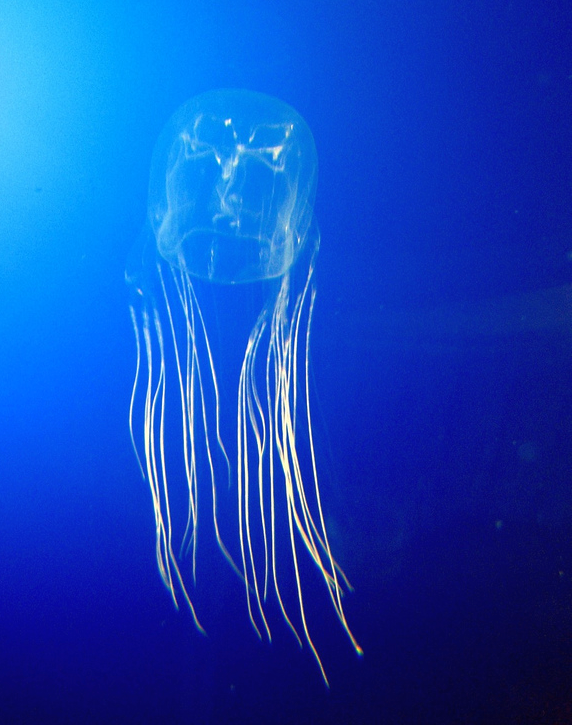
Box jellyfish aka sea wasp are a big summer hazard.
Chironex fleckeri, commonly known as the Australian box jelly, and nicknamed the sea wasp, is a species of extremely venomous box jellyfish found in coastal waters from northern Australia and New Guinea to Malaysia, the Philippines and Vietnam. It has been described as “the most lethal jellyfish in the world”, with at least 64 known deaths in Australia from 1884 to 2021. — Wikipedia
So nobody swims in the sea here unless in a thin skin wetsuit. But that’s hot…
But Indonesia is OK — mostly.
Bureaucracy
Departure from Australia is a couple of days away and we’re embroiled in paperwork for entry to Indonesia — visa applications, boat declarations, stores list, medicines list, equipment list — the list of lists is seemingly endless and stressful.
Dealing with bureaucracy is all part and parcel of cruising on a boat, and one has to learn to be patient. And smile. We’re paying to use an agent in Indonesia to streamline the process, just as we did for the Panama Canal and the Galapagos Islands. The cost is modest but worthwhile.
When I sailed to Brazil in 2006 I didn’t use an agent and spent two days in Recife on a hot and humid goose-chase around the city before obtaining full clearance to enter the country with my boat. There are typically five or six offices/departments to visit. Some countries had bureaucracy down to a fine and frustrating art. And they argue about the order in which the offices should be visited…A goose chase, as I said.
Strangely, the easiest time we had with the entry process was in Cuba. Seven officials came aboard together with a springer spaniel sniffer dog. The process took about an hour. They were friendly and polite.
We’ve had a last minute panic today as our Indonesian agent has told us we cannot bring out of date medicines into the country. So I’ve had to update the medicine list yet again and find a way to deal with the situation legally as we cannot safely dispose of those we have. Sheesh! There’s stuff we’ve been carrying about for years… A form of words is required. And honesty.
Recently Indonesia has started making a concerted effort to encourage sailors like ourselves and use of an agent is no longer mandatory. But I’m glad we’ve got one.
I’ll post an update once we have internet connections sorted — that’s usually a frustrating business, even in ‘advanced’ countries such as Australia.
And Covid has complicated the process of getting a certificate of pratique — i.e. my vessel and crew is healthy.
Coda
Last night we moved out from the marina to an anchorage.
And there was a problem!
The ‘smart’ charger we have connected to our engine alternator to charge the batteries? Well, it ain’t too smart anymore. It’s dead , although it was alive 24 hours previously. I think that the heat got to it…
Anyway, I have alternatives and workarounds. It’s just another last minute job to be squeezed in before our appointment tomorrow with the Australian Border Force to get our clearance/exit papers without which we cannot enter Indonesia (or any other country for that matter). We’d be ancient mariners, doomed to sail the seven seas forever…
Such is the cruising life.
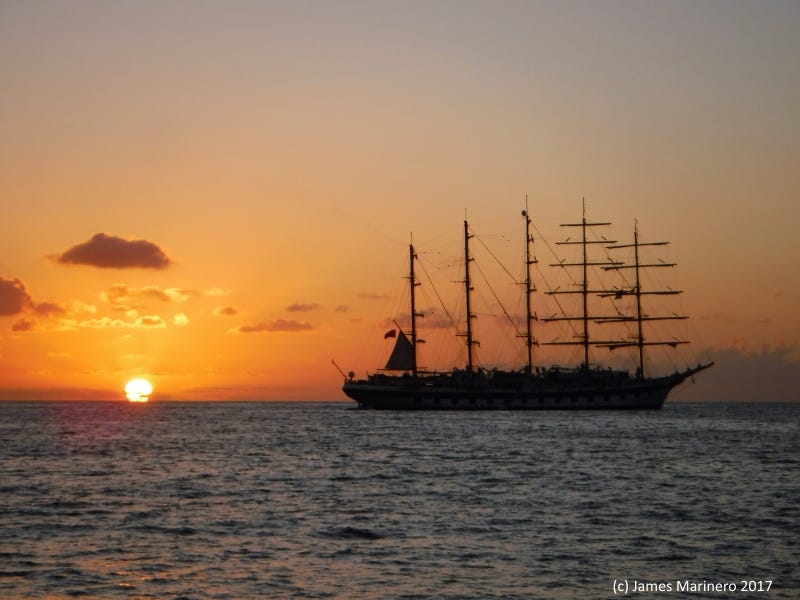
If you really like sunsets then I have a collection of 40 of my own sunset pictures on Pinterest. Sunsets at sea are one of the pleasures of living on a boat.
About me: If you follow me I guarantee variety in your inbox with some unusual perspectives! I write on a wide range of topics including humor, tech, space, geopolitics and travel, together with daily news events and the minutiae of my daily life living on a boat. Yes, I really do live on a boat (some readers don’t believe that). I also write about…
…heat, frustration and out-of-date medicines
If you appreciate stories like these and want to support other writers and me, consider signing up to become a Medium member. It’s only $5 a month, giving you unlimited access to incredible stories on Medium. If you sign up using my link below, I’ll earn a small commission at no extra cost to you.
Or maybe just buy me a coffee? and tell me what you liked reading (or not)!
